The Cost of This Job
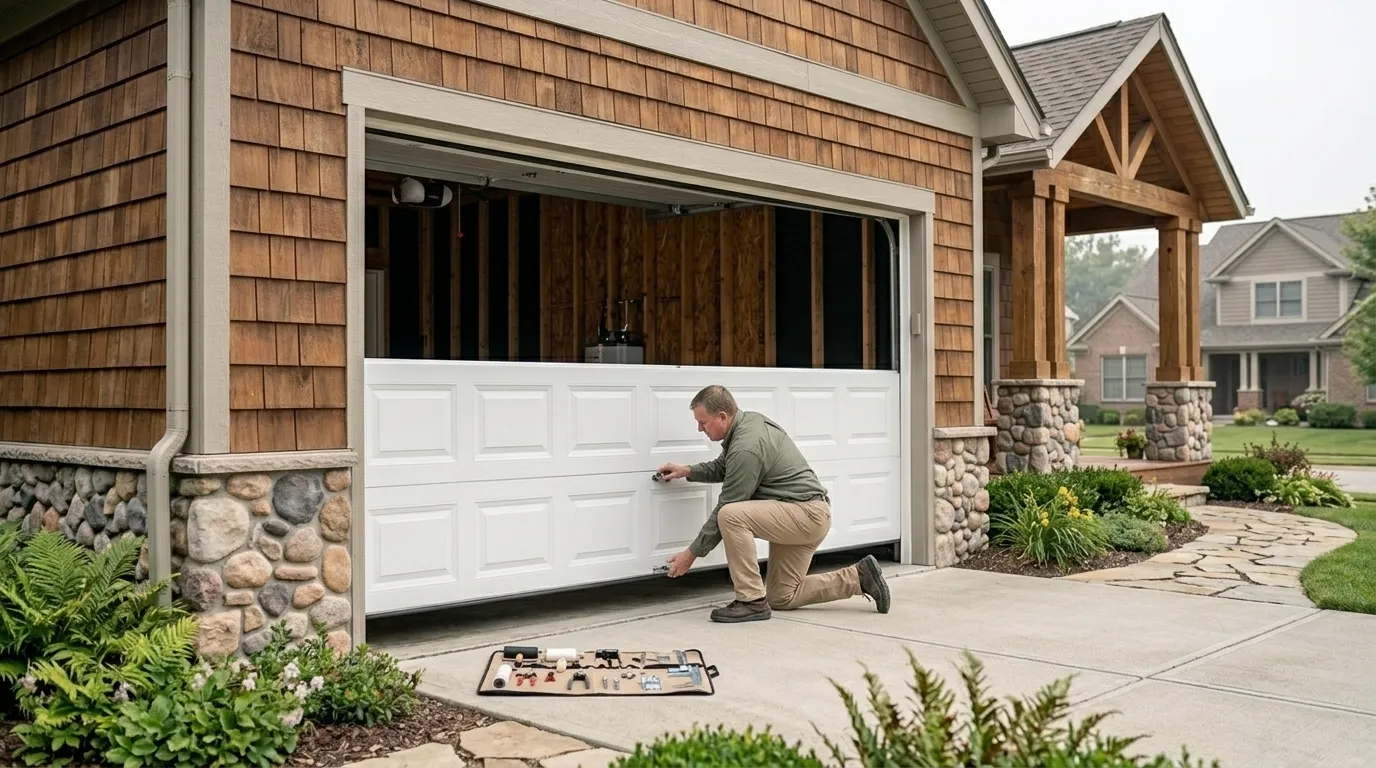
We don't have a fixed number to hand you here, and any page that gives you one without seeing your door is guessing. What we can tell you is what drives the number: whether you've got one spring or two, the size and weight of the door, and whether the drums or bearing plate came down with it. A single torsion spring job on a standard door is a different job than a double door with two springs and a bent shaft, and pricing them the same would be dishonest.
What we will say is that Chicago's housing stock, mostly built between 1938 and 1994 with a lot of it clustered in the 1960s and 70s, means we see a narrow band of spring sizes and mounting styles over and over. That repetition is good for you - it means the part is usually one we carry, not one we have to source. When a job needs a part off the truck versus one we have to order, that's the swing that actually moves your cost, more than anything else.
Ask for a number over the phone and we'll ask you a few questions back: door size, one panel or two, how old the opener is. That's not a stall. It's how you get a real quote instead of a guess.
What Is on the Truck
Because the housing stock across this service area runs so consistently through the 1960s and 70s, with the range stretching back to 1938 and up through 1994, we stock torsion springs sized for that era's doors as a default, not a special order. That's the practical upside of a city with this much housing built in a tight window - the parts problem mostly solves itself.
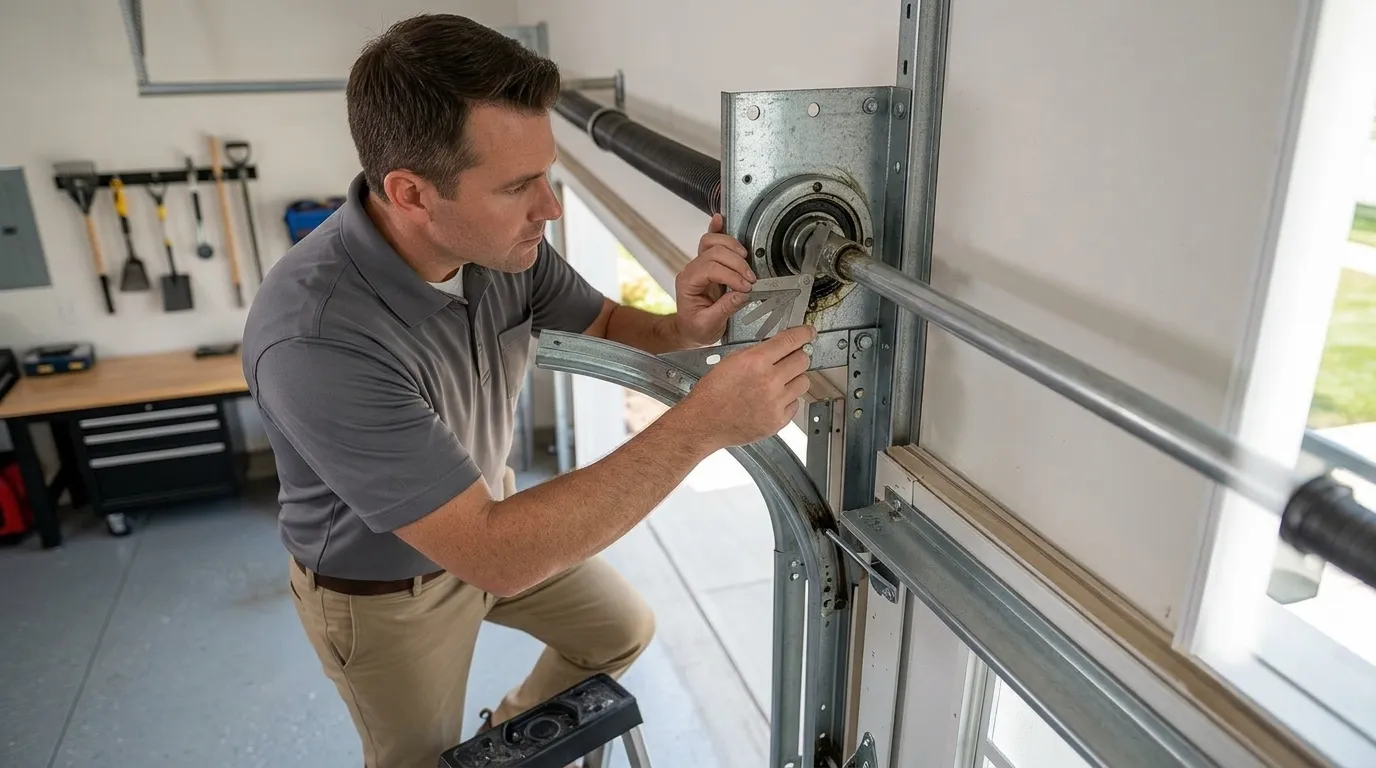
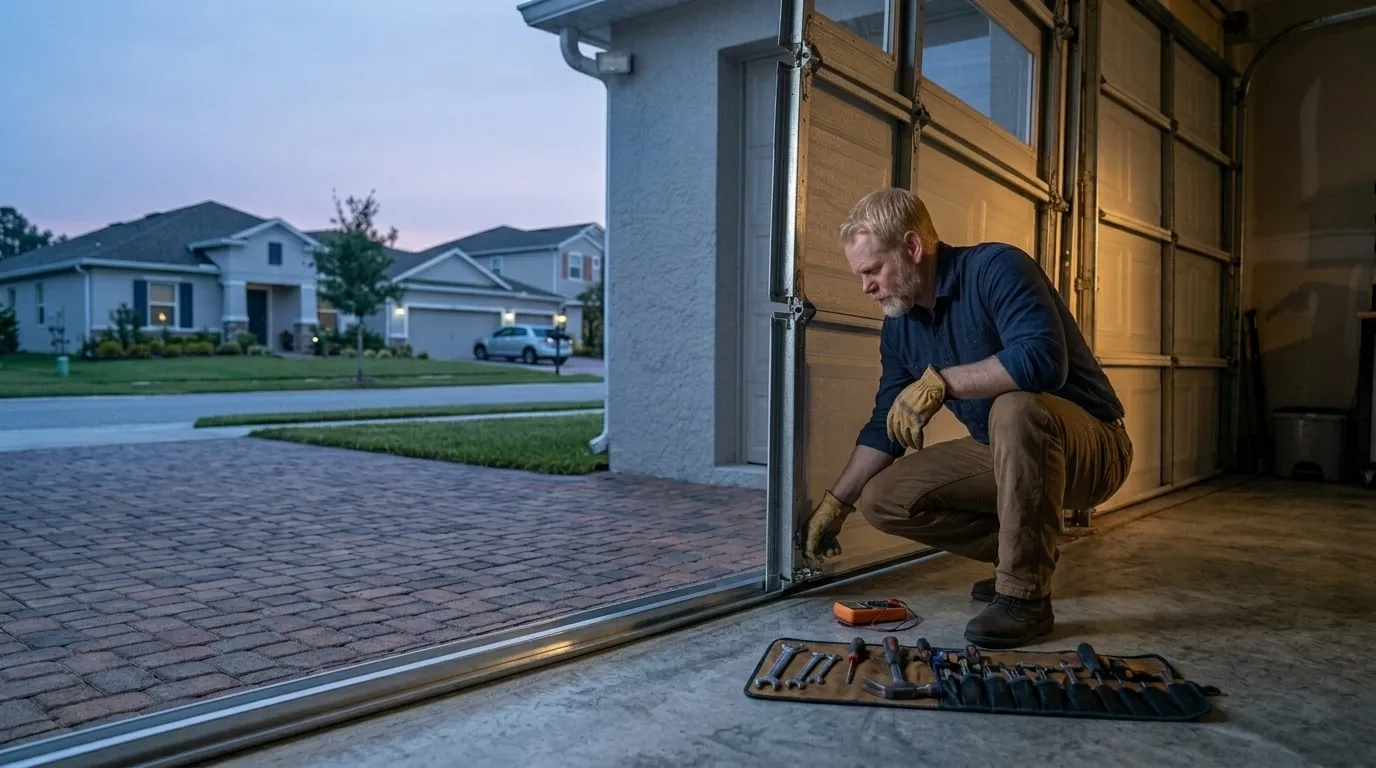
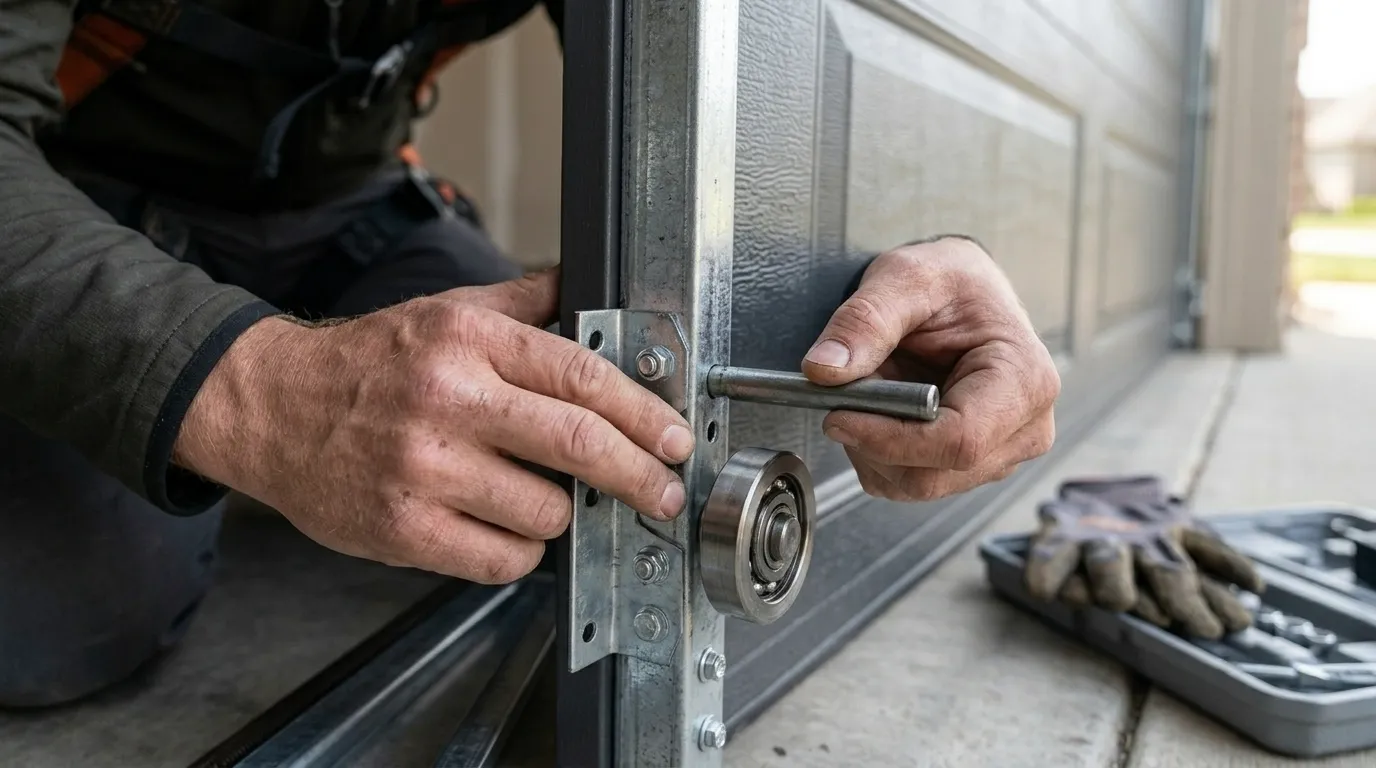
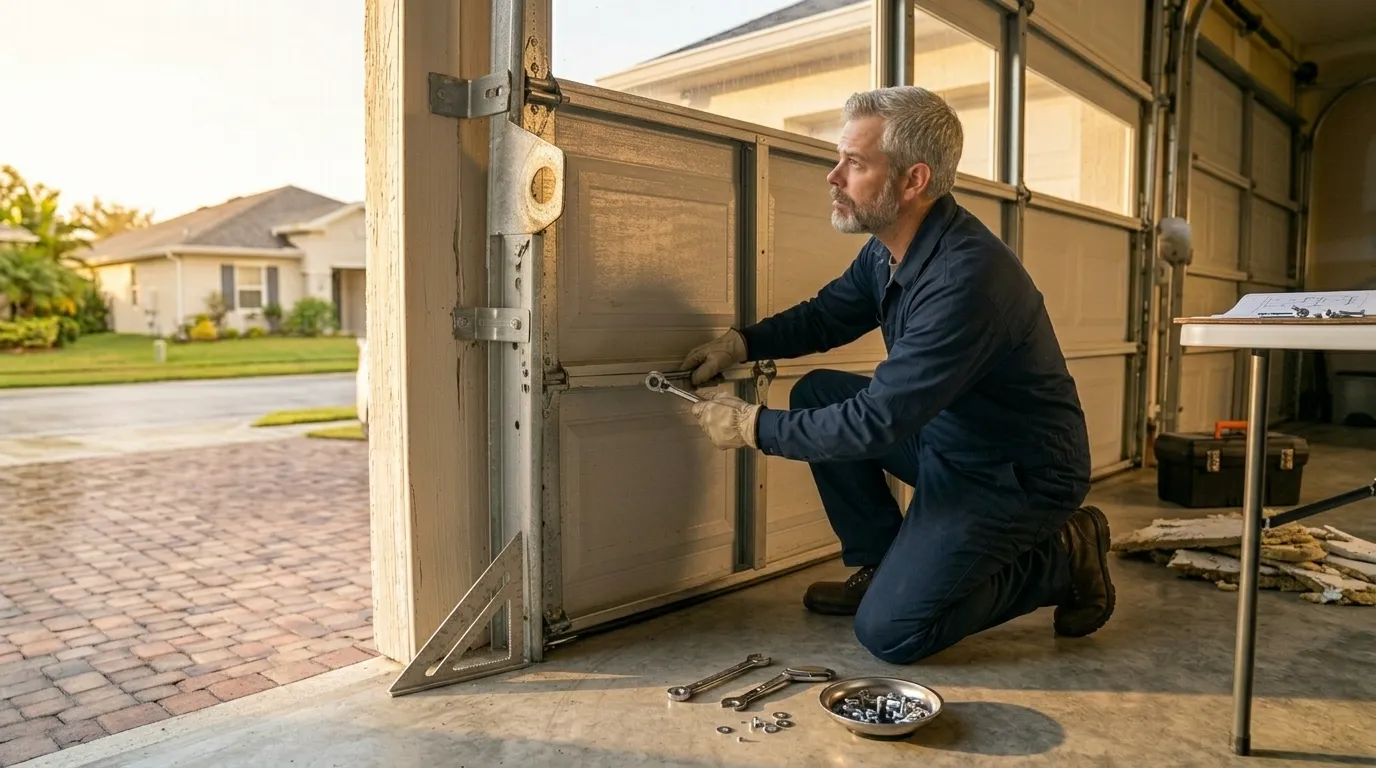
We carry springs in the common wire gauges and lengths for both single and double doors, along with the drums, bearing plates, and center brackets that usually go bad alongside a spring on an older setup. Cables get replaced with the spring as a matter of course, not billed as a surprise add-on later - a cable that's been sharing the load with a dying spring is usually close behind it.
What we don't carry is every obscure or discontinued spring size. If your door has hardware from a manufacturer that's out of business, or a size outside the standard range, that's a part we may need to order rather than pull off the truck. It doesn't happen often given the age and type of housing in this area, but it happens, and we'll tell you straight if your job is one of them instead of pretending otherwise.
What You Are Seeing
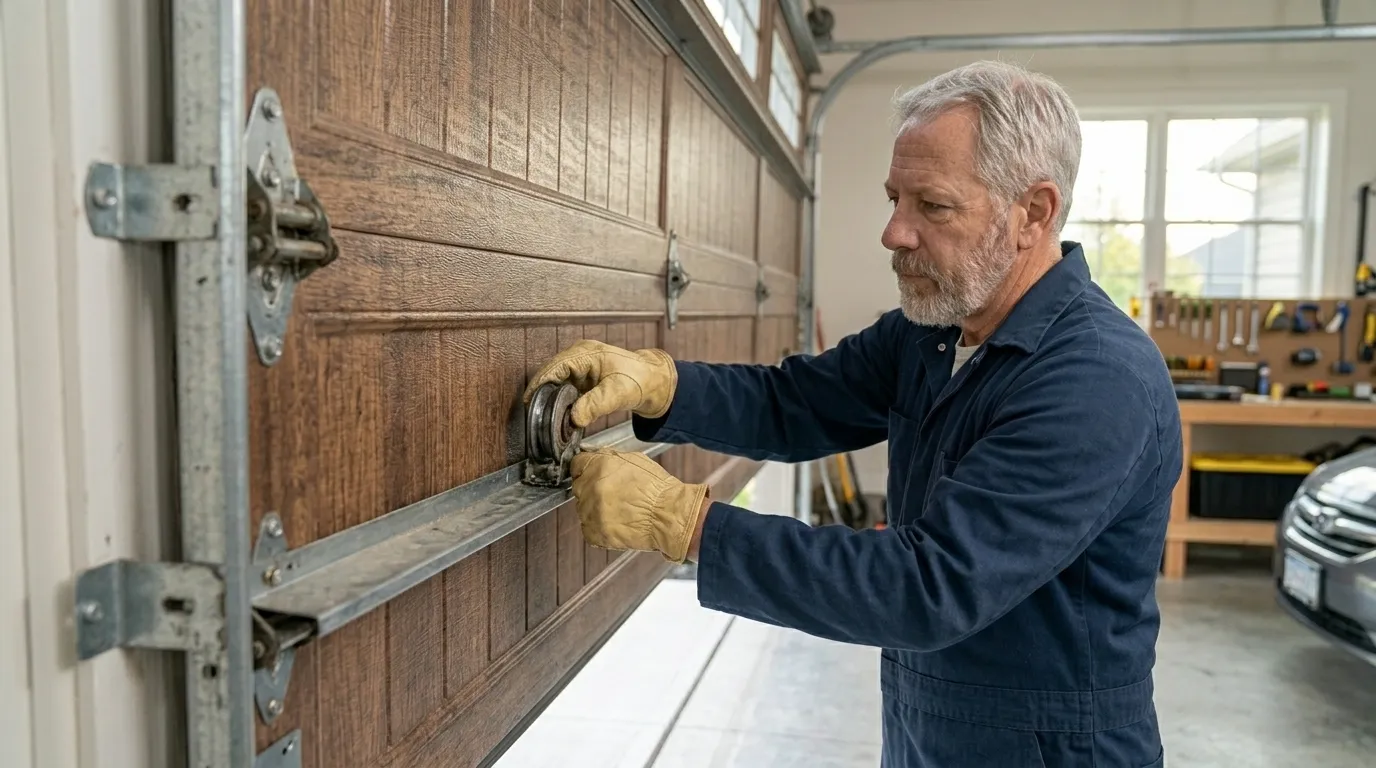
The classic sign is a loud bang from the garage, usually first thing in the morning or when it's been cold overnight, followed by a door that either won't lift or feels like it weighs three times what it did yesterday. That's a torsion spring letting go. If you look up at the shaft above the door and see a gap in the coil, or one half of the spring hanging loose while the other stays wound, that confirms it.
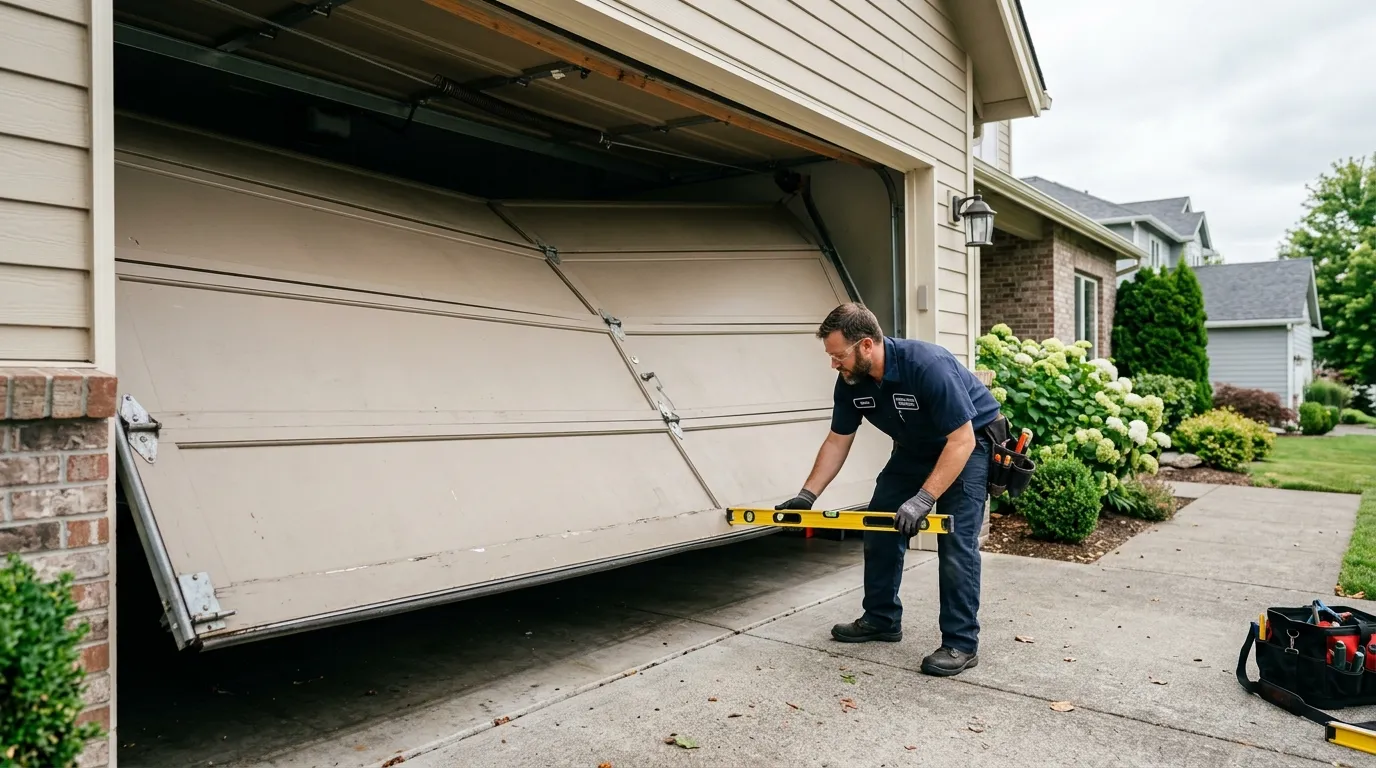
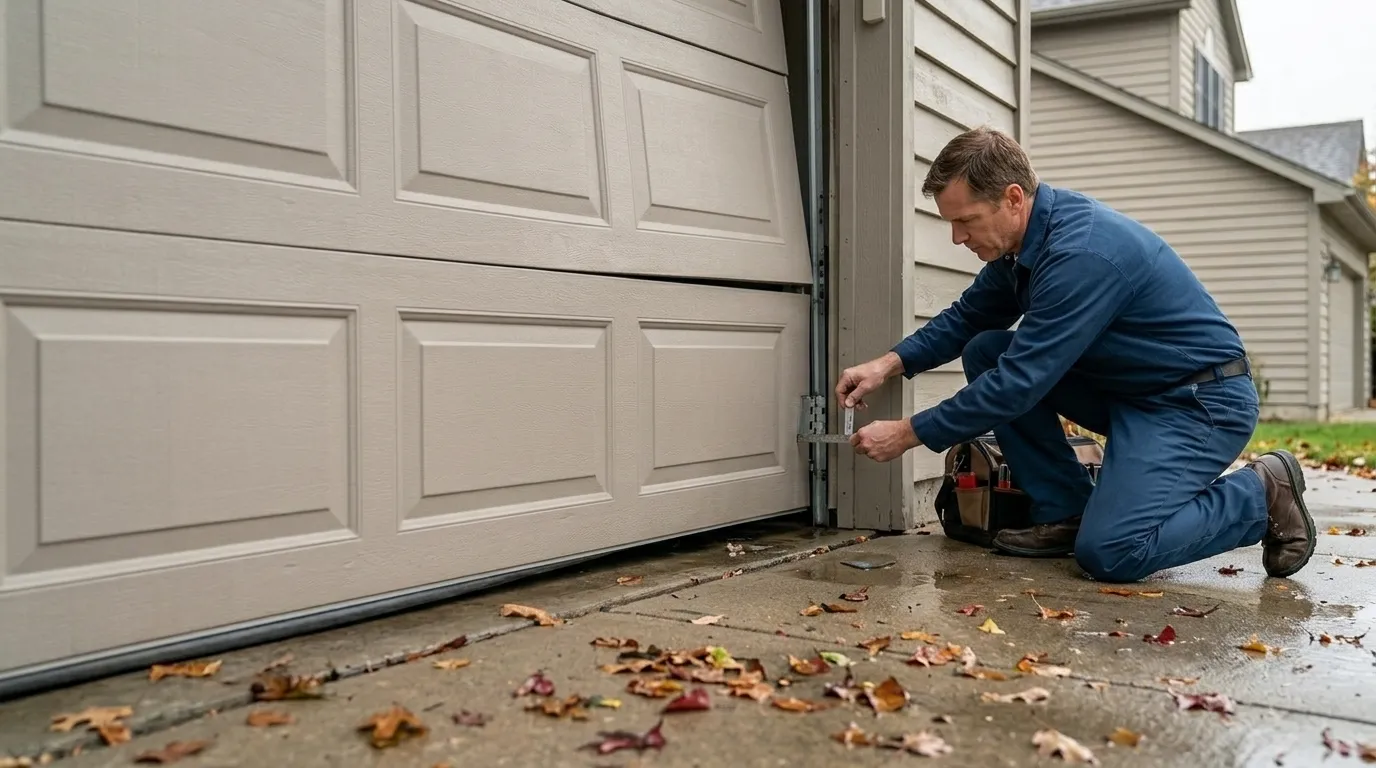
A slower version looks like this: the door starts closing unevenly, one side dropping faster than the other, or the opener strains and reverses partway through a cycle because it's fighting a spring that's lost tension but hasn't fully snapped. That's a spring on its way out rather than gone.
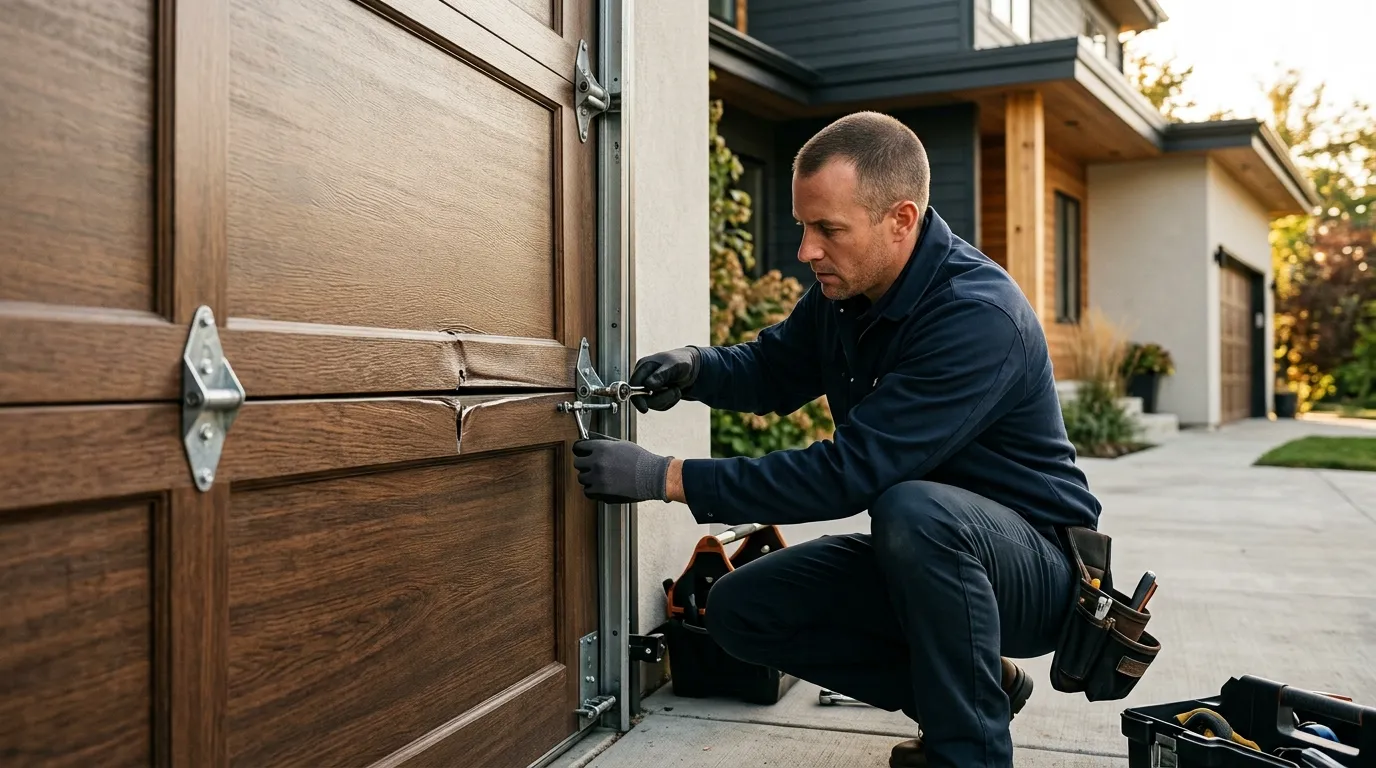
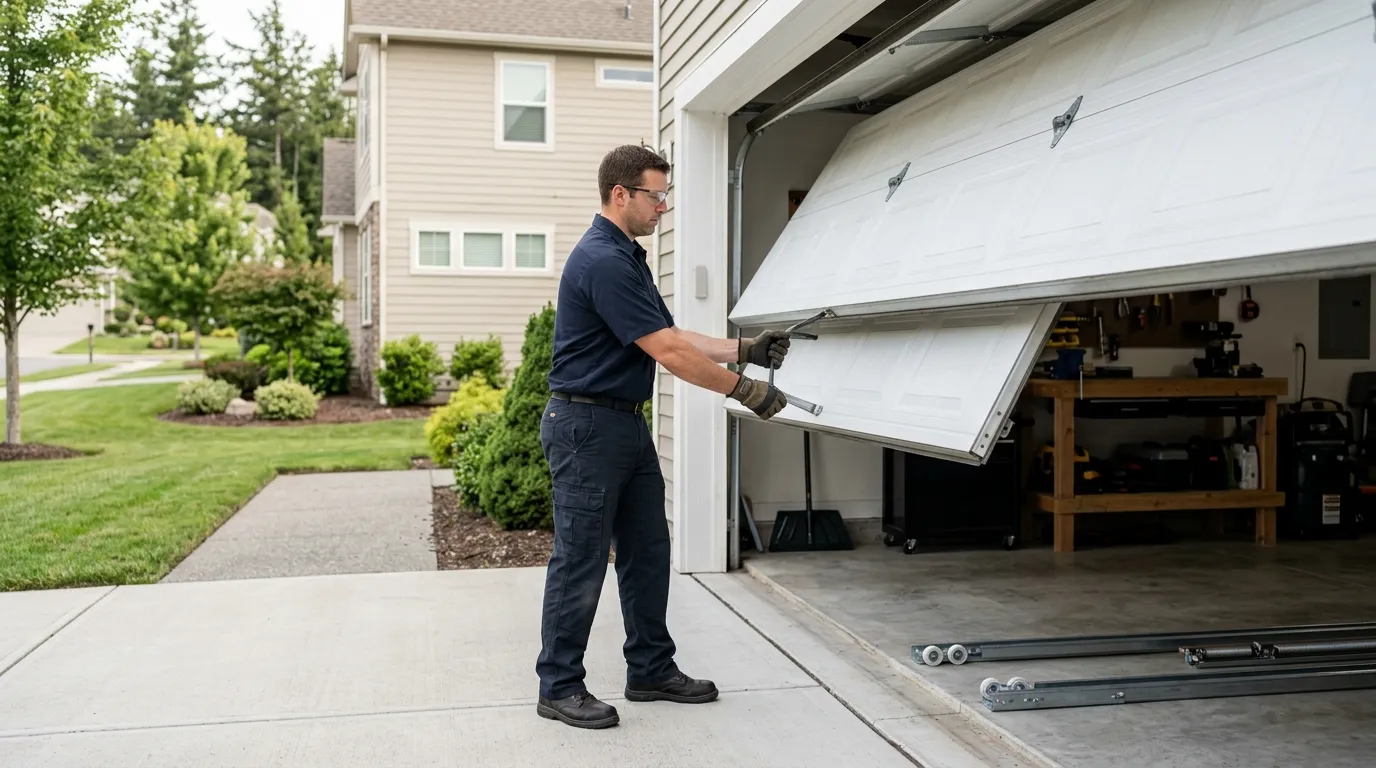
Either way, don't try to force the door open by hand and don't let the opener keep trying to power through it - that's how a bent track or a torn panel gets added to a spring job. One honest limitation: if the spring has already let go and the door came down hard on something, or the drums cracked on the way down, that's no longer a spring repair, it's a structural check first. We'll tell you which one you've got before we start.