
Where We Work, From Chicago Out
Chicago Garage Door Co works from a base in Chicago and travels out to and dozens of nearby areas. Find your town and what breaks there.
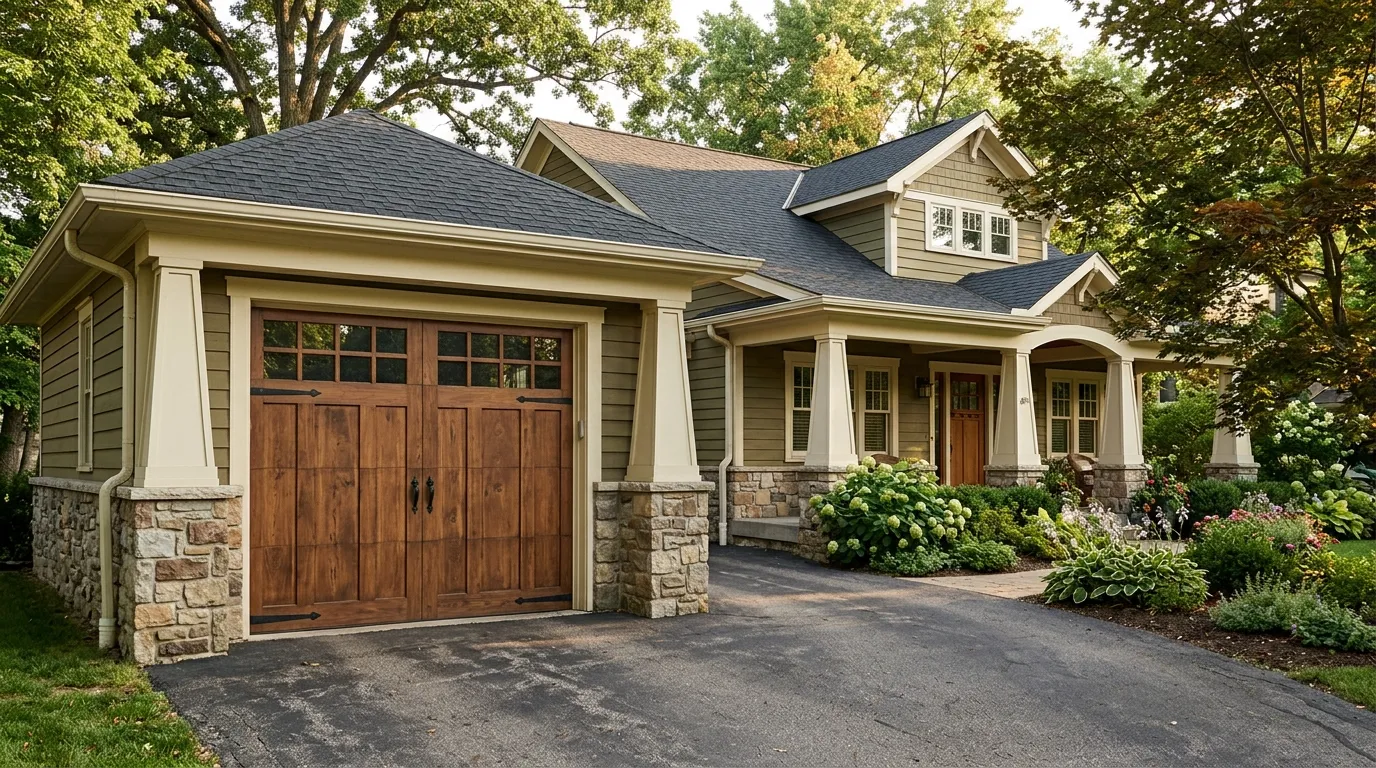
Chicago-area neighborhoods & nearby communities we cover
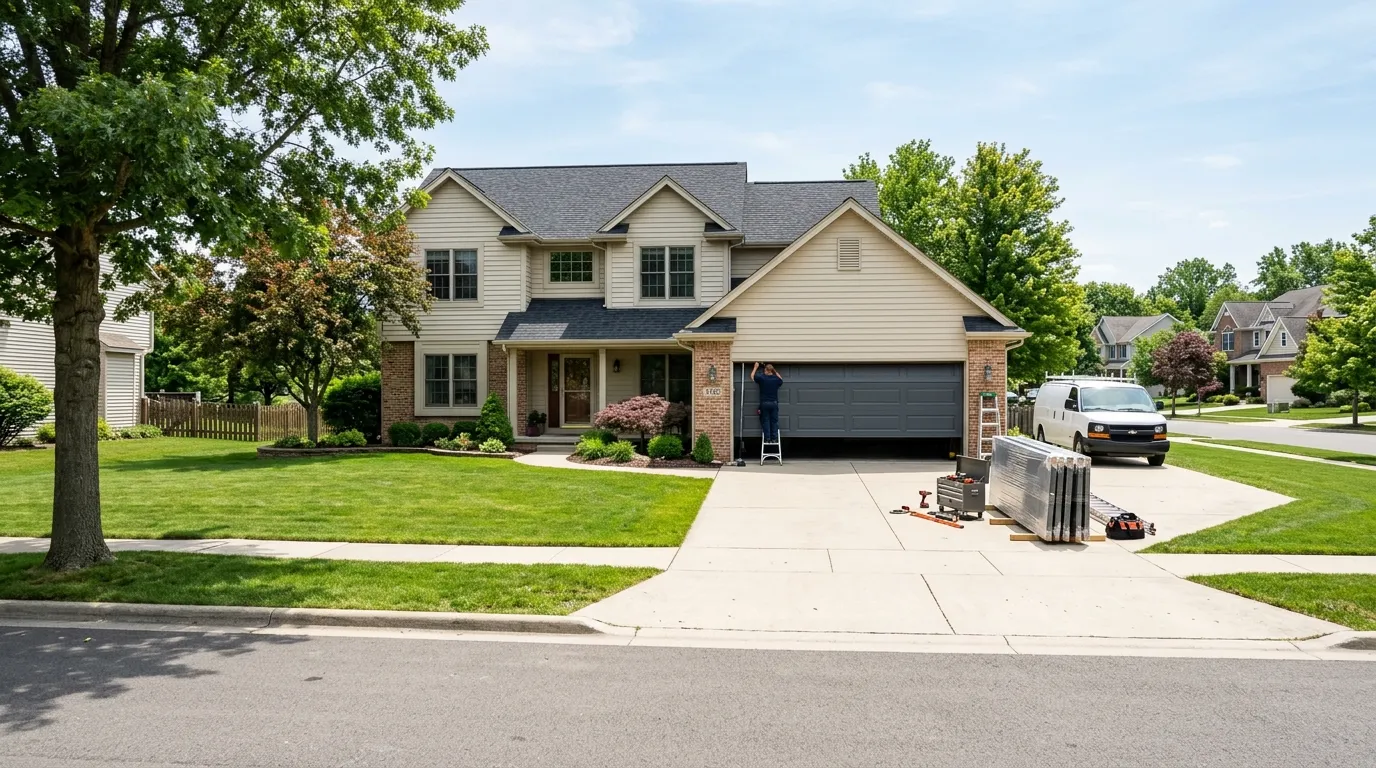
What We Fix Most Here
Most of the housing across this service area went up between 1938 and 1994, with the median build year sitting around 1964. That means a lot of doors and openers are on their second or third life, not their first. Blocks built in the 1960s and 70s make up the bulk of the 86 named areas we cover, and that generation of house usually shipped with a steel sectional door on extension springs, or an early torsion setup bolted straight to a header that was never sized for it.
The fault pattern follows the build year. Pre-1960s pockets tend to have narrower openings and older wood jambs that don't hold lag screws the way current framing does. The 60s-70s majority stock brings worn extension spring pulleys, frayed lift cables, and openers original to the house that are long past any parts support. Newer infill from the 80s and 90s usually means a torsion system that's aging into its first spring replacement now.
The cold climate here also plays into it. Steel contracts in winter, and a spring that's already fatigued from age is the one that lets go on the coldest morning of the year, not a mild one. We see more no-start calls and snapped springs from December through February than any other stretch.
Who Turns Up
We're based in Chicago and drive out from there. We don't have a branch or a crew stationed in any of the towns below - every job starts as a truck leaving Chicago, so travel time is part of scheduling, especially at the far edge of the list.
Closest in are the Chicago neighborhoods themselves: all within about a mile, followed by a mile or two out. Moving further sit around three miles, with four miles the other direction.
Out into the near suburbs are the closest at five miles, then at six, and a wide ring at seven to nine miles that includes Burbank. Past that run ten miles out, with Westchester at the eleven-mile edge of where we go.
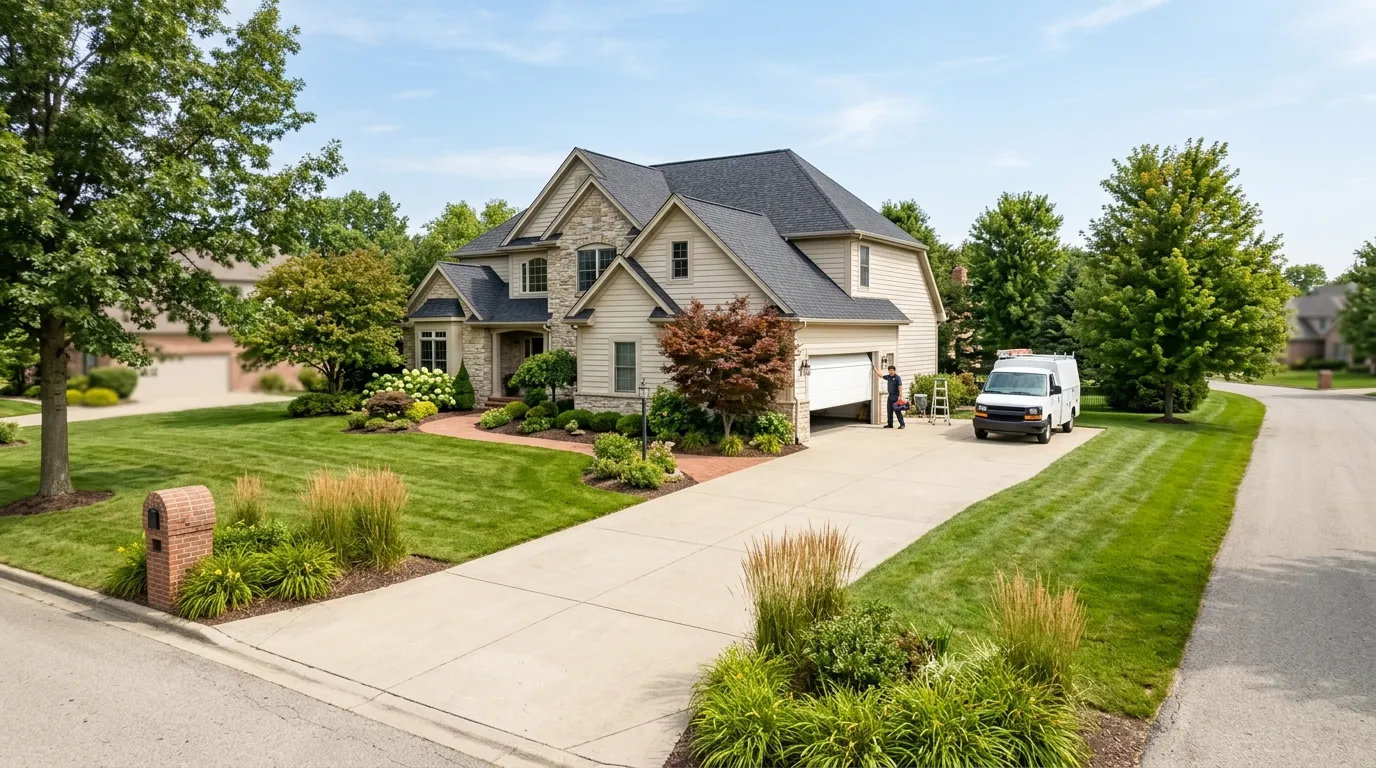
What It Costs and Why
We don't post flat prices on this page because the right fix depends on what's actually on your house - spring size, opener age, whether the track is bent or just out of adjustment. What we can tell you is what shapes the estimate here specifically. Median household income across the service area is $80,202, and with 461,017 households and 223,261 of them owner-occupied, most of the calls we take are homeowners deciding between a repair and a full door replacement on a house that's been standing since the 60s or 70s.
That decision usually comes down to age. A torsion spring failure on a door from that era is almost always worth repairing - springs are a known part, and the rest of the hardware is usually still sound. Where it stops making sense is a door with a rusted-through track, a warped panel, and an opener from the same install date; at that point patching one part just means the next part fails in six months, and we'll say so instead of running up a repair bill on a door that's done.
Cold-climate wear adds a variable too: steel hardware here works harder in winter than it would somewhere with a milder band, and that shows up in shorter spring life on older systems. If your job needs a part with a longer lead time, we'll tell you that before we start, not after.
What to expect
Frequently asked
Straight answers about garage door repair in Chicago. Still unsure? Ask us directly.
How old is a typical garage door around here?
Most houses in this area were built between 1938 and 1994, with the bulk from the 1960s and 70s, so the garage doors and hardware we find often date back decades. That means original torsion or extension spring setups, older track profiles, and openers that predate current smart-home standards.
Do you come out to my suburb?
We cover the neighborhoods close to the shop plus the near suburbs, from at five miles out to around eleven miles. If your town is in that ring, we're already running calls there.
Is it cheaper to repair or replace my door?
It depends on what's actually broken. If springs, cables, and rollers are worn but the frame and track are still square, repair usually costs less over time. If the door is warped, rusted, or the track has been bent repeatedly, replacement is the better spend even at a higher upfront cost.
What if you don't have the part on the truck?
On older or nonstandard doors - common given the 1938-1994 housing stock here - a part sometimes has to be ordered rather than pulled off the truck. We'll tell you that up front, along with what it means for timing, instead of guessing and calling back later.
Ready to get your garage door sorted?
Tell us what it’s doing and where you are in Chicago - we’ll take it from there.