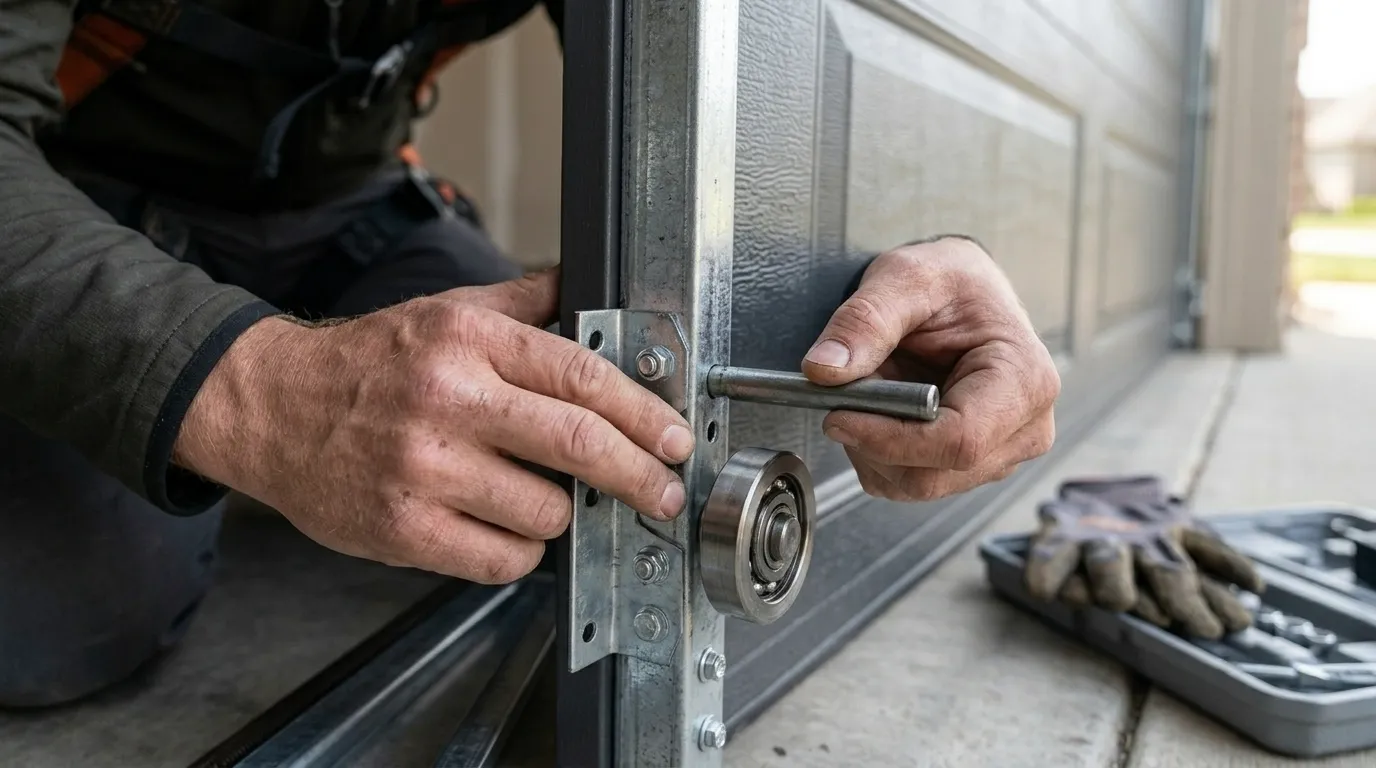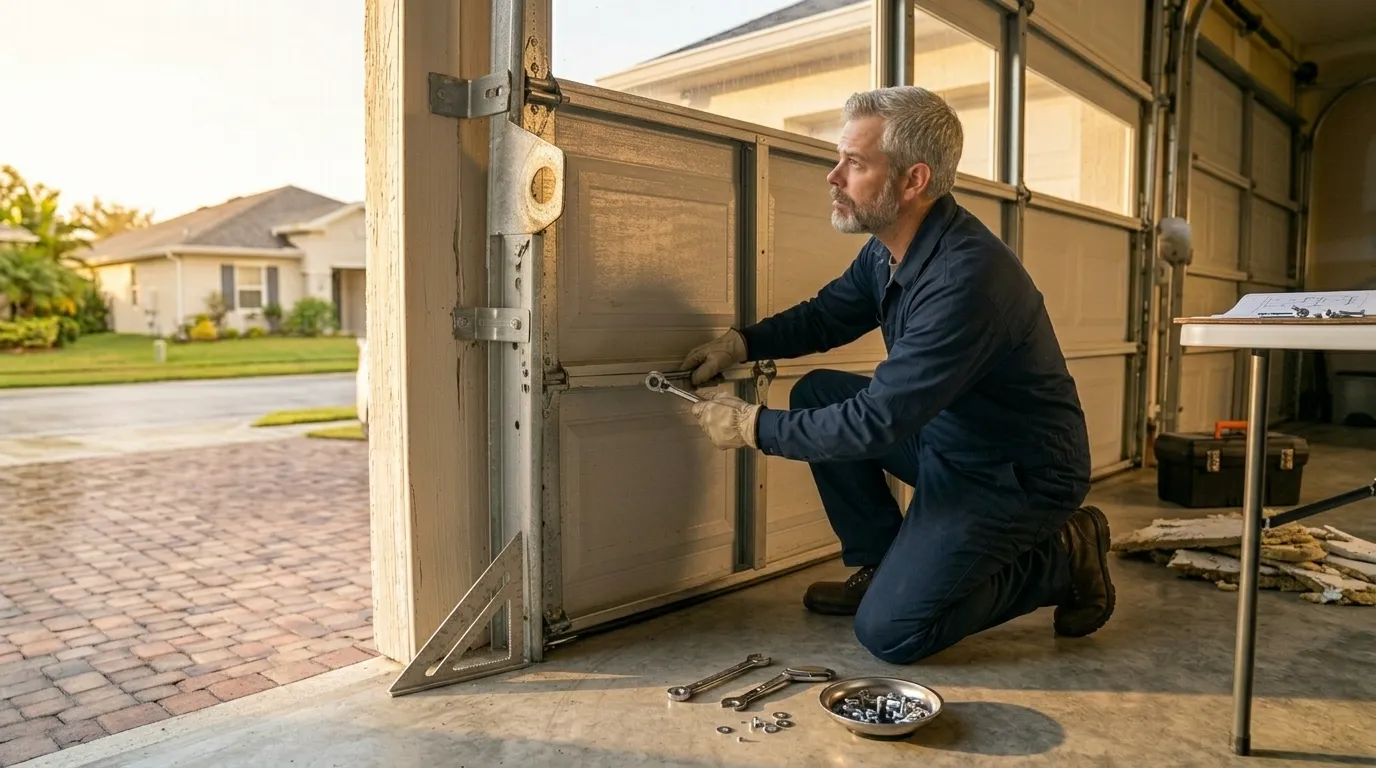
What You Are Seeing
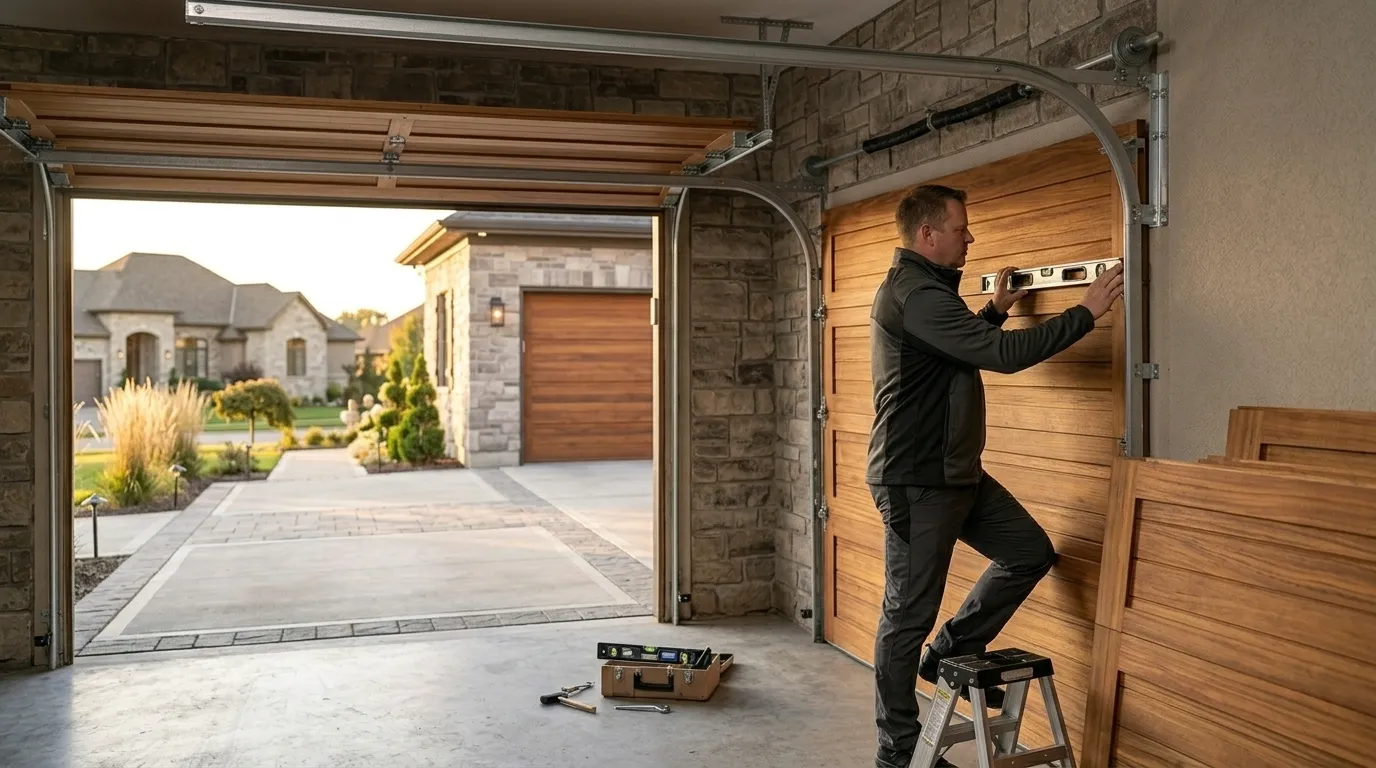
Lemont's houses skew newer than most of the towns we cover. The median year built here is 1994, a full three decades past the 1964 median that describes the housing stock across the rest of the service area, where most homes went up between 1938 and 1994. That gap matters more for openers than for the doors themselves. A door panel from the 1960s can outlast three openers. But an opener installed the year a house was built is a specific, aging machine, and if your house here went up anywhere near 1994, there's a real chance the opener bolted to your ceiling is the same one the builder put in. That means gear sets worn thin, drive screws stripped from three decades of use, and logic boards running on capacitors that don't hold a charge the way they used to. You're not dealing with a random mixed bag of retrofit brands the way you would in an older block of the city. You're dealing with one aging original unit, on borrowed time.
The DIY Question
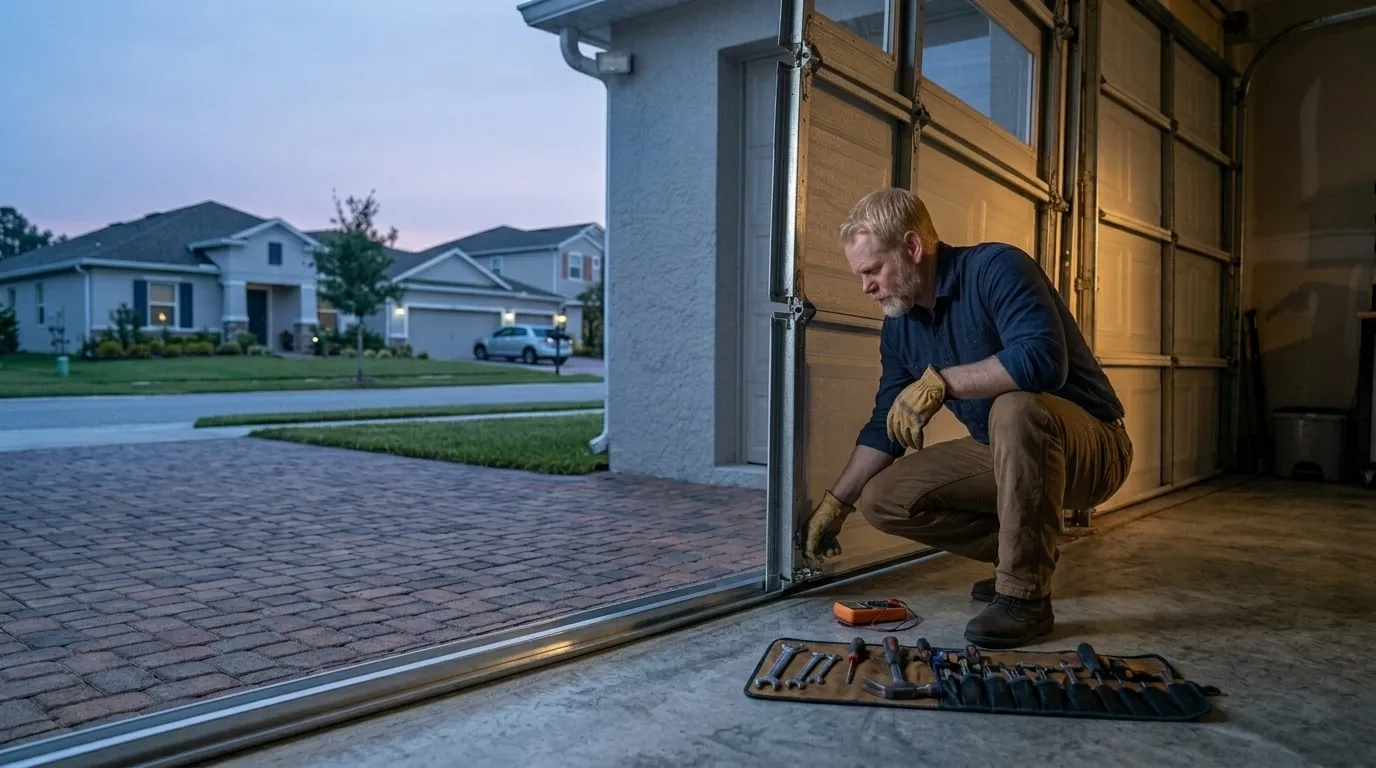
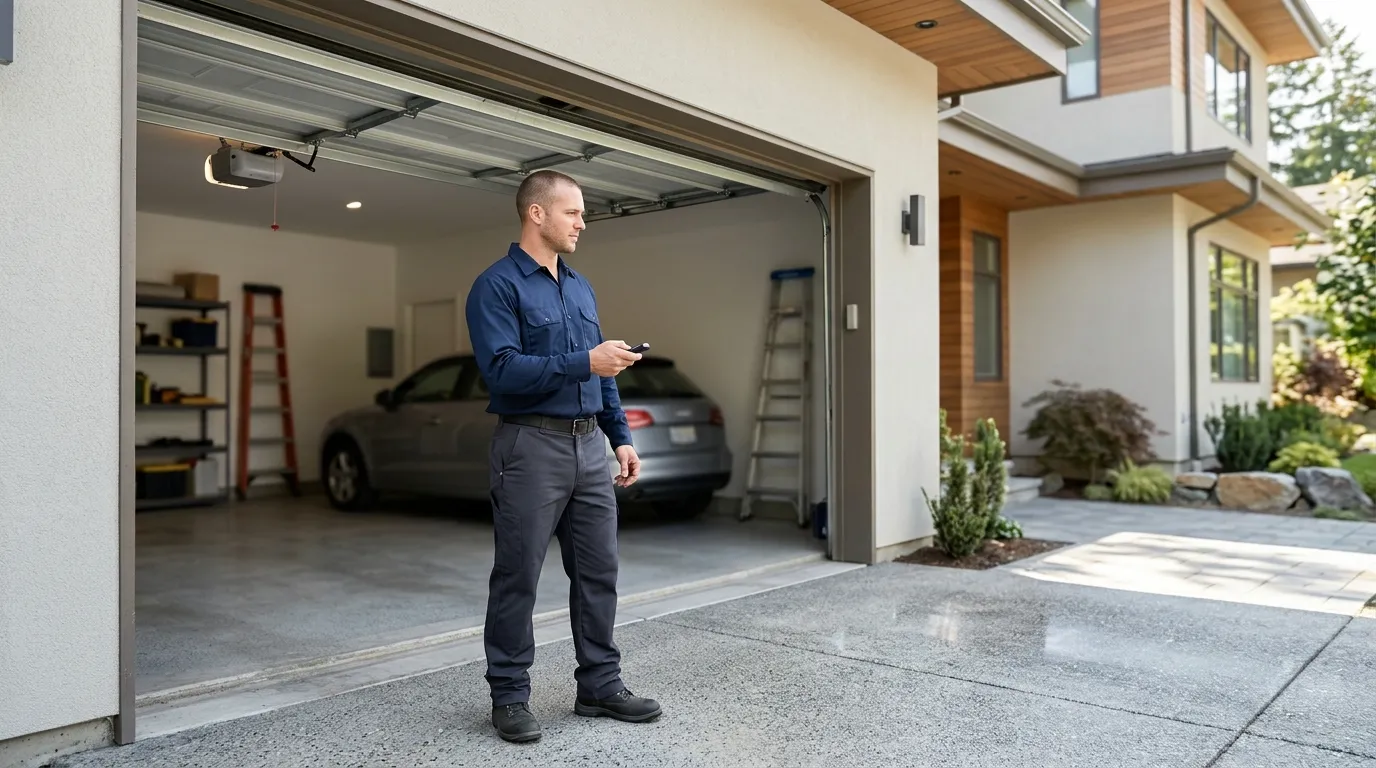
Some of this you can handle yourself. Wiping down and re-aiming the two safety sensors at the base of the track, checking that nothing's blocking their line of sight, reprogramming a remote or keypad code - all fair game with a screwdriver and ten minutes. Where we'd tell you to stop: pulling the motor housing on a unit this old to chase a logic board fault, or swapping gears on a drive mechanism you can't identify. Here's the honest limitation - openers built in the low-to-mid 1990s are old enough now that some manufacturers have discontinued the exact circuit boards and gear kits they used. We carry what we can, but on some units, once the board is dead, the repair math tips toward replacing the whole opener rather than hunting a discontinued part. We'll tell you straight when we're standing in front of it - not guess over the phone.
The Cost of This Job
We don't quote a number sight unseen, but here's how the decision usually breaks down. Median household income across Lemont runs $126,100, well above the $80,202 median for the wider service area, and that shows up in what gets fixed versus what gets replaced. On a newer opener with a few years left in it, a sensor realignment or a capacitor swap is a small job. On an original unit already pushing 30 years, most homeowners here decide a repair that buys another year or two isn't worth it against a new belt-drive unit that'll run quiet for the next 15. That's not a sales pitch - it's just the math on a machine that old. We'll walk you through both options and the actual cost of each before touching anything.