Serving Chicago, IL & nearby
(708) 630-7529
Chicago, IL

Garage Door Installation for Westchester's 1957-Era Homes

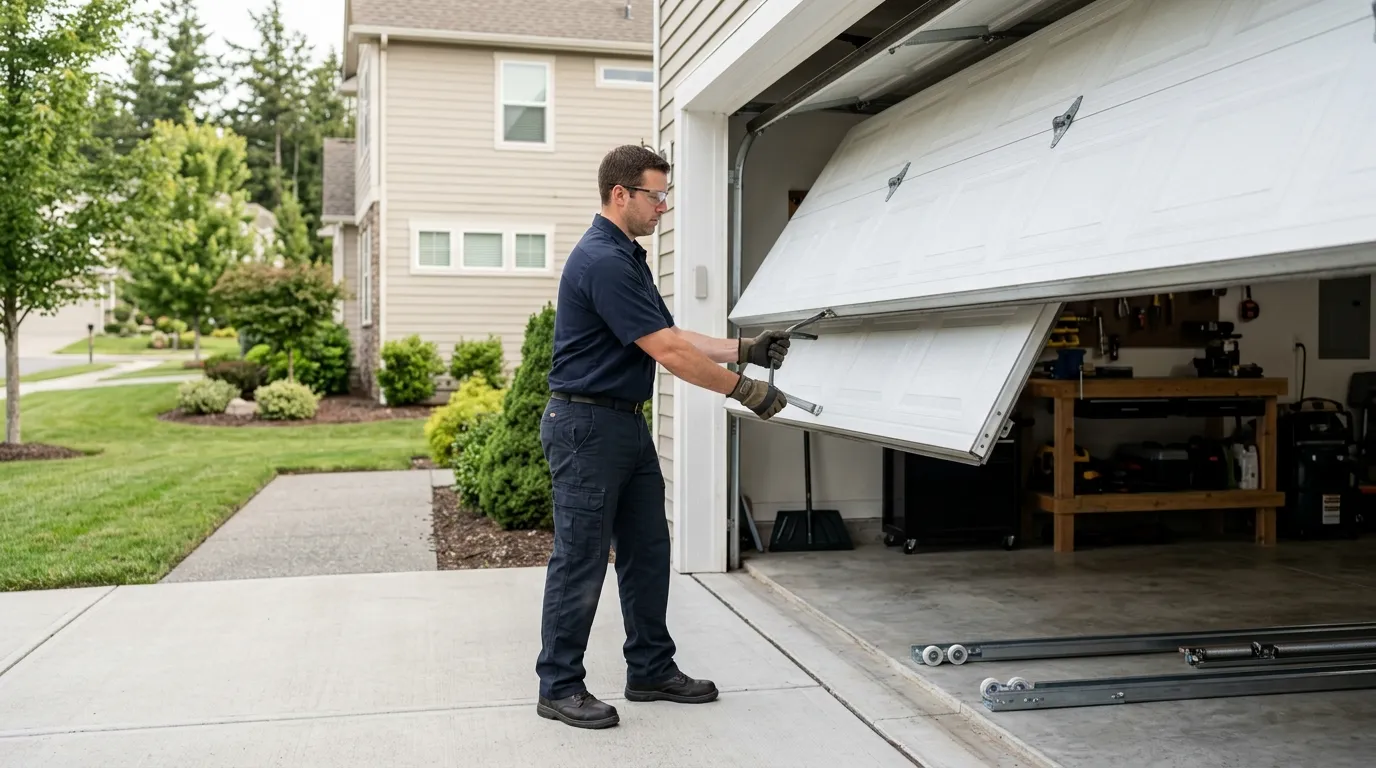
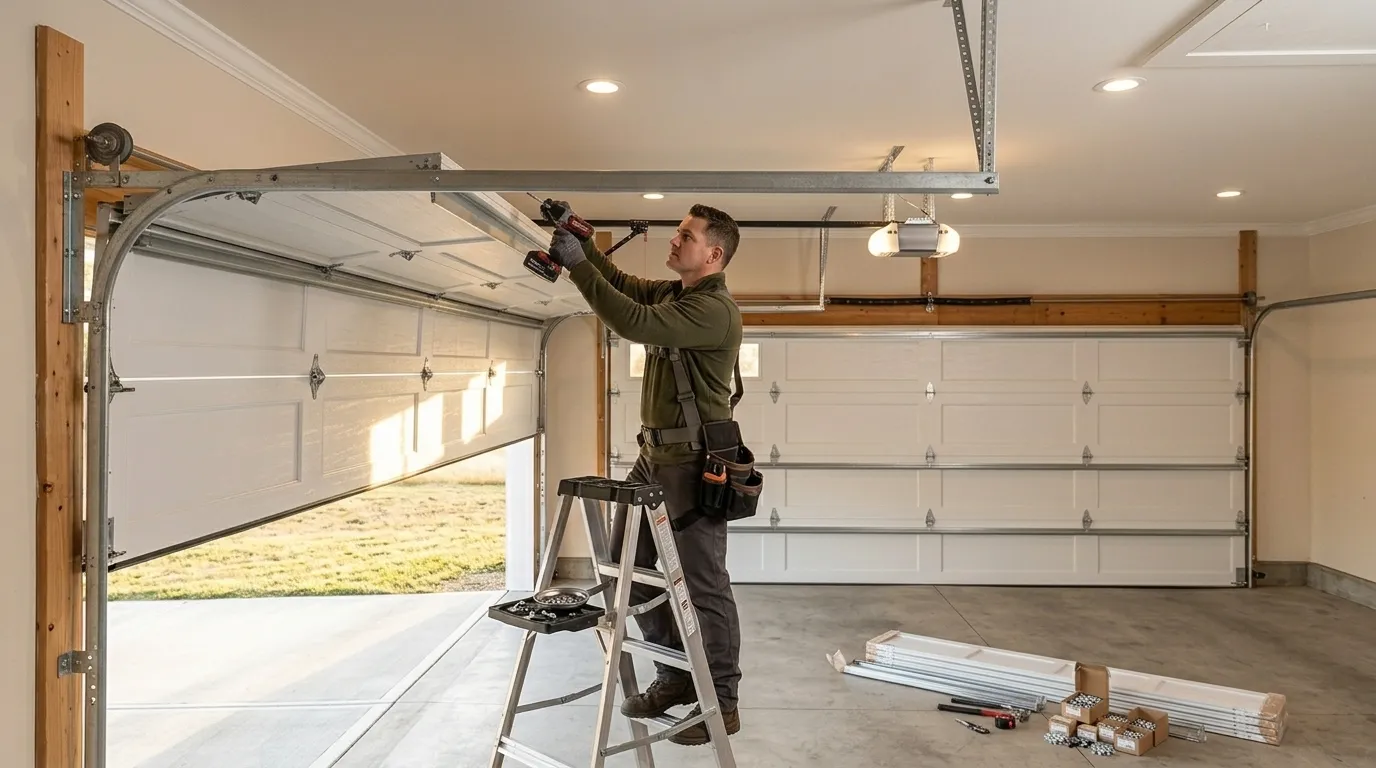
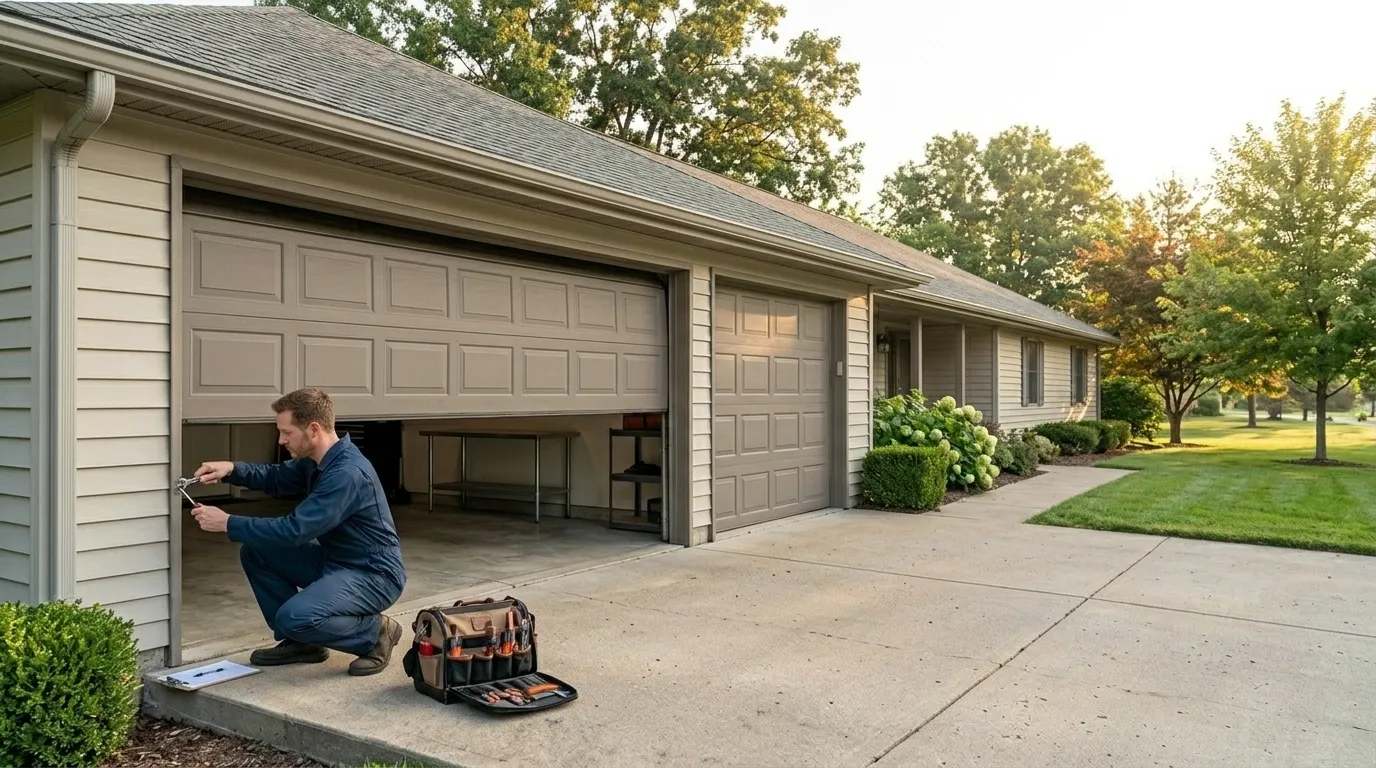
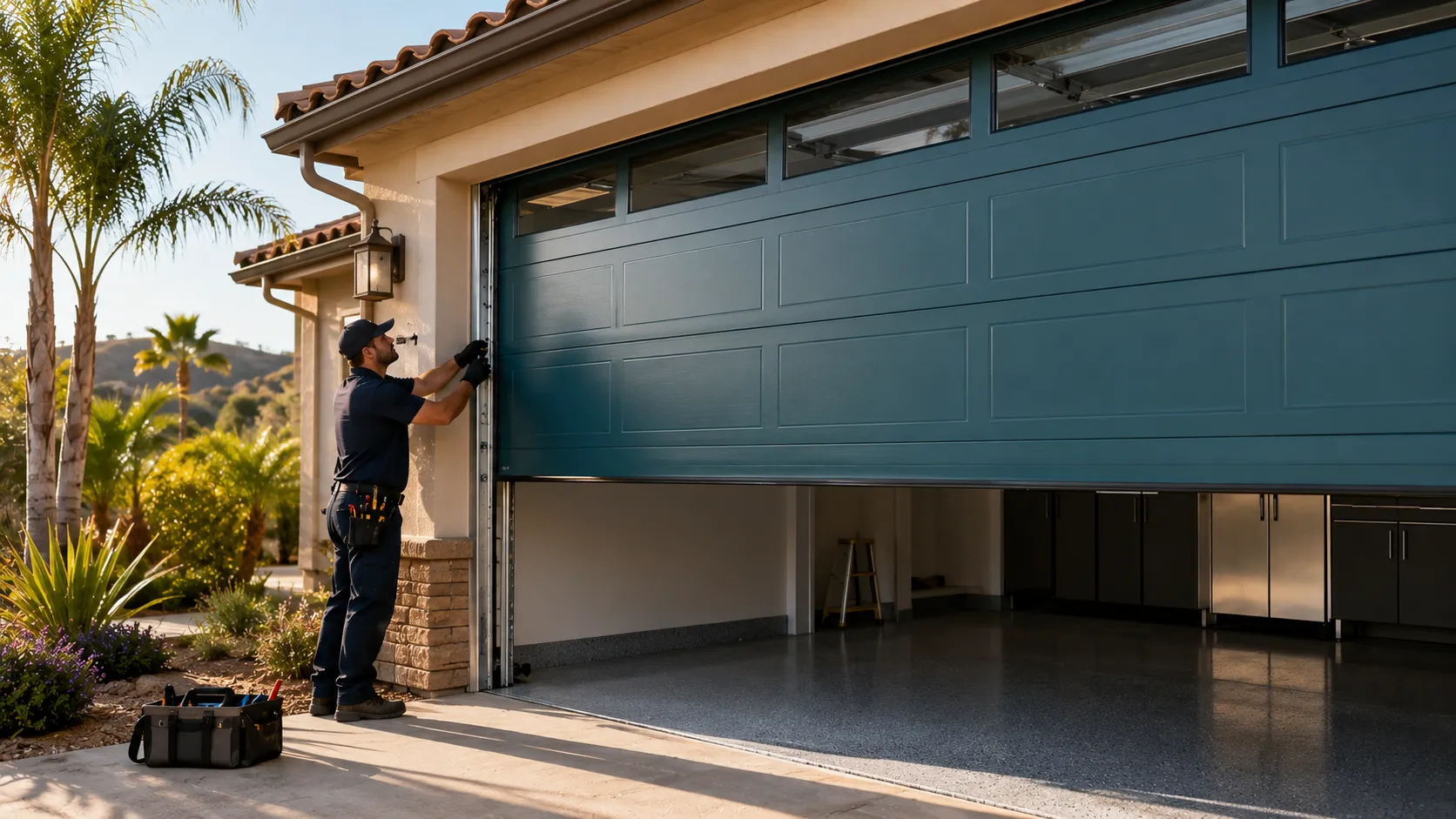
New garage door installation in Westchester, IL, where most homes date to 1957. We size doors and springs to fit original openings and heavier hardware.

Garage Door Installation for Westchester's 1957-Era Homes
Chicago, IL
8 services
8 service areas
Diagnosis first, then the fix

The Complications

Most houses in Westchester went up around 1957, right in the middle of the postwar build-out that put a single steel or wood sectional door on a house with a garage sized for a car a foot narrower than what people drive now. That single fact drives most of what makes installation here different from a new-construction job. The opening itself is often out of square by an inch or more after sixty-some years of settling, the header may have less clearance than a modern door needs for its track radius, and the jamb material is usually original lumber, not the treated stock a door track wants to lean on. None of that stops a new door from going in. It just means we measure the actual opening instead of trusting what the old door's dimensions suggest, and we plan for shimming or jamb repair before the new track goes up. Skip that step and you get a door that closes crooked or a track that pulls loose from the wall within a year. On a house this age, the install is really two jobs: fixing what six decades did to the opening, then hanging the door.

What Causes It Around Here

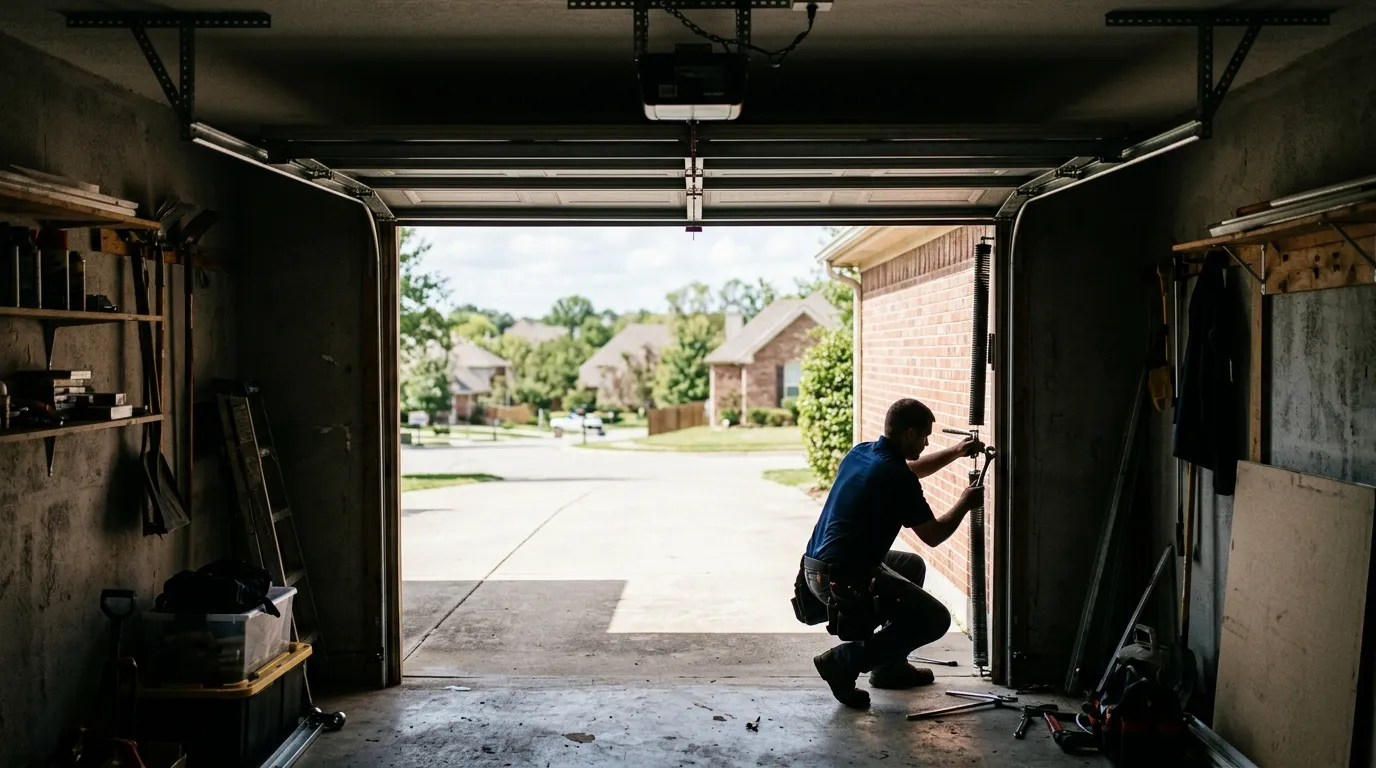
Two things stack on top of each other in Westchester: the age of the openings and a cold-moderate climate that puts real freeze-thaw cycling on wood jambs and concrete aprons every winter. A door built to 1957 standards was matched to a single torsion spring rated for a heavier wood-panel slab, not the lighter steel or insulated doors sold today. Swap in a modern door without re-rating the spring and the door either won't stay put on the track or slams down on its own weight. On top of that, decades of frost heave under the slab tilt the floor of the opening just enough that a door which seals fine at one corner gapping at the other by a quarter inch is common. With 7,084 households in town, most raised in that same late-1950s push, the same combination of undersized spring, tilted slab, and tired jamb shows up house after house. It isn't a one-off; it's the pattern for this build era, and it's why a straight swap of old door for new one is rarely the right job here.

How Long It Takes

The honest answer depends on what the opening looks like once the old door comes off the wall, not on the door itself. A clean opening with square jambs and a level slab is a straightforward day's work: old door out, new track and springs matched to the new door's weight, opener reattached if it's being reused. An opening that needs jamb shims, a header extension for a taller door, or slab leveling at the threshold adds real time on top of that, and on a house from this era we plan for the possibility rather than promise around it. Median household income in Westchester runs $103,561, well above the $80,202 figure for the wider area we cover, and that shows up in the choice of door - more owners here go for insulated steel or wood-look composite doors, which are heavier than the original slab and change the spring math again. We'd rather walk the opening first and give you a number based on what's actually there than quote a time before we've seen the jamb.

The DIY Question

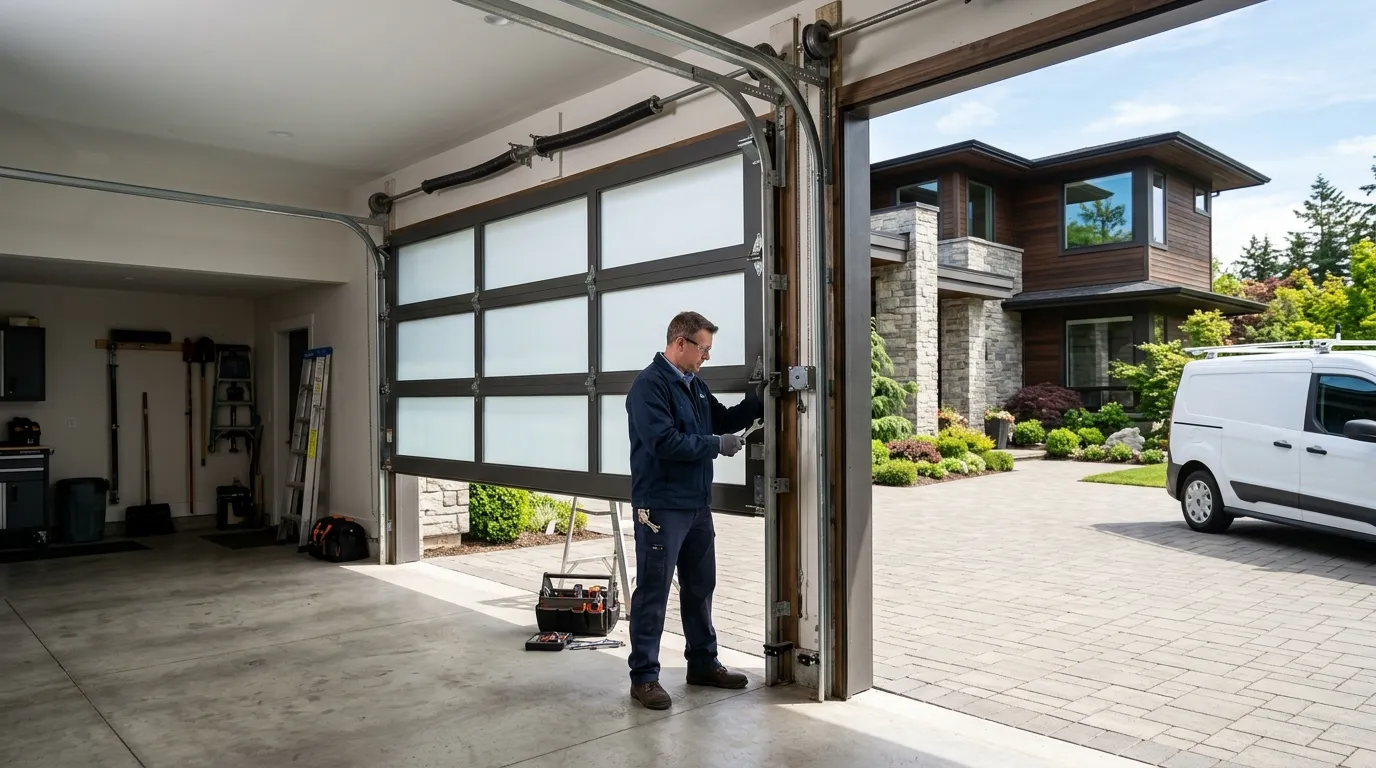
Swapping a garage door yourself is possible if the opening is square, the jamb is sound, and you're only replacing a door for a door with a matching spring already sized to the new weight. On a house built around 1957, that's the exception, not the rule. The spring on an old door here was almost always sized for a heavier wood panel, and mounting a new insulated steel door on that same spring either leaves the door too heavy to lift by hand or, worse, leaves a torsion spring under more tension than it was built to hold. That's not a place to guess. We also don't stock every legacy track width on the truck - some drive-side brackets from this era need a special order, and we'll tell you that up front rather than force a fit that won't hold. If your opening is already square and the jamb is solid, a straight door swap with a properly re-rated spring is a job we're glad to quote. If the opening needs work first, that's worth knowing before the new door shows up.
How it works

From “it’s stuck” to “it’s fixed”

1
Tell us what’s wrong - Chicago garage door service

Tell us what’s wrong

Describe the symptom - won’t open, loud bang, opener runs but the door won’t move.

2
On-site diagnosis - Chicago garage door service

On-site diagnosis

A technician tests the door under power and by hand and finds what actually failed.

3
Clear, up-front plan - Chicago garage door service

Clear, up-front plan

You get the fix that’s needed and what drives the cost - before any work starts.

4
Repaired & tested - Chicago garage door service

Repaired & tested

The repair is done, the door is set true and tested, and the work area left clean.

Serving Chicago, IL - tell us what your door’s doing and we’ll take it from there.

How we work

What to expect

Diagnosis firstEvery visit starts by finding what actually failed - not a pre-written parts list.
The right part for the doorSprings and openers matched to the door’s weight and age, so the fix holds up.
Straight answersWhen a repair makes more sense than a replacement - or the reverse - you hear it plainly.
Clean, careful workTension released safely, hardware set true, the door tested under power before we leave.
2,664,452Residents in Chicago
8Garage door services
8Neighborhoods & suburbs
ILServing Chicago, IL
Questions

Frequently asked

Straight answers about garage door repair in Chicago. Still unsure? Ask us directly.

Will a new door fit my original 1950s-era opening without changes?

Sometimes, but don't assume it. Openings from this build era have often shifted out of square over the decades, and headroom clearance for a modern door's track radius can be tighter than it was for the original slab. We measure the actual opening before quoting so you know upfront whether jamb or header work is part of the job.

Do I need a new spring if I'm just replacing an old door?

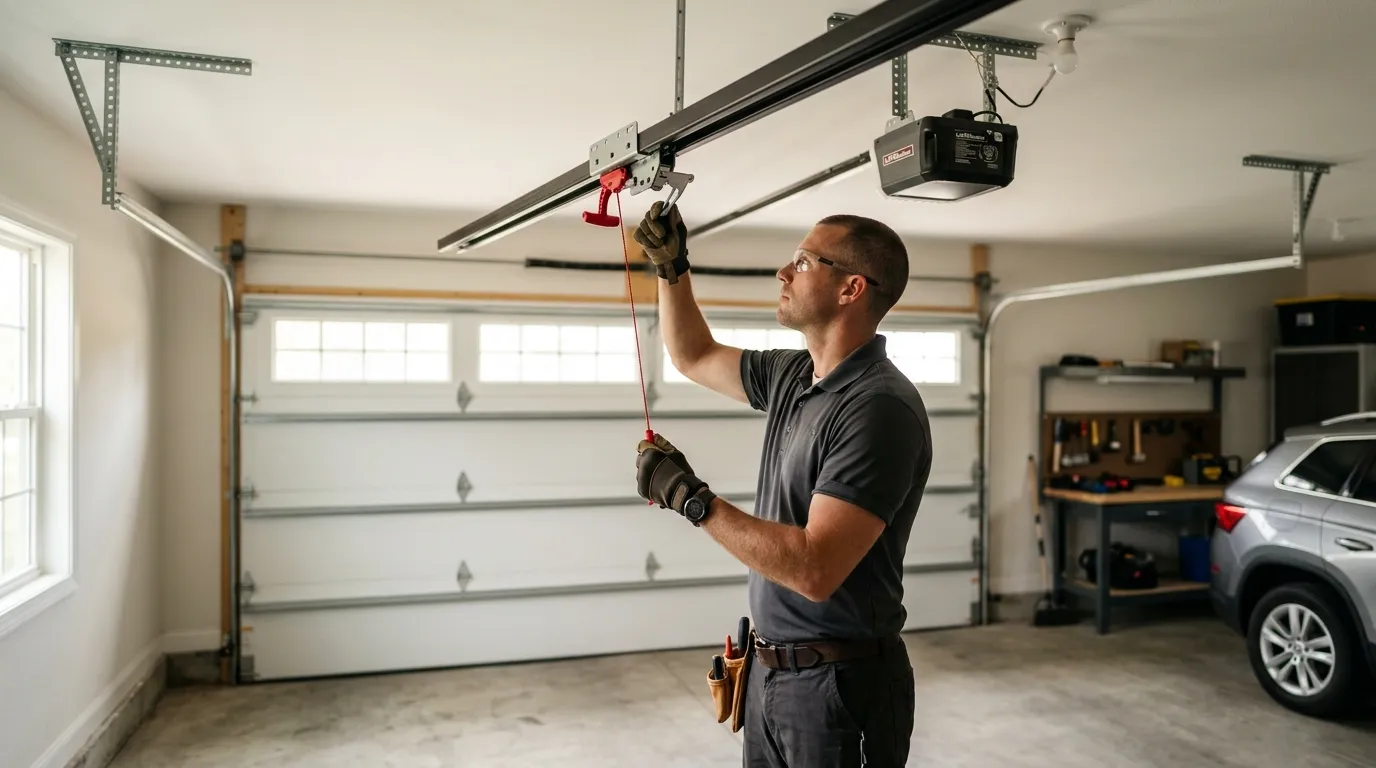
Almost always, yes. Springs from houses built around 1957 were rated for a heavier wood-panel door, not today's lighter steel or insulated doors. Reusing the old spring on a new, lighter door usually means a door that won't stay in position or a spring under the wrong tension for its new job.

How far out does Chicago Garage Door Co travel for a Westchester install?

Westchester sits about 11 miles from our Chicago base, and we plan the drive into the visit like any other install stop on this side of the metro. We don't run a branch office in town, just a scheduled truck for the job.

Ready to get your garage door sorted?

Tell us what it’s doing and where you are in Chicago - we’ll take it from there.

Request a QuoteCall