The Complications
When a spring goes on a Westchester door, it usually goes the way springs go on houses this age: all at once, with a bang that sounds like a car backfiring in the garage. One torsion spring snaps, the door won't lift past a few inches, or it slams down on its own because the cable let go along with it. On a two-car door, a single broken spring can look fine until you try to open it and the whole thing binds sideways in the track.
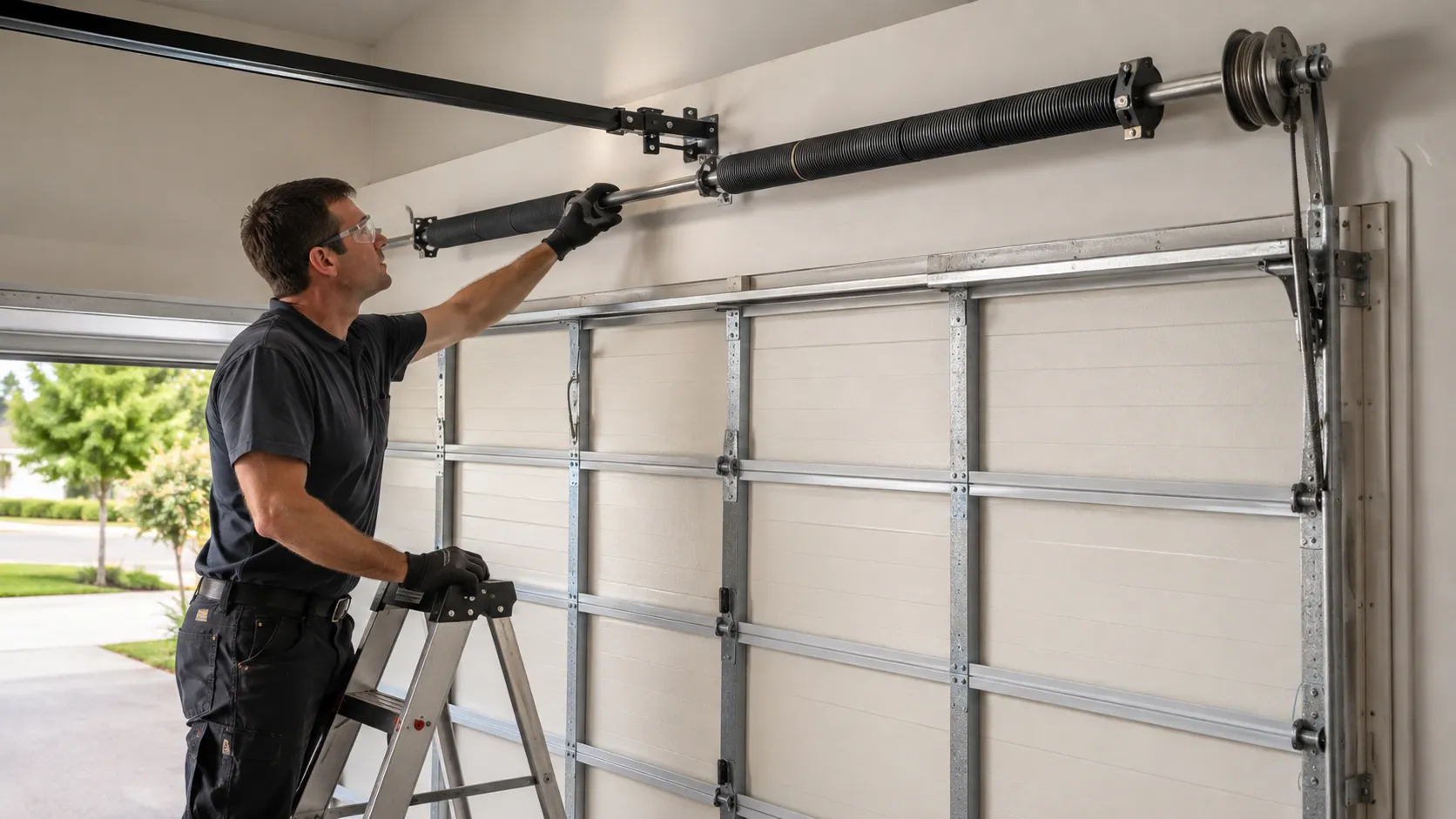
Westchester's housing stock centers on 1957, a few years ahead of the 1964 median for the wider area. That earlier build date matters here because torsion springs and drums from that stretch weren't standardized the way later hardware was - a spring pulled off a shelf for a newer door in Chicago won't always match the drum size or wind on an original Westchester setup. We measure the shaft, the drum, and the door weight on site rather than guess from the model year.
The complication isn't the break itself. It's matching parts to a door that was built before national sizing settled down, and doing it without over-tensioning a spring that's already fighting decades of wear on the cable drums.
How Long It Takes
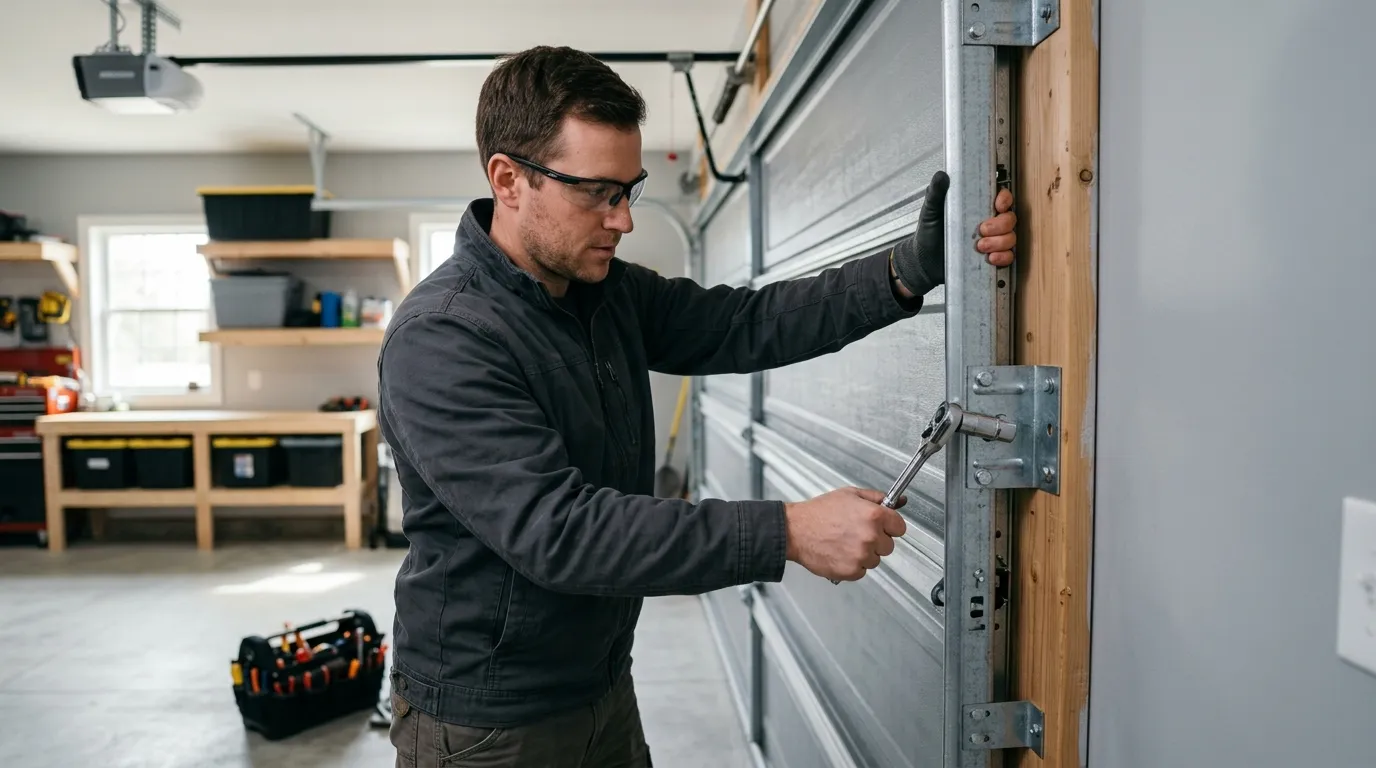
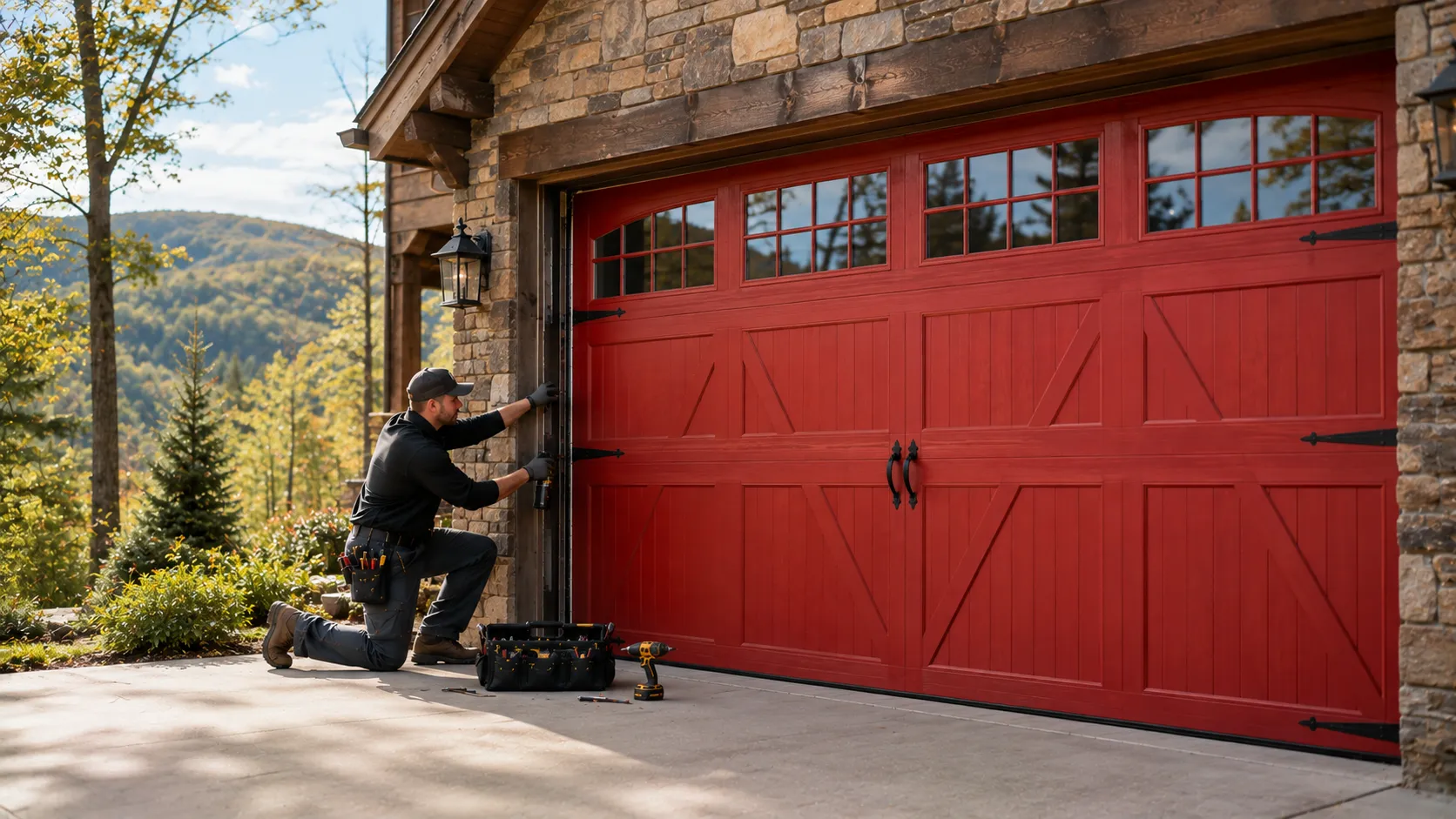
Once we're on site, swapping a torsion spring on a standard residential door is a matched-pair job - we replace both springs even if only one broke, because the other is on the same clock and close to the same fatigue. That part of the work is usually done within a couple of hours, including balancing the door afterward so it doesn't drift open or slam shut on its own.
What we won't promise is a same-day rush. Westchester sits about 11 miles out from Chicago, and the truck runs a route rather than sitting on standby a few blocks away. If your spring breaks on a Tuesday morning, tell us that up front and we'll work the job into the schedule - we're not going to tell you we can be there in twenty minutes when the honest number is longer.
Across the roughly 7,084 households in Westchester, most garage doors that still carry their 1957-era hardware are due for spring replacement regardless of whether one has already broken - the other one is rarely far behind.
The DIY Question
A torsion spring is wound under enough tension to break a wrist or worse if it lets go while you're working on it, and that's true whether the door is five years old or from 1957. We won't walk you through doing this yourself, and any guide that tells you it's a weekend project with a winding bar and a socket set is leaving out the part where people get hurt.
Extension springs on older side-rail setups are a little more forgiving to look at, but they still store enough force to snap a cable or send a bracket flying. If you can see rust on the coils, a gap where a coil has separated, or a cable that's frayed near the drum, that's a call, not a project.
The honest limit here: if the drum, the shaft, or the track on your door is bent or badly worn along with the spring, a spring swap alone won't fix it, and we'll tell you that instead of quoting a job that won't hold. Sometimes the right answer on a door this age is replacing the operator hardware, not just the spring.