What Causes It Around Here
Western Springs sits eleven miles out from the shop, and that distance shapes how a call here actually plays out. It's not a next-door run - it's a real drive down through the western edge of the service area, past towns like before the truck turns. That matters less for whether we come and more for when: a call placed midmorning has a different shape than one placed at 4:30 on a Friday, simply because of what else is on the board and how far the truck already is from home base.
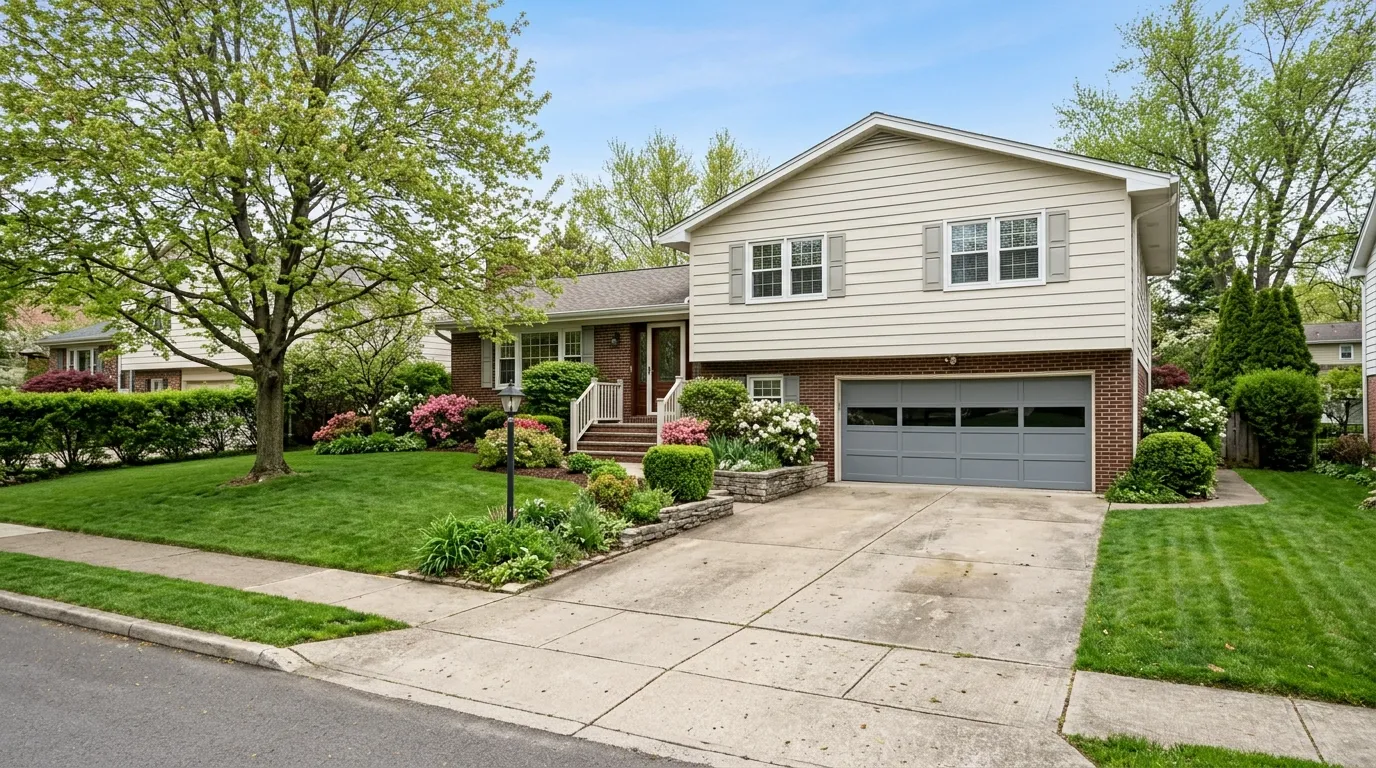
Once we're actually looking at the door, the town's own numbers take over. Most houses here went up around 1960, which puts Western Springs squarely inside the broader area's 1938-to-1994 building window but on the older, tighter end of it. Doors from that era were built with steel and hardware sized for a different lifting standard than what's sold today. Springs wear out the same way everywhere, but on a 1960-built door the spring, the track gauge, and the drum are often not the same part number you'd pull off a door installed in 2005. That's the actual local variable - not the weather, not the traffic, the housing stock.
What You Are Seeing
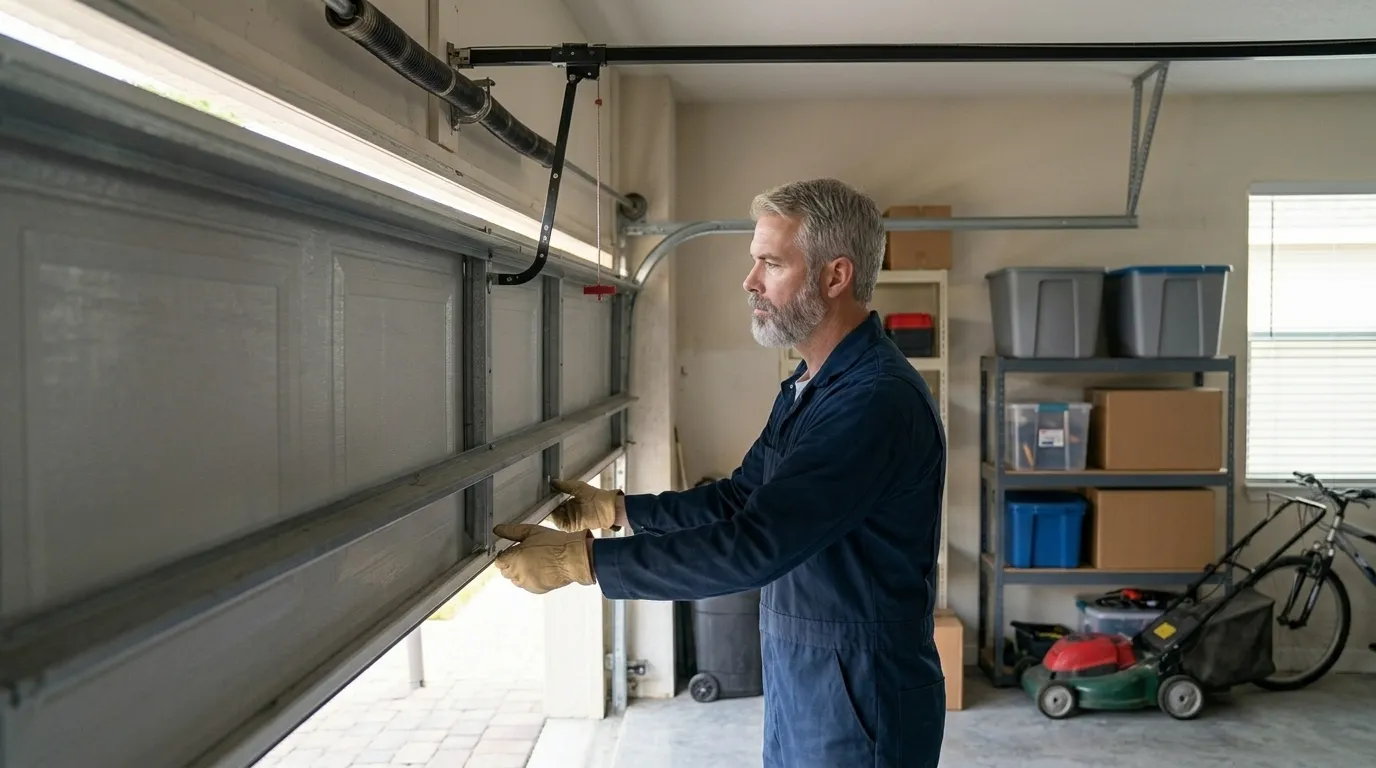
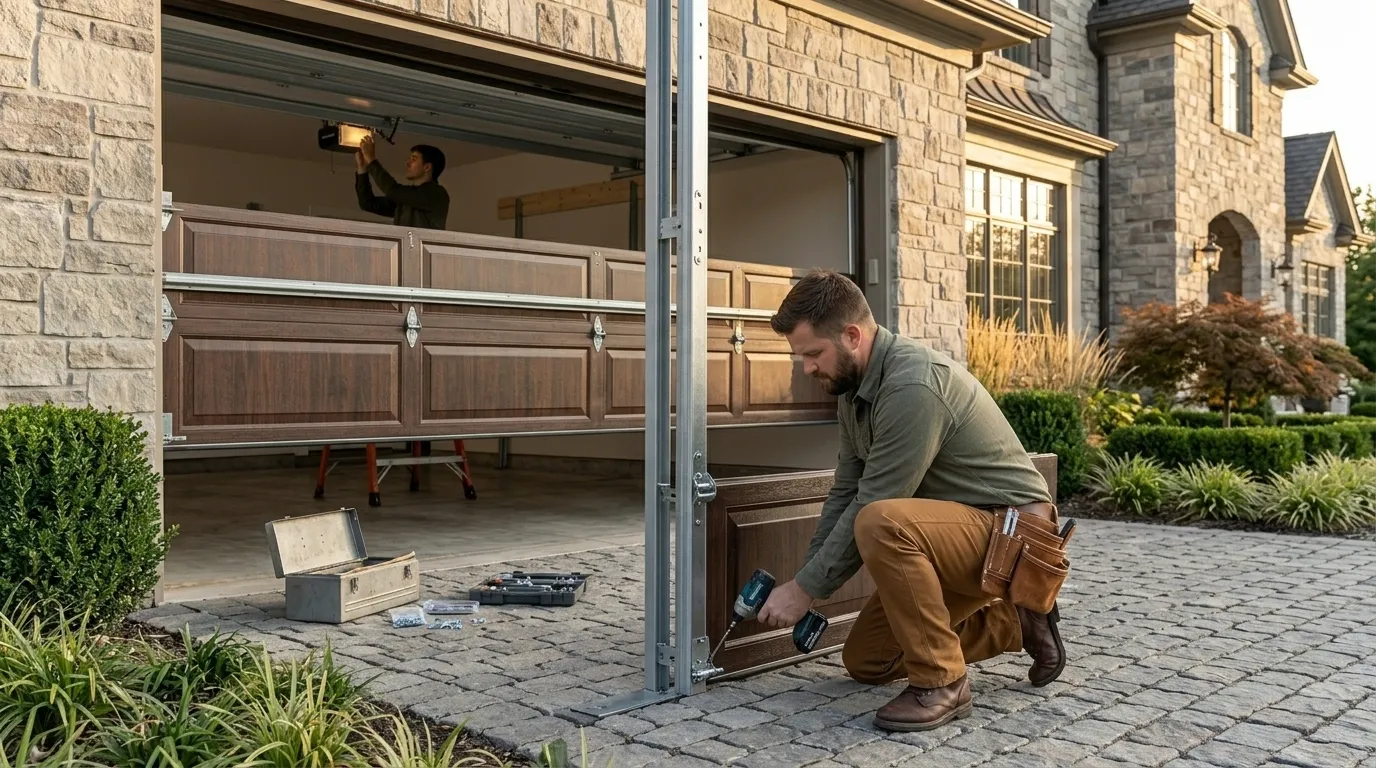
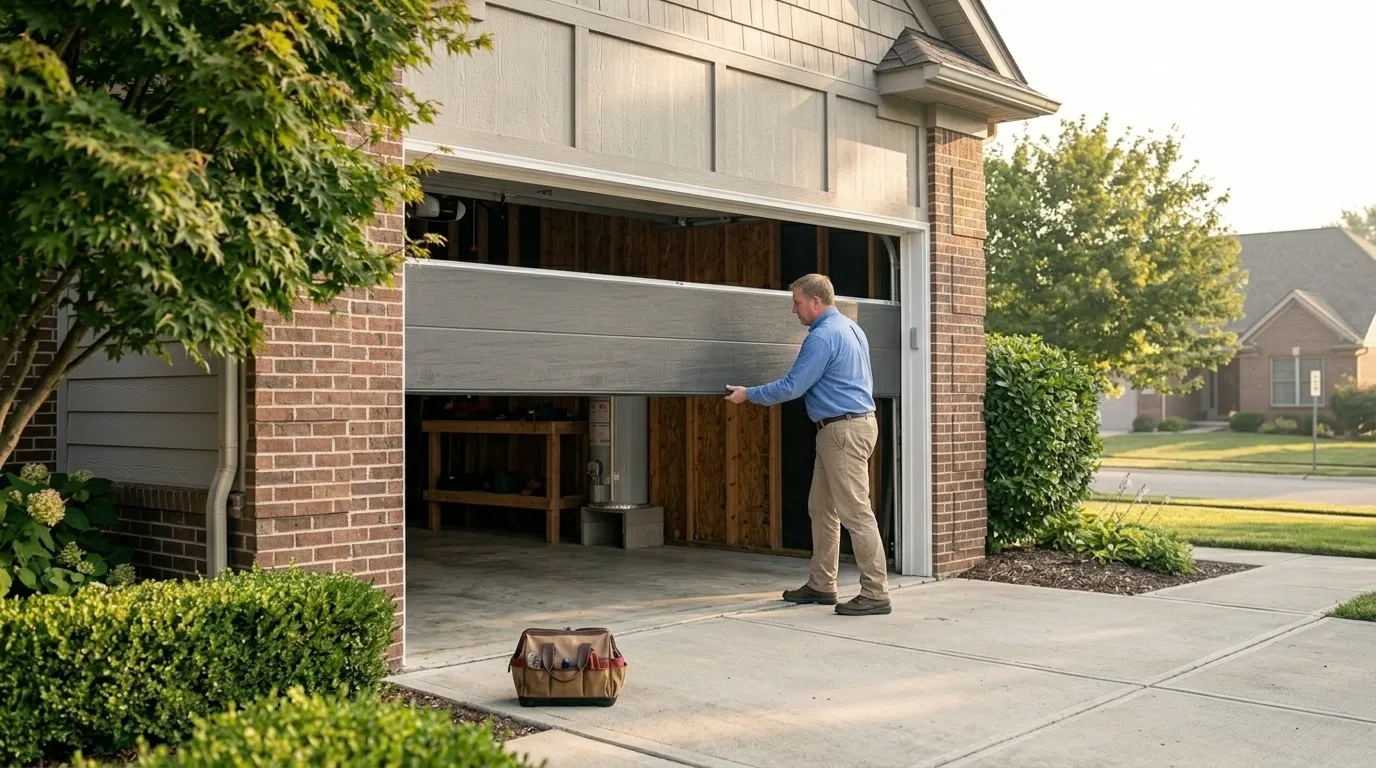
A door that won't budge, with the opener motor running and clicking, is almost always a broken torsion spring - the opener isn't built to lift a door's full deadweight alone, and on a 1960-built house that spring has usually been doing the job for a couple of decades already. A door that slams down fast on its own is the same failure a few days earlier in the story.
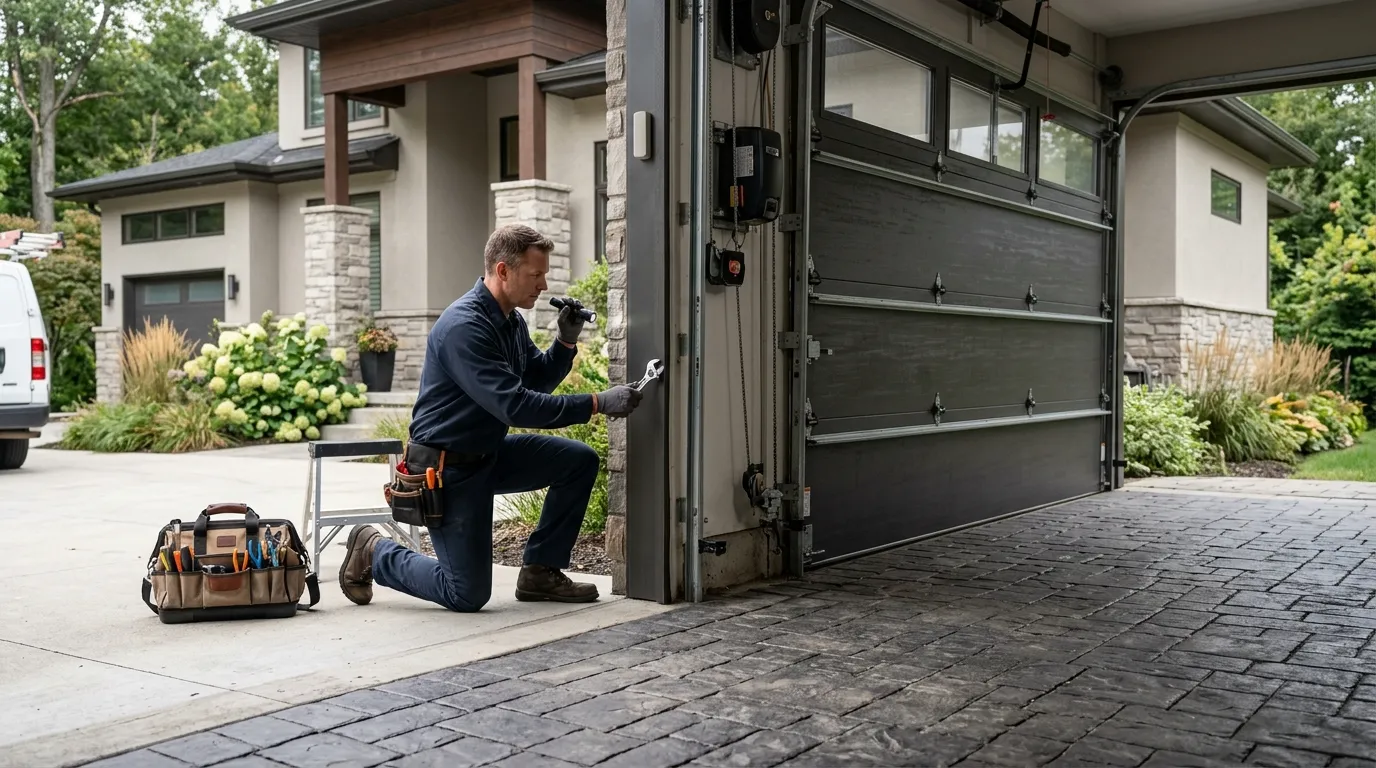
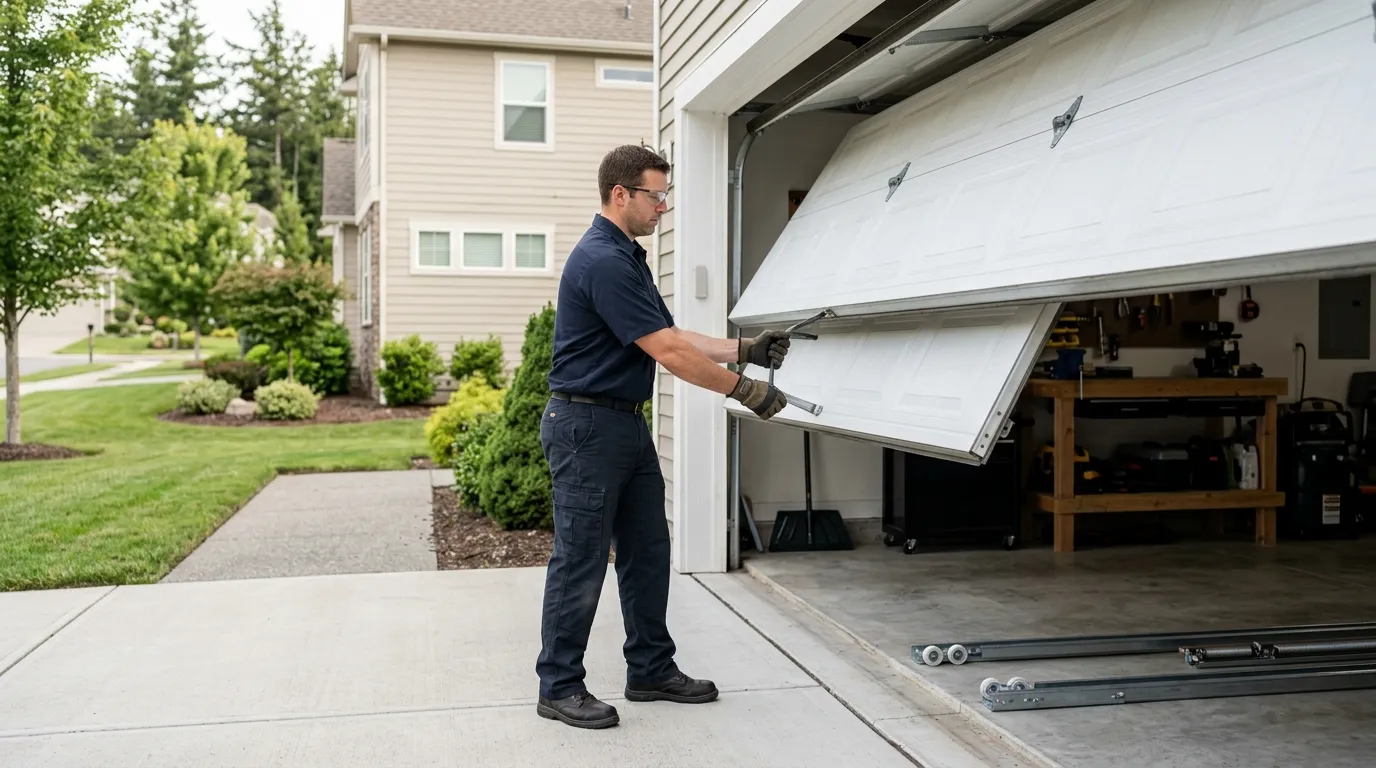
A door that runs off one side of the track, or drags with a metallic scrape, points to a bent track or a roller that's worn through its housing - more common on original steel doors that never got upgraded to nylon rollers. If the opener hums but nothing moves and there's no visible spring damage, that's often a stripped gear inside the unit rather than anything on the door itself, and it changes what we bring off the truck.
The DIY Question
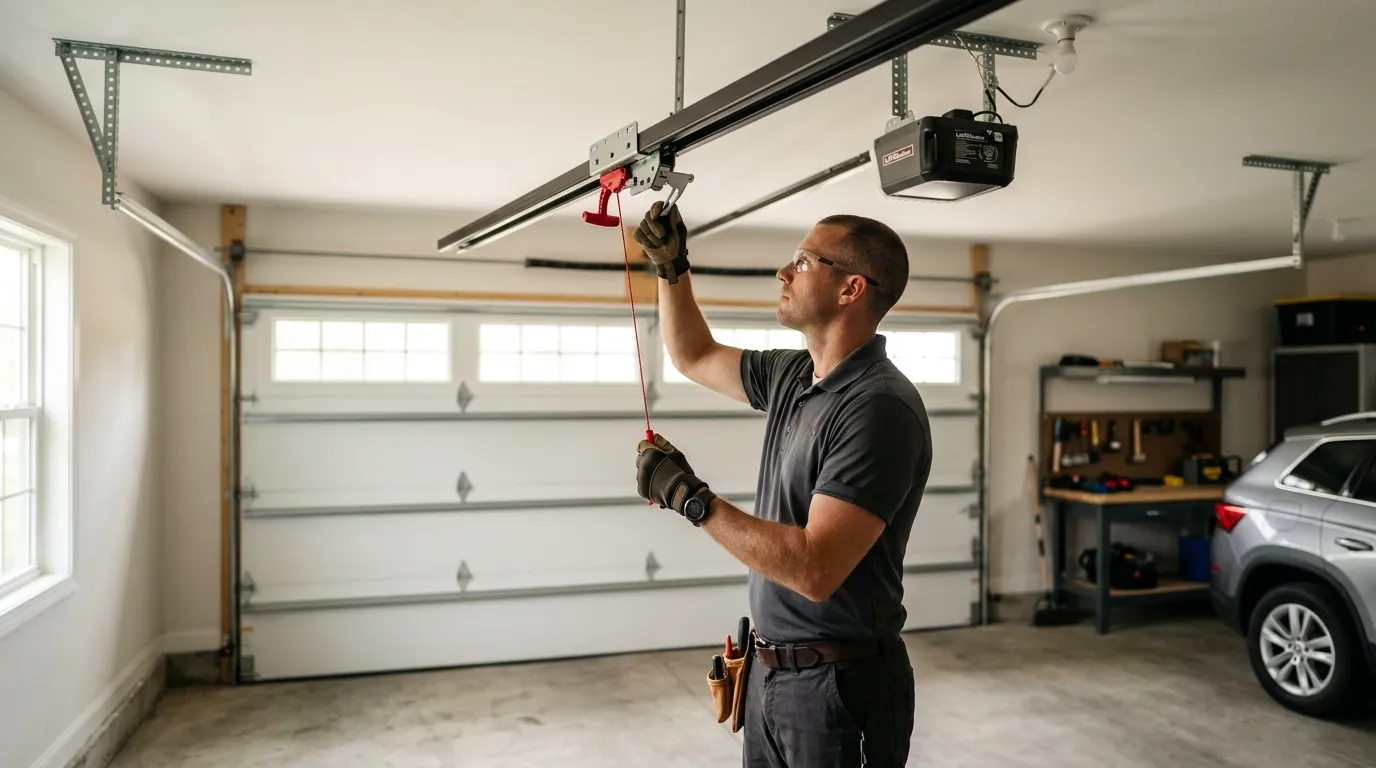
Don't touch a broken torsion spring. It's wound under enough tension to break a wrist or worse, and there's no safe way to release or reset one without the right bars and a clamp - this is true on any door of any age, not just older ones. If the door is stuck and the spring looks intact, you can usually disengage the opener's emergency release cord and lift the door by hand to get a car out, then leave it alone until we're there.
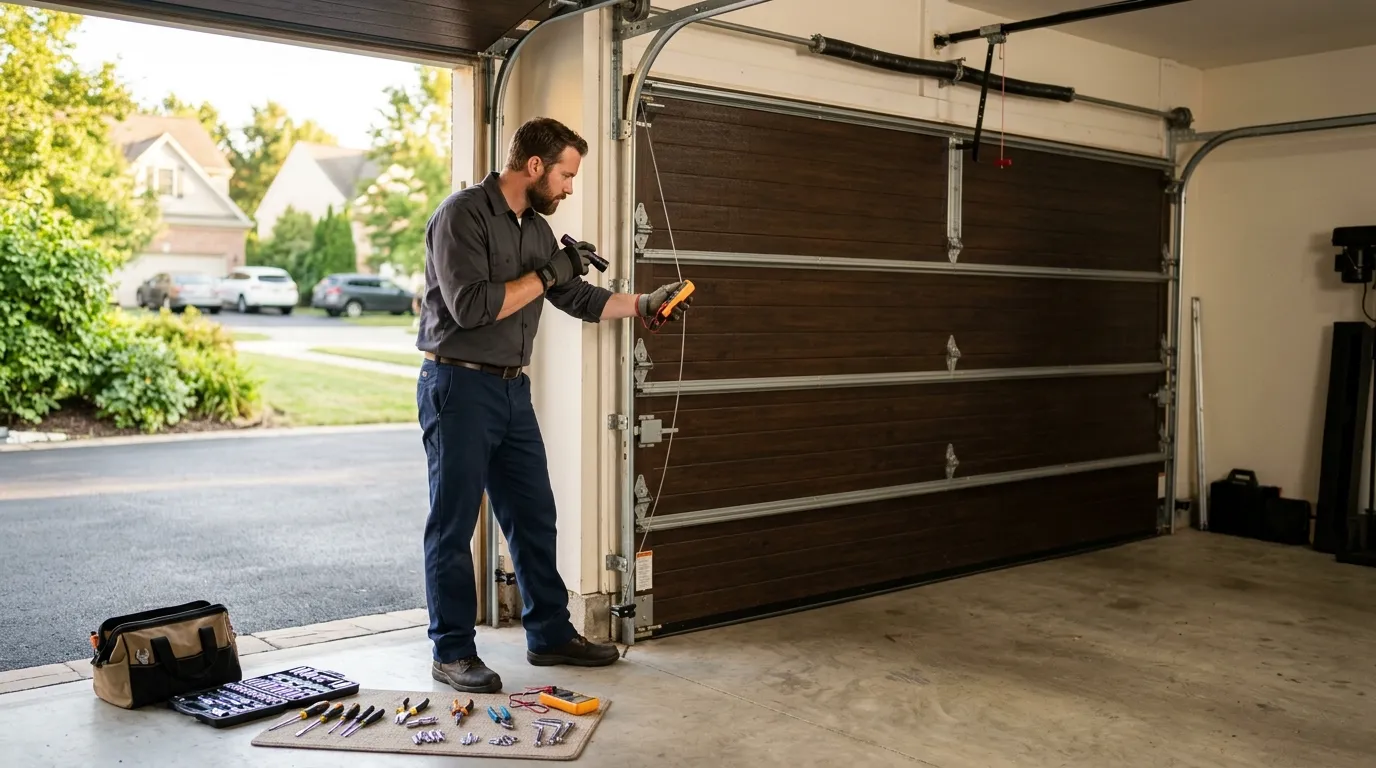
What you can check yourself: the photo-eye sensors near the floor on each side of the track, since a knocked or dirty sensor is a common reason an opener refuses to close the door and it costs nothing to wipe the lenses and re-aim them. Beyond that, on a door this age, guessing at a fix usually means buying a part twice.
What Is on the Truck
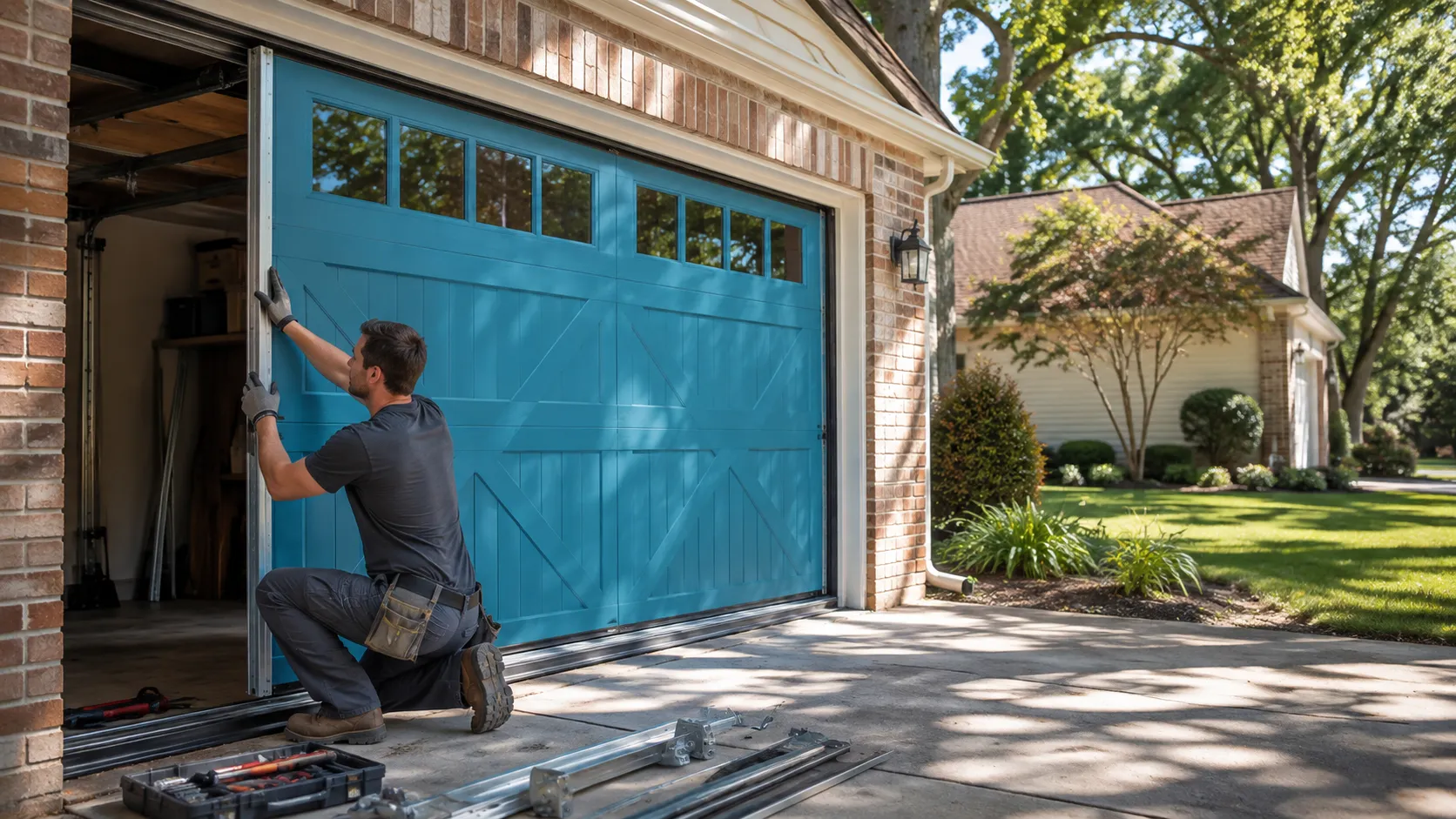
Because a good share of Western Springs' housing dates to right around 1960, the truck heading out here carries torsion springs sized for the older wind counts and drum diameters that came standard on doors from that build era, alongside the newer stock sizes for anything that's already been replaced. We carry both because a door's age on paper doesn't always match what's actually hanging in the opening - plenty of these houses have had at least one replacement door since 1960.
We also carry standard cable, a range of roller types, and photo-eye sensor units, since those fail often enough on older tracks to be worth stocking rather than ordering. What we don't carry on the truck is anything sized for a modern insulated door wider than what these original openings were built for - if that's what's needed, it's a follow-up order, not a same-visit fix. Learn more about our Western Springs coverage or see what we cover for emergency repair across Chicago.