What Causes It Around Here
Western Springs' homes cluster around a median build year of 1960, a little earlier than the 1964 median across the wider service area we cover from Chicago. That six-year gap matters more than it sounds like it should. Doors and torsion hardware installed in the early 1960s are a different generation from the ones going up in the mid-to-late 60s and 70s that make up most of the broader stock - different spring gauges, different drum styles, sometimes different mounting brackets entirely. A torsion spring put up in 1960 is pushing sixty-five years of daily cycling. Steel fatigues on a schedule, and that schedule is nearly up on a lot of these original setups. The climate band here is cold-moderate, which means the door goes through real freeze-thaw cycling every winter - cold makes the coil stiffer and more brittle right when it's asked to lift a heavier, colder door. That combination - old coil, cold snap, decades of cycles - is the most common way we see one of these springs finally let go. It's rarely a surprise once you know the age of the hardware.
What You Are Seeing
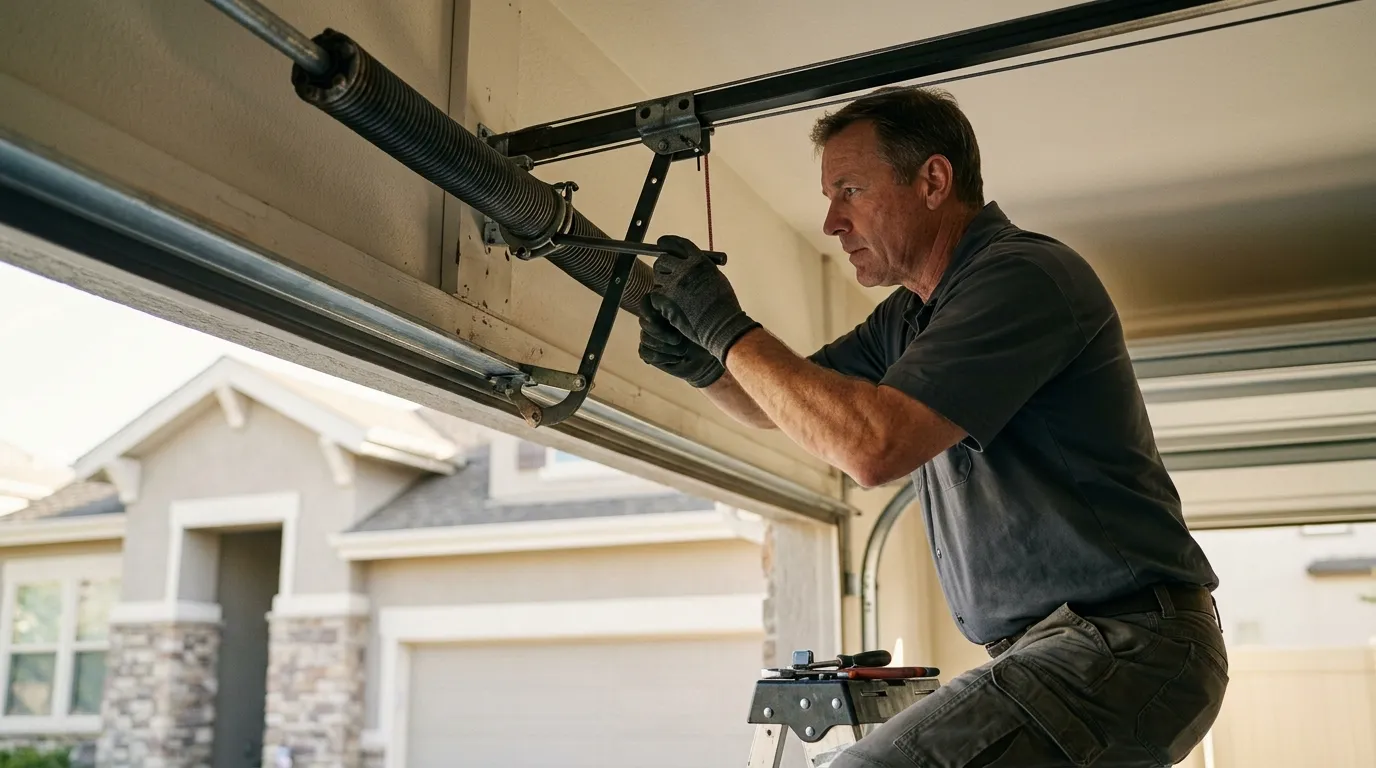
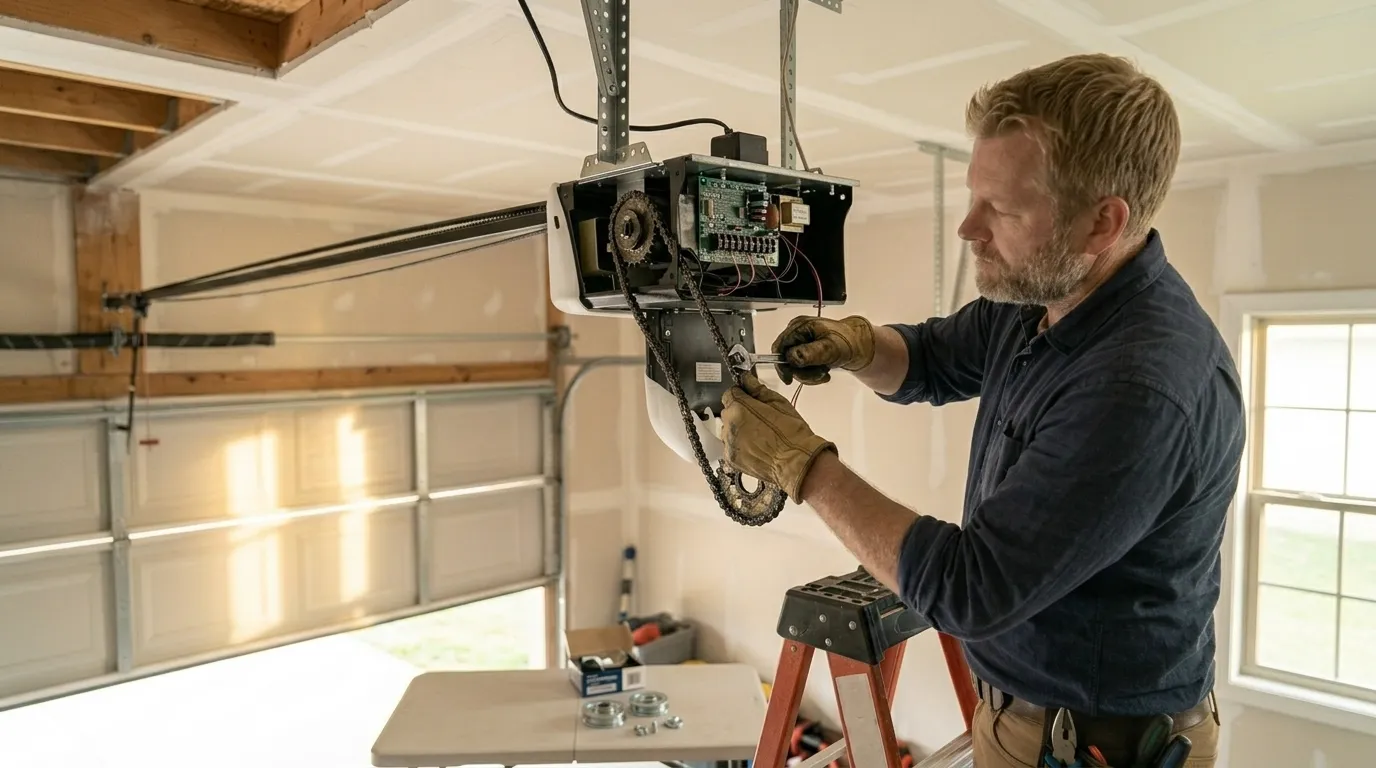
A broken torsion spring on a door built around 1960 usually announces itself the same way it does anywhere: the door won't lift, or it lifts a few inches and stops, or the opener strains and the gears inside start to whine. Look at the spring itself, mounted above the door on the torsion bar - if there's a visible gap in the coil, it's snapped. On a double door from this era, you'll often find two torsion springs working together, and if only one has gone, the door may still limp open unevenly before an opener burns out trying to compensate. Extension springs, mounted along the horizontal tracks instead of above the door, are the other common setup in this vintage of house, and they fail differently - a sudden loud bang followed by a door that drops fast when someone tries to close it manually. Either way, the door gets heavy in a hurry. If a torsion spring has broken and the door is still down, don't force it with the opener. That's how you strip a gear or bend a track on top of the spring problem you already had.
The DIY Question
Torsion springs are wound under several turns of tension, and if that tension is not released the right way with the right tools, the bar can whip loose hard enough to break a hand or worse. This is the one repair on a garage door where we tell people flatly: don't. Extension springs carry less stored energy and some homeowners do swap those themselves, but even there, a mis-sized replacement spring on a heavier 1960s-era wood or early steel door puts uneven strain on the opposite side of the door and often leads to a second failure within months. Our honest limitation here is that we don't walk people through torsion spring replacement over the phone - it's not a job we'll talk someone through doing themselves, because the failure mode is too dangerous and too easy to get wrong on a bar under load. If you want to handle something yourself, lubricating hinges and rollers is fine. The spring itself is a call.
What Is on the Truck
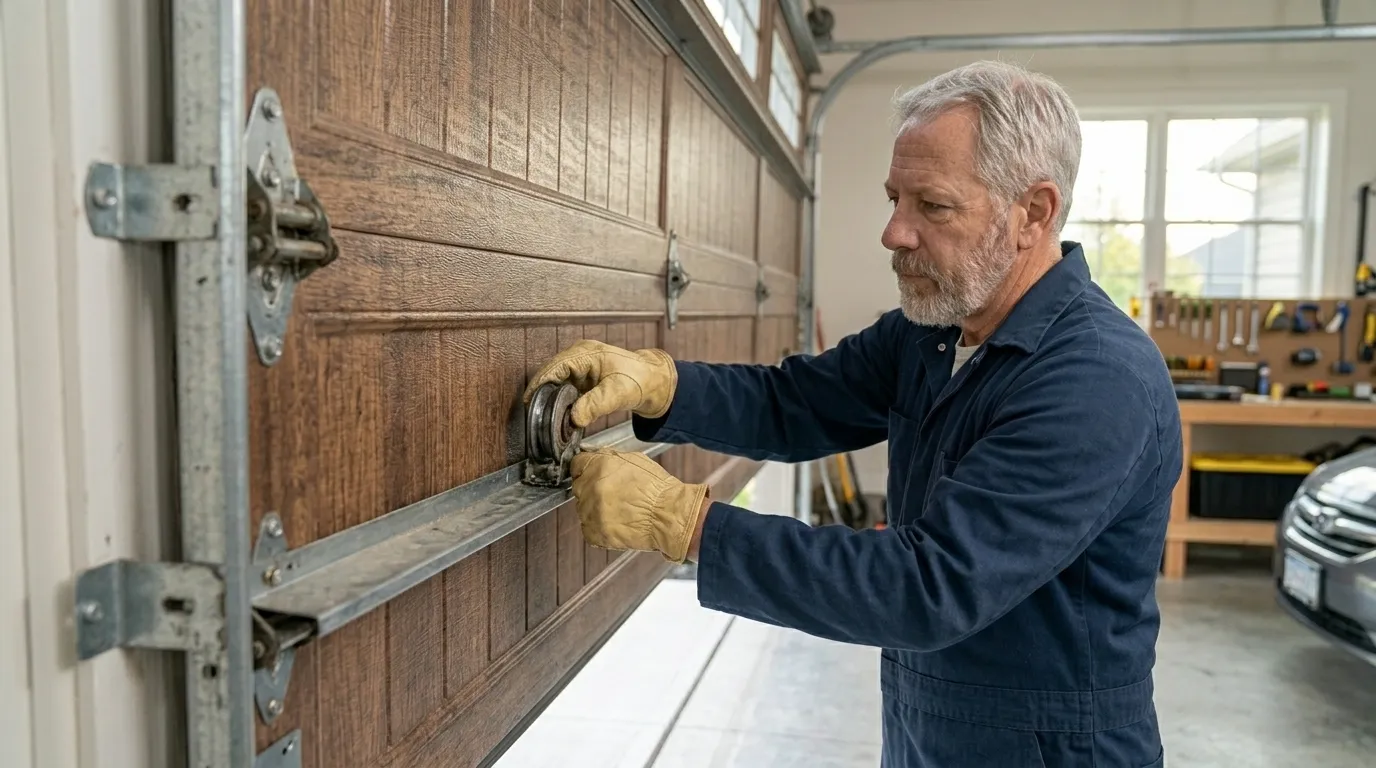
We carry a working range of torsion spring wire sizes and standard extension springs sized for both single and double doors, because the housing stock here spans roughly 1938 to 1994 and a single truck load has to cover a lot of ground. For a 1960-era door, that usually means a specific torsion coil diameter and wind that's gotten harder to find off a shelf as manufacturers have shifted their standard sizing over the decades - it's one of the reasons a same-day fix on an older double door sometimes takes an extra call to confirm we've got the exact match rather than a close one. We also carry the cable, drums, and bearing plates that commonly go along with a spring failure, since a spring rarely fails in isolation on a door this age - the cable's usually stretched or frayed too, and swapping the spring without checking the cable just moves the next failure down the road a few months.