What Causes It Around Here
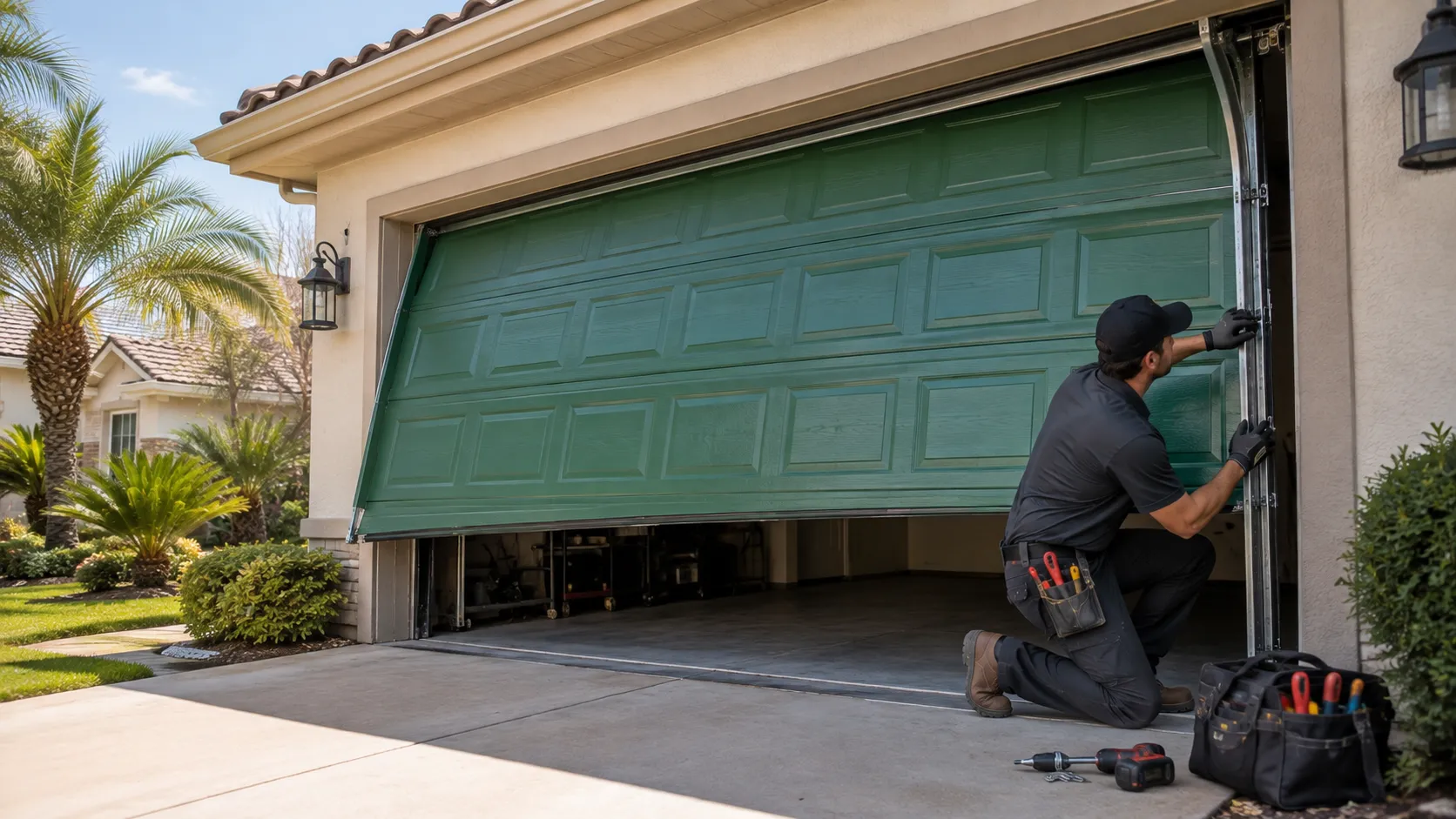
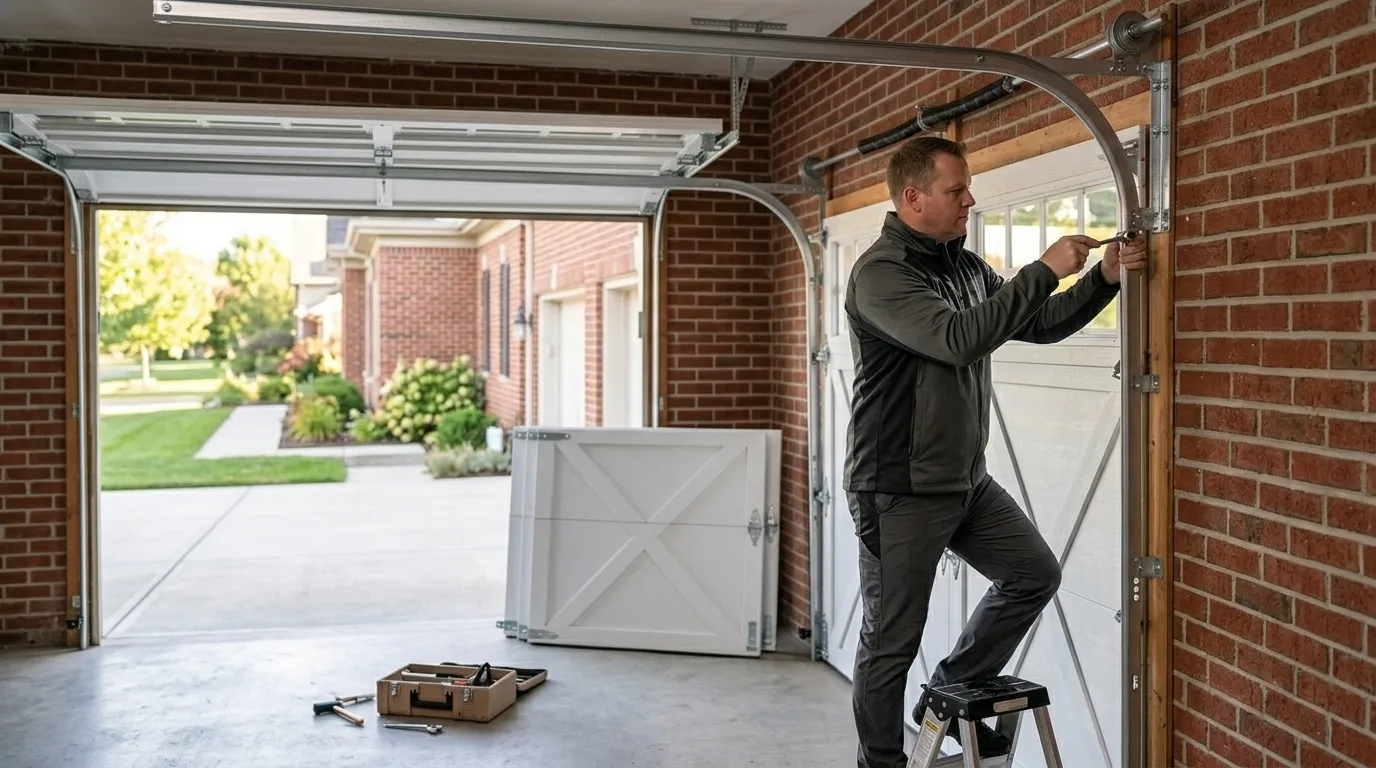
The call we get most from Western Springs isn't a dead opener, it's a torsion spring that's let go on a door that's been on the same hardware since the house was built. That's not a coincidence. The median home in Western Springs went up around 1960, which puts it right in the middle of a build era that runs 1938 to 1994 across the wider service area we cover. Doors from that period were hung with steel torsion springs rated for a lighter, single-layer wood or early steel panel - not the heavier insulated doors a lot of owners have swapped in since without upgrading the spring to match.
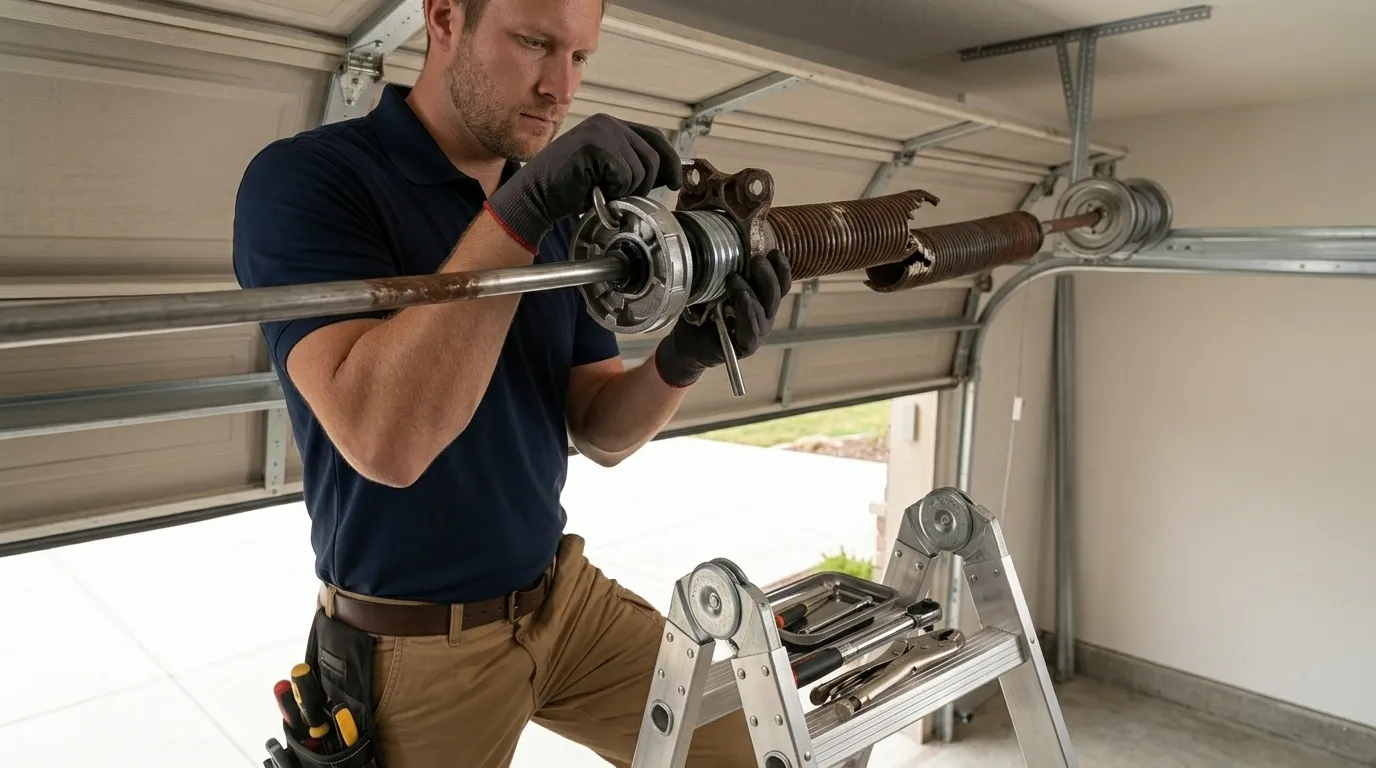
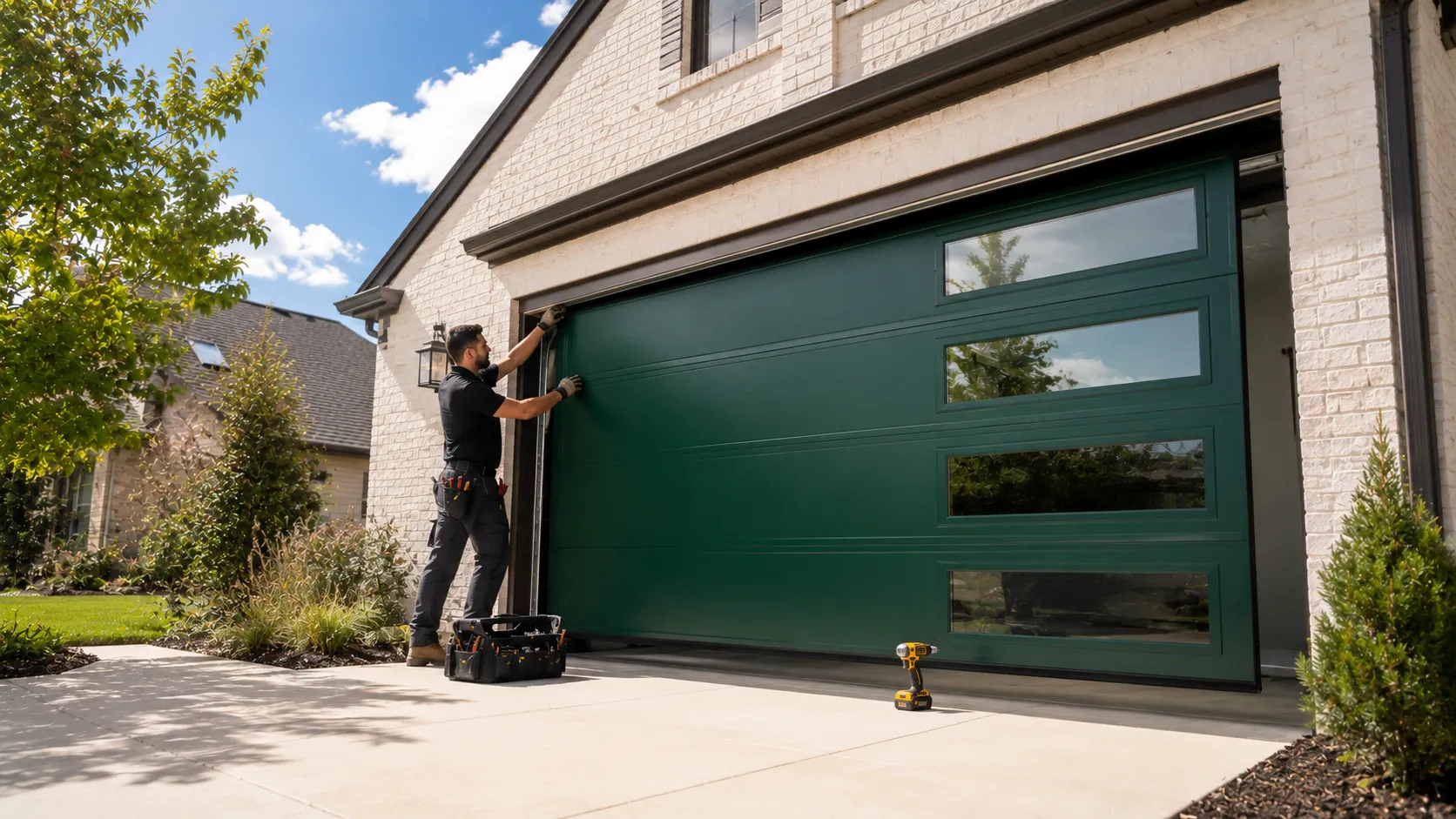
That mismatch is the fault we see over and over: a spring sized for the original 1960s door straining under a replacement panel that weighs more than it was built to lift. The spring cycles faster than it should, the cable frays at the drum, and eventually something gives - usually with a bang loud enough that a neighbor calls to ask if you're okay. It's not bad luck. It's a door built for one era doing a job it was never rated for.
What You Are Seeing
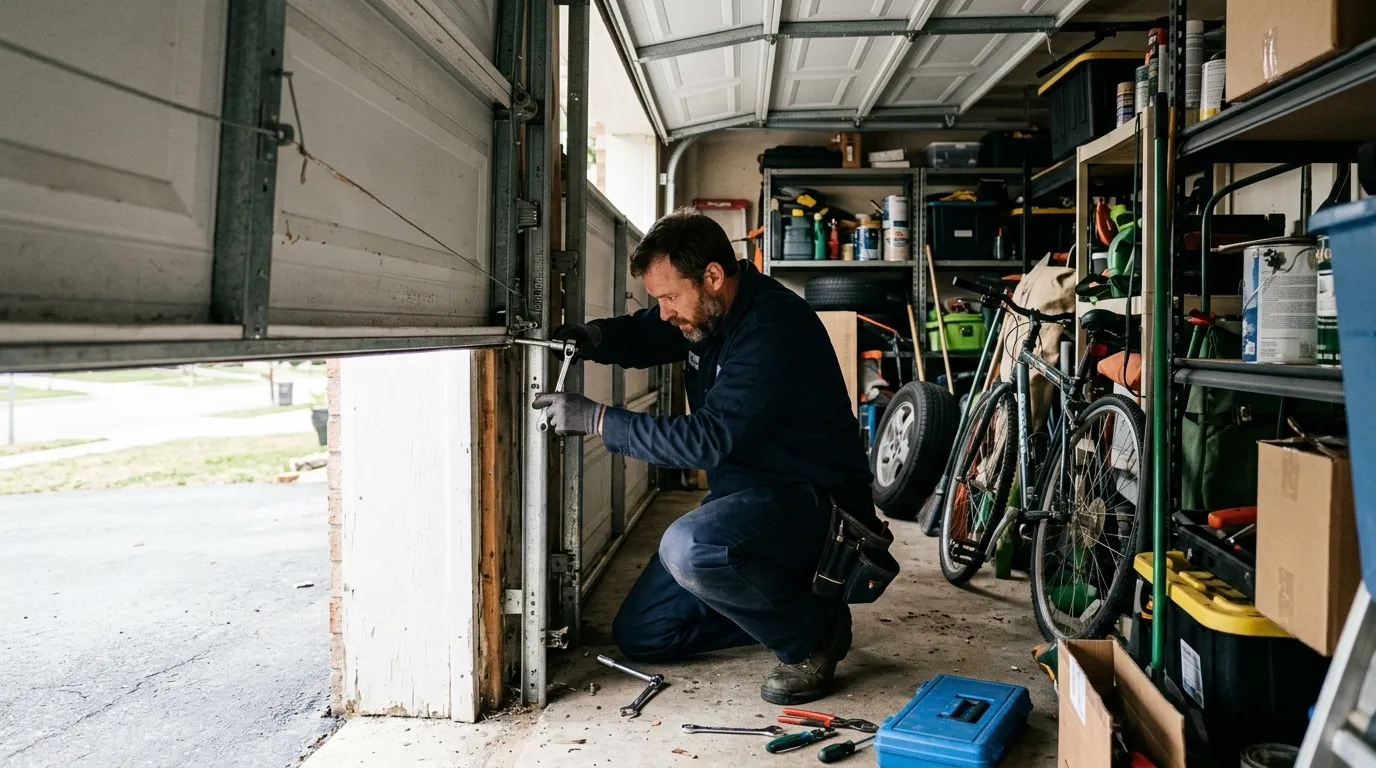
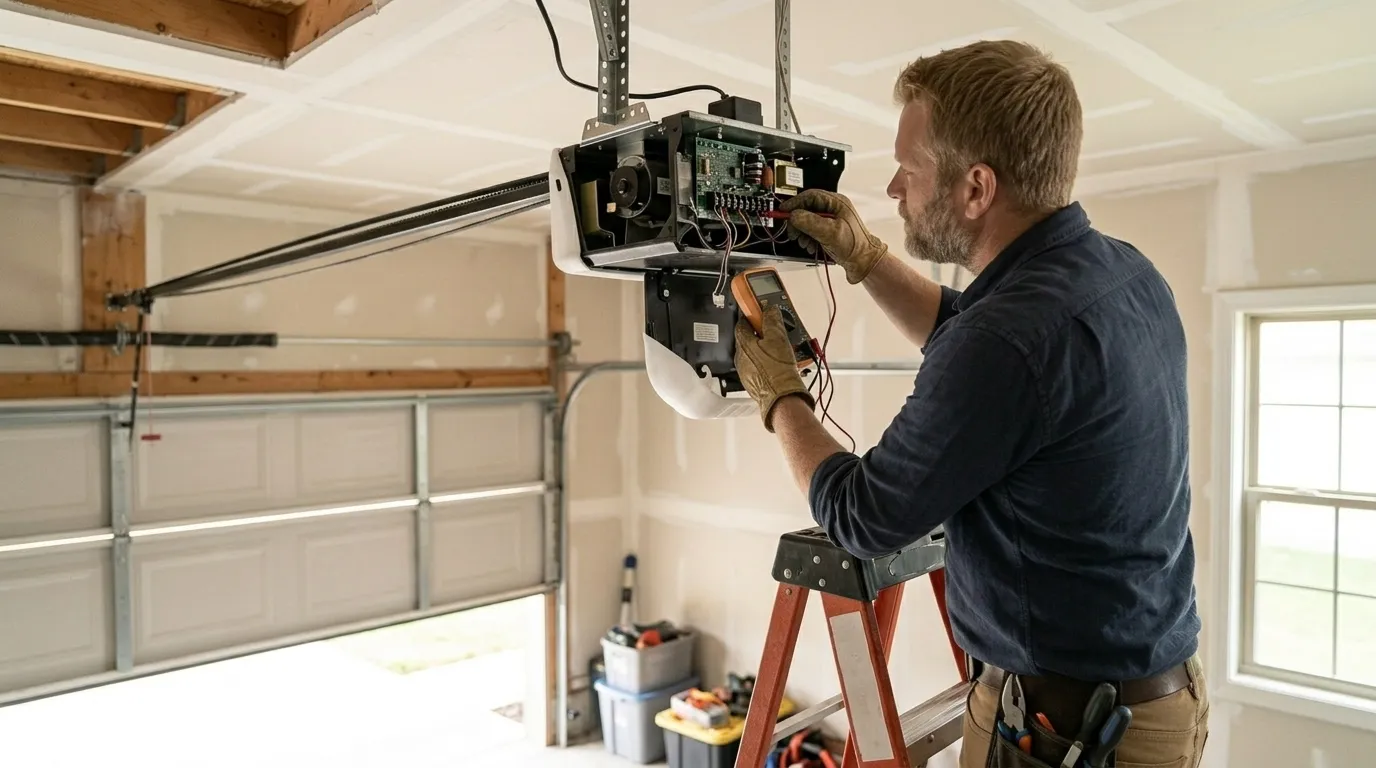
A door that slams the last foot instead of settling is almost always a spring that's lost tension gradually before it finally snaps. A door that won't budge, with the opener straining and clicking, is often the same spring, already broken, with the opener trying to lift the full weight alone - which burns out the motor faster than people expect. Rollers on original steel track from the 1960s tend to bind rather than glide; you'll hear a grinding rattle instead of a smooth roll, especially in cold weather when the metal contracts.
Cables that look frayed near the bottom bracket are worth a same-day call, not a wait-and-see. A frayed cable under torsion load can snap without warning, and when it does, the door can drop fast. None of this is unique to any one house, but on a door that's carried the same hardware for six decades, the odds of hitting one of these failures climb every year past the original install.
The DIY Question
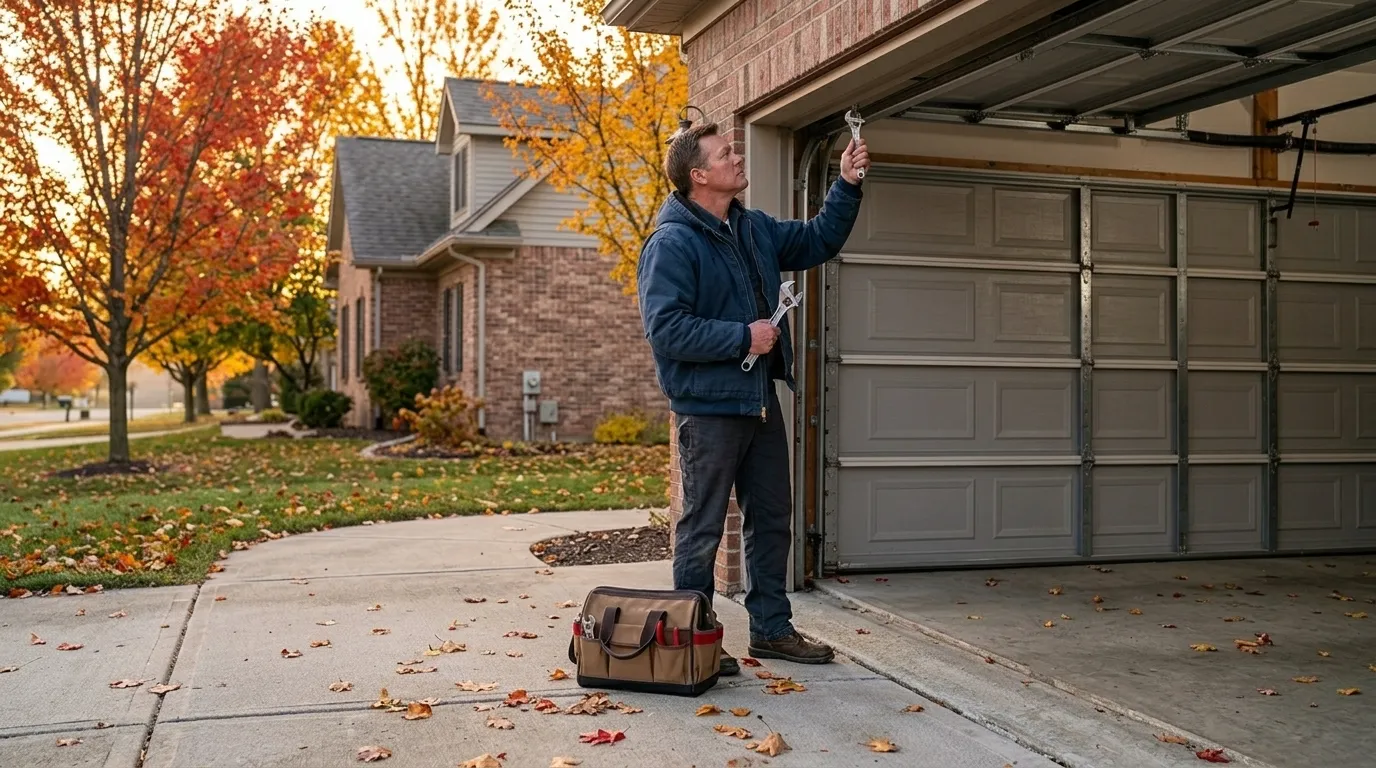
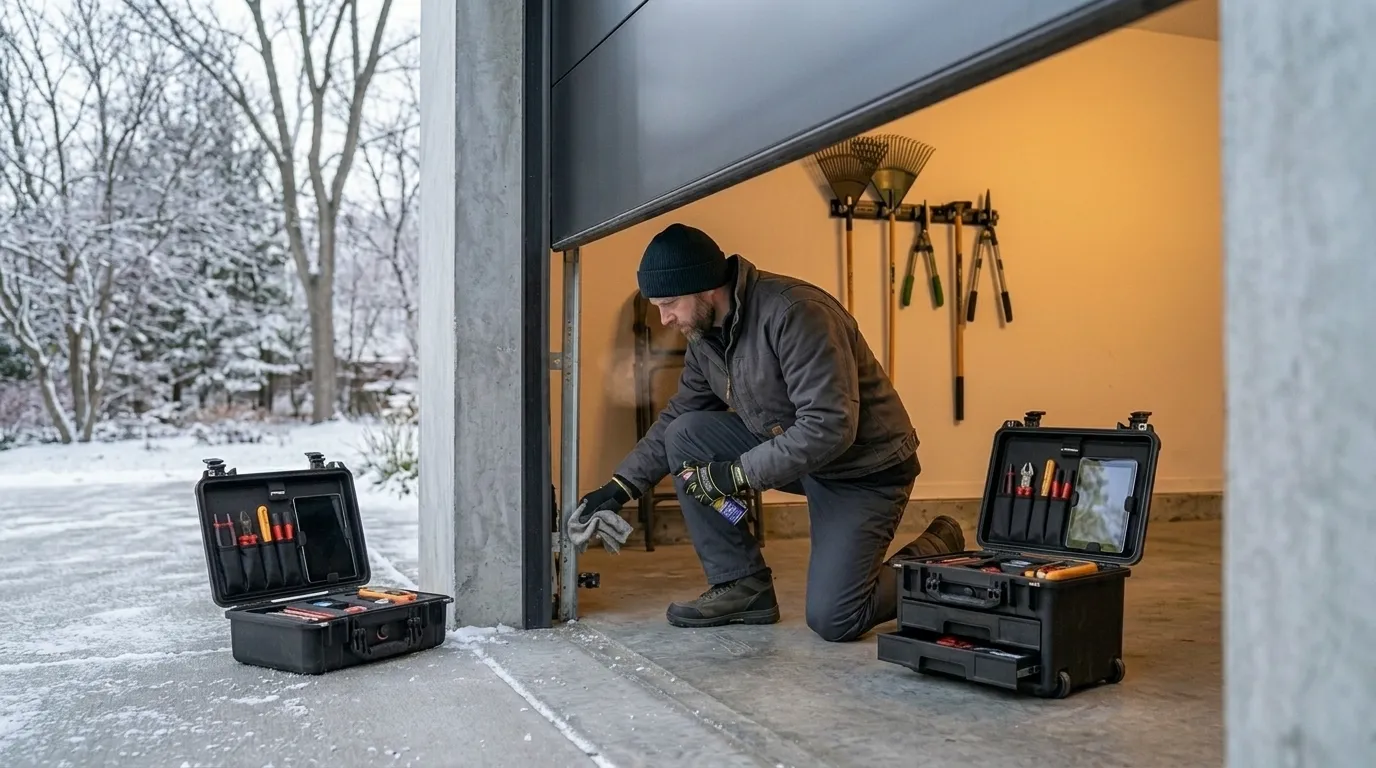
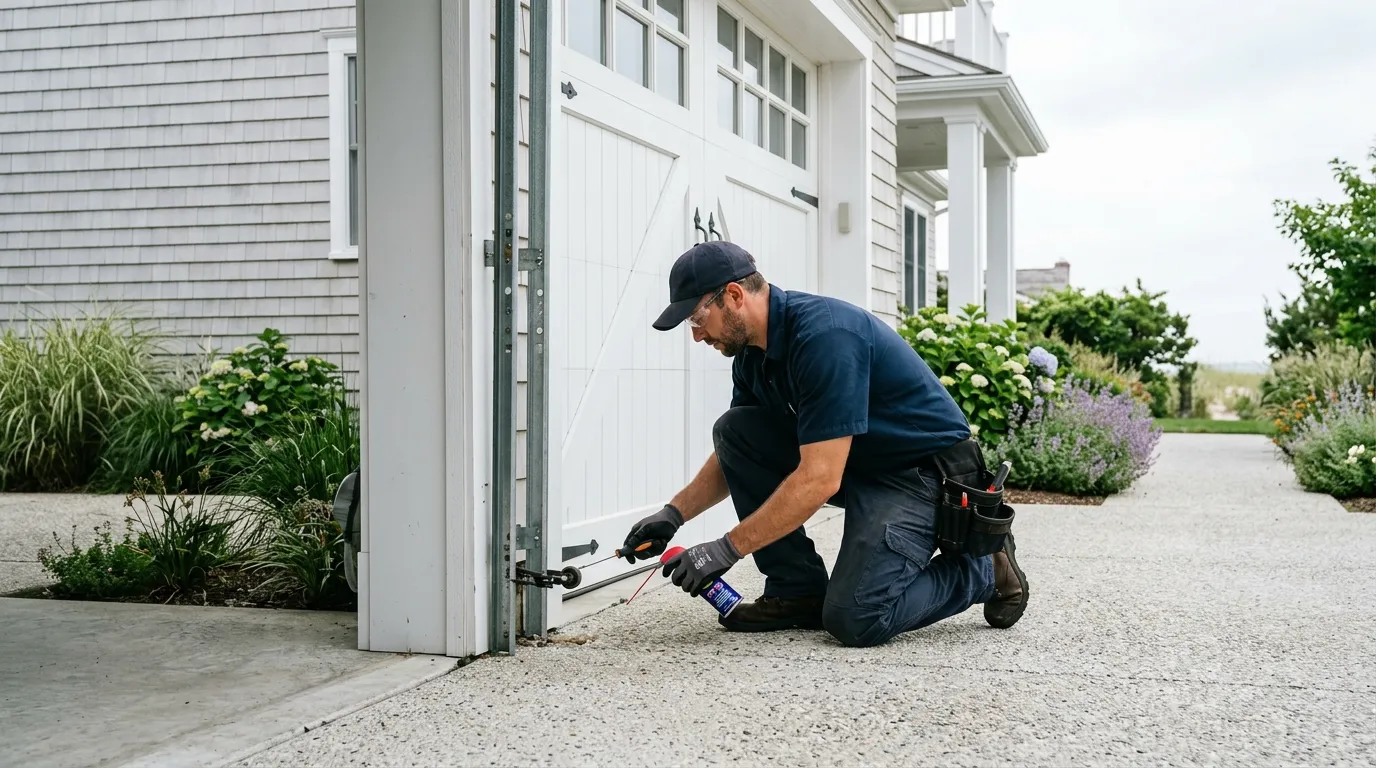
Cleaning the photo-eye sensors, tightening loose hinge bolts, and lubricating rollers and the top of the track are all fine to do yourself, and doing them twice a year will genuinely extend the life of older hardware. Replacing or adjusting a torsion spring is not something to take on solo. These springs store enough force to break a wrist or worse if the winding bars slip, and on a door old enough to have the original spring, corrosion can make it behave unpredictably even for someone who's done it before.
The honest limit here: if your opener is original to a 1960s install and it's finally quit for good, we'll usually tell you replacement makes more sense than repair. Parts for openers that old are getting harder to source, and a new unit will run quieter and safer than anything built to code standards from sixty years ago. We'd rather say that upfront than bill you for a patch that fails again in a year.
What Is on the Truck
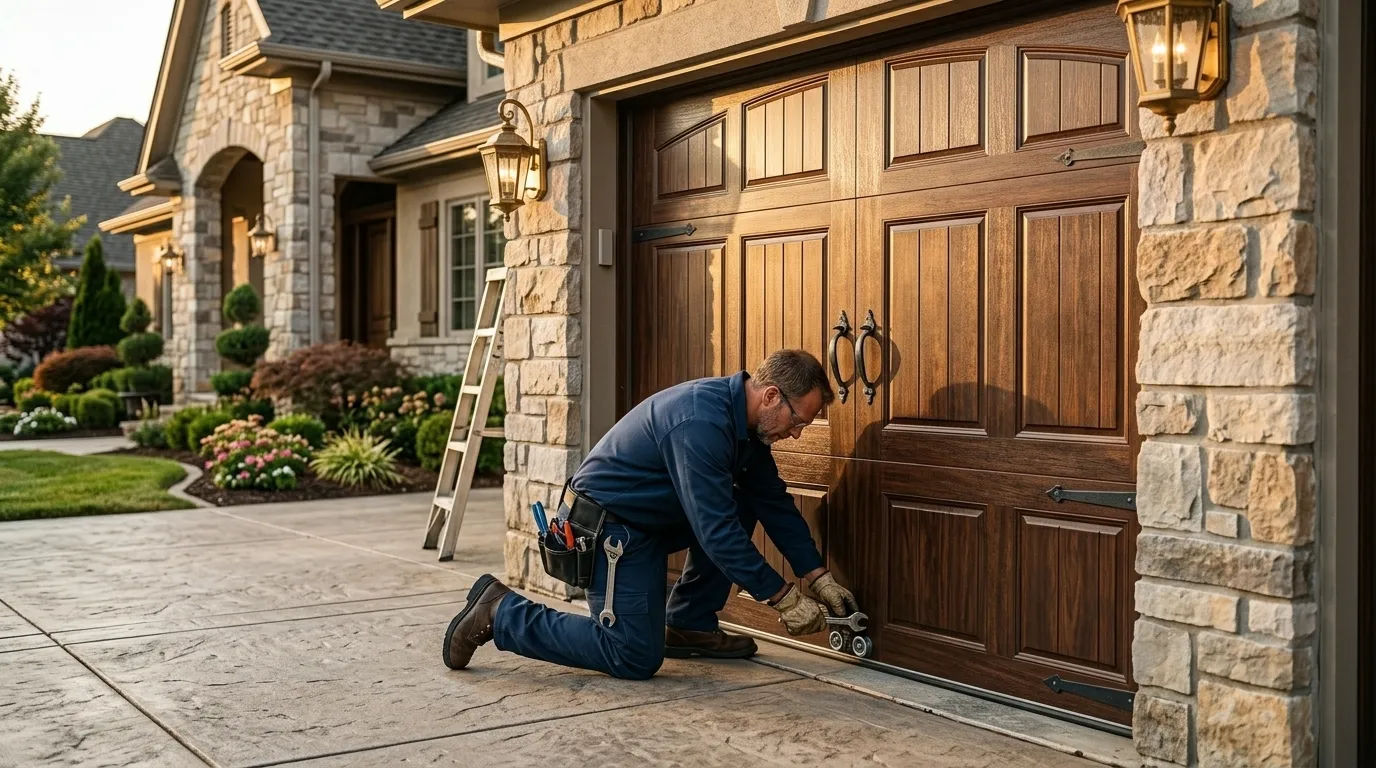
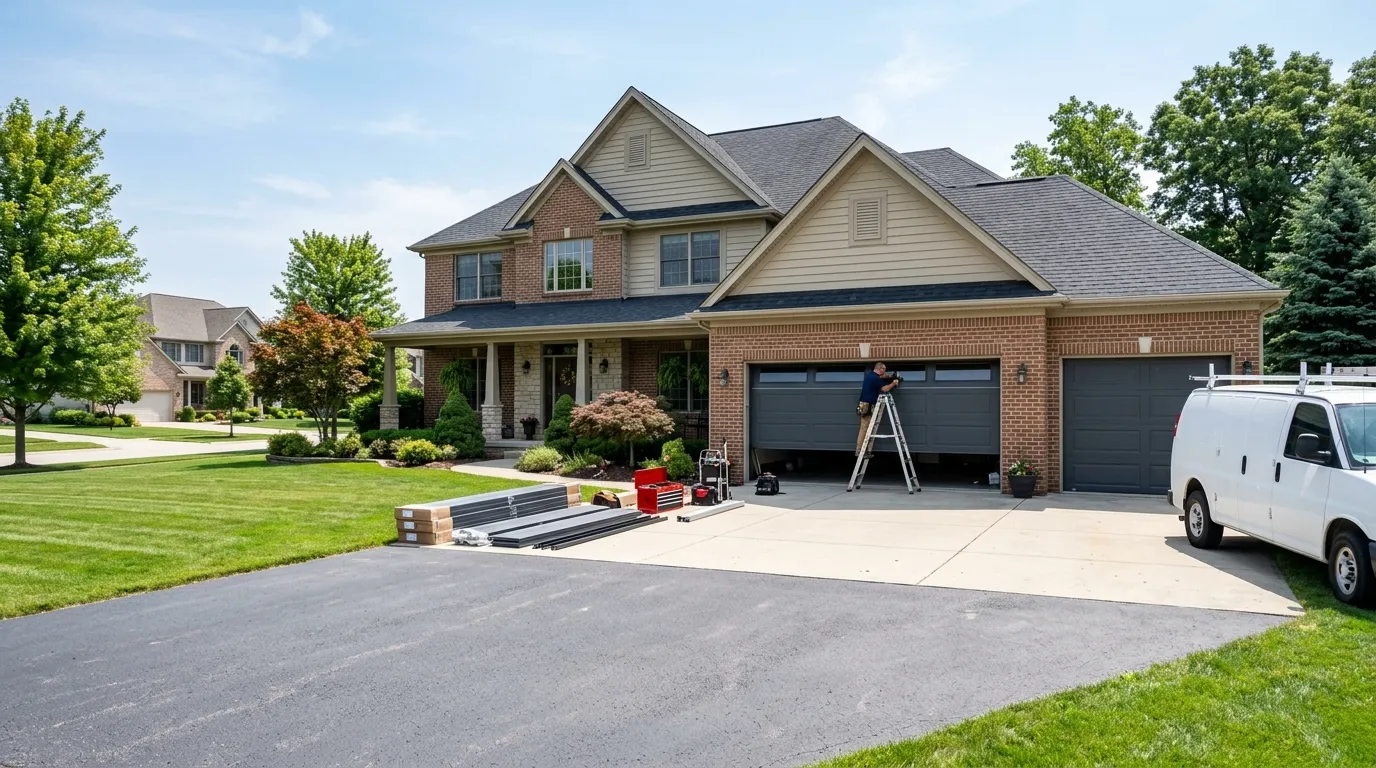
For a service area with housing mostly from the 1960s and 70s, we stock torsion springs across the common wire sizes and drum diameters that fit that era's tracks, plus the lighter cable gauges those older doors used before insulated panels became standard. We carry standard 7-foot and 8-foot track sections, ball-bearing and nylon rollers, and both original-style and sealed bearing plates, since a lot of 1960s installs never got upgraded off the original hardware.
What we don't carry on the truck is anything for a discontinued panel style or an odd non-standard door width - those get special-ordered rather than guessed at. If your door turns out to be one of those, we'll tell you on the spot rather than force a part that's close enough. On a house old enough to still have its original garage door, that's a real possibility, and it's better to hear it from us than find out after a bad fit.