Getting It Booked In
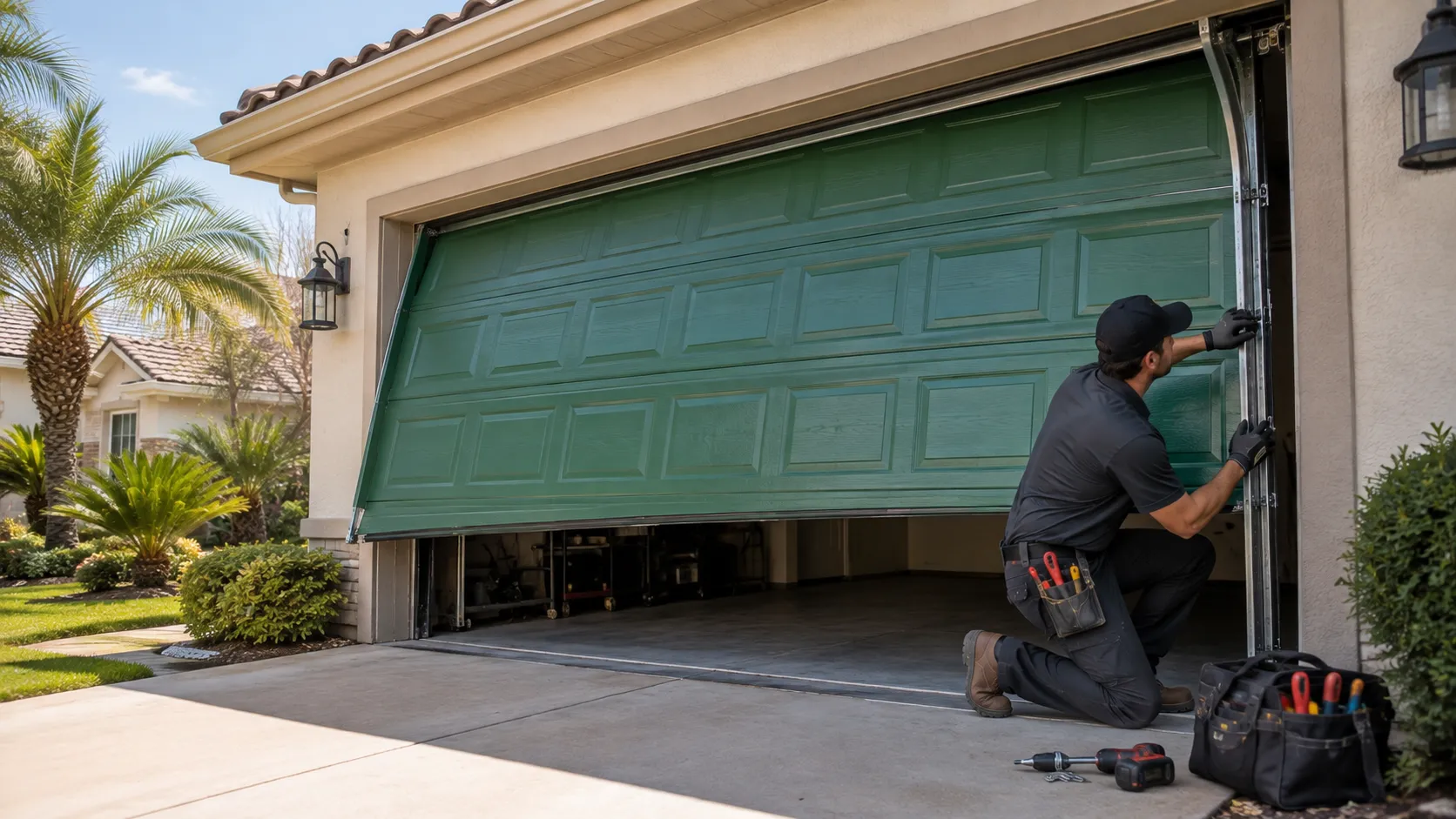
Burbank's median household income sits at $83,975, a notch above the $80,202 median across the wider service area. That gap matters for one reason: it's usually cheaper to maintain a door than to replace one, and at Burbank income levels, a $150 tune-up beats a $1,200 door swap almost every time - provided the door gets looked at before a spring snaps or an opener motor burns out. We travel out from Chicago to handle these calls; we don't run a branch in Burbank, so booking ahead instead of calling for a same-day emergency gets you a better shot at a convenient slot. A maintenance visit isn't an emergency repair. It's a scheduled look at rollers, cables, hinges, and the opener's force settings, timed so nothing on the list becomes a 6 a.m. no-start. If you've never had the door serviced and it's more than a few years old, that first visit is the one that finds the most.
What You Are Seeing
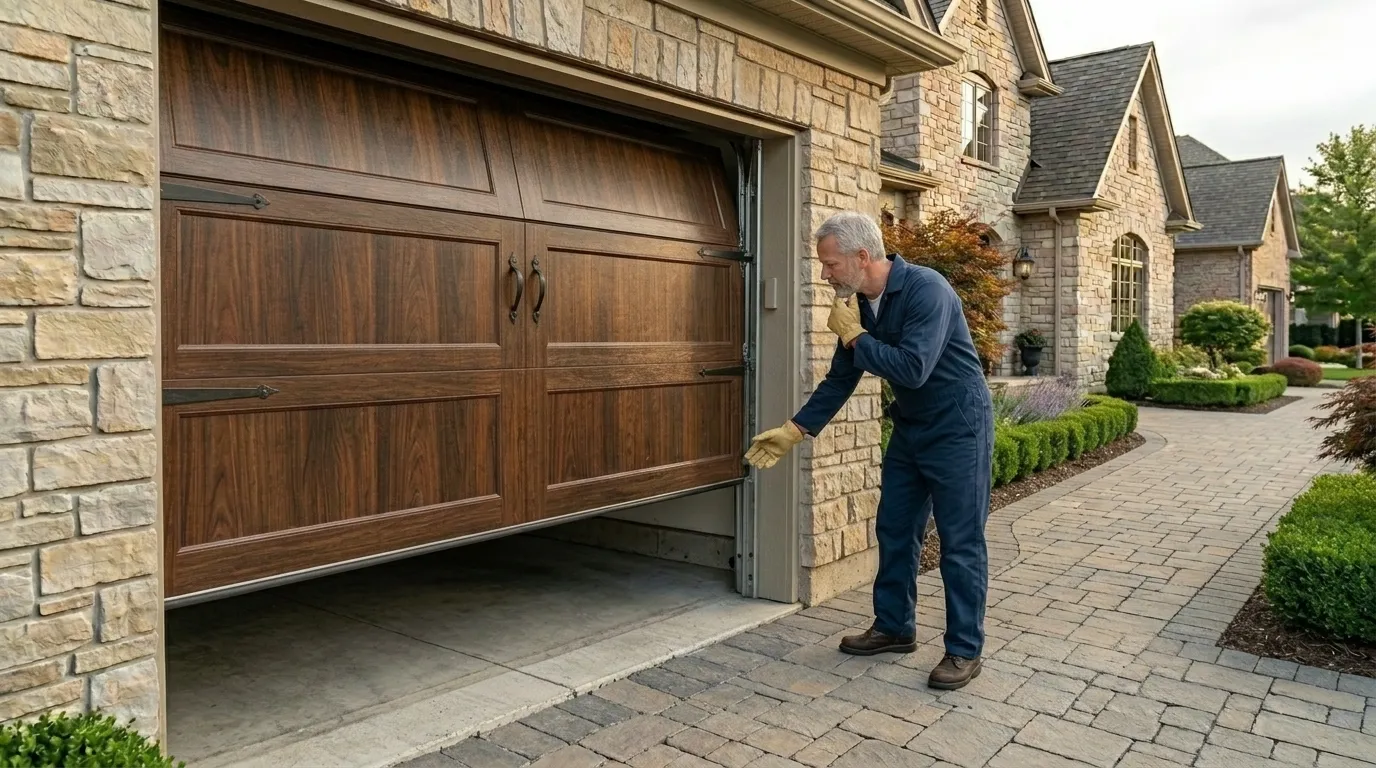
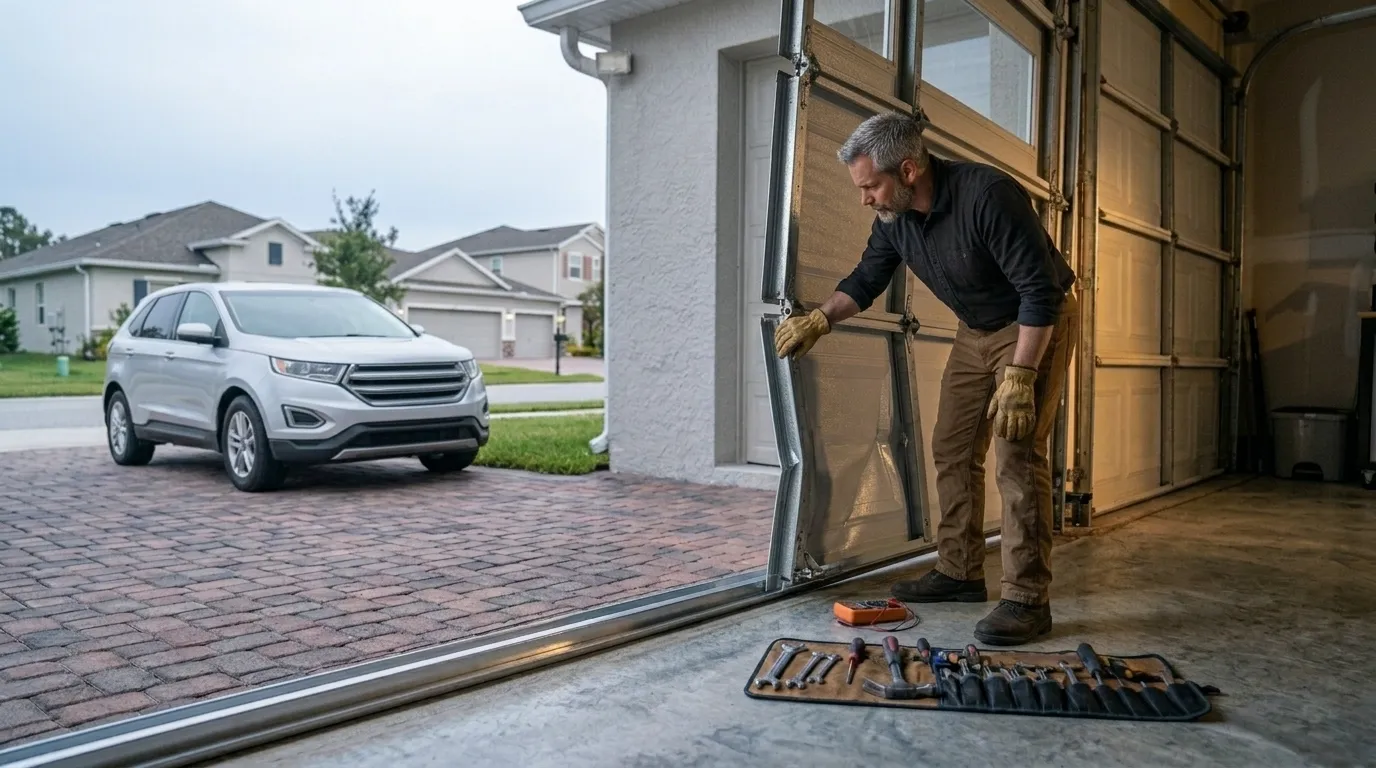
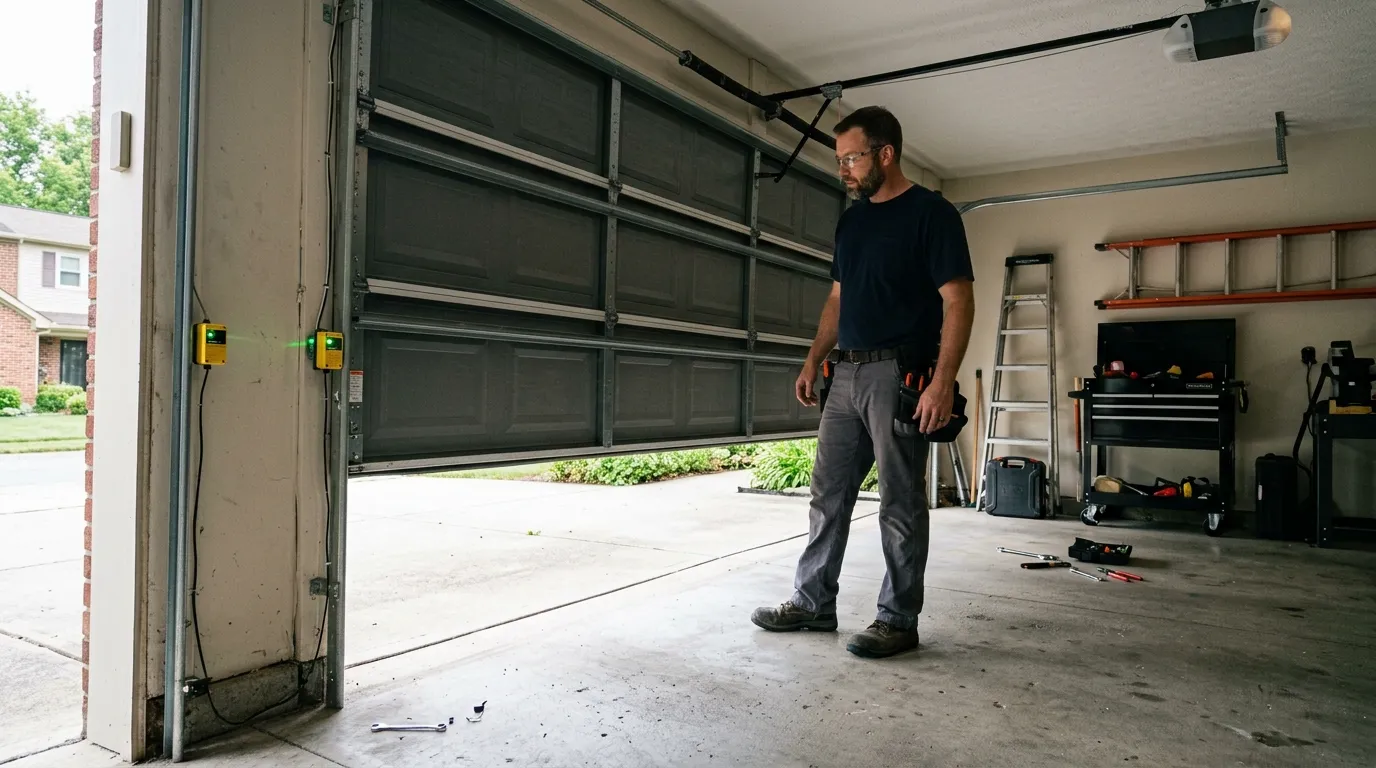
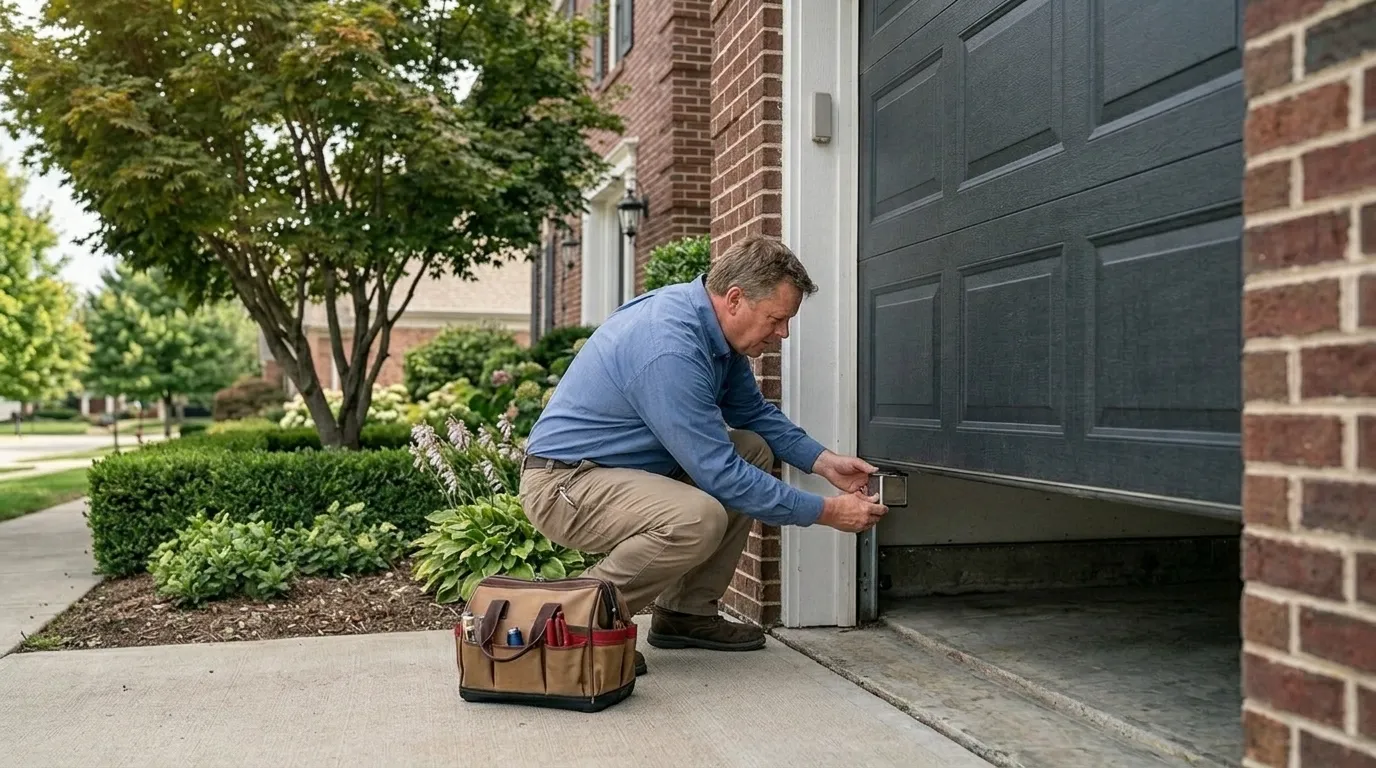
On a house built around the local median year, the tells are usually mechanical, not cosmetic. A door that's noticeably heavier to lift by hand than it was a year ago is a spring losing tension, not a door getting heavier. An opener that runs longer than it used to before the door starts moving is straining against resistance somewhere in the track or the springs, and the motor is compensating instead of the hardware doing its job. Rollers that grind instead of roll, cables with a slight fray near the drum, hinges that have worked loose enough to let a panel flex - these are all normal wear on a door this age, not signs of a bad installation. What's harder to see is the opener's force setting drifting out of range, which is often the first quiet indicator that something downstream - springs, track alignment - has already changed and the opener is just absorbing it.
What the Fix Involves
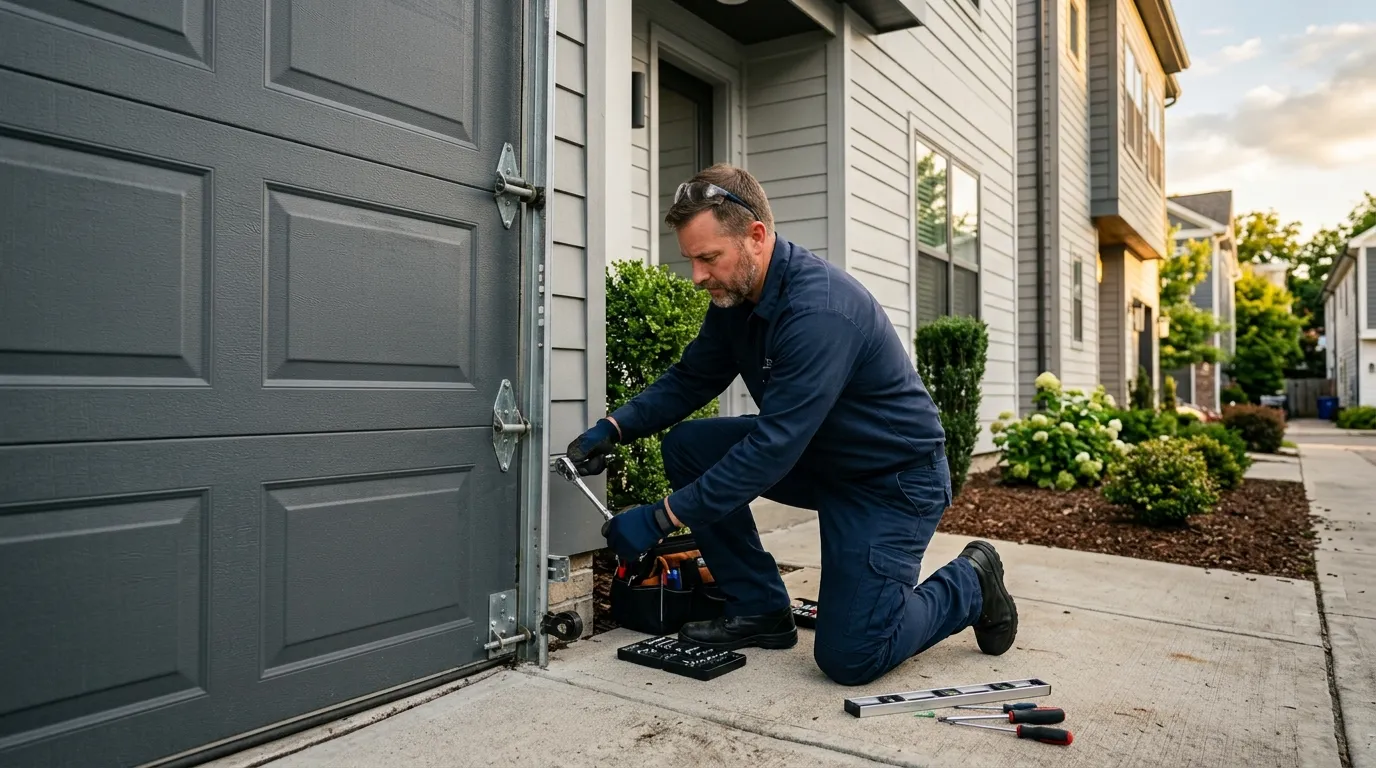
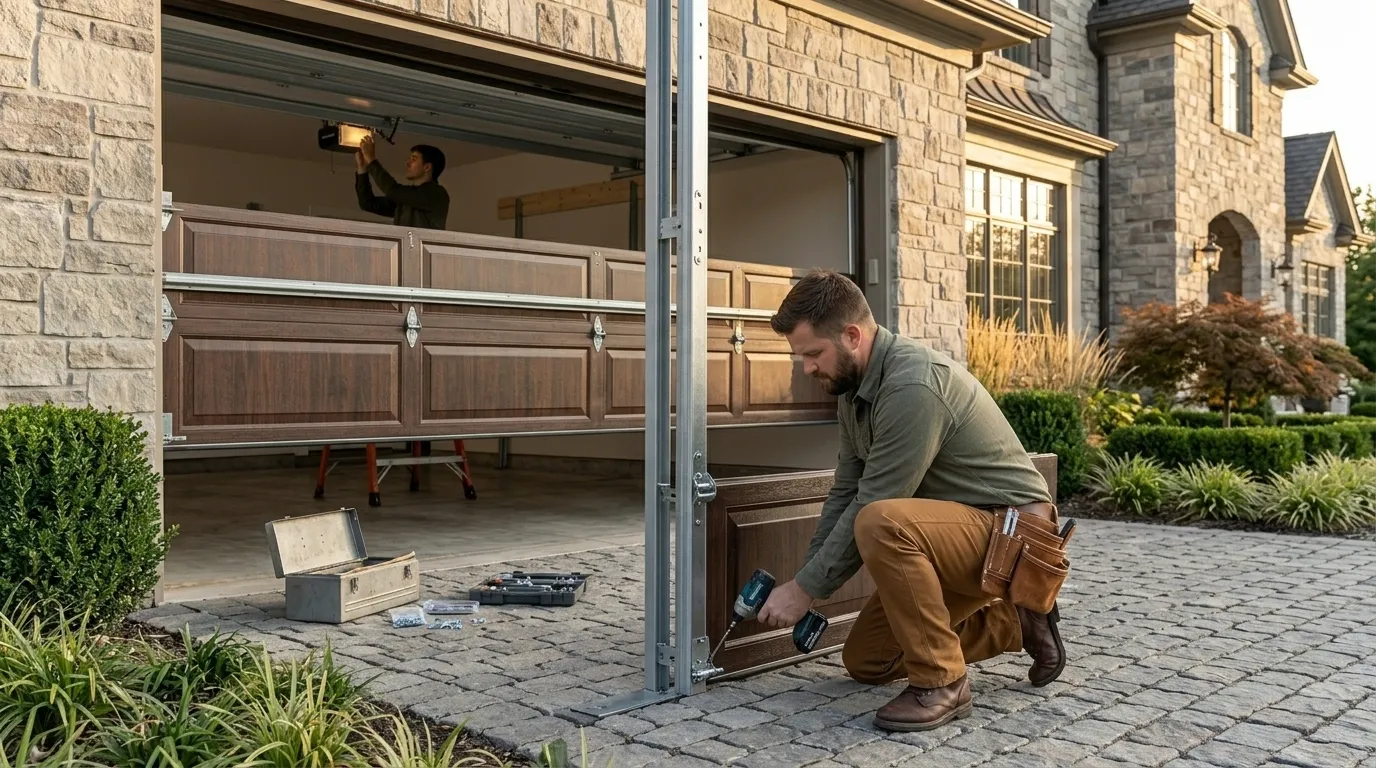
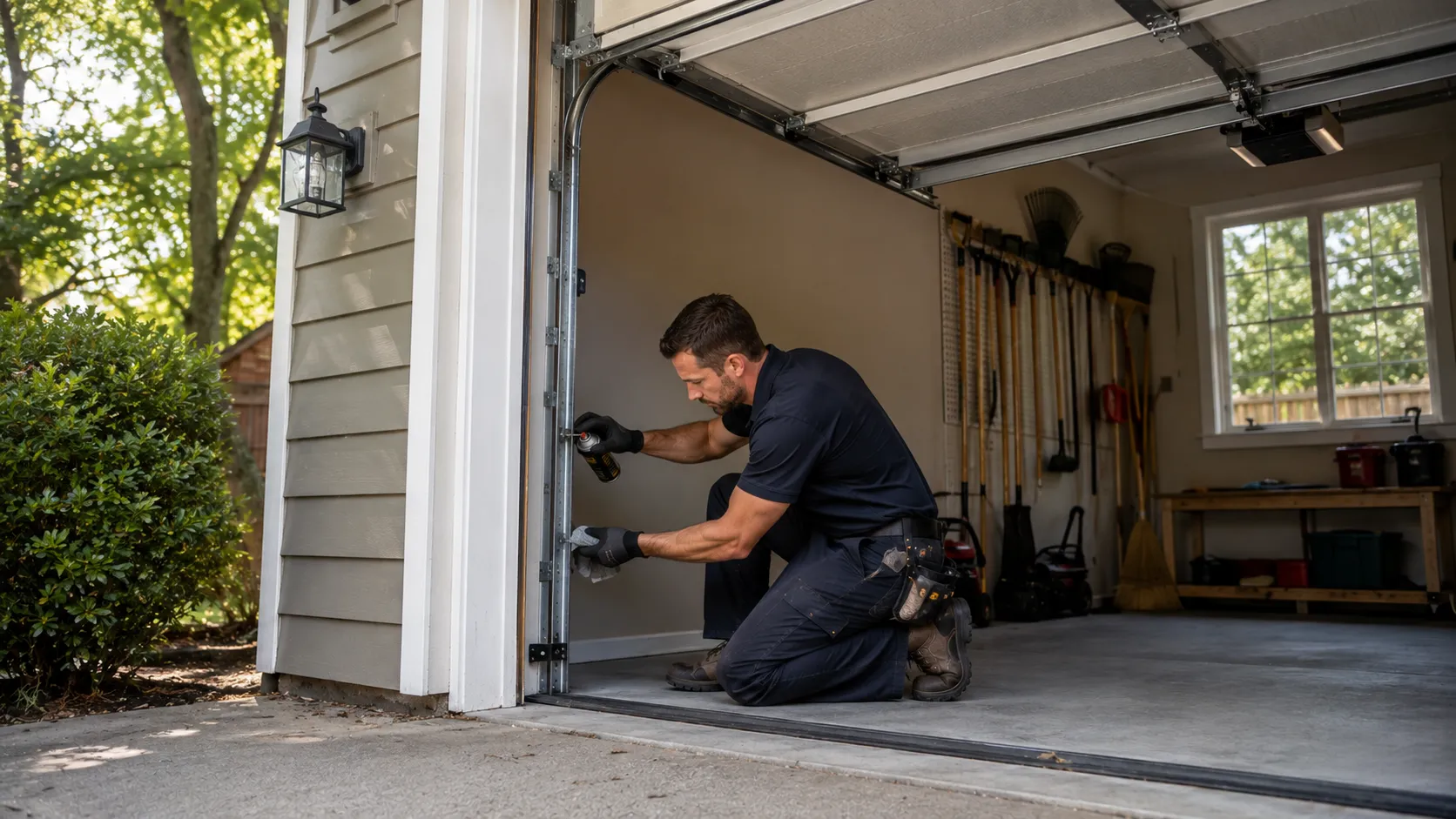
A maintenance visit on a door from this era means checking spring tension against the actual weight of the panel, not just eyeballing it, since the springs installed originally may already be a step off from what the door now needs after decades of adjustment and replacement parts. It means re-lubricating hinges and rollers with the right lubricant for a cold-moderate climate - heavy grease that doesn't stiffen in winter - and re-torquing hardware that's worked loose. It means resetting opener force and travel limits so the motor isn't doing a spring's job. What it does not mean is replacing anything that doesn't need it. If a cable's fraying but not close to failing, we say so and note it for next visit instead of billing for parts that have another year in them. That's the honest version of maintenance: catching what's actually close to failing, and leaving alone what isn't.