Serving Chicago, IL & nearby
(708) 630-7529
Chicago, IL

New Garage Door Installation for Burbank, IL Homes

Burbank's housing stock dates to about 1965, which means original hardware built for a different era. Here's what a new garage door install actually involves in this town.

New Garage Door Installation for Burbank, IL Homes
Chicago, IL
8 services
8 service areas
Diagnosis first, then the fix

Getting It Booked In

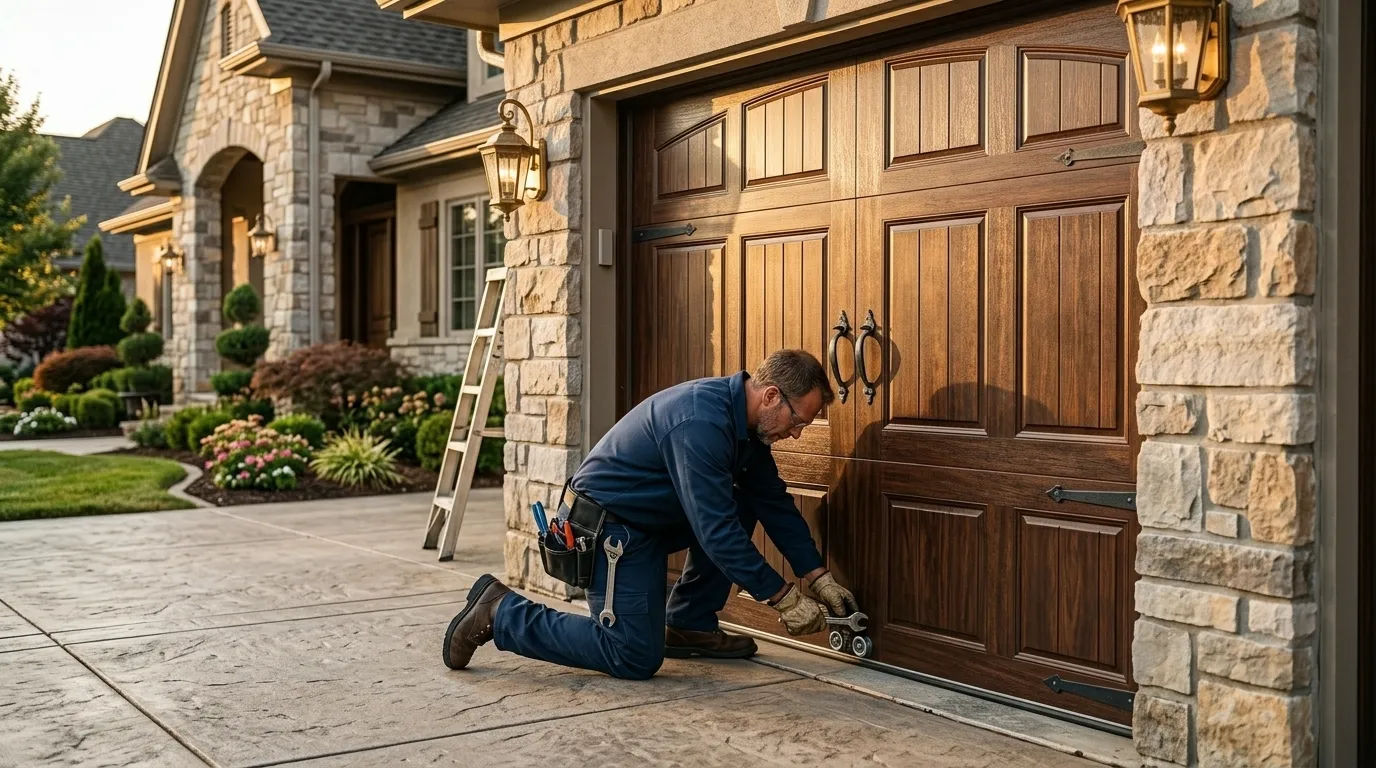
Chicago Garage Door Co runs installs out to Burbank same as the rest of the service area, and the drive is about eight miles, so scheduling here means picking a day rather than getting a same-hour visit. We measure the opening, talk through door and opener options, and give a written quote before anything gets ordered. Standard sizes ship fast; anything custom to an older opening takes longer, and we tell you that lead time up front rather than after you've paid a deposit. Install day itself is usually one visit - old door and track come out, new door, hardware, and opener go in, and we haul the old unit away. We don't do same-day emergency swaps out here; if a door failed this morning and you need something today, that's a repair call, not a new install. Booking a new door is a planned job, and we treat it that way - right measurements, right hardware for the opening, done once instead of redone in a year.

What Causes It Around Here

Burbank's housing stock centers on 1965, which puts most garages here right in the middle of an era that standardized on single steel doors, extension springs mounted along the horizontal track, and openers - where they existed at all - with none of the safety reversal sensors required on newer units. Across the wider service area the housing runs 1938 to 1994 with a median around 1964, so Burbank sits almost exactly on that line rather than off to either edge. That means the failure pattern here is predictable: the door itself may have been swapped once or twice over sixty years, but the header, the track spacing, and the wall anchors are often still original to the build. When a homeowner calls for a new install, it's rarely because the door just broke - it's because the whole system is original-era hardware trying to run modern springs or a modern opener bolted onto a frame that was never built for one.

What You Are Seeing

On a house from this era, the signs that you need a new door rather than another patch are usually mechanical, not cosmetic. The door doesn't sit level in the opening anymore because the track has racked slightly out of square over decades of use. An opener installed after the fact strains against extension springs it was never sized for, so it grinds or stutters partway up. There's no auto-reverse eye, or there's one bolted on as an afterthought that doesn't align with the current door's edge. Panels show rust or delamination at the bottom where decades of Chicago-area winters have pushed moisture into a door with no insulation rating to speak of. None of this is dangerous on its own until a spring goes, and on a door this old, that's usually the day it fails all at once rather than gradually.

What the Fix Involves

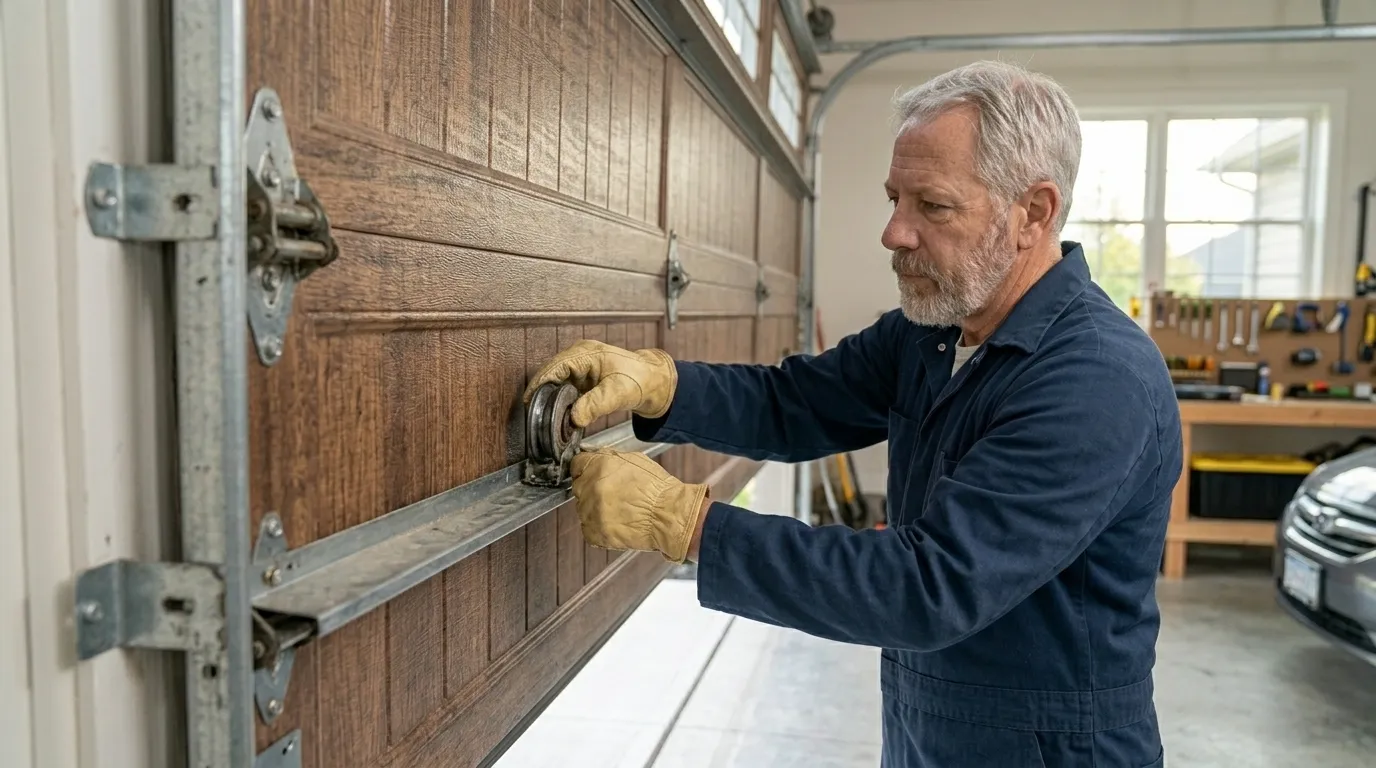
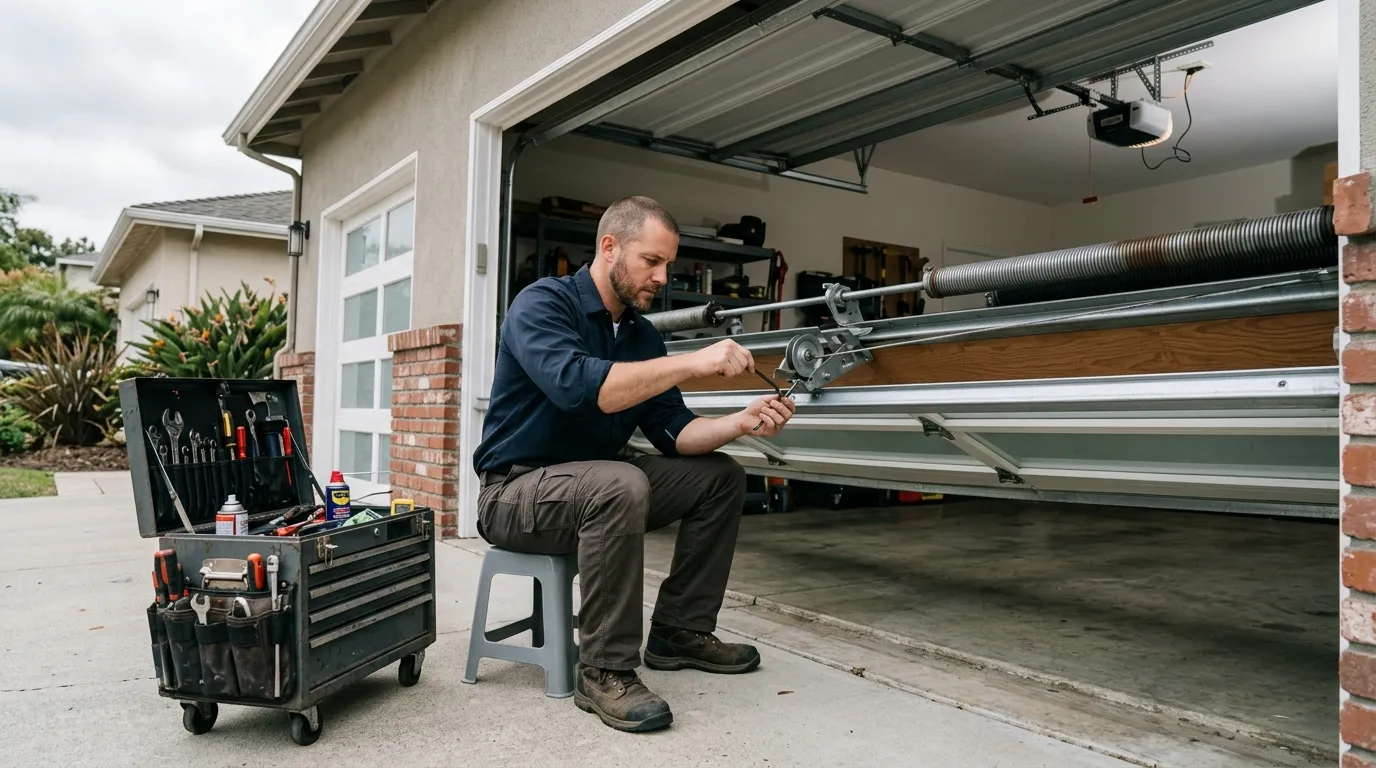
A new install on a house built around 1965 starts with fixing what's underneath the door, not just the door. We check the header and jamb for square, because sixty-year-old framing has usually settled. We convert extension spring setups to torsion where the header allows it - torsion hardware handles more cycles and doesn't have the exposed-cable failure mode extension springs do. The opener goes in with a working auto-reverse system as a baseline, not an option. Given the cold-moderate climate this area sits in, we talk through insulated panel doors versus uninsulated steel - the difference matters more on an attached garage than a detached one, and we'll say so plainly rather than upselling insulation on a door that doesn't need it. One honest limit: if the header or jamb has shifted enough that it needs carpentry beyond hardware anchoring, that's outside a standard install and we'll tell you before we start, not after.
The Complications

The most common complication on a 1965-era garage in this area is headroom. Torsion conversions need clearance above the opening for the spring and shaft, and a lot of these garages were framed with just enough room for the original extension-spring setup and nothing more. Sometimes that means a low-headroom torsion kit; sometimes it means keeping extension springs by design, not by default. Electrical is the second issue - an opener installed decades after the garage was built often runs off an extension cord instead of a dedicated outlet, and we won't wire around that; it gets fixed or the opener doesn't go in. Door width can also be a problem on older single-car garages where a wider replacement door simply won't clear the existing opening without framing work. None of these kill a job, but they add time and cost that a quote sight-unseen can't account for, which is part of why we measure in person before anything is ordered.

How it works

From “it’s stuck” to “it’s fixed”

1
Tell us what’s wrong - Chicago garage door service

Tell us what’s wrong

Describe the symptom - won’t open, loud bang, opener runs but the door won’t move.

2
On-site diagnosis - Chicago garage door service

On-site diagnosis

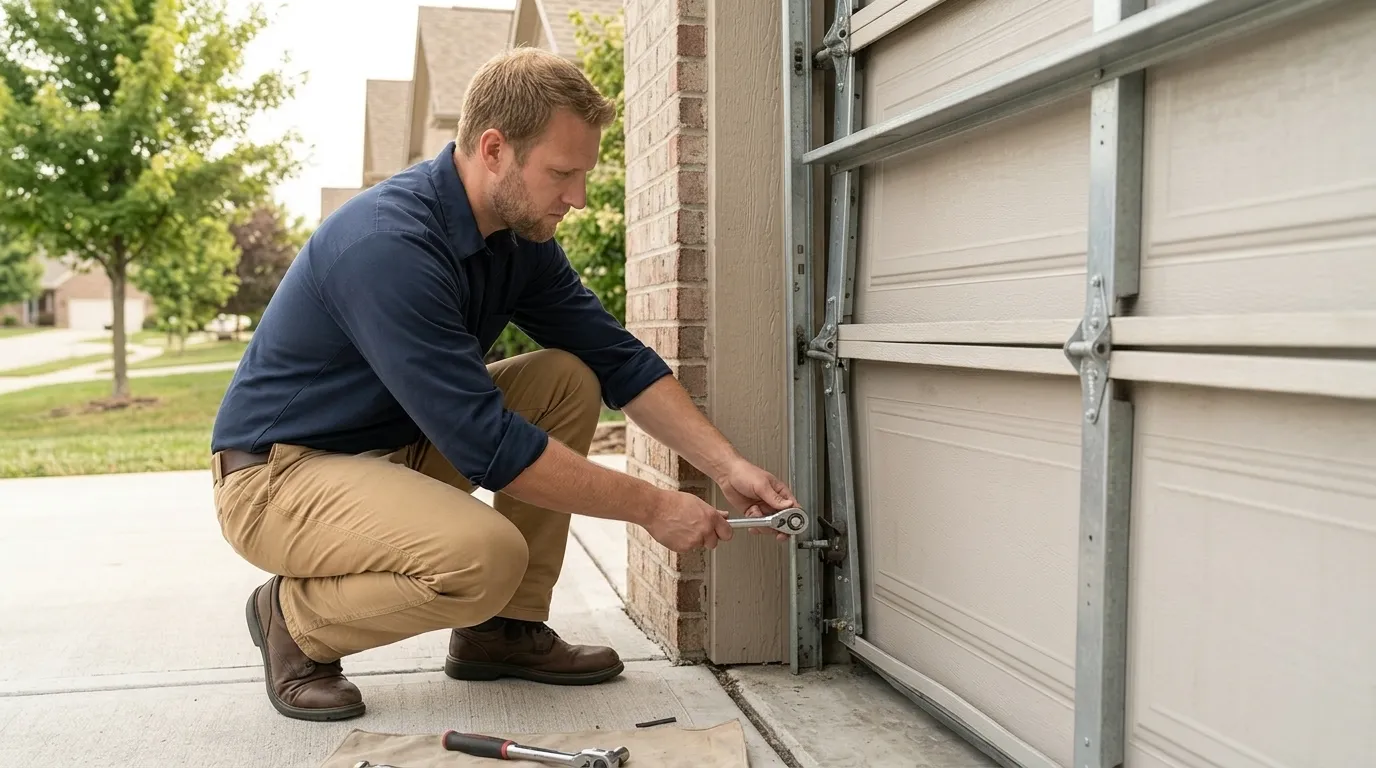
A technician tests the door under power and by hand and finds what actually failed.

3
Clear, up-front plan - Chicago garage door service

Clear, up-front plan

You get the fix that’s needed and what drives the cost - before any work starts.

4
Repaired & tested - Chicago garage door service

Repaired & tested

The repair is done, the door is set true and tested, and the work area left clean.

Serving Chicago, IL - tell us what your door’s doing and we’ll take it from there.

How we work

What to expect

Diagnosis firstEvery visit starts by finding what actually failed - not a pre-written parts list.
The right part for the doorSprings and openers matched to the door’s weight and age, so the fix holds up.
Straight answersWhen a repair makes more sense than a replacement - or the reverse - you hear it plainly.
Clean, careful workTension released safely, hardware set true, the door tested under power before we leave.
2,664,452Residents in Chicago
8Garage door services
8Neighborhoods & suburbs
ILServing Chicago, IL
Questions

Frequently asked

Straight answers about garage door repair in Chicago. Still unsure? Ask us directly.

Does Chicago Garage Door Co have a branch in Burbank?

No. The company works out of Chicago and travels to Burbank for jobs, about eight miles each way. That means installs are scheduled rather than same-hour, and it's why we don't offer emergency same-day service here - new installs are planned work, not urgent repairs.

Will a new door fit my garage if it was built in the 1960s?

Usually yes, but headroom and framing vary. Garages from this era were built for extension-spring hardware, so a torsion conversion sometimes needs a low-headroom kit, and a wider replacement door can require framing adjustments. We check this in person before quoting a final price.

Do I need an insulated door in Burbank?

It depends on whether the garage is attached and heated. This area sits in a cold-moderate climate band, so insulation helps more on attached garages that share a wall with living space. We'll walk through the difference rather than default to the pricier option.

How long does a new install take once it's scheduled?

Standard-size doors and openers are usually a single day once the crew is on site. Custom sizes for older, non-standard openings take longer to source, and we give you that lead time before you commit to an order, not after.

Ready to get your garage door sorted?

Tell us what it’s doing and where you are in Chicago - we’ll take it from there.

Request a QuoteCall