Serving Chicago, IL & nearby
(708) 630-7529
Chicago, IL

Spring Repair for Burbank's Older Garage Doors

Torsion springs on Burbank's mid-1960s garage doors wear differently than newer stock. We travel from Chicago to fix broken springs on the doors this town actually has.

Spring Repair for Burbank's Older Garage Doors
Chicago, IL
8 services
8 service areas
Diagnosis first, then the fix

Getting It Booked In

When a spring goes on a garage door, the door doesn't open partway or slow down - it stops, or it slams. That's the fault we're called out for most in Burbank: a torsion spring that's snapped clean through, usually a coil that's been winding and unwinding since Lyndon Johnson was president.

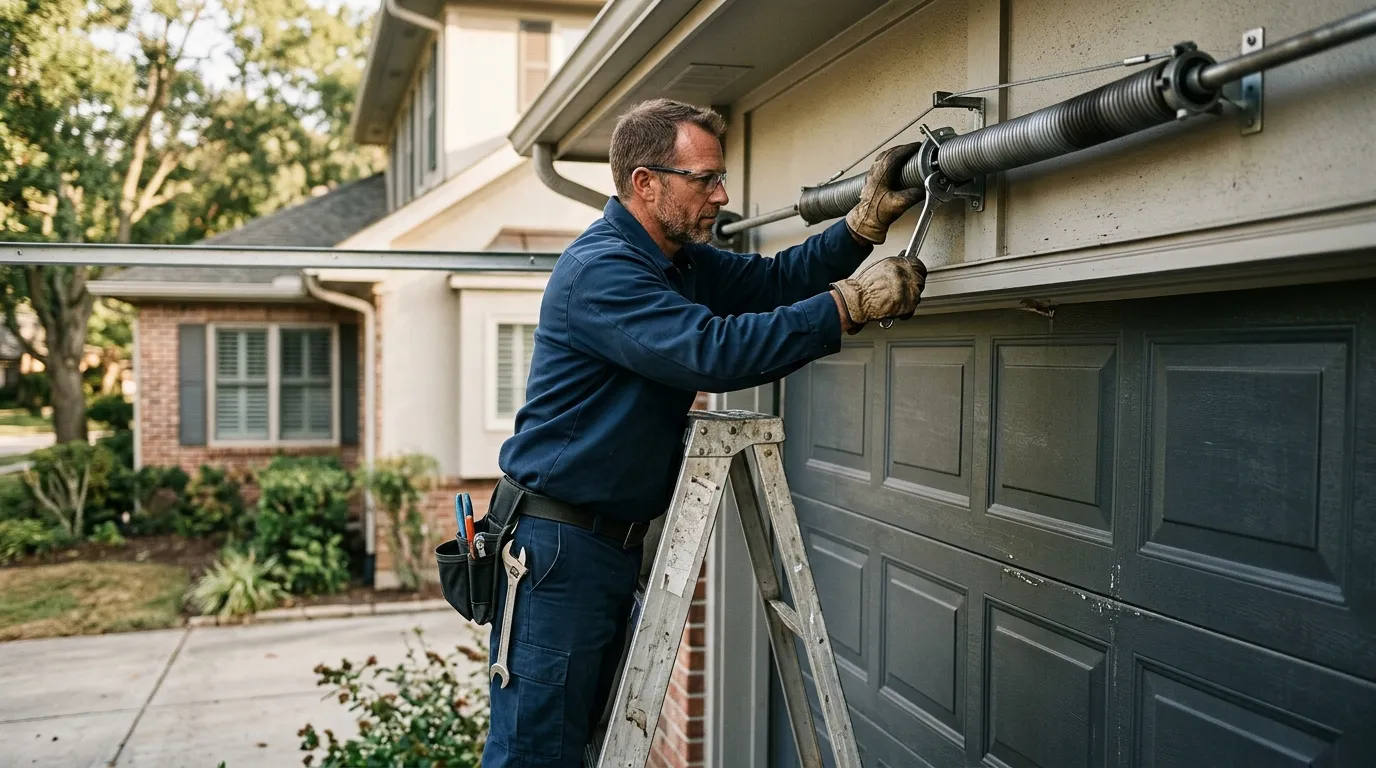
Burbank's housing stock centers on 1965, right in the middle of the 1938-1994 range across the areas we cover. A door built or replaced in that era almost always runs on a single torsion spring mounted above the header, not the dual-spring or extension-spring setups you see on newer construction. That single point of failure is why one bad spring means a dead door, full stop, not a door that limps along.

We come out from Chicago, about 8 miles in. There's no local branch to dispatch from, so we're upfront that we're driving in, not sitting five minutes away. Booking is straightforward: tell us what the door is doing (or not doing), and whether you can see the spring - coiled tight and split, or hanging loose - and we'll get the right spring on the truck before we leave.

What Causes It Around Here

Torsion springs are rated for a cycle count, not a calendar. A door built in the mid-1960s that's still on its original spring, or even a second-generation replacement from the 1980s or 90s, has likely put in more open-close cycles than the spring was ever rated for. That's the main driver of failures we see in this part of the service area - age of the hardware, not age of the door itself.

Cold winters put extra strain on a spring that's already near the end of its life. In this climate band, steel contracts and lubricant thickens, and a spring that's been creaking along all fall will often go in the first hard cold snap. It's not the cold that causes the wear - it's the cold that finishes the job the cycle count started.

What You Are Seeing

A snapped torsion spring usually announces itself with a bang from the garage, loud enough that people inside the house hear it. After that, the door won't lift with the opener - or it will, briefly, before the opener strains and quits, because it isn't built to lift the door's full weight alone.

Look up at the spring above the door, if it's safe to do so from outside the door's path: a snapped spring shows a visible gap in the coil, sometimes with the two halves twisted apart. A spring that's just worn but not broken will show frayed or stretched coils and a door that closes unevenly, drifting to one side as it comes down.

Don't try to lift the door yourself once the spring's gone. Without it, a standard door section runs 130-200 lbs, all of which the springless system can no longer support.

What the Fix Involves

On a single-spring door from this era, the job is a straight swap: unwind and remove the old spring, install a new one matched to the door's weight and the drum size on the shaft, and rebalance the door so it holds level at the halfway point. We check the cable and the bearing plate at the same time, since they take the same wear cycle.

If the door has been running on a mismatched or hardware-store spring from a past repair, we'll flag that. Springs are sized to the door, not just the opening, and a wrong-size spring wears out the opener trying to compensate.

We carry standard torsion spring sizes on the truck. If your door needs an oddball size - an older custom door, or a spring that was never standard to begin with - that part isn't something we stock, and we'll tell you it needs to be ordered rather than pretend otherwise.
The Complications

The complication we run into most in this area is a door where the spring failure isn't the only problem - it's the symptom. A door built around 1965 has had 60 years to develop track misalignment, a bent bottom bracket, or a worn roller that the spring was quietly compensating for. Once the spring's gone, those issues show up all at once.

Another complication: some of these older doors were never converted from extension springs to torsion, or vice versa, and the header framing doesn't match what a standard replacement expects. That's a longer job than a straight swap, and we'll say so before we start rather than after.

For full details on our spring repair service across the wider Chicago area, see our main spring repair page. For general garage door work in Burbank beyond springs, see the Burbank repair page.

How it works

From “it’s stuck” to “it’s fixed”

1
Tell us what’s wrong - Chicago garage door service

Tell us what’s wrong

Describe the symptom - won’t open, loud bang, opener runs but the door won’t move.

2
On-site diagnosis - Chicago garage door service

On-site diagnosis

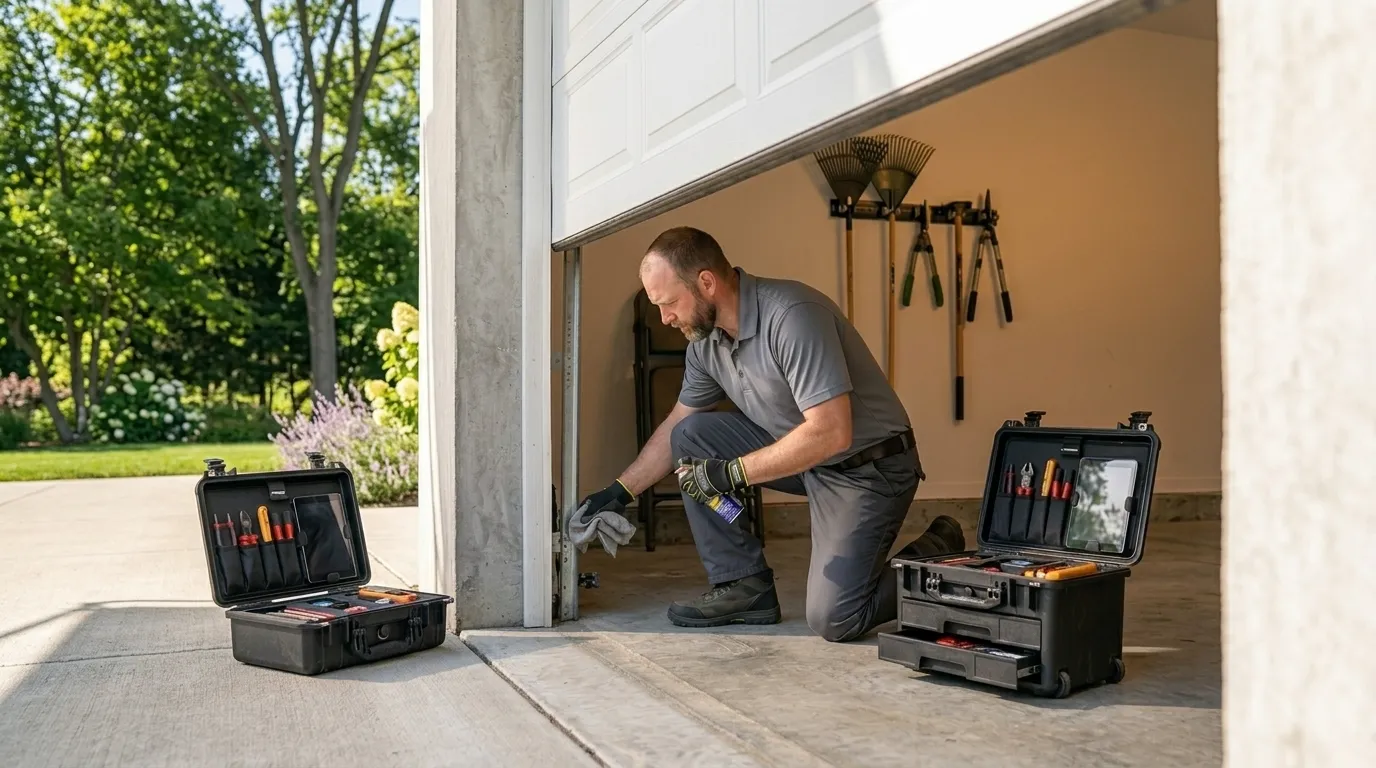
A technician tests the door under power and by hand and finds what actually failed.

3
Clear, up-front plan - Chicago garage door service

Clear, up-front plan

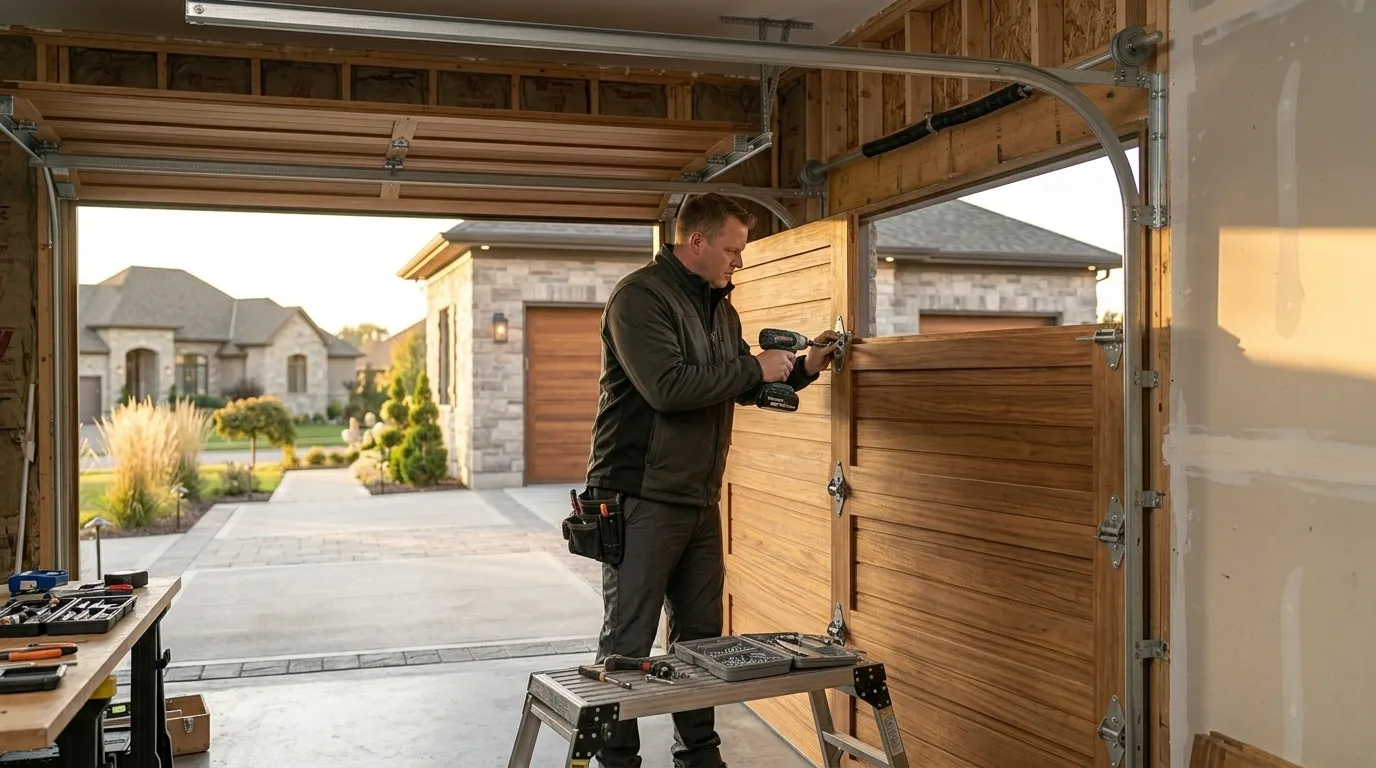
You get the fix that’s needed and what drives the cost - before any work starts.

4
Repaired & tested - Chicago garage door service

Repaired & tested

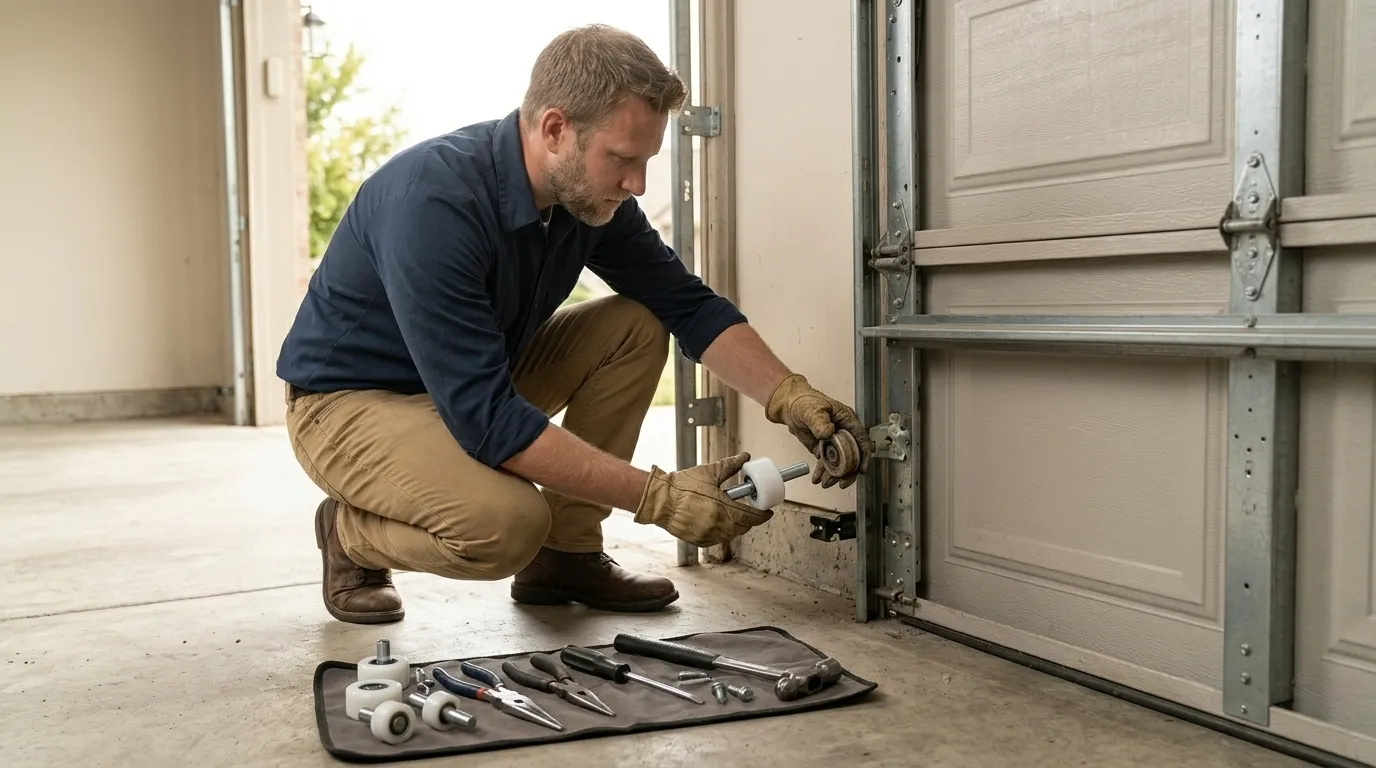
The repair is done, the door is set true and tested, and the work area left clean.

Serving Chicago, IL - tell us what your door’s doing and we’ll take it from there.

How we work

What to expect

Diagnosis firstEvery visit starts by finding what actually failed - not a pre-written parts list.
The right part for the doorSprings and openers matched to the door’s weight and age, so the fix holds up.
Straight answersWhen a repair makes more sense than a replacement - or the reverse - you hear it plainly.
Clean, careful workTension released safely, hardware set true, the door tested under power before we leave.
2,664,452Residents in Chicago
8Garage door services
8Neighborhoods & suburbs
ILServing Chicago, IL
Questions

Frequently asked

Straight answers about garage door repair in Chicago. Still unsure? Ask us directly.

How old are most garage doors in Burbank likely to be?

Housing in this part of the service area centers on 1965, and a lot of original garage doors and hardware from that era are still in service. That usually means a single torsion spring above the header rather than the dual-spring setups on newer doors, which is worth knowing before you call anyone out.

Do you have a truck stationed in Burbank?

No. We work out of Chicago and travel to Burbank, about 8 miles away, for spring repairs. We don't have a local branch here, and we won't claim a response time we can't back up. We'll tell you honestly what the trip means for scheduling when you call.

Can I replace a broken spring myself?

We'd advise against it. A torsion spring under tension can cause serious injury if released wrong, and a standard door section weighs 130-200 lbs once the spring is gone. This is one job where the safety margin for DIY is thin enough that it's not worth the savings.

Why did my spring break in cold weather?

Cold doesn't cause spring failure by itself, but in this climate band, contracting steel and thickened lubricant add strain to a spring that's already near the end of its rated cycle count. If your spring was going to fail soon anyway, a hard cold snap is often what finishes it.

Ready to get your garage door sorted?

Tell us what it’s doing and where you are in Chicago - we’ll take it from there.

Request a QuoteCall