Getting It Booked In
We work out of Chicago, about 14 miles from Elmhurst, so a call here gets slotted into the day's route rather than dispatched from a branch around the corner. That's the honest limitation: we won't promise a same-hour arrival the way a shop sitting inside town might. What we can do is tell you straight when the truck can realistically get there and what it's carrying when it does.
When you call, tell us the door's behavior, not just "it's broken." Does it stop halfway. Does it drop suddenly. Is there a loud bang before it quit. That detail decides whether we bring spring stock or opener parts, and it cuts the guesswork out of the visit before we're even on the road.
Elmhurst has 16,863 households, and a fair share of those sit on original garage hardware from the era the house was built. That's useful information before a wrench ever touches the door - it tells us what's likely worn before we get there.
What Is on the Truck
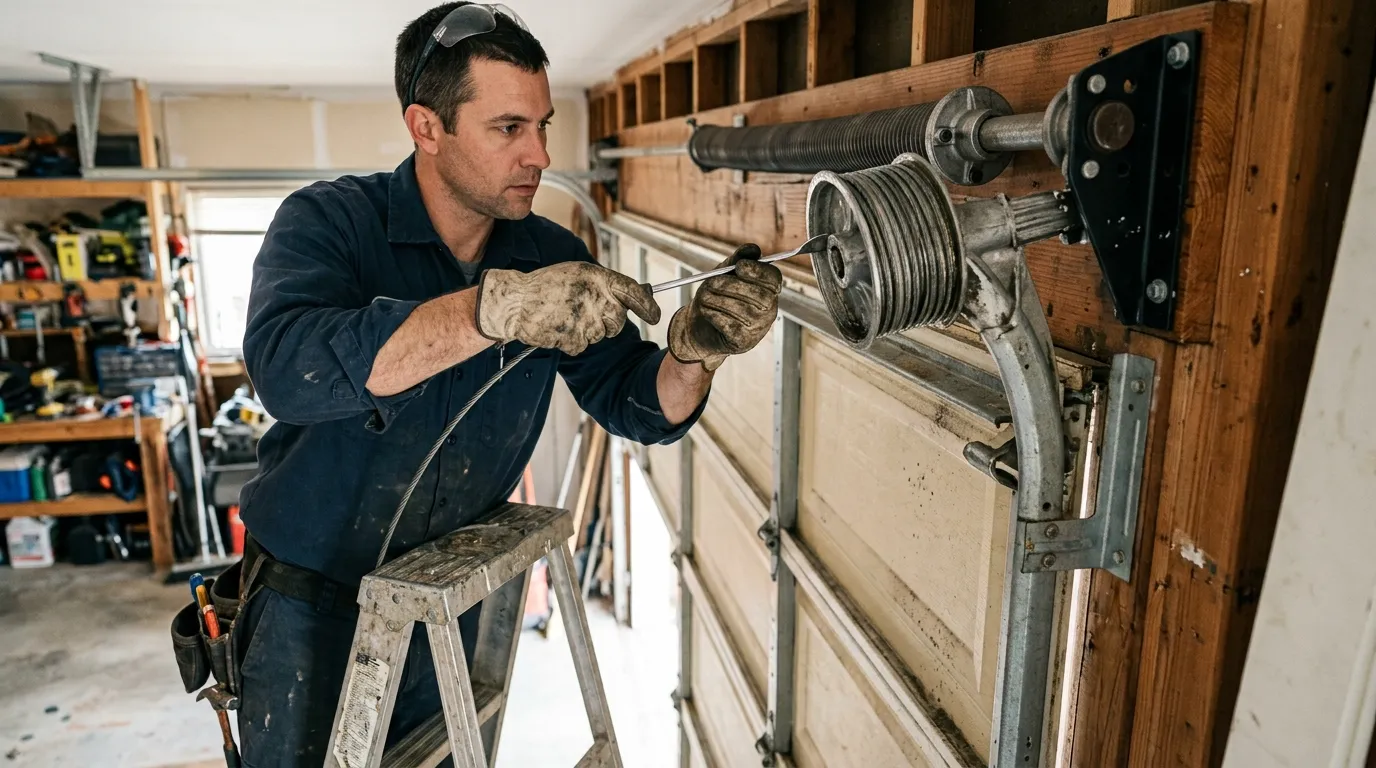
Because so much of Elmhurst sits on 1960s-era torsion hardware, the truck carries springs sized for that generation of door, not just whatever's newest. Same with end bearings and cable drums - the older doors use dimensions that current stock doesn't always match off the shelf, so we keep both eras covered rather than betting on one.
We also carry standard opener logic boards and drive parts for the mid-range residential units, since a failed opener is as common a call as a broken spring across houses of any era.
What we don't carry is custom panel stock. If a section's been dented or cracked, matching the exact panel on an older door sometimes takes an order rather than a truck part, and we'll tell you that up front instead of promising a same-visit panel swap we can't deliver.
What You Are Seeing
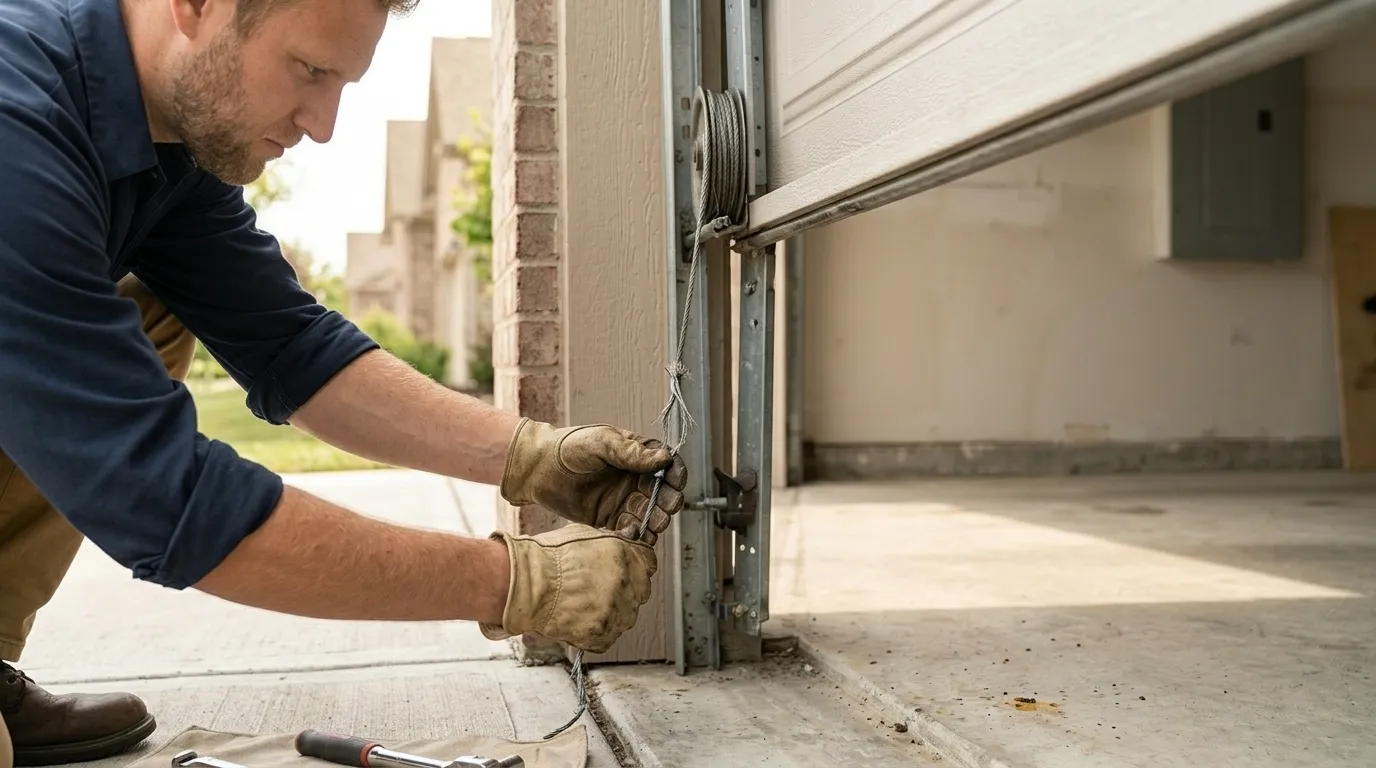
A door that won't budge and a loud bang beforehand usually means a torsion spring let go - common enough on a house built around 1964, where the original spring has had six decades to fatigue. A door that opens but drops on its own partway through is almost always a cable, not the opener.
If the opener runs but the door doesn't move, check the arm connecting it to the door before assuming the motor's dead - that link disengages on purpose sometimes, and it's a five-second fix, not a repair call.
A door that's noisy but still functions, grinding or popping on the way up, is worn rollers or a track that's slightly out of alignment. It's not an emergency, but it's the kind of noise that turns into one within a season if it's ignored.
How Long It Takes
A straight spring replacement runs about the same length of visit whether the house is in Elmhurst or anywhere else on the route - the work itself doesn't care about the address. What changes the timeline here is the hardware: original 1960s-era torsion setups sometimes need an adapter part or a slightly different bearing plate than a newer door, and if that part isn't on the truck, the job splits into two visits instead of one.
A track straightening or cable job is usually quicker than a spring, assuming the bend or fray hasn't already taken out something else. Opener repairs vary the most, since diagnosing a logic board issue can take longer than actually swapping it once we know what's wrong.
What we can't shrink is the drive time. At 14 miles out, that's built into scheduling a call here, not into the repair itself.