Getting It Booked In
Elmhurst sits about 14 miles from our shop in Chicago, so when you call, we're scheduling a truck to make that drive, not sending someone from around the corner. That means we ask a few more questions up front than a shop based in town would: what the door is doing, whether it's one spring or two, whether the opener still runs the door partway before it stops. The more we know before the truck leaves, the less time gets burned figuring it out in your driveway. With a median household income here around $145,374 - well above the wider service area's $80,202 - a fair number of these calls are about doing the job right the first time rather than patching something for a season. We don't keep a local branch in Elmhurst. We keep a truck stocked for the kind of doors this town actually has, and that's the tradeoff worth knowing before you book.
What Is on the Truck
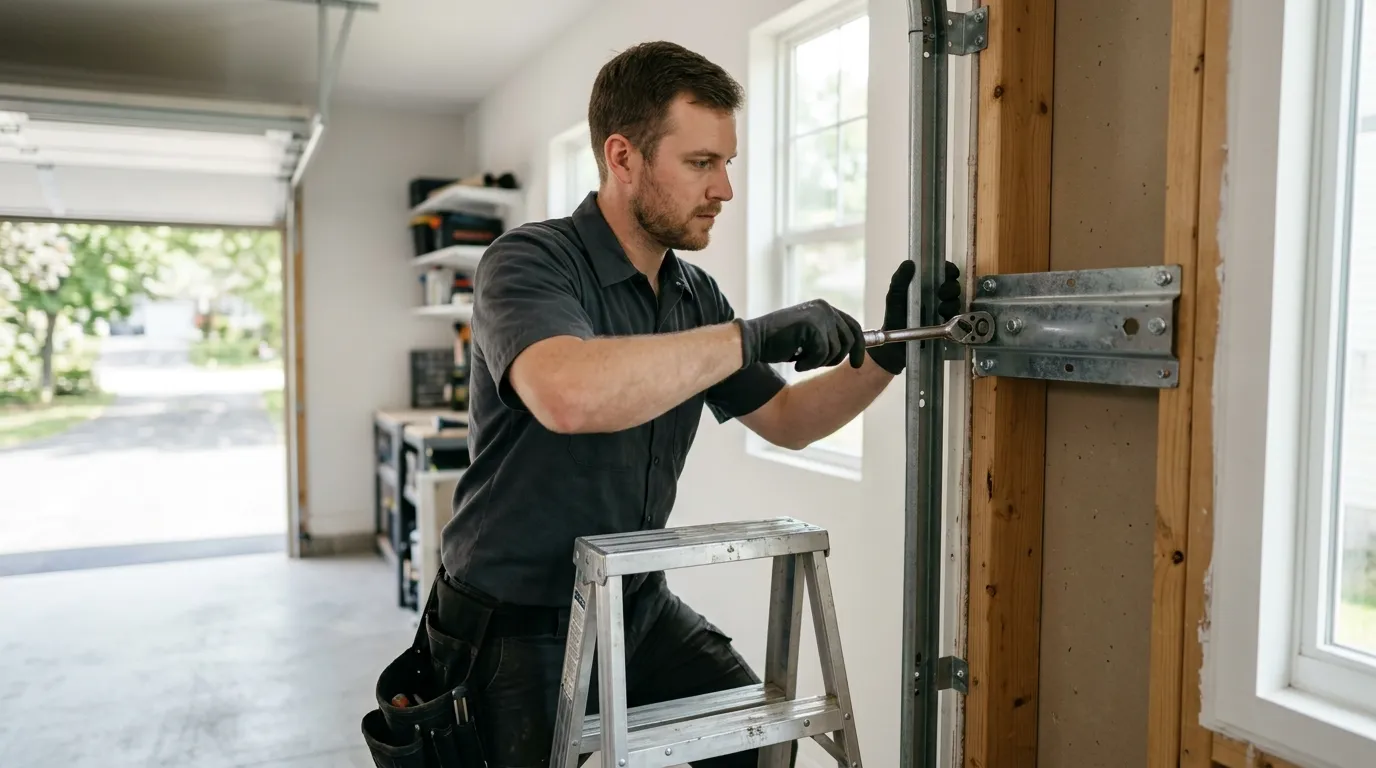
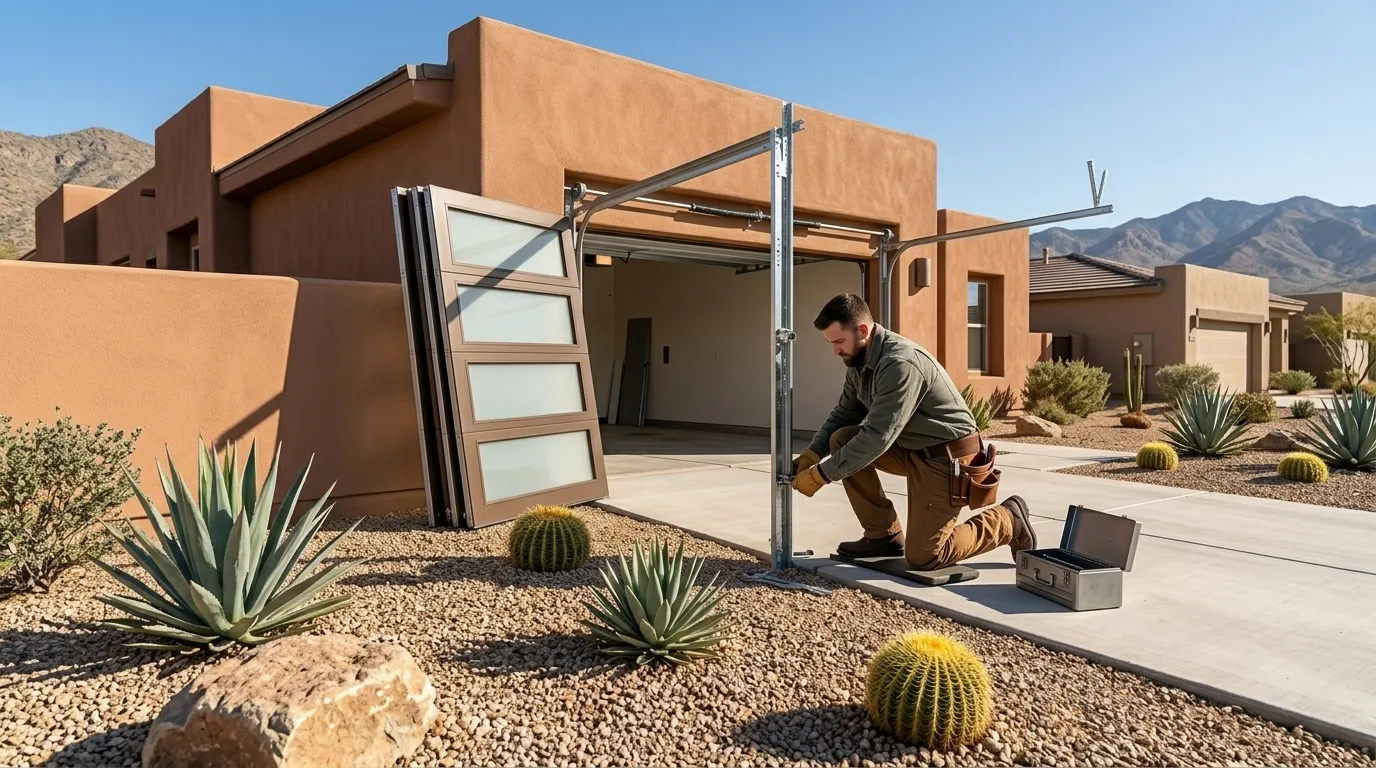
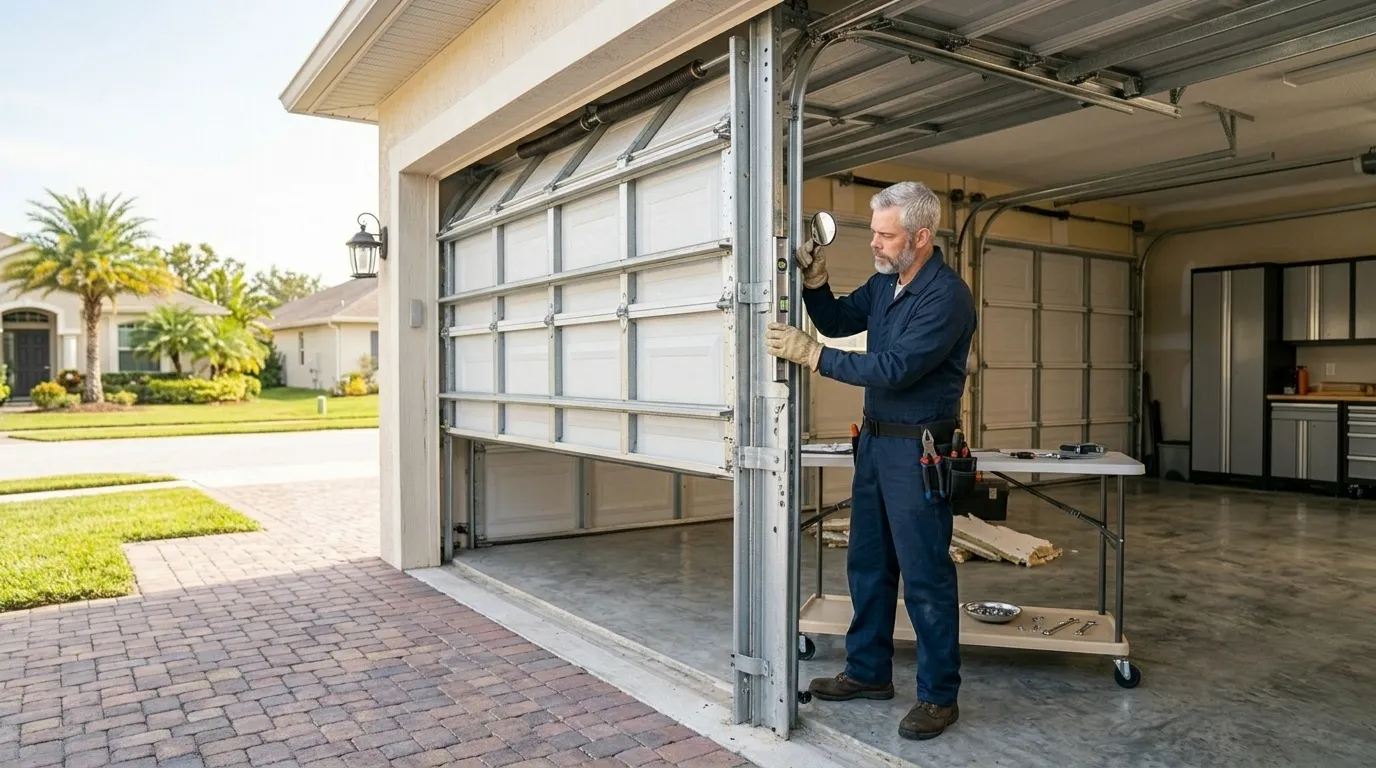
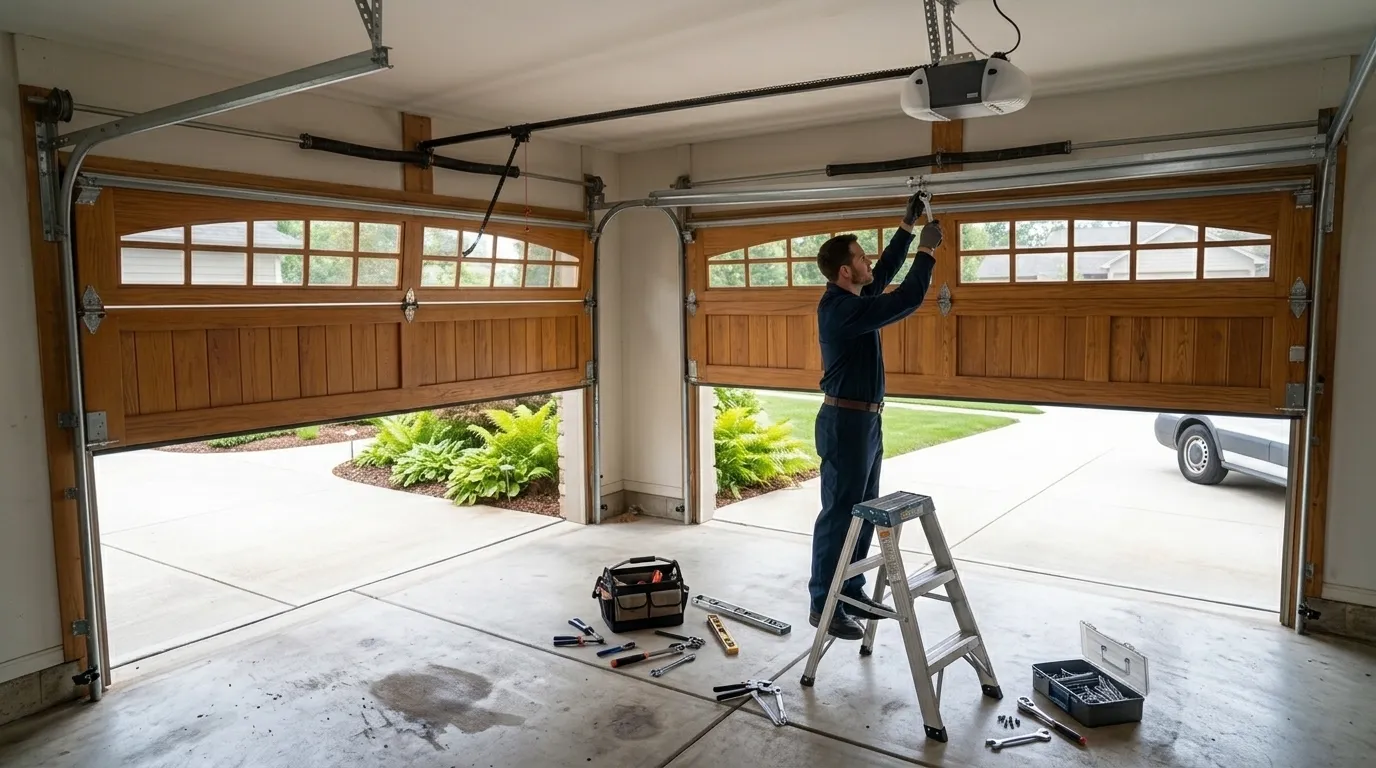
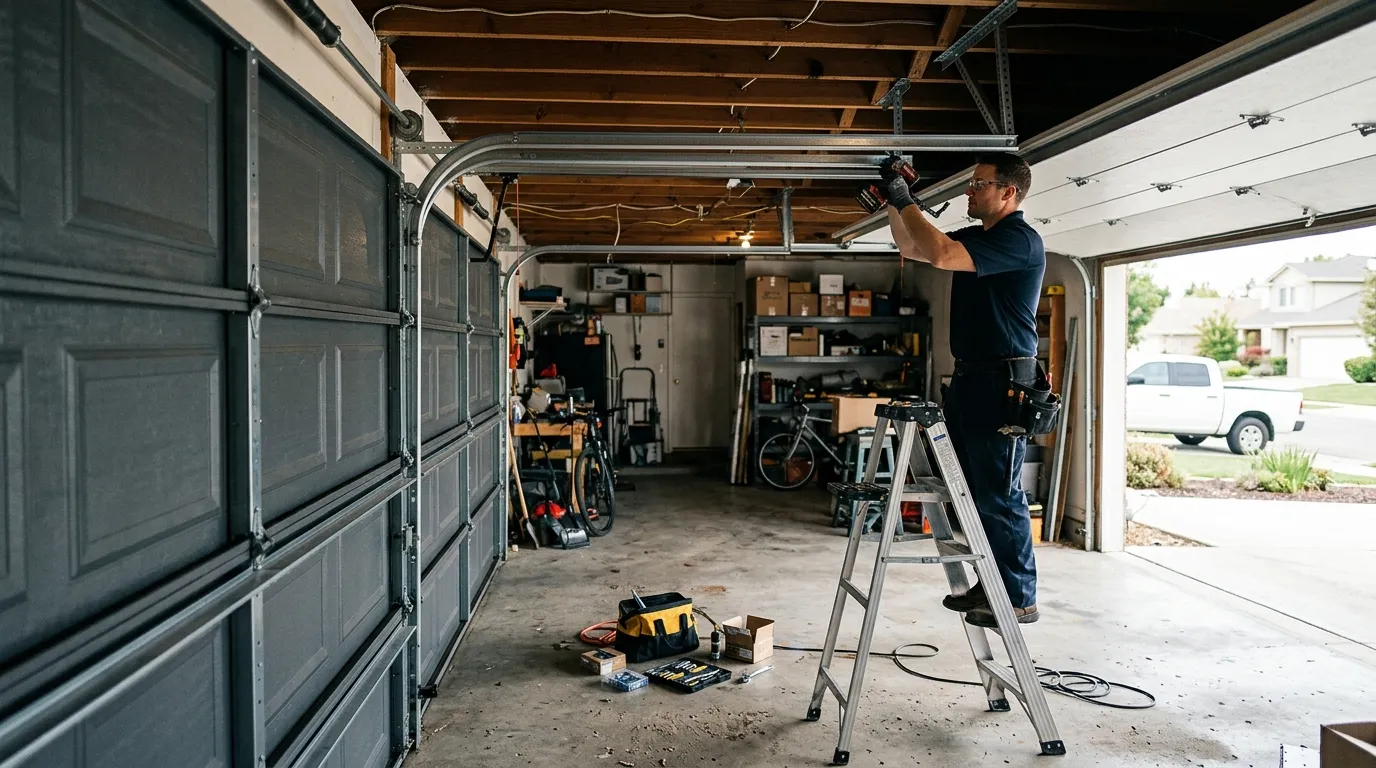
Because Elmhurst's housing skews to that 1960s-70s build window, the truck carries torsion springs sized for older single-panel and early sectional doors alongside the heavier springs current insulated doors need - we don't guess which one a house needs until we're standing at the door. We carry rollers in steel and nylon, both standard and heavy-duty cable, and track sections in the shorter runs common on older single-car openings as well as longer runs for the wider two-car doors that came later. Openers on the truck cover both older chain-drive replacements and newer belt-drive units, since we see both generations of hardware on the same block here. What we don't carry is custom millwork - if a door needs a panel replicated from a discontinued 1960s pattern, that's a special order, not a same-visit fix, and we'll tell you that on the spot rather than pretend otherwise.
What You Are Seeing
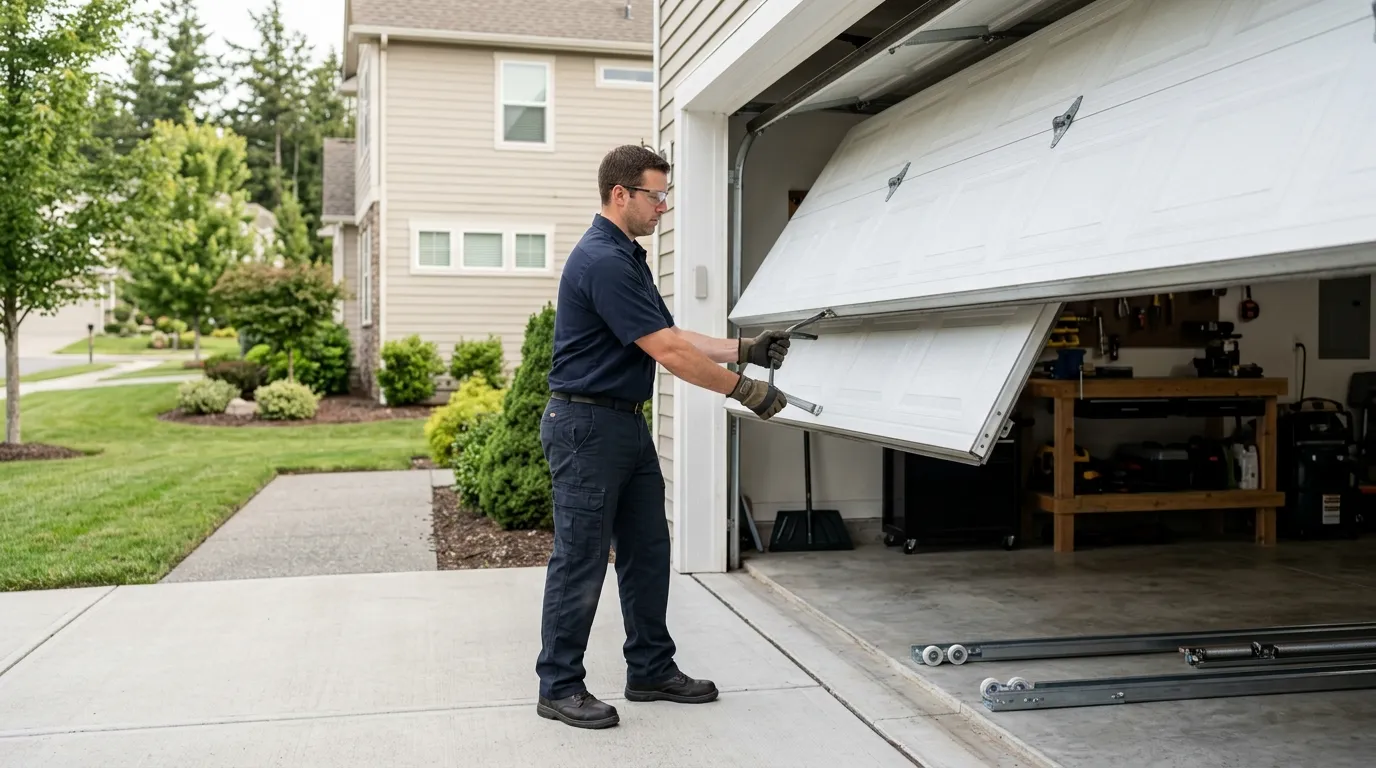
If your door is original or close to it, the symptom is often a spring that's simply worn out from age rather than dramatic failure - a slow sag when the door is halfway up, or a cable that's frayed from decades of cycling on hardware never rated for today's heavier panels. Climate here runs cold with moderate swings through the year, and that cycle of freeze and thaw stiffens old grease in tracks and rollers, so a door that worked fine in September can start binding once temperatures drop. On homes that had a door swap without a full hardware update, you'll often see an opener that runs hot or trips its safety reversal for no obvious reason - that's usually the opener compensating for springs sized for the old door, not the new one.
How Long It Takes
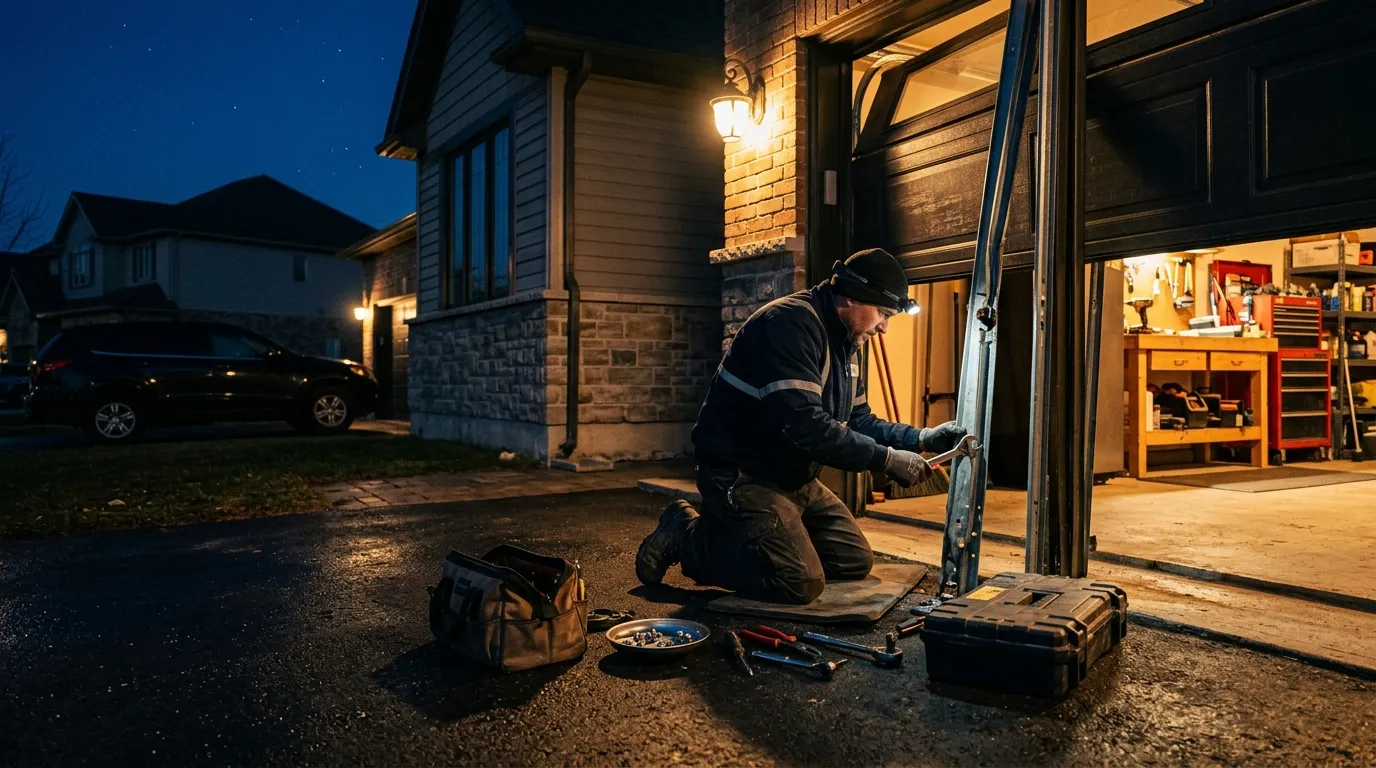
Most single-repair visits - a spring, a cable, a set of rollers - run under two hours once the truck is on site. Add the 14-mile drive from Chicago on either end, and that's the honest window to plan around, not a same-hour promise. If the job turns up something the truck doesn't stock - a discontinued panel style from an original 1960s door, for instance - that part has to be sourced, and we'll tell you a realistic timeline rather than guess at one just to close the call.