Serving Chicago, IL & nearby
(708) 630-7529
Chicago, IL

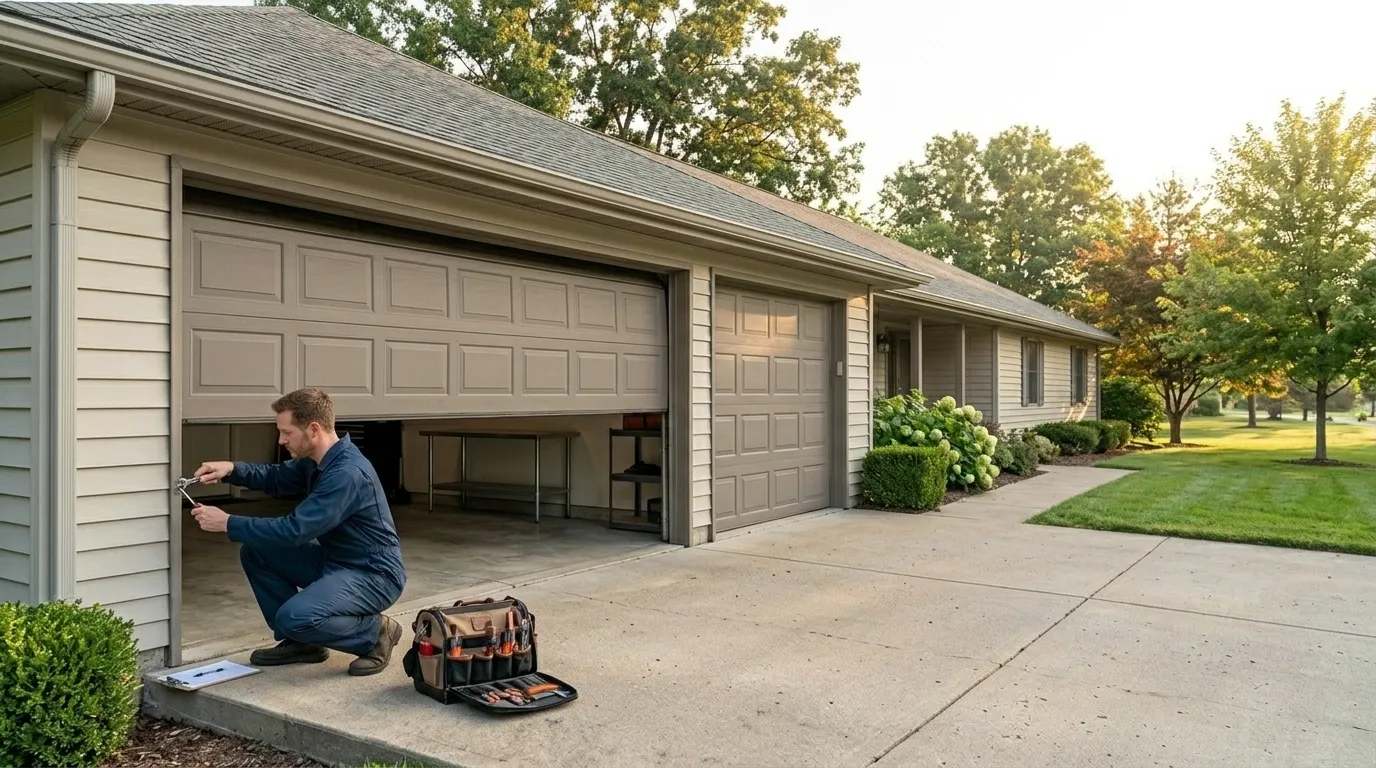
Garage Door Opener Repair for Elmhurst Homes

Elmhurst opener repair: most homes date to the 1960s, so retrofitted safety sensors and mismatched drive units are common. We travel from Chicago for the job.

Garage Door Opener Repair for Elmhurst Homes
Chicago, IL
8 services
8 service areas
Diagnosis first, then the fix

Getting It Booked In

The call we get most out of Elmhurst isn't a dead unit sitting silent. It's an opener that runs - motor hums, wall button lights up, remote clicks - but the door itself won't budge, or it jerks halfway and stops. That's a gear or a board problem more often than a dead motor, and it's the single most common opener complaint we hear from this side of the service area.

It tracks with the housing stock. Elmhurst's median build year sits at 1964, right in line with the 1938-1994 range across the wider area we cover from Chicago. A house from that era didn't come with the opener it has now - federal rules requiring photo-eye safety sensors on new openers didn't exist until 1993, so almost every unit currently installed here is a retrofit, sometimes a second or third one layered onto wiring and bracket work from a previous owner's install. We're one of 461,017 households' worth of garage doors across the area we drive to, and Elmhurst's roughly 16,863 households carry that same retrofit pattern as strongly as anywhere else on the list.

When you call, tell us what the door does when you press the button - moves and stops, doesn't move at all, reverses on its own - because that alone tells us most of what we need before the truck leaves.

The Complications

The complication in Elmhurst is rarely the opener in isolation. It's the opener paired with a door and a bracket setup from a different decade than the opener itself. A 1960s-built garage with a door swapped out in the 1990s and an opener added in the 2010s has three eras of hardware talking to each other, and safety sensor alignment or travel-limit settings get thrown off by whichever piece was touched last.

Elmhurst's median household income, at $145,374, runs well above the $80,202 median across the rest of the area we serve, and it shows in the calls: more requests for belt-drive and smart, app-connected openers than the chain-drive units we replace elsewhere. Swapping a chain unit for a belt-drive isn't a straight bolt-in - the header bracket, rail length, and sometimes the wall wiring all need adjustment, which is a different job than a straight motor or board swap.

One limitation worth saying plainly: if the opener is old enough that its circuit board is out of production, we may not be able to source an exact replacement board on the spot. In that case, full opener replacement is usually the faster and more sensible call than chasing a discontinued part.

What Is on the Truck

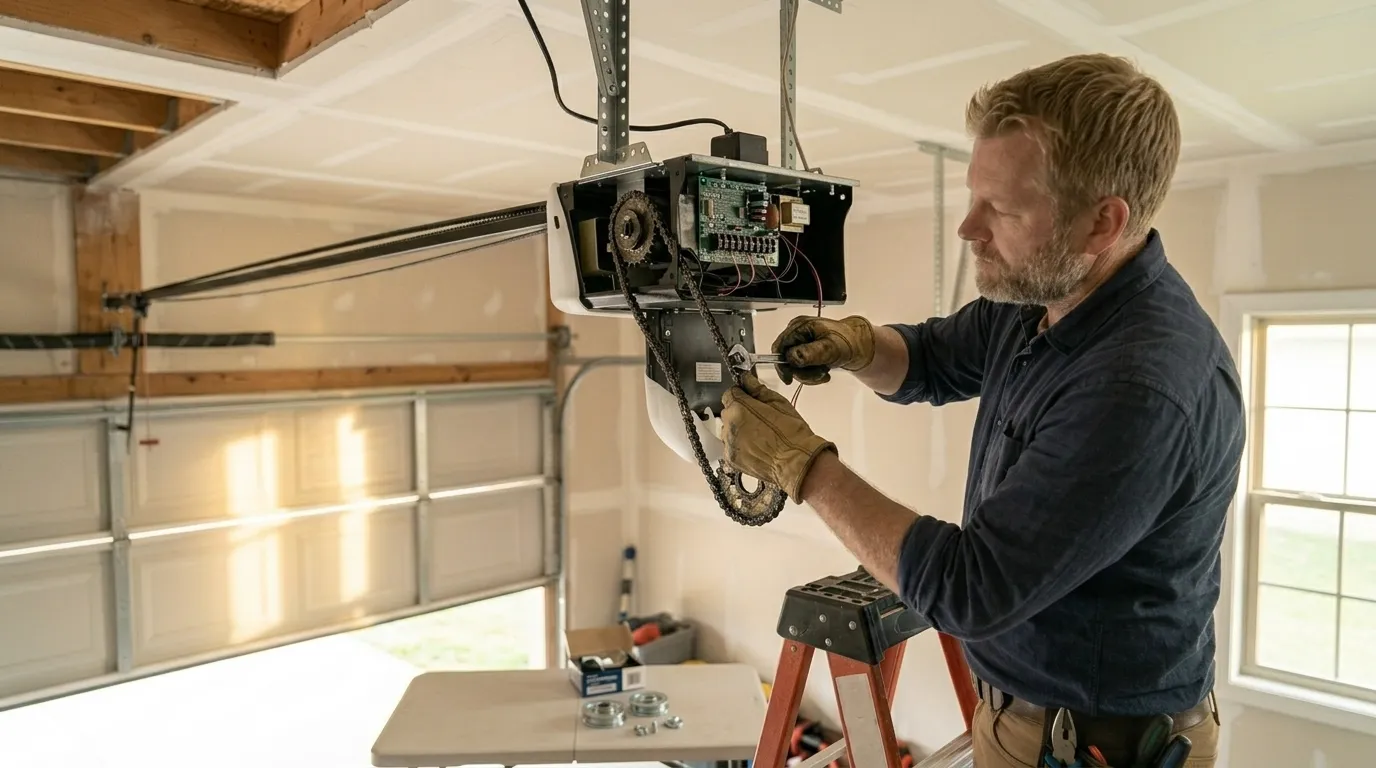
For opener work, the truck carries the parts that fail most: capacitors, drive gears and gear kits, limit switch assemblies, safety sensor pairs, and logic boards for the handful of drive systems we see most often in this area - chain, belt, and screw drive. We also carry wall stations and standard remotes, since those go bad on their own more often than people expect.

What we don't stock is every circuit board for every opener brand and generation ever sold. Given how much of Elmhurst's opener hardware is a retrofit onto 1960s-era garages, we sometimes find a board or drive head that's been out of production for years. When that happens, we'll tell you straight rather than guess - either we order the part and come back, or we talk through full replacement instead of chasing a part that may not exist anymore.

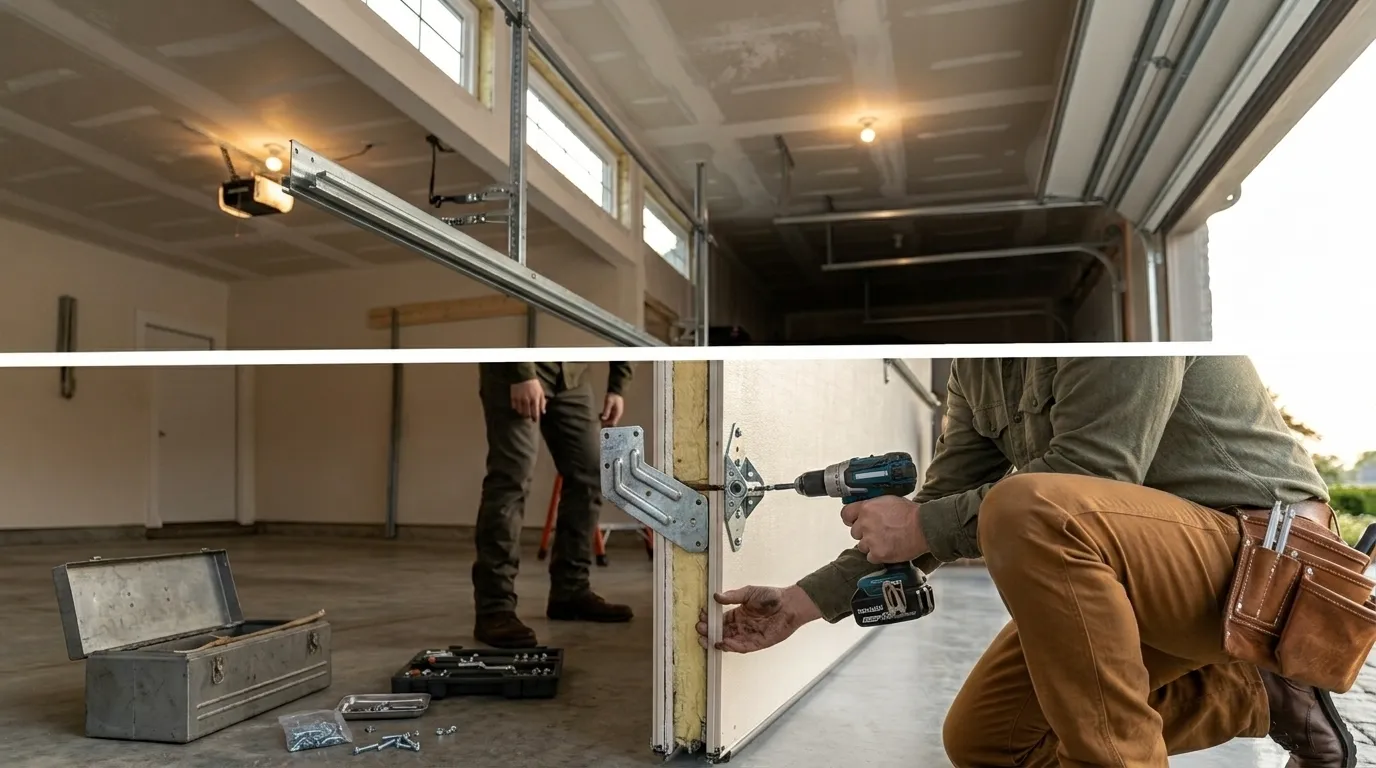
We also carry basic bracket and rail hardware, since a lot of these retrofit jobs need a header bracket resized or a rail shortened to fit a door that predates the opener bolted to it. That's routine work, not a special-order item, so it rarely slows the job down.

What You Are Seeing

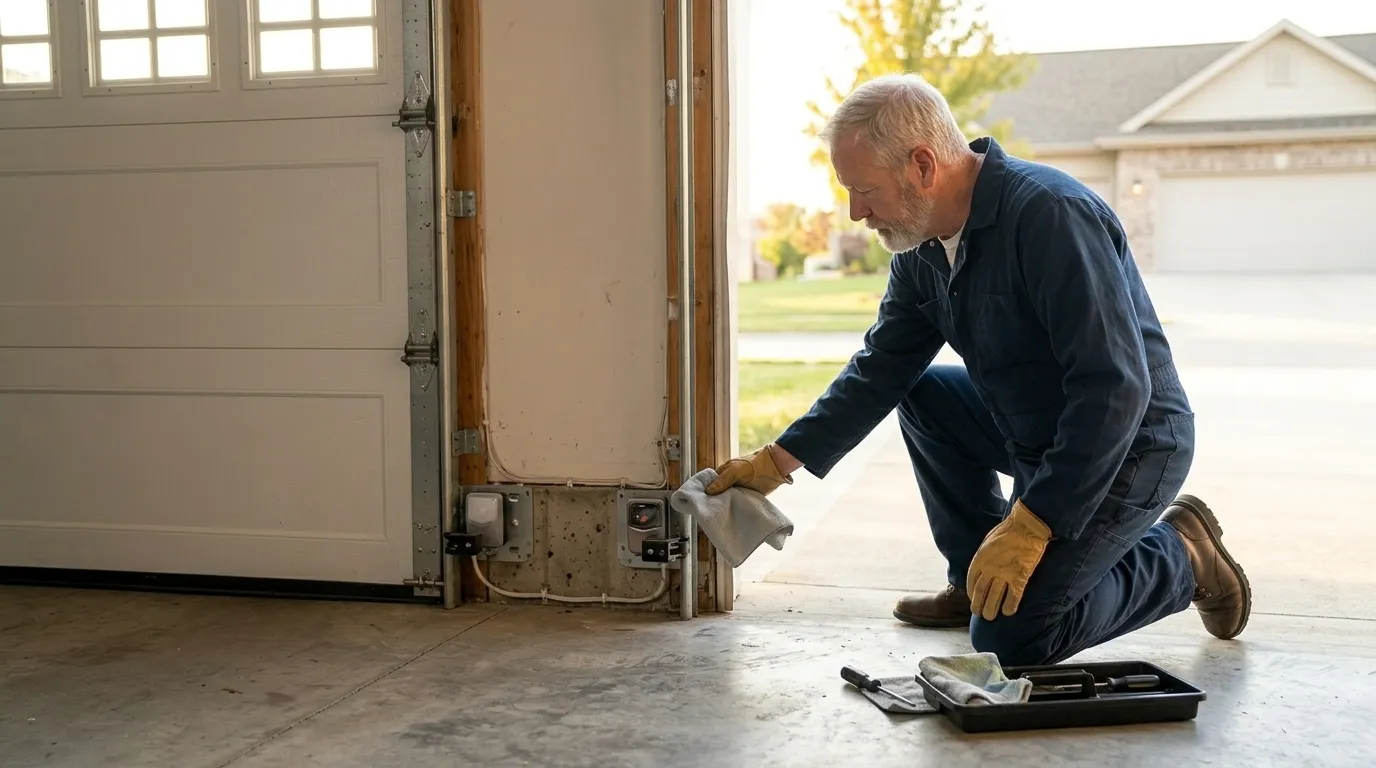
The most common thing homeowners describe is the door reversing on its own halfway down, which is almost always a safety sensor that's drifted out of alignment or gotten dirty - an easy fix, but one that gets misdiagnosed as a bigger problem more than it should. Second most common: the opener runs but the door doesn't move at all, which usually means a stripped drive gear inside the motor housing, a part that wears out from age rather than from anything you did wrong.

Grinding or a new rattle right before the door stops responding altogether points to that same gear, or to a worn belt on belt-drive units. A remote that works sometimes and not others is more often a dying logic board than a dead remote battery, especially on units old enough to predate today's rolling-code remotes.

If your opener clicks but the light doesn't come on and the door doesn't respond at all, check the wall switch and breaker first - it saves a truck roll if it's something that simple. But if the motor runs and the door still won't move, that's a mechanical fault inside the unit, not a wiring issue, and it needs a hands-on look.

The Cost of This Job

What drives the cost on an opener call is which part failed and whether the unit is worth repairing at all. A capacitor, a gear kit, or a sensor pair is a contained repair. A failed logic board on an opener old enough to be out of production is a different conversation - sometimes the board can be sourced, sometimes full replacement makes more financial sense than special-ordering a part for a unit that's already a decade or two past its expected life.

Belt-drive and smart openers, which we see more of in Elmhurst given the household income here compared to the rest of the area, generally cost more to service than chain-drive units simply because the parts themselves cost more - a belt and its hardware aren't priced the same as a length of chain.

We don't have a flat number to quote here without seeing the unit, and we're not going to invent one. What we can tell you upfront is which category your problem falls into - contained repair versus board or full-unit replacement - before any work starts, so you're not guessing.

How Long It Takes

A straightforward repair - a gear, a capacitor, a sensor realignment - is a same-visit job once we're on site and have identified the fault. What extends the timeline in Elmhurst specifically is the retrofit factor: an opener old enough that its board isn't something we carry on the truck means a return trip once the part is sourced, rather than a one-and-done visit.

Diagnosis itself usually doesn't take long. Because so much of the hardware here is layered - a door from one decade, an opener from another - the time-consuming part is tracing which component in the chain is actually causing the symptom you're seeing, not fixing it once we know. A door that reverses on its own can look like a motor problem, a sensor problem, or a limit-switch problem, and telling those apart correctly the first time is what keeps a job from turning into two visits instead of one.

We won't promise a same-day fix on a unit where the failed part has to be special-ordered - that's the honest limit here, and we'd rather say it upfront than have you wait on a truck that can't finish the job anyway.
How it works

From “it’s stuck” to “it’s fixed”

1
Tell us what’s wrong - Chicago garage door service

Tell us what’s wrong

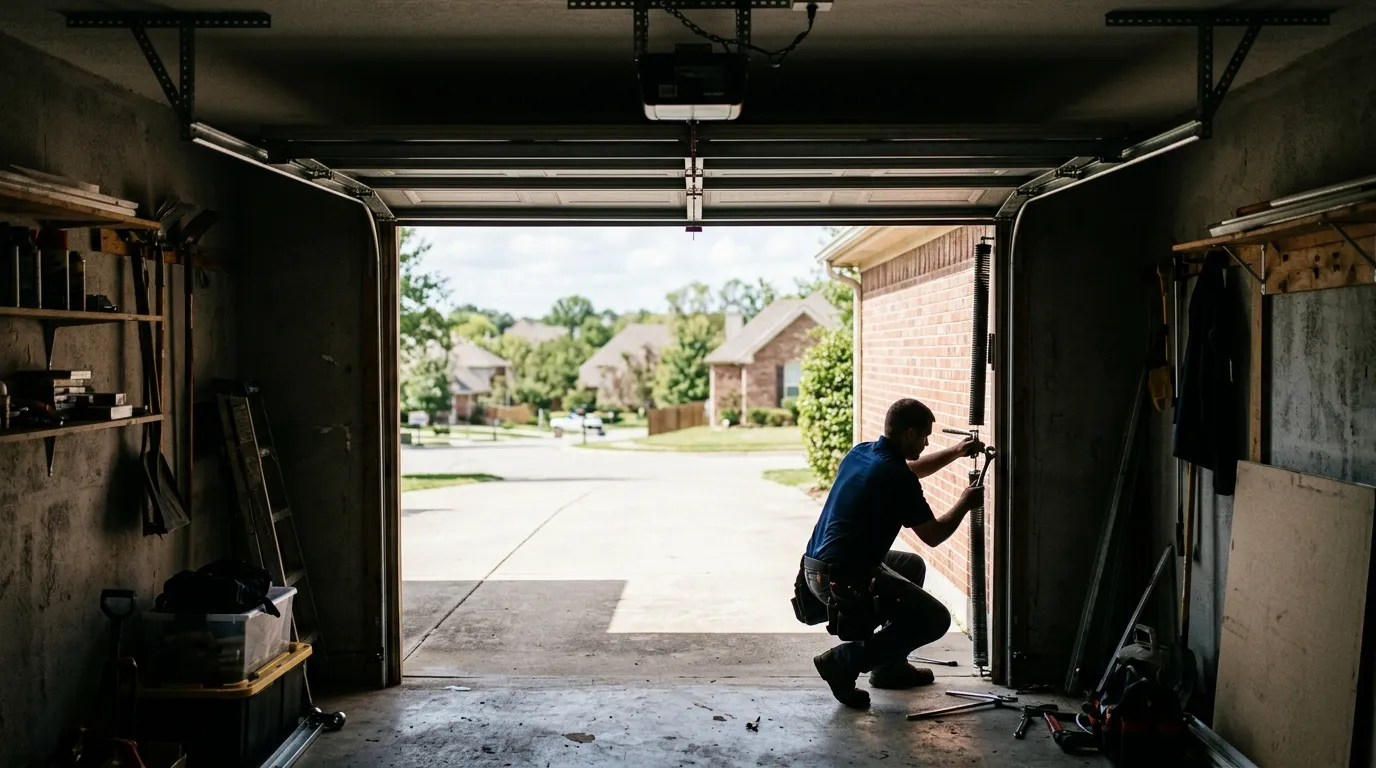
Describe the symptom - won’t open, loud bang, opener runs but the door won’t move.

2
On-site diagnosis - Chicago garage door service

On-site diagnosis

A technician tests the door under power and by hand and finds what actually failed.

3
Clear, up-front plan - Chicago garage door service

Clear, up-front plan

You get the fix that’s needed and what drives the cost - before any work starts.

4
Repaired & tested - Chicago garage door service

Repaired & tested

The repair is done, the door is set true and tested, and the work area left clean.

Serving Chicago, IL - tell us what your door’s doing and we’ll take it from there.

How we work

What to expect

Diagnosis firstEvery visit starts by finding what actually failed - not a pre-written parts list.
The right part for the doorSprings and openers matched to the door’s weight and age, so the fix holds up.
Straight answersWhen a repair makes more sense than a replacement - or the reverse - you hear it plainly.
Clean, careful workTension released safely, hardware set true, the door tested under power before we leave.
2,664,452Residents in Chicago
8Garage door services
8Neighborhoods & suburbs
ILServing Chicago, IL
Questions

Frequently asked

Straight answers about garage door repair in Chicago. Still unsure? Ask us directly.

Why does my opener work but the door won't move?

On houses this age, that's almost always a stripped internal drive gear or a slipping belt, not the motor itself. The motor runs fine, but the mechanism that actually pulls the door has worn out. It's a common failure on units that have been running for years without the gear ever being replaced, and it's a contained repair, not a sign the whole opener is dying.

Is my opener original to the house?

Almost certainly not. Elmhurst's median build year is 1964, well before the 1993 federal rule requiring photo-eye safety sensors on new openers. Nearly every opener running in a house from that era has been replaced or retrofitted at least once, sometimes with wiring and brackets from more than one prior install layered on top of each other.

Do you stock parts for older opener models?

We carry gears, capacitors, sensors, and boards for the drive systems we see most - chain, belt, and screw drive. What we don't always have on hand is a board for a specific model that's been out of production for years. When that happens, we'll tell you directly and talk through ordering the part versus replacing the unit.

Should I repair or replace an old opener?

If the failed part is a gear, capacitor, or sensor, repair almost always makes sense. If it's a discontinued logic board on a unit already well past its expected life, replacement is usually the more sensible call financially, since sourcing an obsolete board can cost more than a new opener.

Ready to get your garage door sorted?

Tell us what it’s doing and where you are in Chicago - we’ll take it from there.

Request a QuoteCall