Getting It Booked In
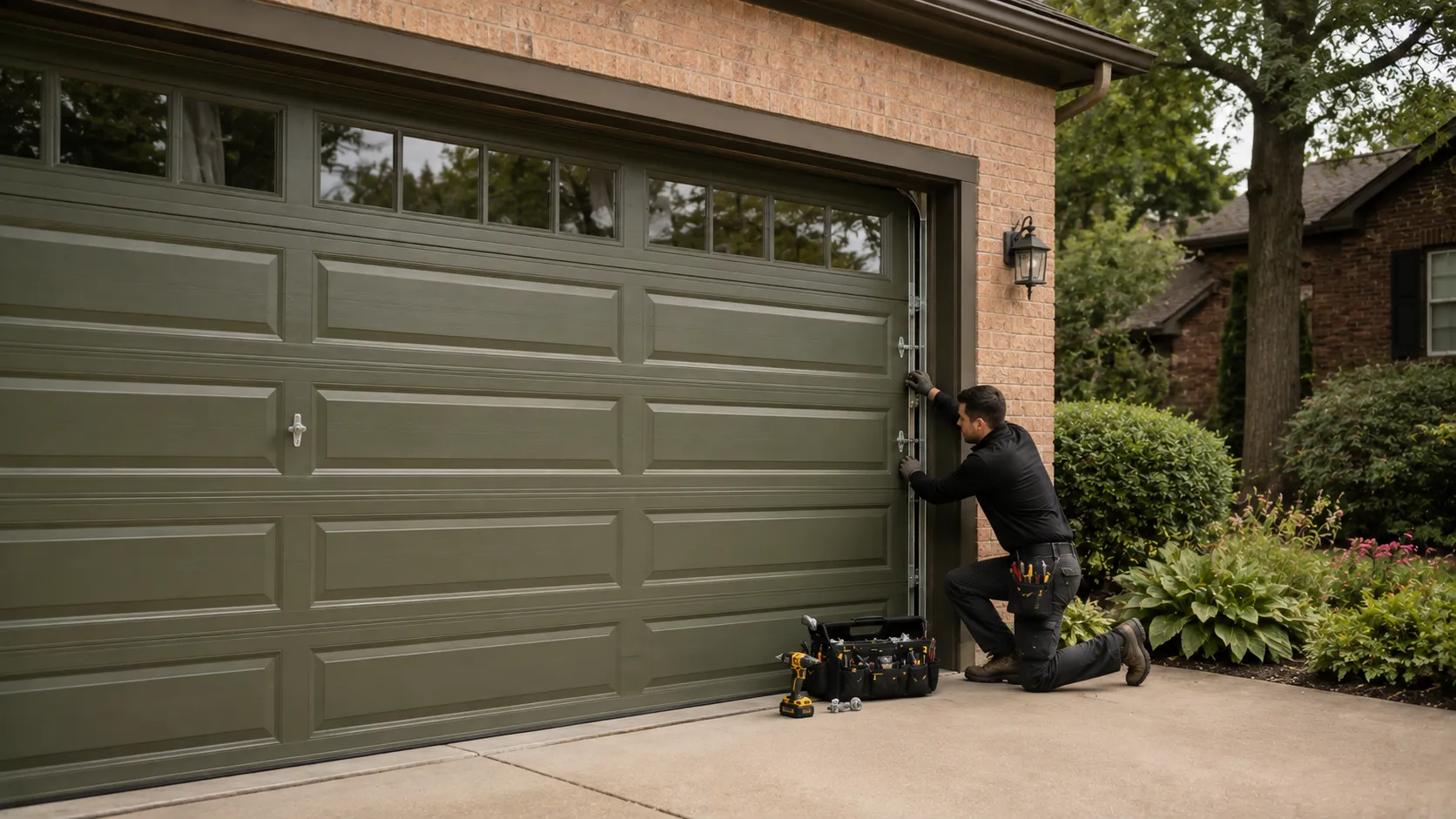
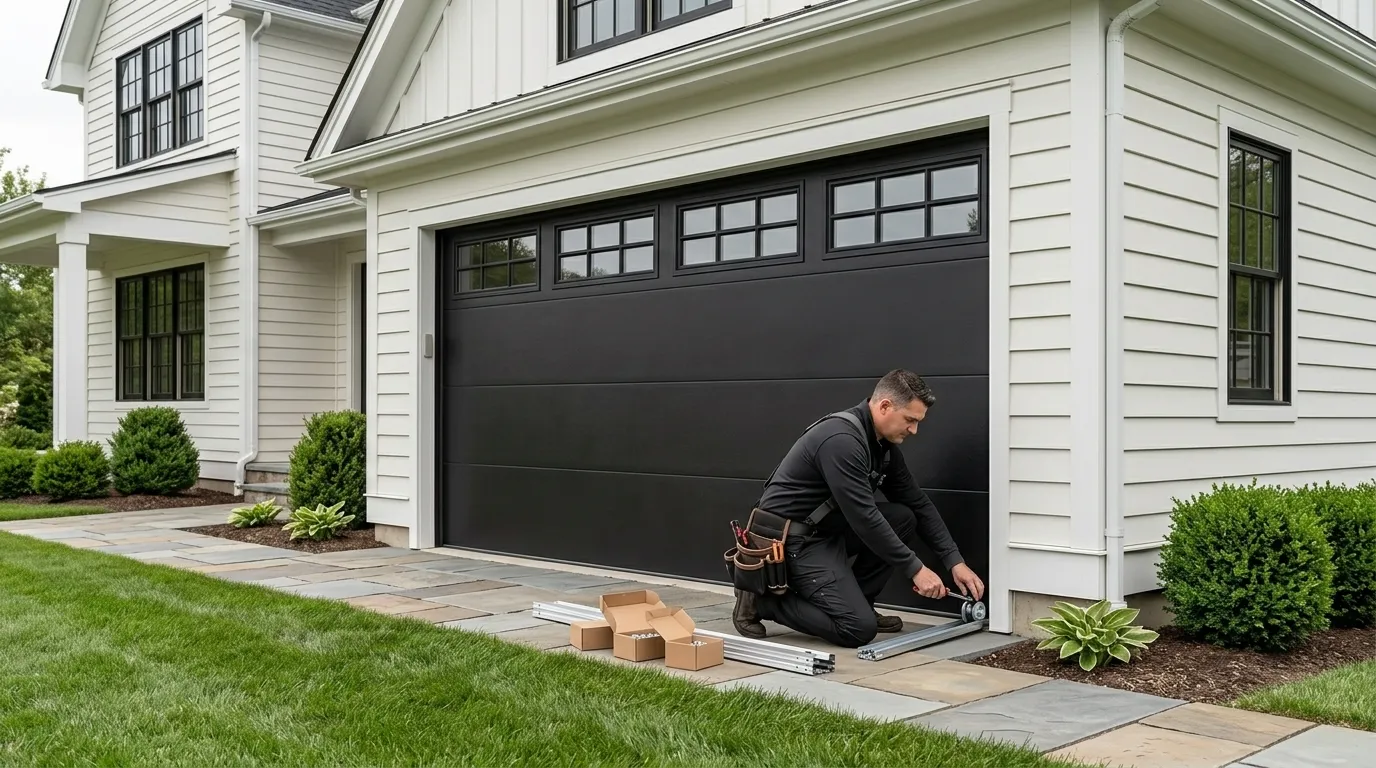
We work out of Chicago and drive to Elmhurst for repair calls, so there's no local branch or storefront here - just a truck that comes to your address. Elmhurst went up mostly in the early 1960s, median build year 1964, which means the garage on your property is very likely original or a like-for-like replacement from decades ago: a single steel or wood panel door on a torsion spring set that was sized for a car half the width of what's parked in the driveway now. Before we send a truck out, we ask what the door is doing - won't open, won't close, stuck halfway, loud on the way up - because that tells us what to load before we leave, not after we're standing in your driveway. Elmhurst has about 16,863 households, smaller and higher-income than the wider service area's 461,017, and that matters less for the door itself than for what people expect done to it: a clean fix, not a patch. We'll give you a window for the visit, not a promise about how fast we can get there, since we're coming from outside town.
What Is on the Truck
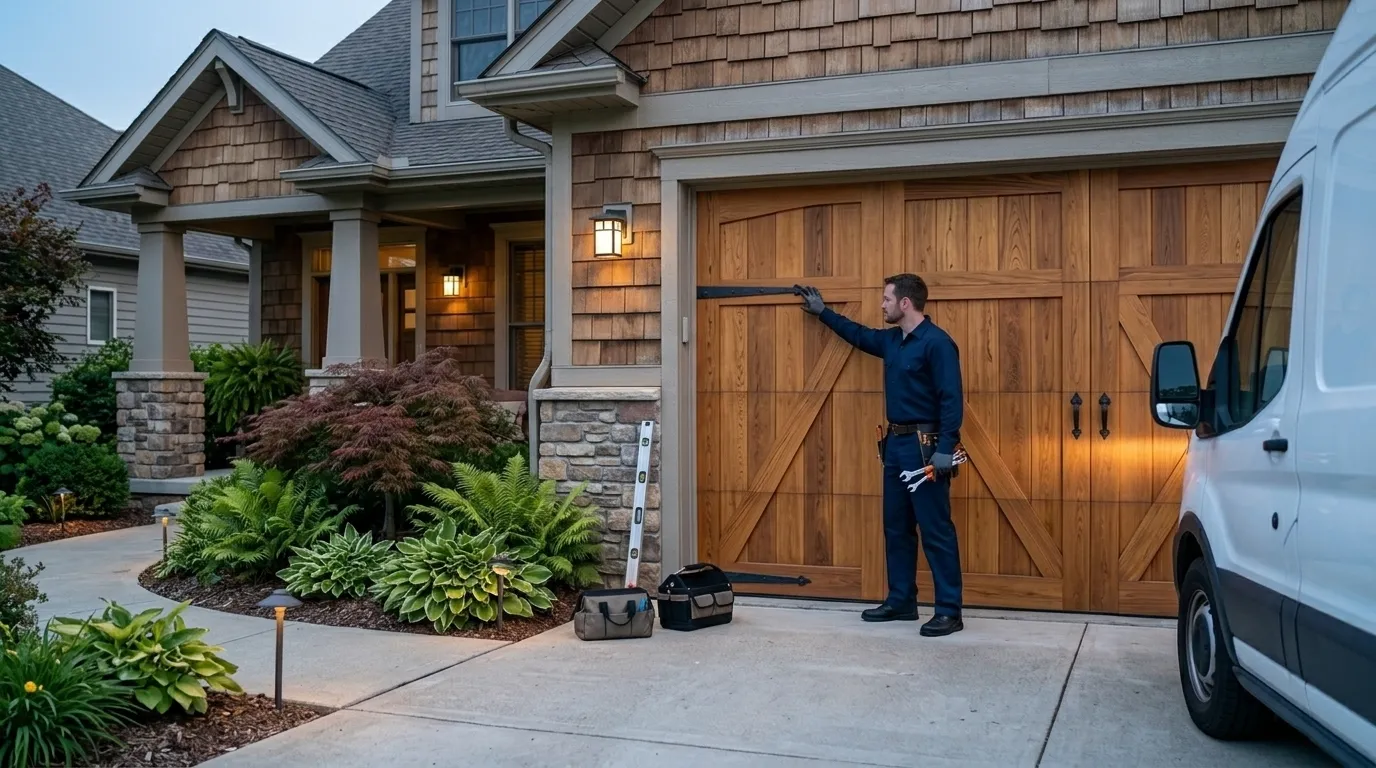
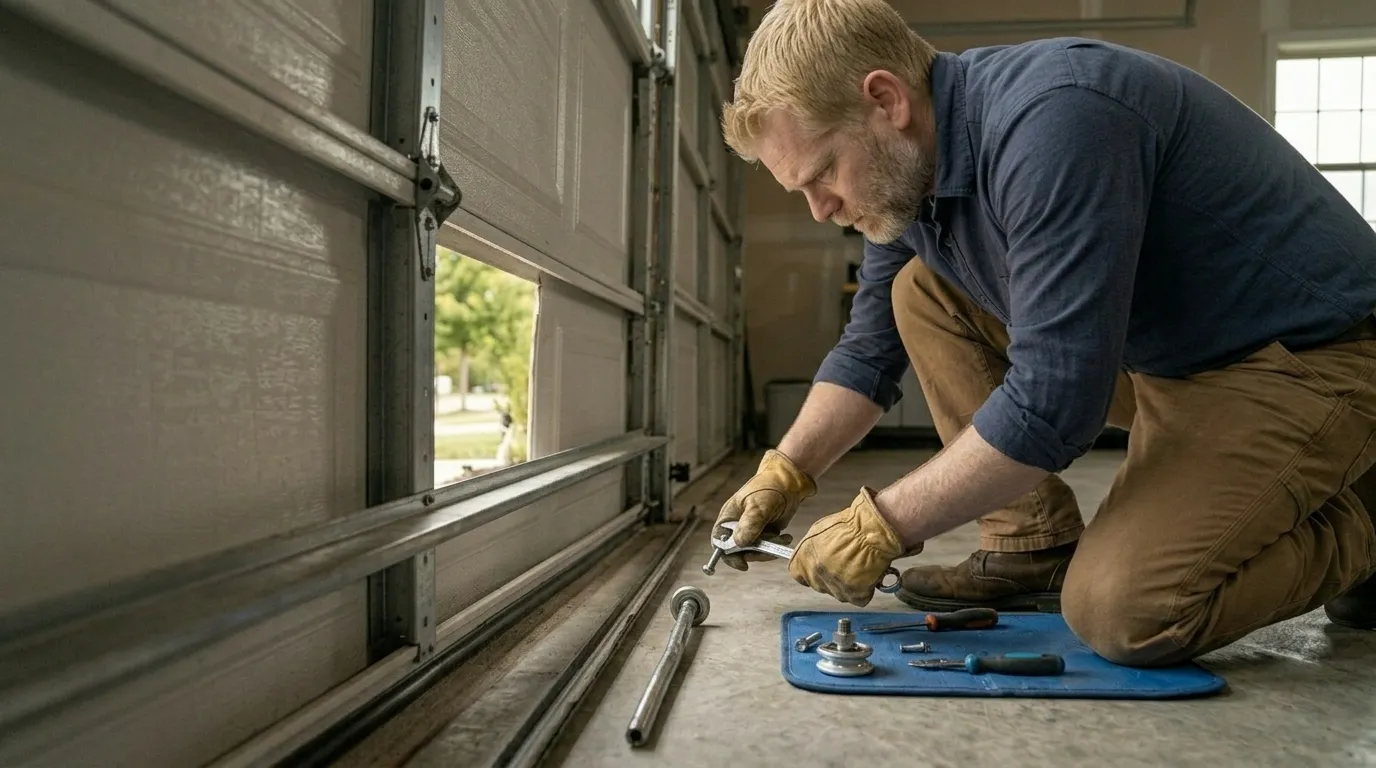
For a house built around 1964, we carry torsion springs across a wider range of wind and wire gauges than you'd need for a newer subdivision, because original hardware on doors this age was sized to a narrower band of standard widths that don't match current stock sizes cleanly. We bring both galvanized and oil-tempered spring options, since a door that's been re-sprung once already may have mismatched original brackets that only take one type. Roller sets, cable, and drum hardware come in standard and low-headroom versions - a lot of Elmhurst garages from this build era have shallower headroom than modern construction, so we check that before assuming standard clearance parts will fit. What we don't carry on the truck is obsolete wood panel sections; if your original door is still wood and a panel's split or rotted, we can source a match but it isn't a same-visit part, and we'll say so up front rather than promise something we can't do that day.
What You Are Seeing
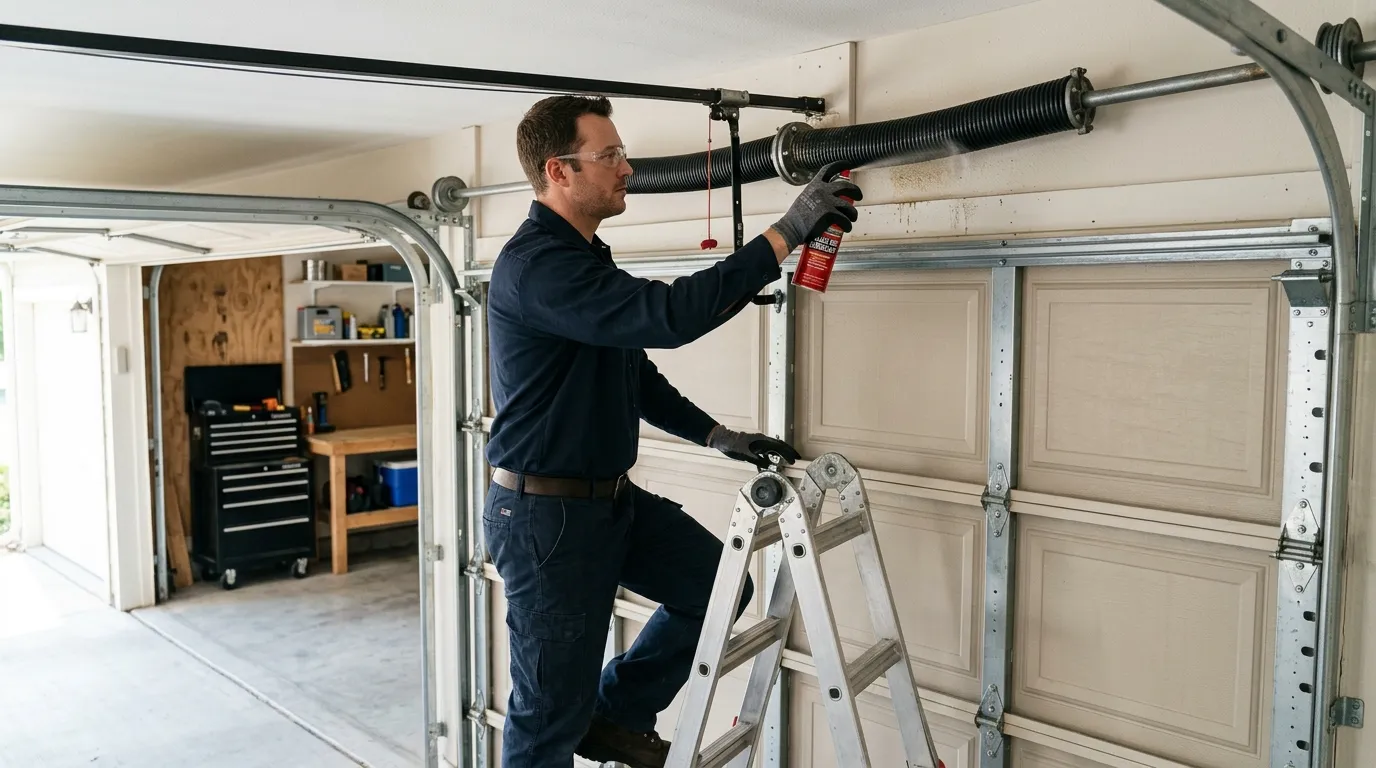
On a door this age, the door refusing to budge and the opener straining but not lifting almost always mean the torsion spring has finally given out - expected on hardware original to a 1964-built house, since springs have a service life measured in cycles, not years, and this one has had six decades to use them up. A door that opens fine but drops fast or slams on the way down usually means a cable has frayed at the drum, common where the original cable was never swapped and has just been flexing since it was installed. Grinding or a door that walks sideways in the track points to bent or misaligned rail, likely from the bracket shift that comes with a house this old settling over time. If the opener runs but the door doesn't move at all, check the spring first before assuming the motor - on a door this vintage, the spring almost always fails before the opener does.
How Long It Takes
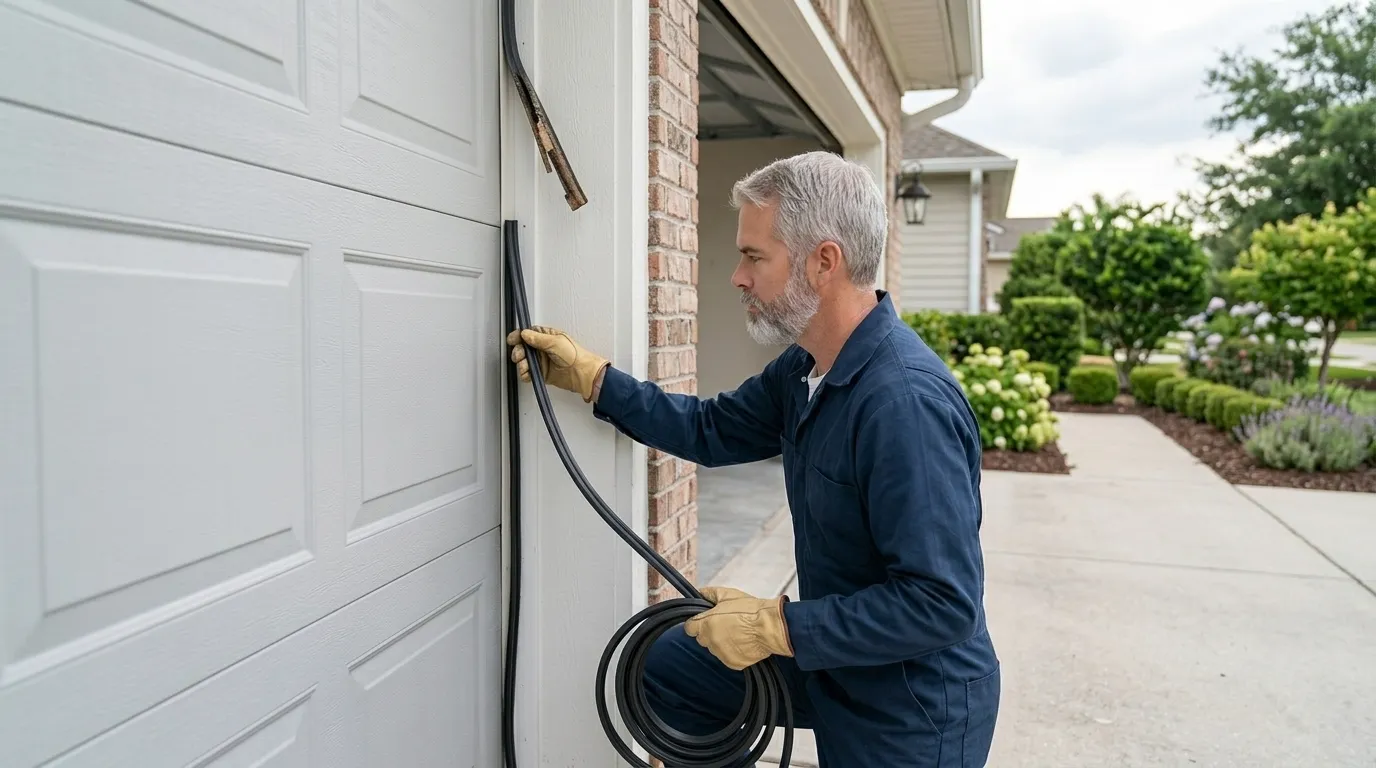
Most single-spring or cable jobs on a house this age take about the same time as any repair - the age of the house affects what parts we need, not how long the wrench work takes once we're there. Where it does add time is diagnosis: on original 1960s hardware we check bracket condition and headroom before touching the spring, because skipping that step on a door this old is how a simple spring job turns into a second trip for a bent track. If a part isn't standard stock - an obsolete wood panel, a drum size nobody makes anymore - that's the one thing that can push a job past a single visit, and we'll tell you before we start, not after.