The Cost of This Job
We don't quote a flat number over the phone for Hinsdale calls, and we won't pretend to. A snapped cable on a lightweight steel door costs a lot less to fix than a torsion spring assembly that's been carrying a heavy insulated panel door since the house was built. Hinsdale's housing stock averages a 1979 build year, which means a good number of these doors are original, or close to it, and parts for that era aren't always sitting on a shelf at the supply house the way current stock is. Sometimes a job that looks like "just a spring" turns into a spring plus two rollers and a bent track once we're actually looking at the hardware. What we can tell you honestly: a same-day spring swap on a standard double door is a different bill than a full door and opener replacement, and we won't know which one you need until someone's hands are on it. If a repair is going to cost close to what a new door runs, we'll say so before we start, not after.
What You Are Seeing
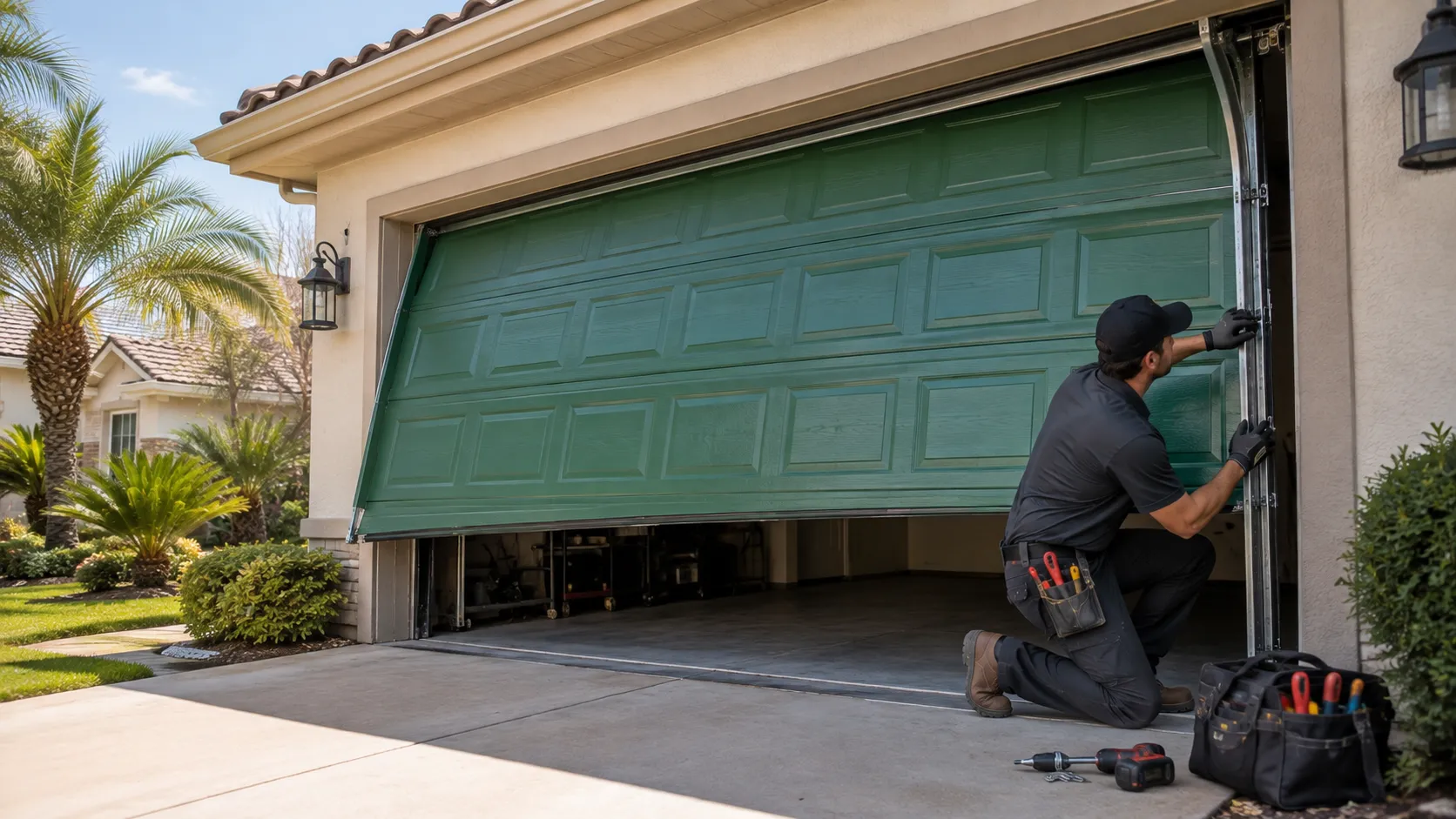
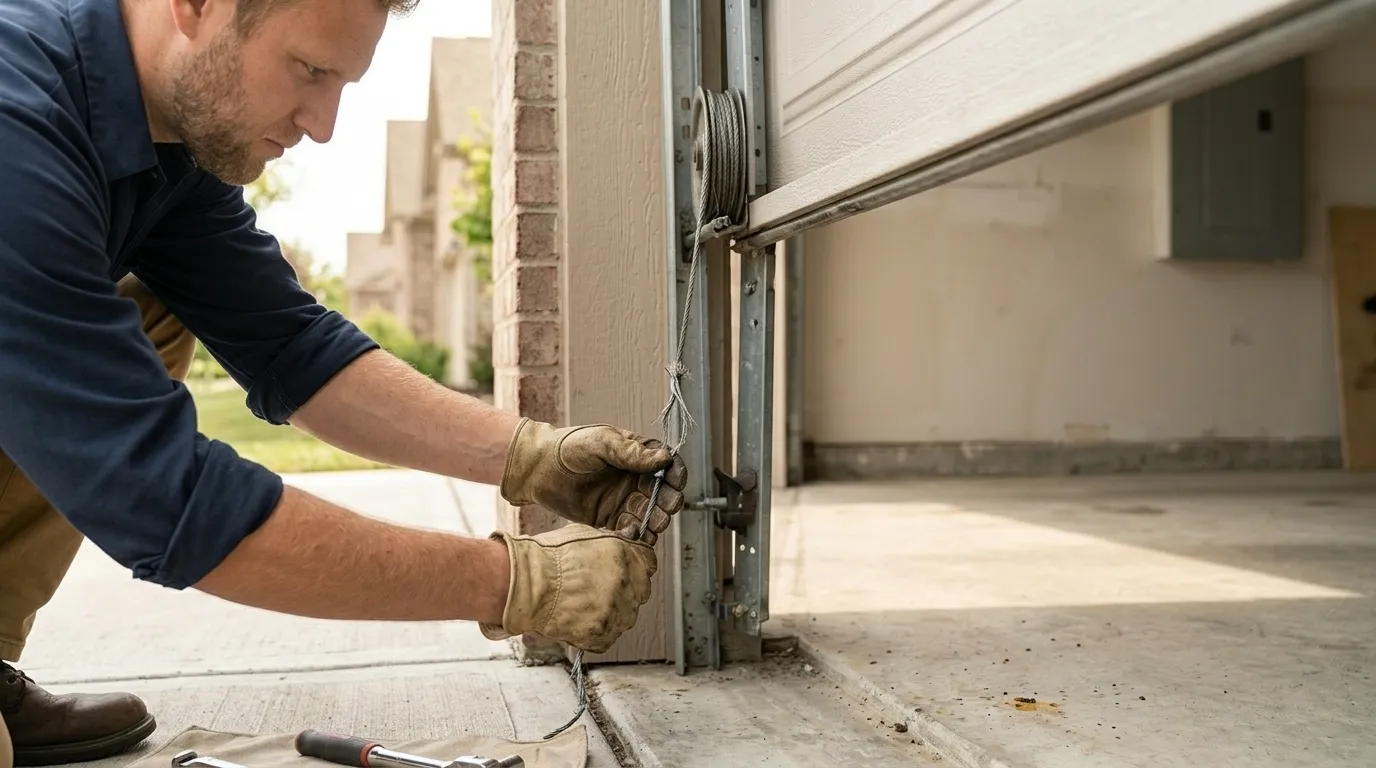
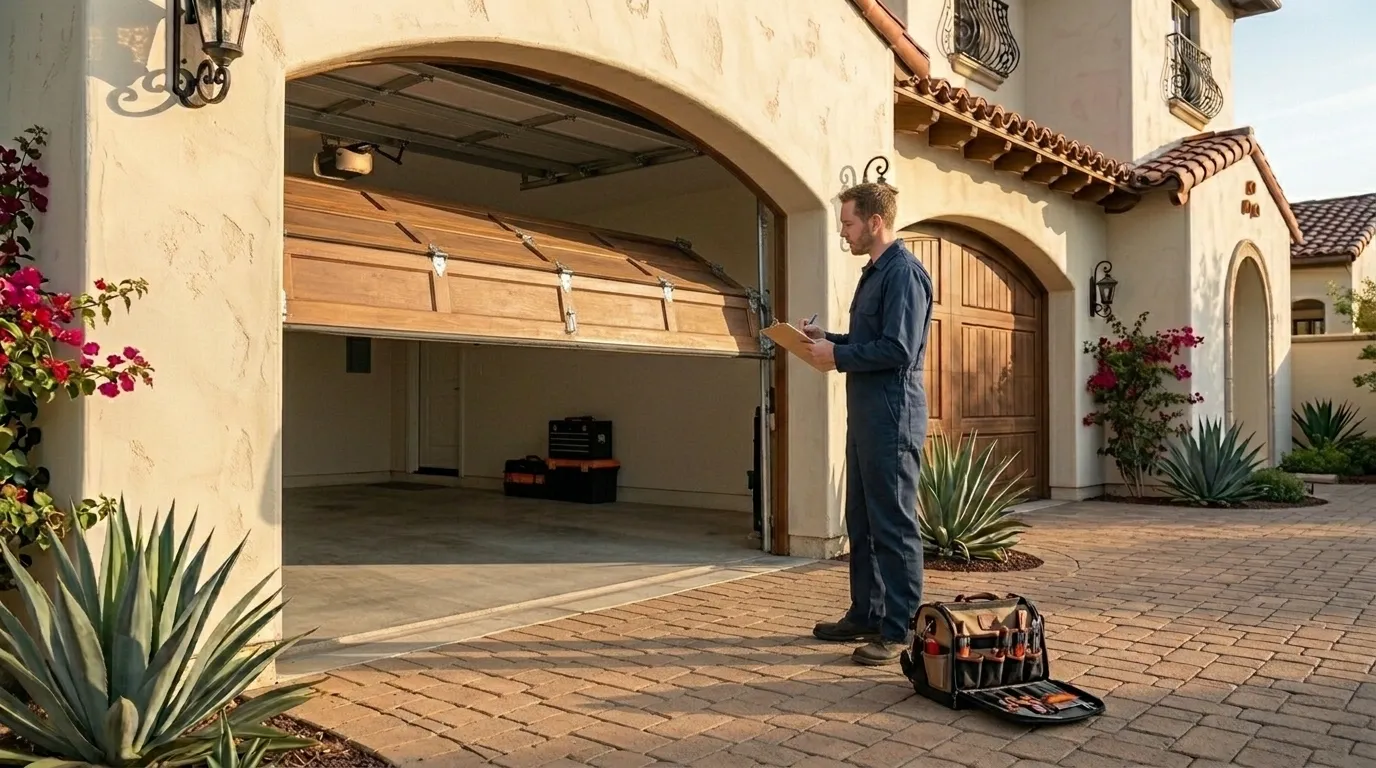
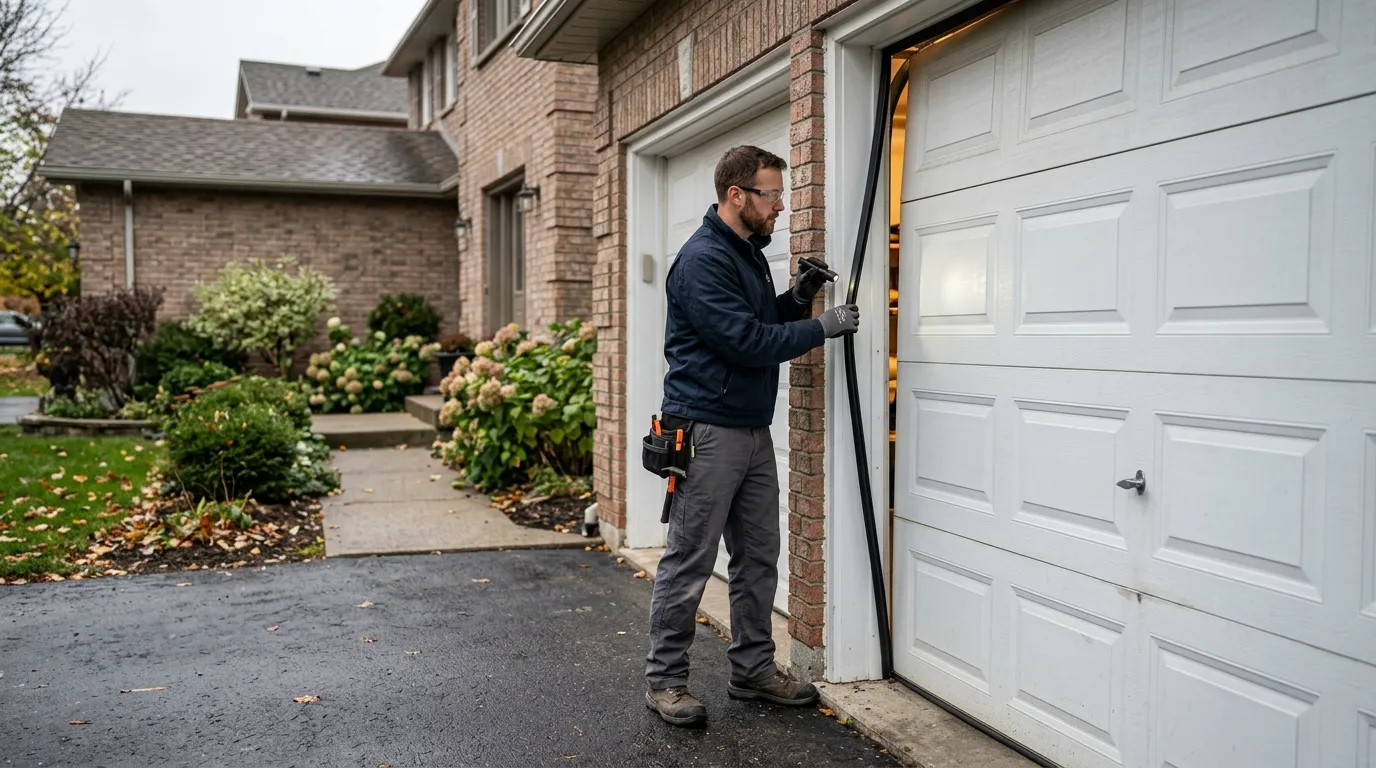
The door stops partway and the opener keeps straining against it - that's usually a spring that's lost tension, not a motor problem, even though the motor takes the blame. A loud bang followed by the door refusing to move at all is almost always a broken torsion spring, and on a house from this era it's often the original one, never swapped. If the door runs but sags visibly to one side when it's halfway up, one spring on a two-spring setup has likely gone while the other is still holding, which is a more dangerous situation than it looks because the door can drop suddenly. A cable that's frayed and starting to unravel near the drum is a warning sign, not yet an emergency, but it turns into one fast. Openers from the original build year sometimes still work fine mechanically but trip the safety sensors constantly, or grind without turning - that's usually the gear inside the unit, not the door itself. None of these are things to force open by hand repeatedly; that's how a bad spring becomes a bent track too.
The DIY Question
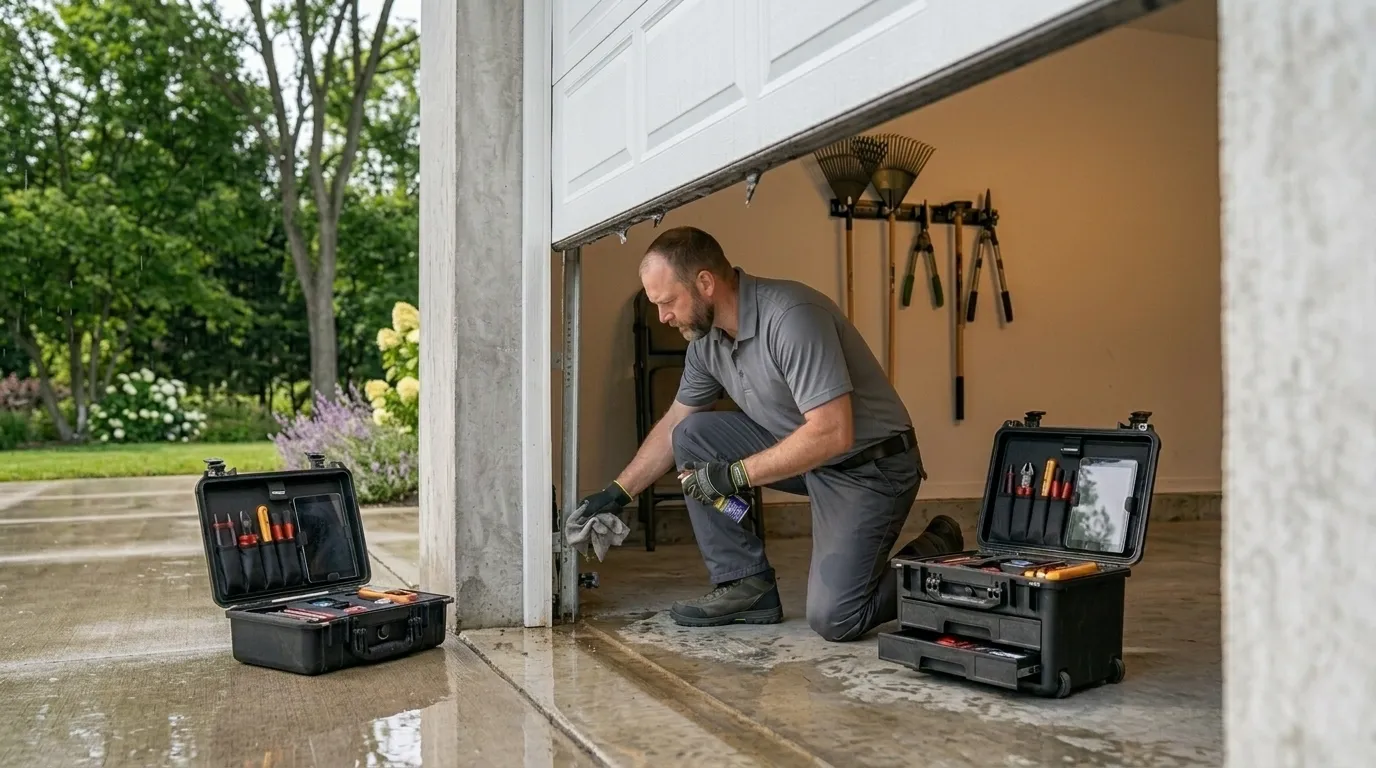
Tightening a loose bracket or lubricating hinges and rollers - fine, do that yourself, it's basic maintenance. Adjusting or replacing a torsion spring is not a DIY job, full stop. These springs are wound under enough tension to cause serious injury if the winding bar slips, and on an older door with an original spring that's never been serviced, you don't know how much fatigue is already in the metal before you touch it. Cable work is the same category - leave it. What you can reasonably do yourself: check whether the issue is actually the opener's remote or wall button (dead battery, misaligned sensor eyes) before assuming it's a mechanical failure. That alone solves a fair number of calls that don't need to be calls at all. If the door won't budge and you're tempted to force it with the emergency release pull, don't - that's meant for a controlled manual operation, not for muscling a stuck door, and doing it wrong on a spring under tension is exactly how people get hurt.
What the Fix Involves
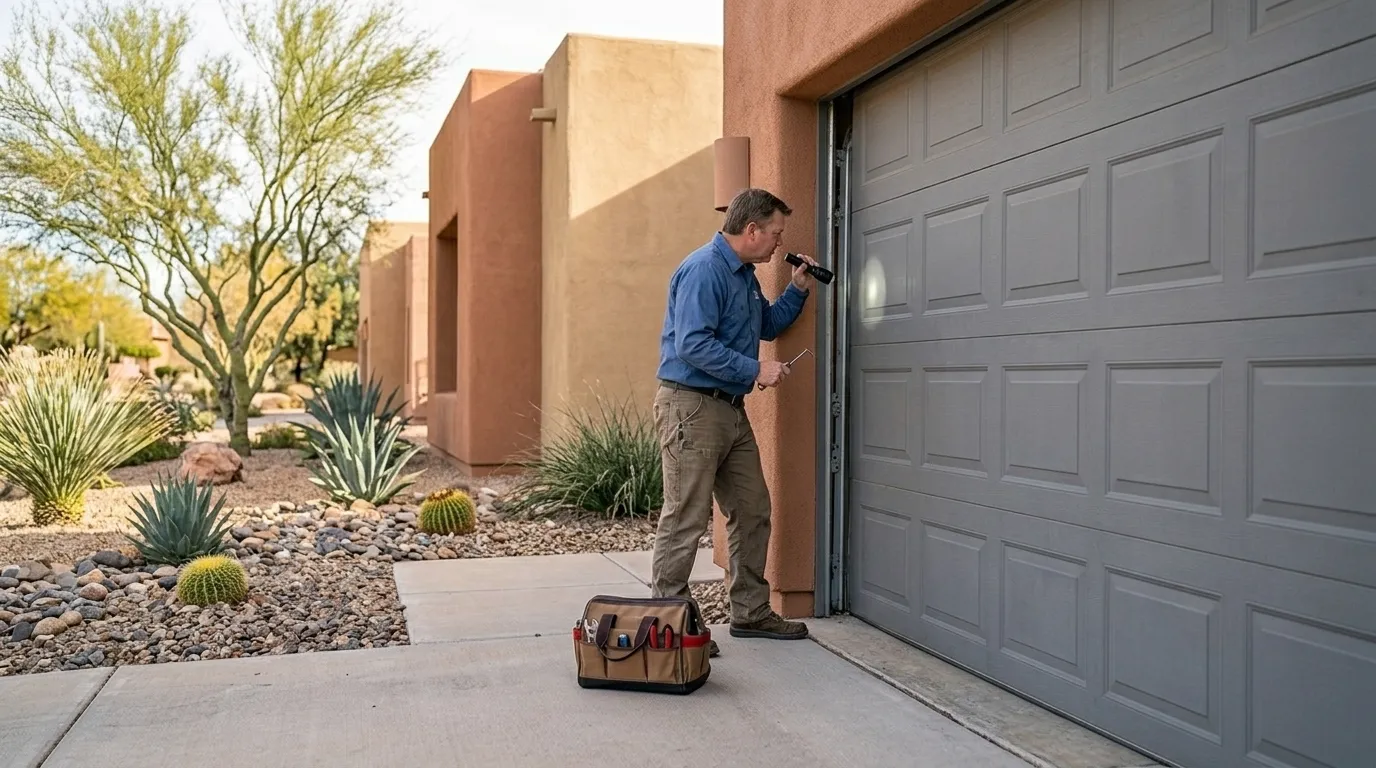
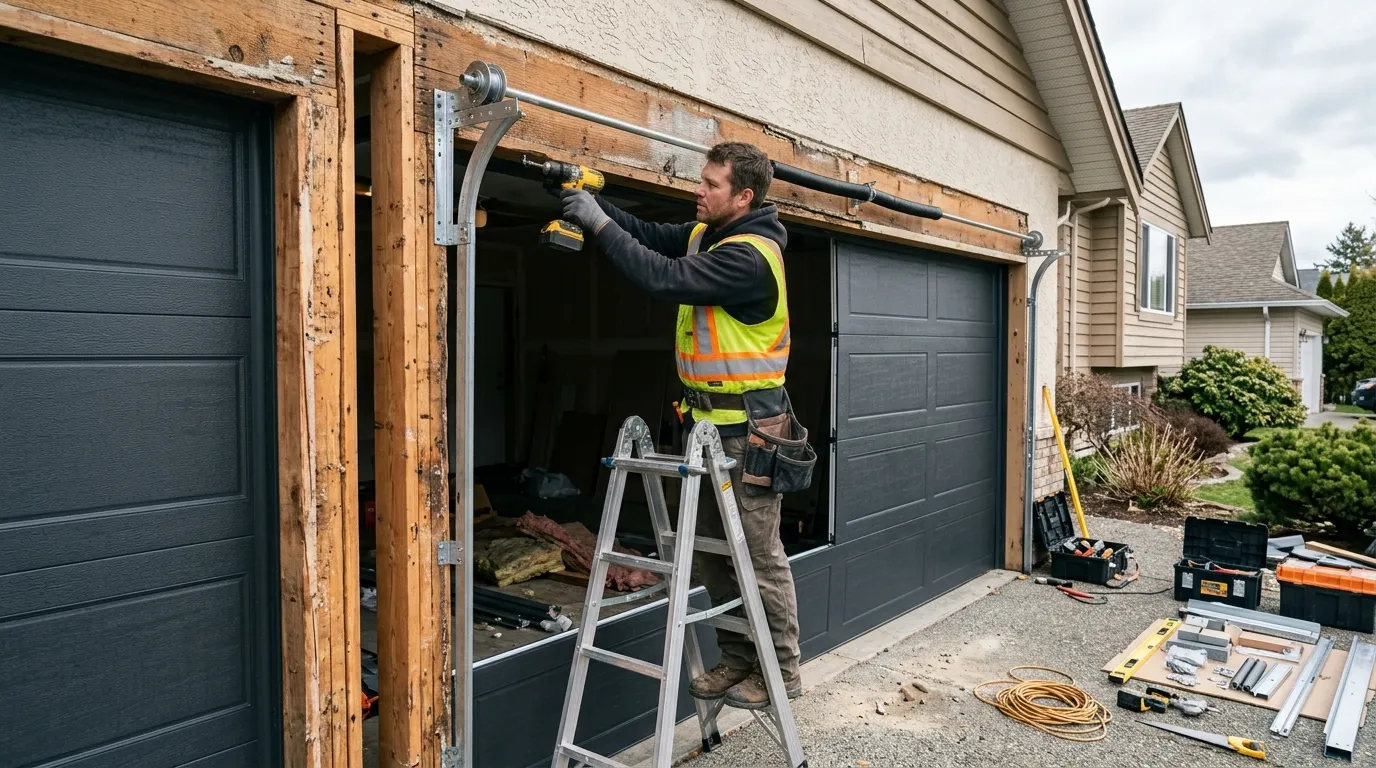
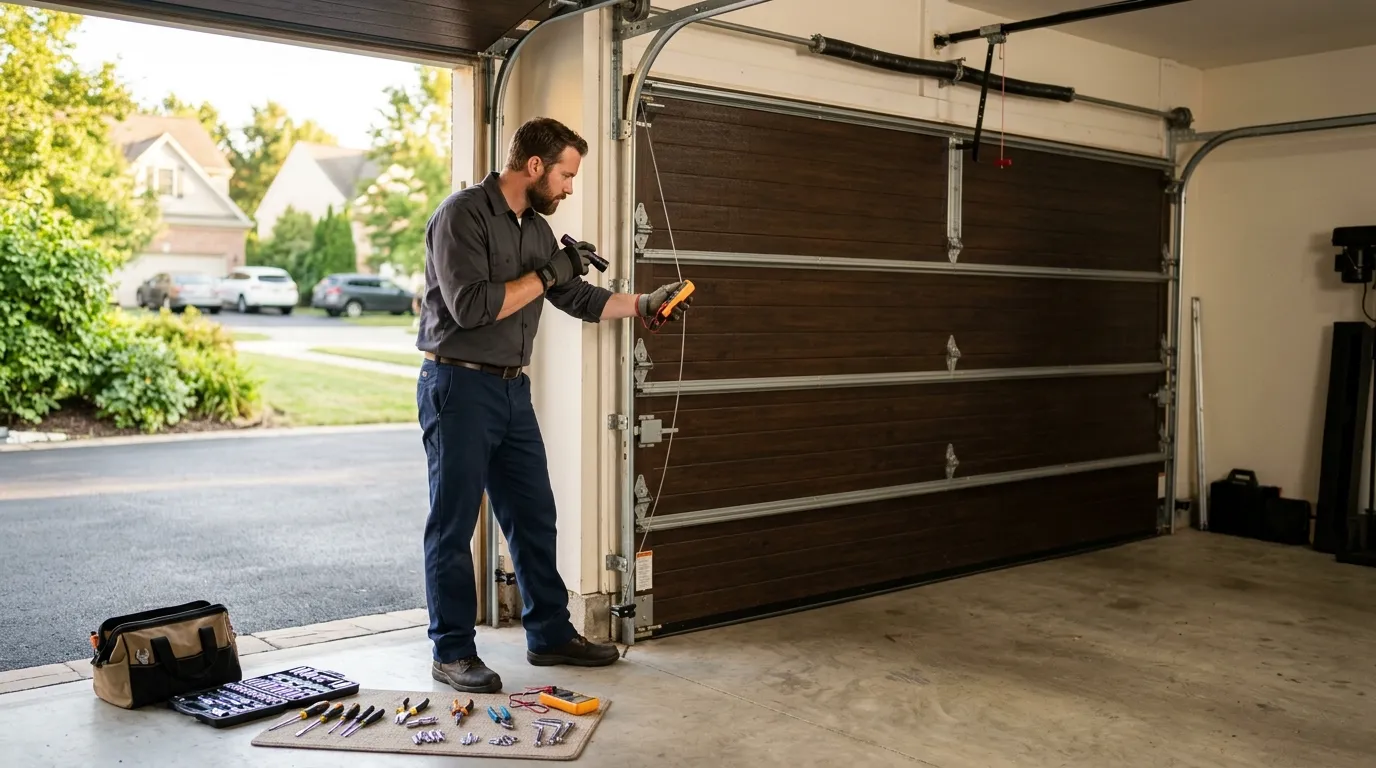
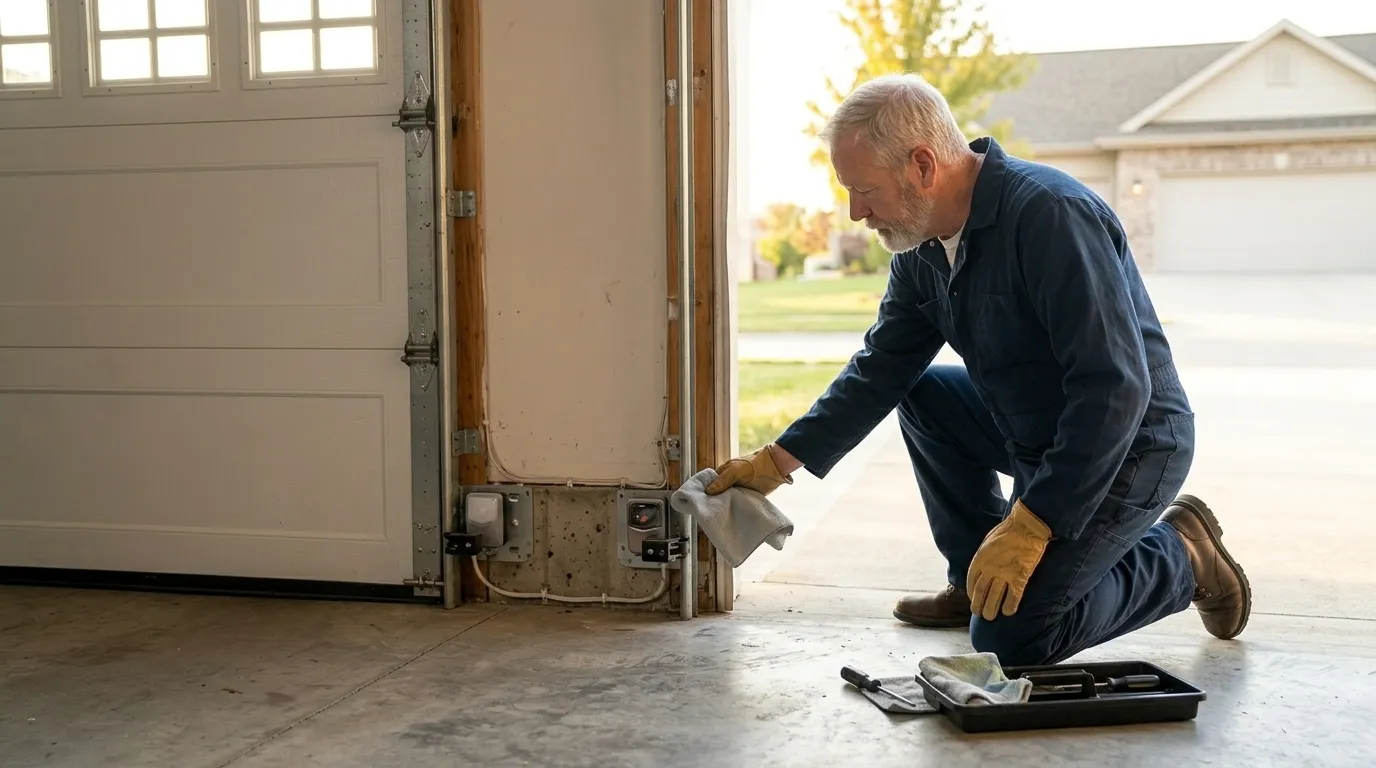
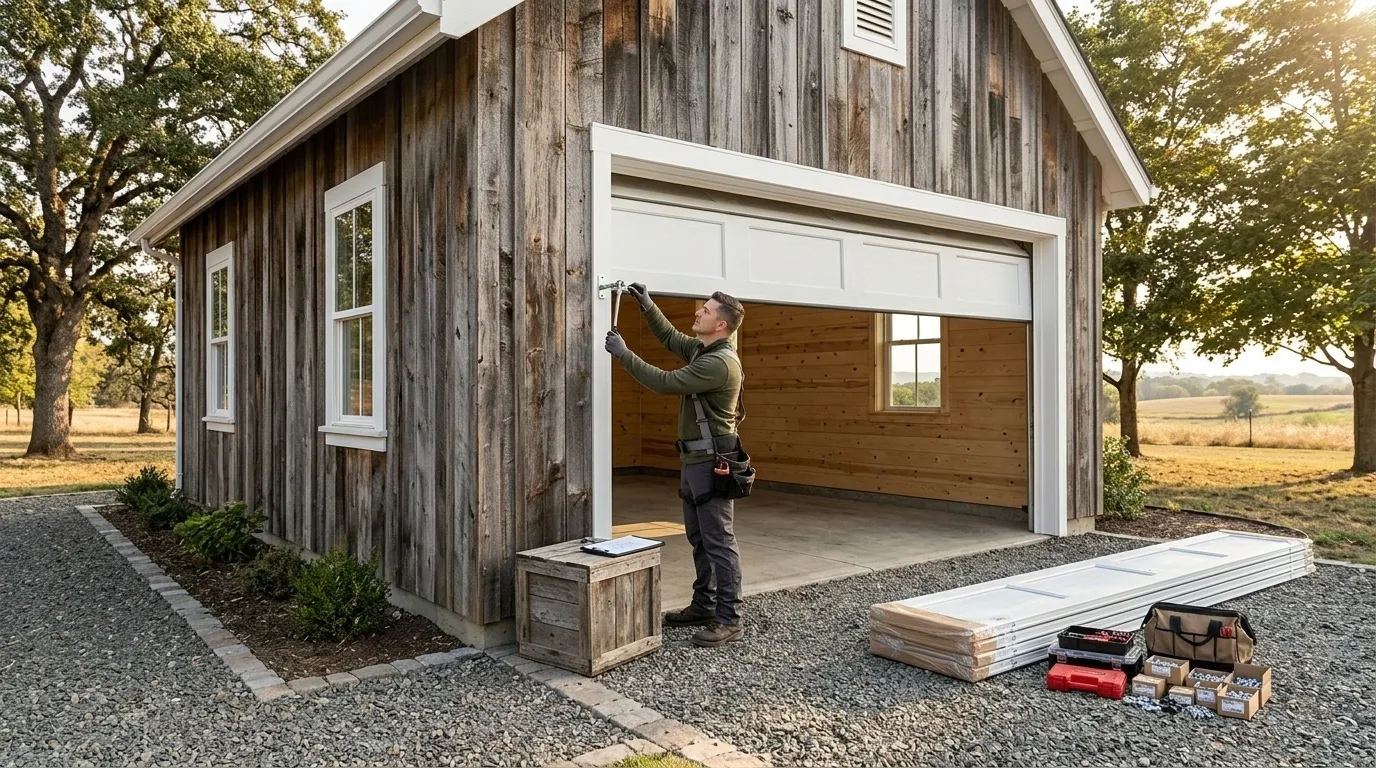
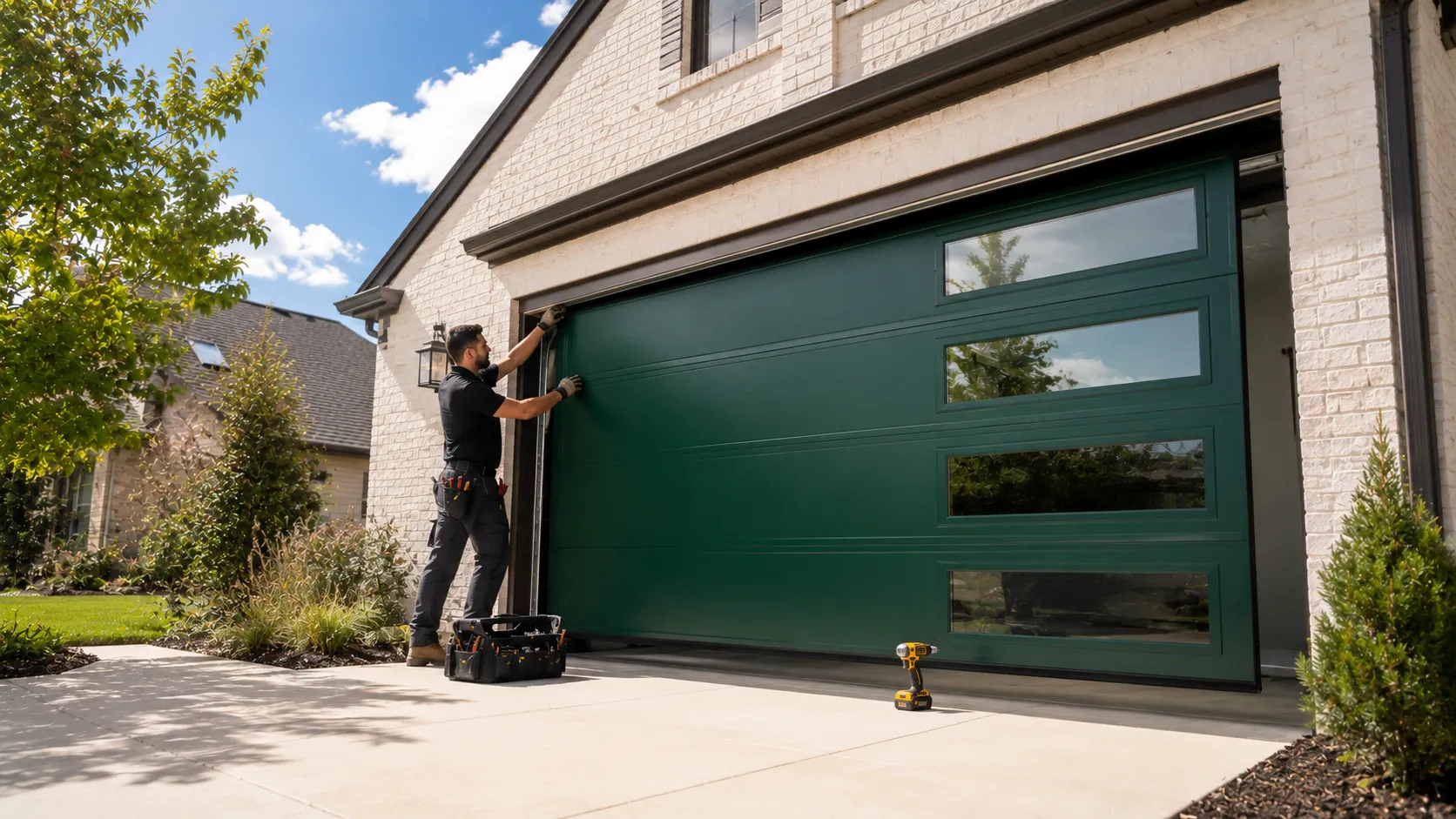
First, we look at the door with the opener disconnected - pulling the emergency release and moving the door by hand tells us whether the problem is spring tension, a track alignment issue, or the opener itself, before we assume anything. If it's a spring, we release the old one under control, measure the door and spring specs against the existing hardware (which on a house from this era often means matching an old wind pattern rather than a current standard size), and install and tension the replacement, then run the door through a full open-close cycle to check balance. If it's cables or rollers, those get swapped alongside the spring since they're usually worn from the same years of use. For an opener replacement, we pull the old unit, mount and wire the new one, and set the travel limits and safety sensor alignment before we leave - a door that closes but doesn't reverse on an obstruction isn't a finished job, it's a liability we won't leave behind.