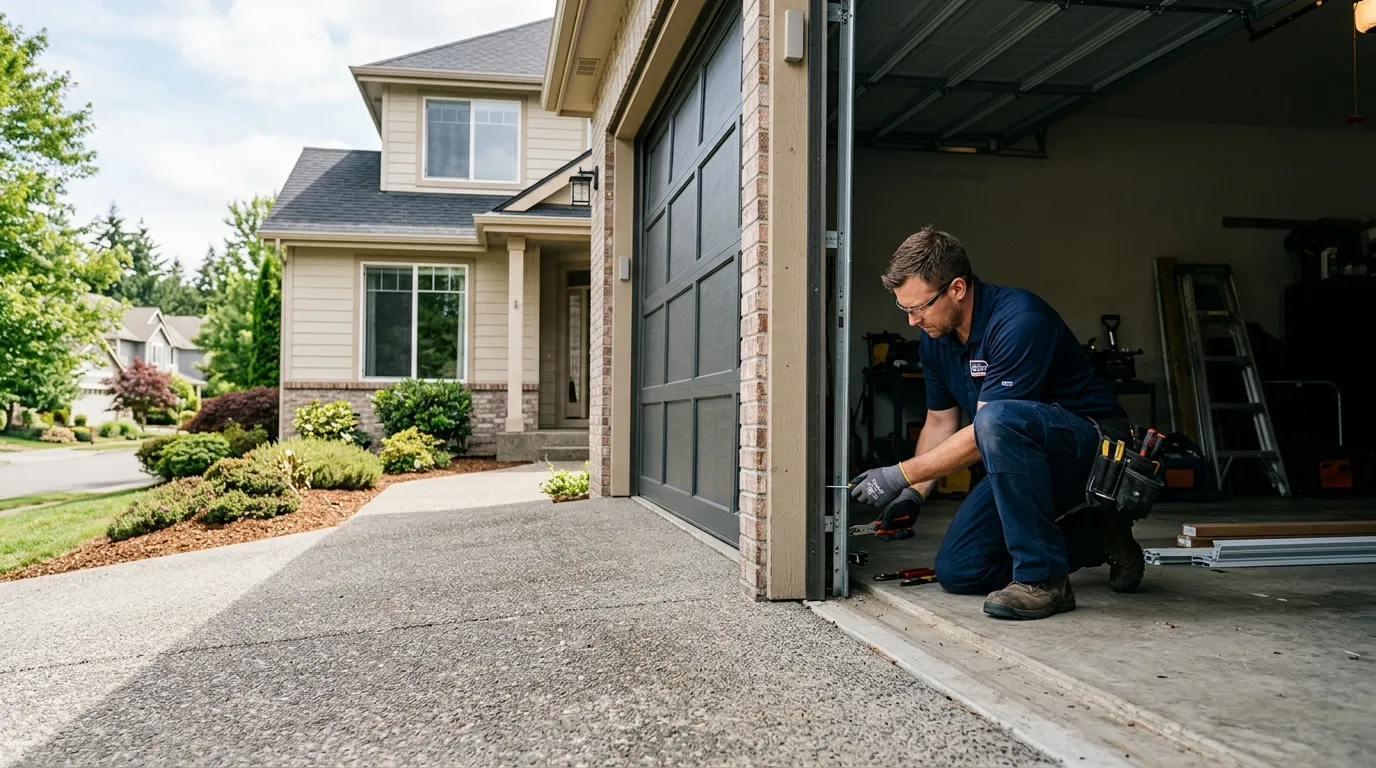
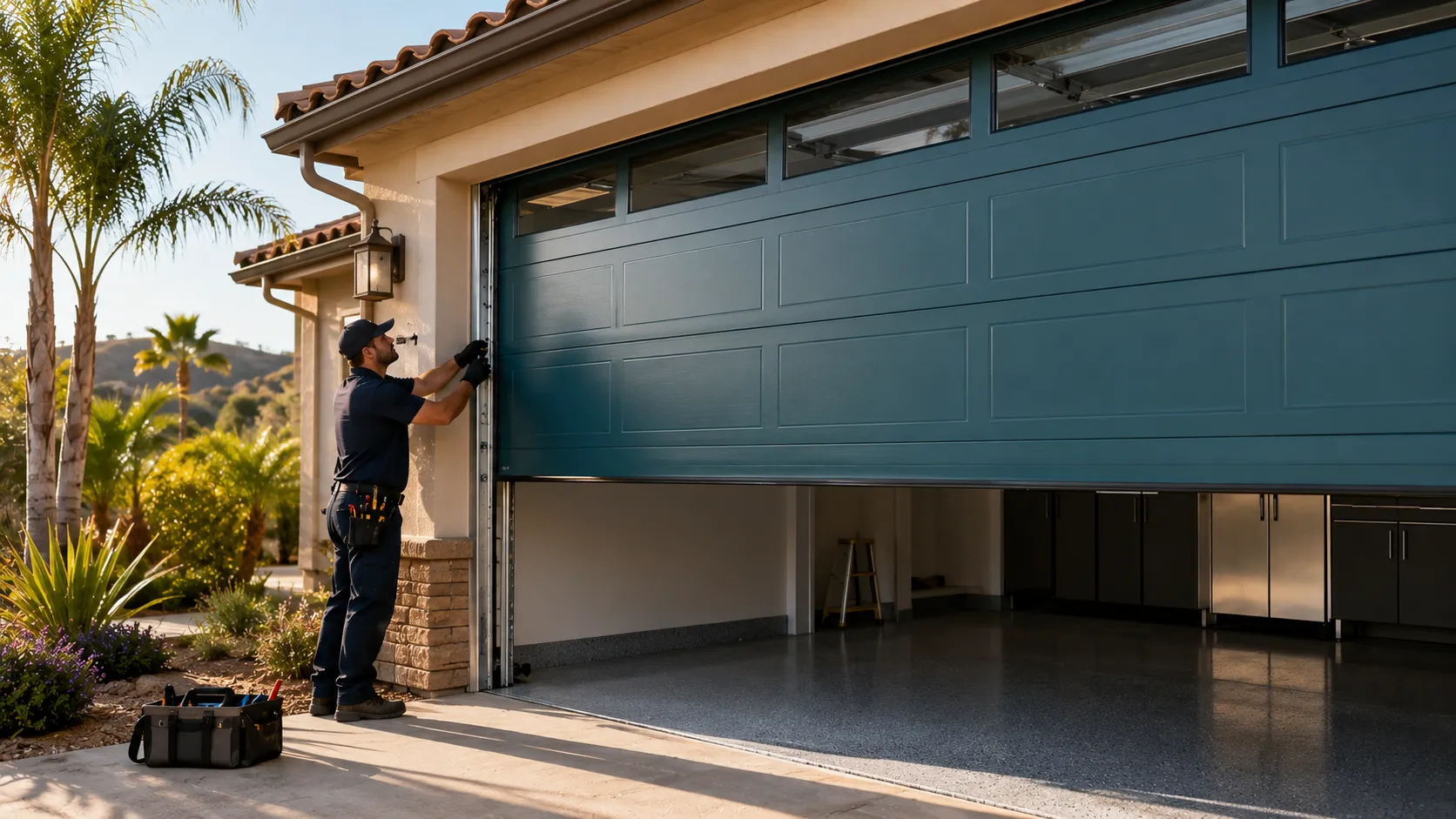
The Cost of This Job
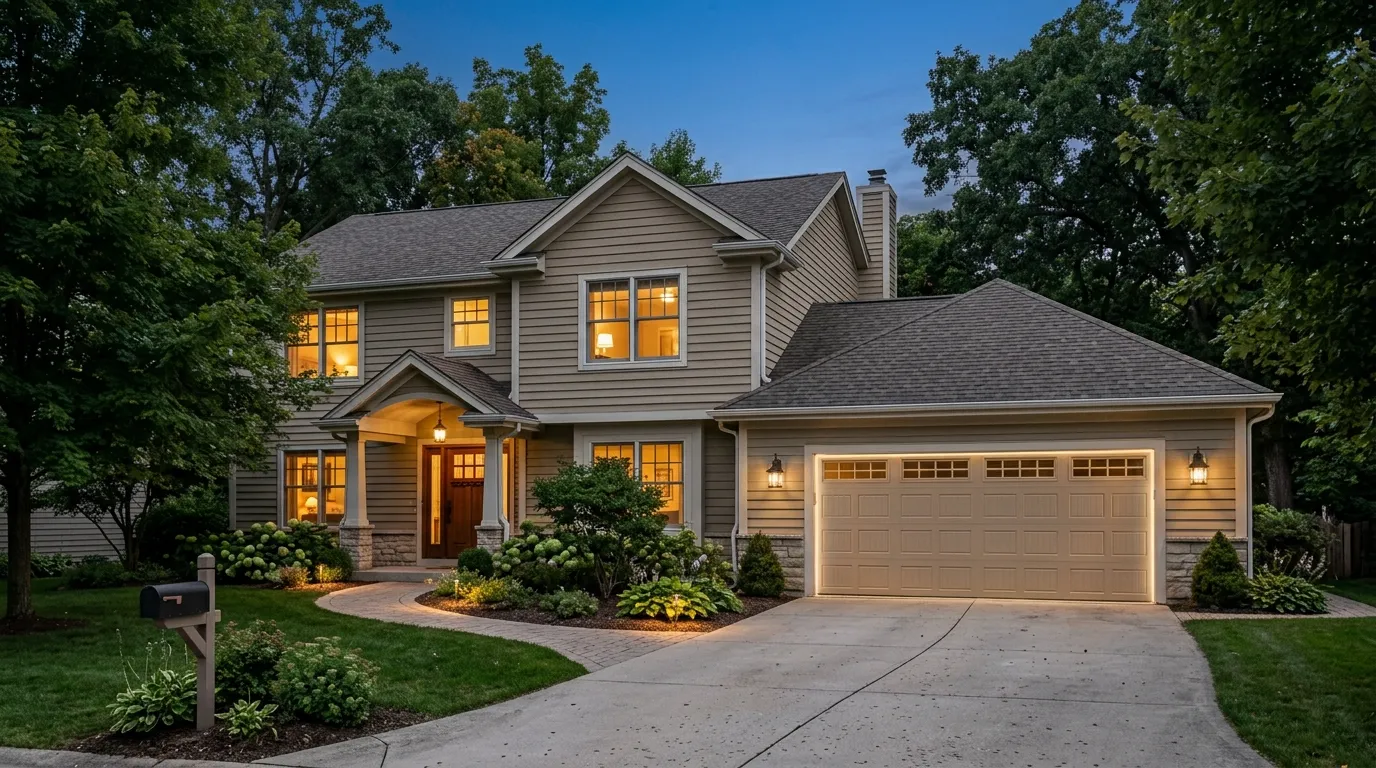
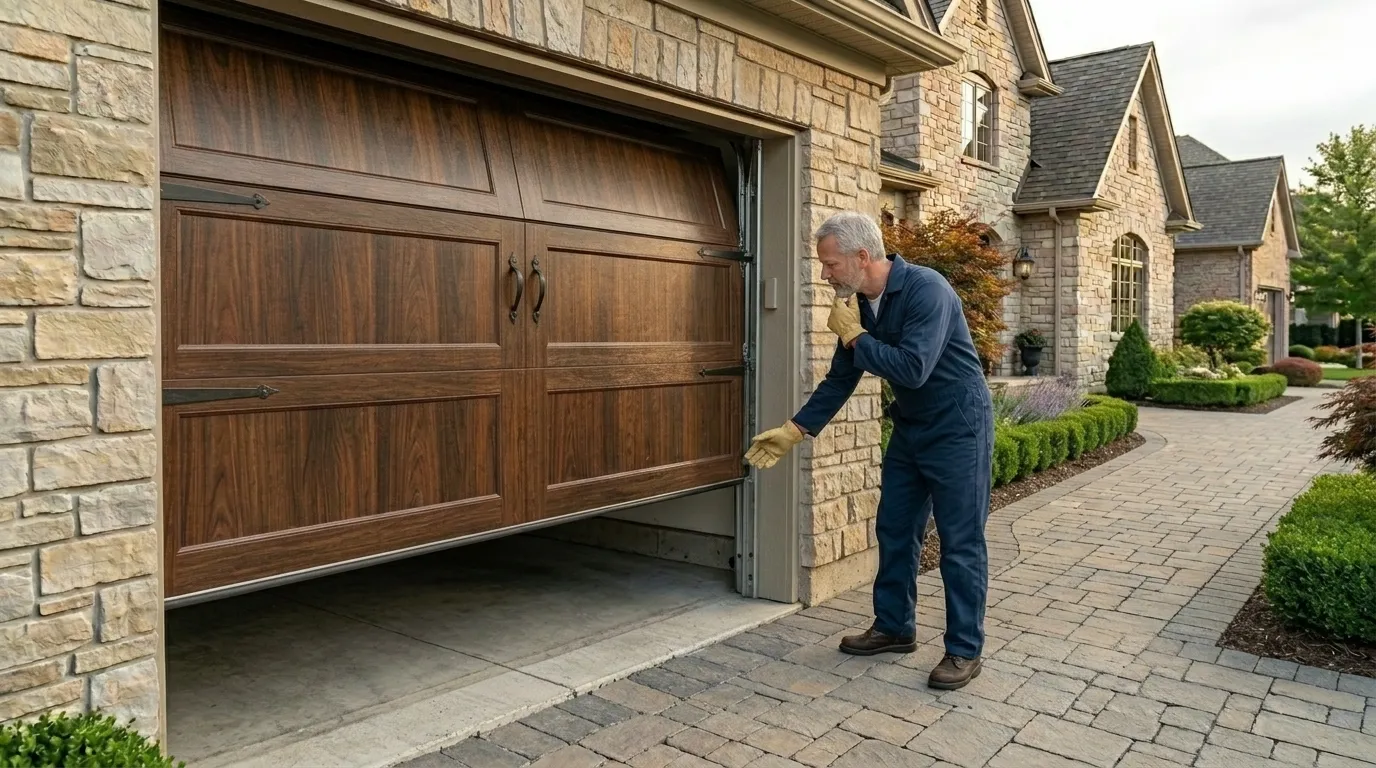
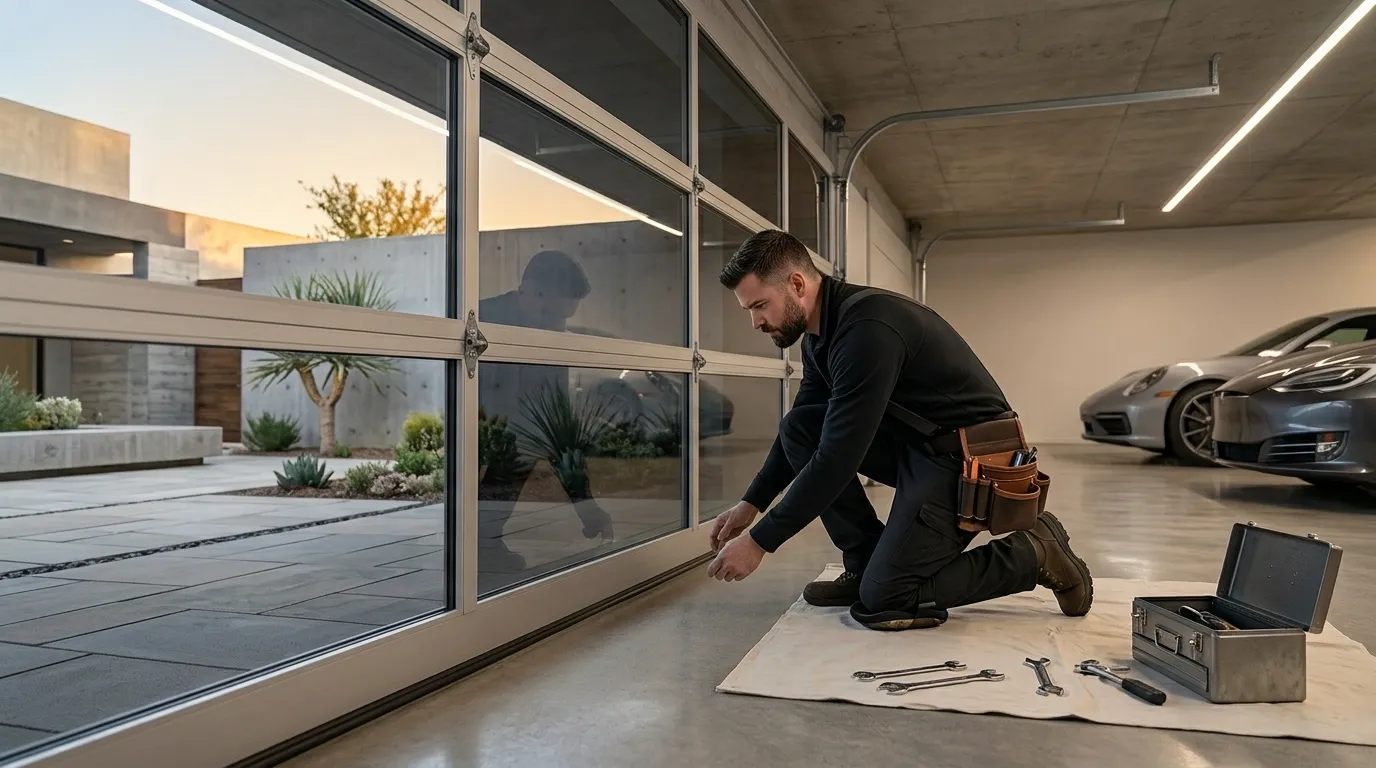
Hinsdale is a small town by the numbers - 5,640 households total, compared with 461,017 across the wider territory we run trucks through. That size matters for pricing in one specific way: we're not doing high-volume production-builder repairs here. The median house went up around 1979, fifteen years newer than the 1964 median for the rest of the area we cover, and household income runs near $250,001 against an $80,202 median territory-wide. What that buys, in practical terms, is a higher share of custom or upgraded doors - insulated steel, some wood-composite panels - rather than the bare builder-grade door you'd find on a 1960s subdivision house. Repair cost on those doors tracks the door itself: a torsion spring swap on a standard 16-foot double costs about the same whether the house is worth $300,000 or $1.2 million, but a cracked panel on a higher-end door means matching a specific profile, and that part isn't always something we carry on the truck. We quote it once we've seen the door, not before.
What You Are Seeing
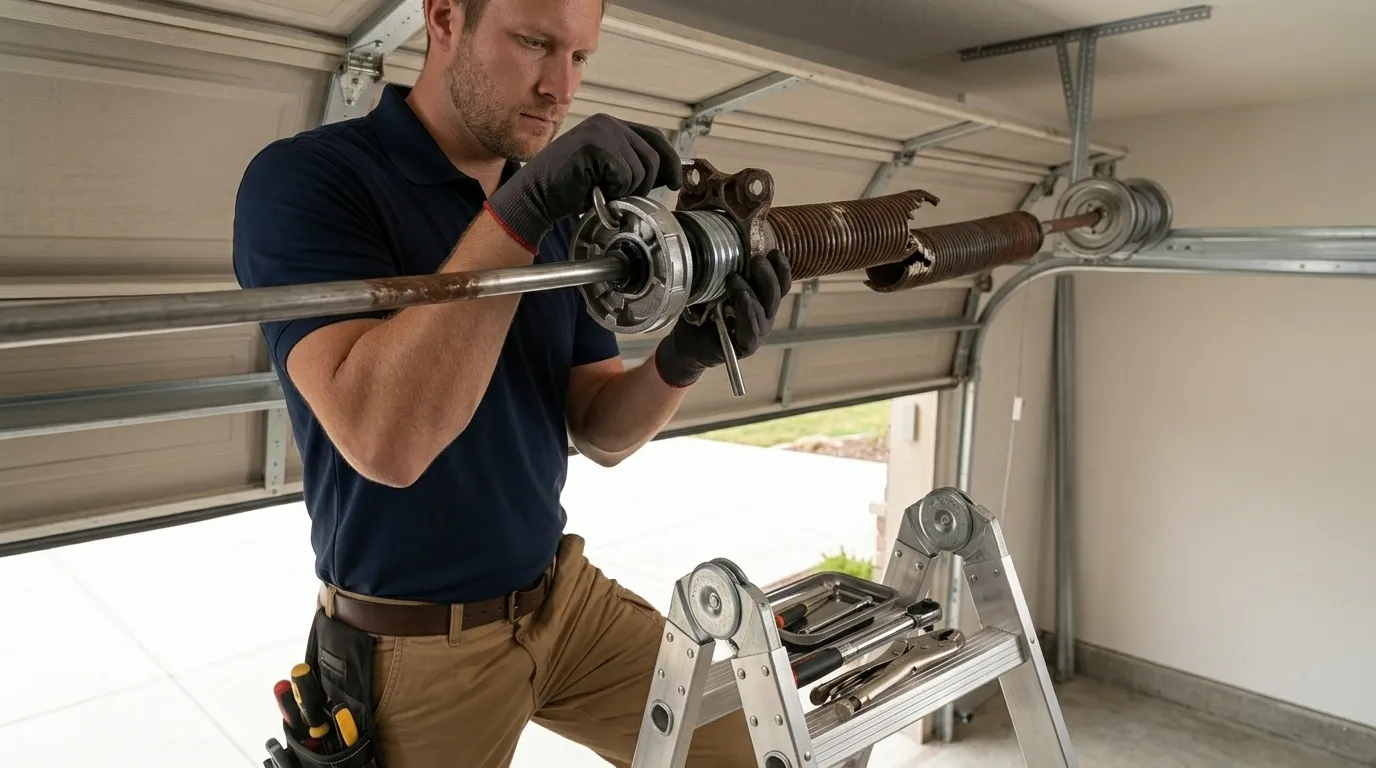
On houses from the late 1970s and into the 1980s, the most common call is a torsion spring that's simply worn out - these systems are now 40-plus years old in a lot of cases, and steel fatigues on a schedule whether or not the door gets used every day. You'll hear it before you see it: a bang from the garage, then a door that won't lift past knee height, or lifts unevenly with one side dragging. On extension-spring doors from the same era, the failure looks different - the door drops fast and hard when the cable lets go, because there's no torsion bar holding tension evenly across the top. Rollers on original hardware from this period are usually steel, not nylon, and they've had four decades of Chicago-area winters working into the track. Cold-weather stiffening is real here - this is a cold-moderate climate band, and steel contracts enough in January that a marginal spring or a slightly bent track finally gives out.
The DIY Question
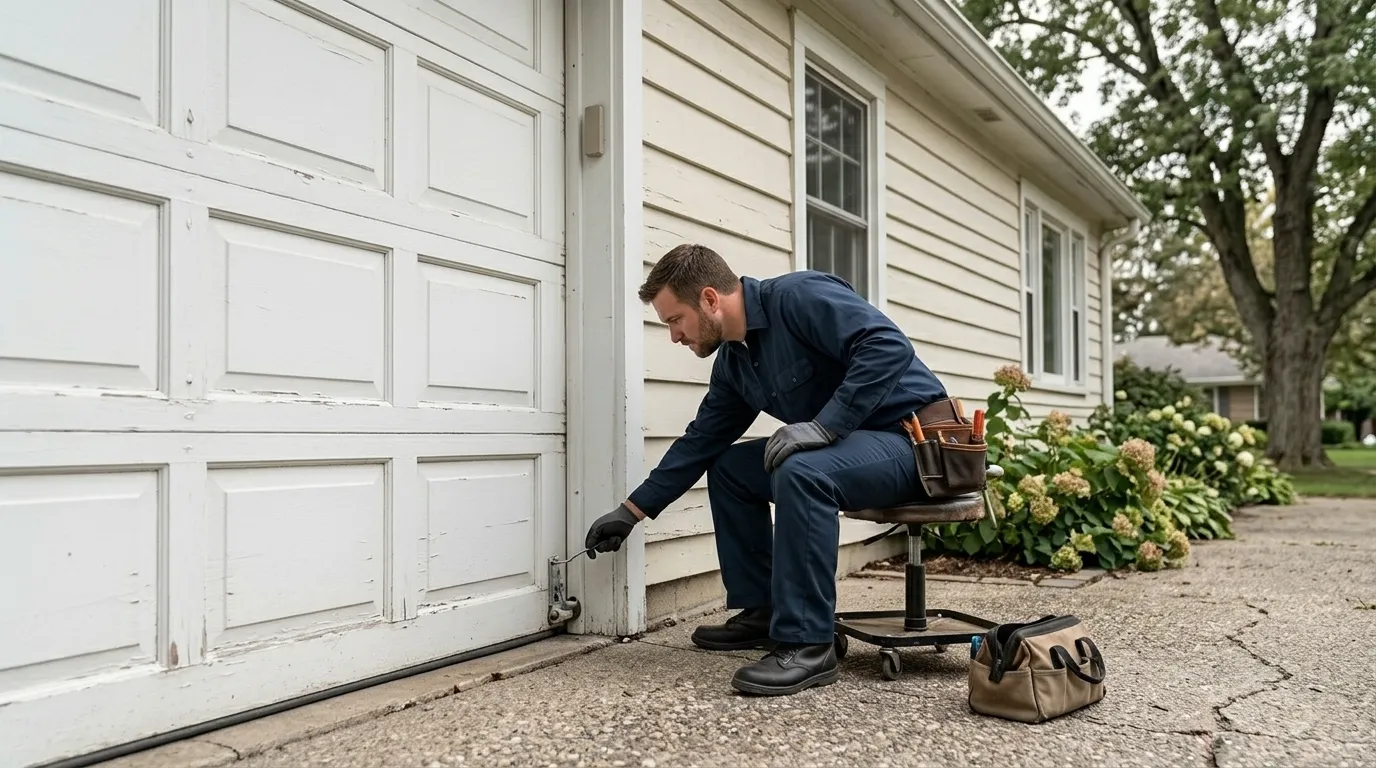
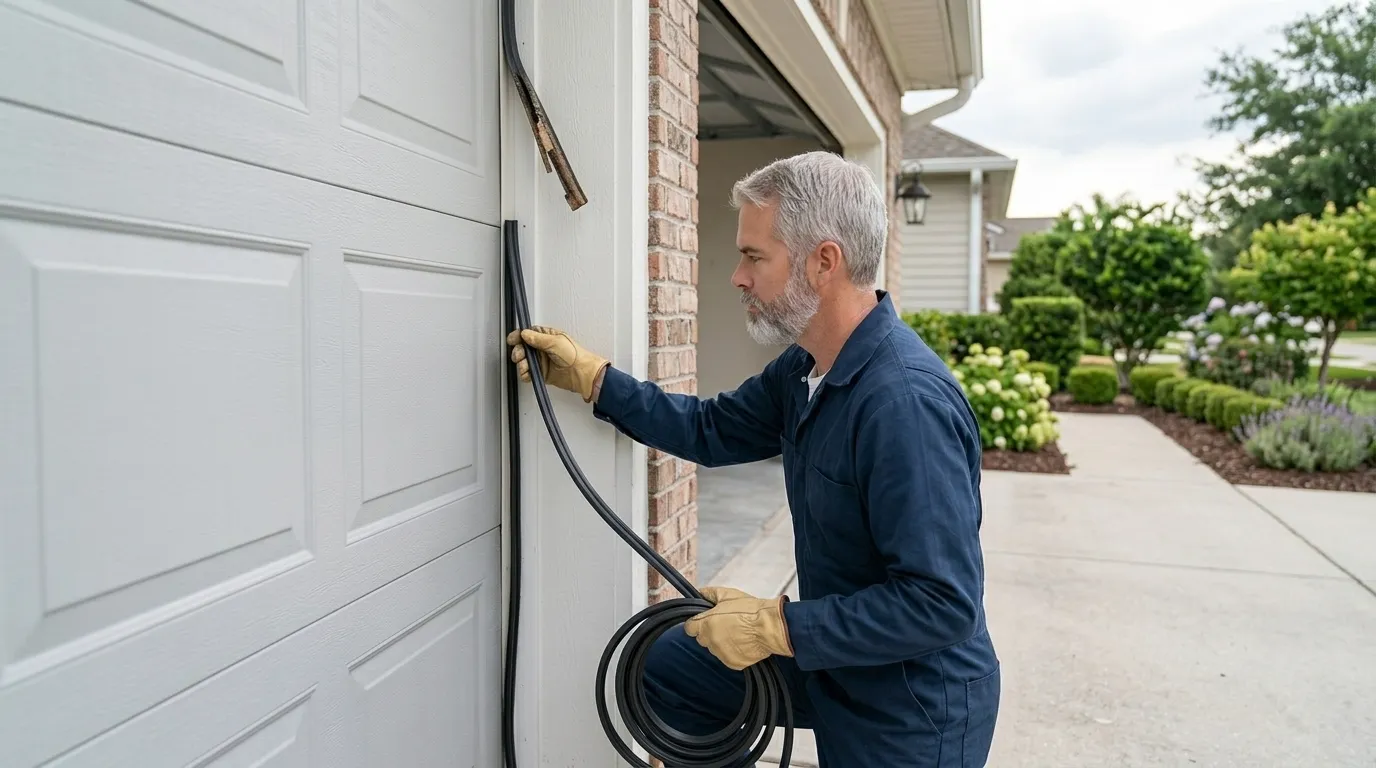
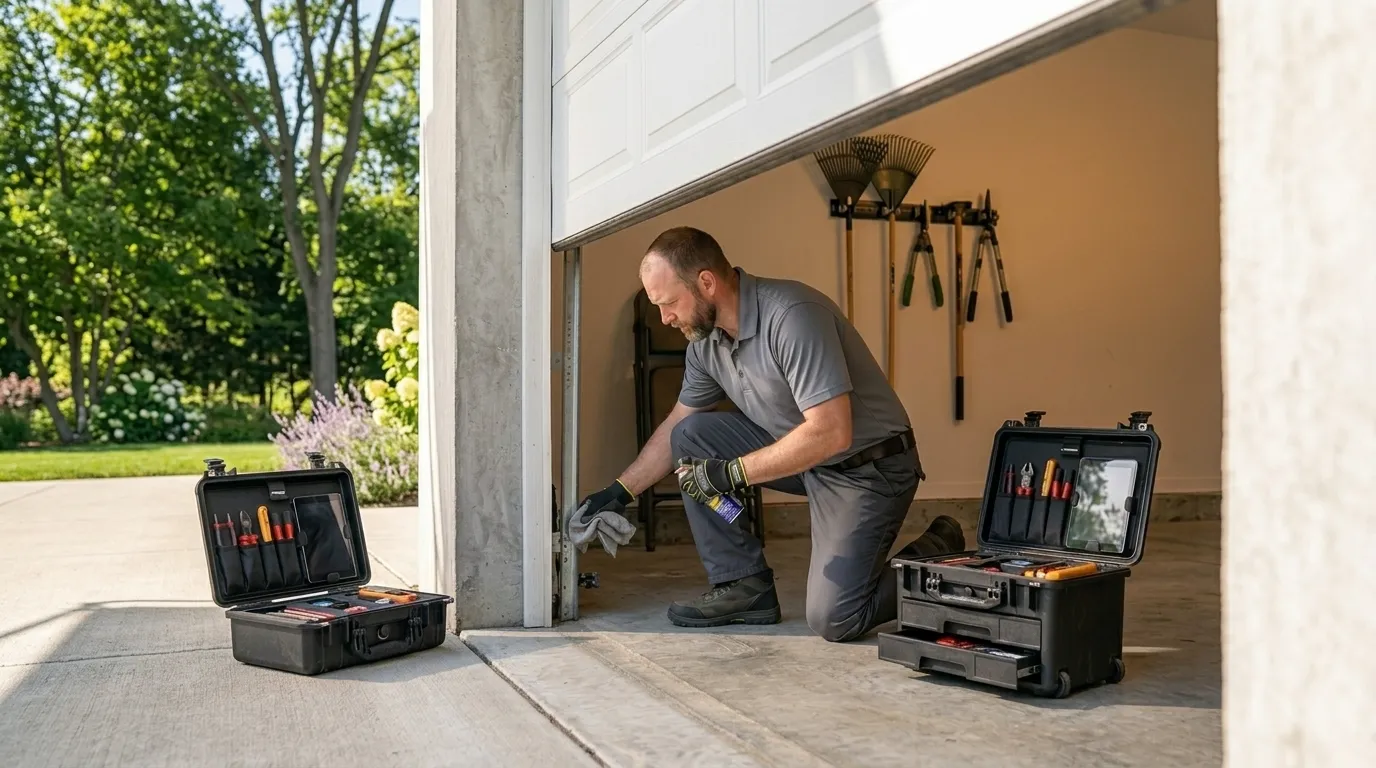
Torsion springs are not a homeowner repair, full stop - the spring is wound under enough tension to break a bone or worse, and that's true whether the house is fifty years old or five. What you can reasonably check yourself: whether the door is binding on a bent track, whether the opener's force setting has drifted (a door that reverses on its own is usually this, not a spring), and whether the weatherstripping at the bottom has hardened and cracked, which is common on doors from the late 1970s that have never been replaced. If you're seeing a cable frayed at the drum, or a spring with a visible gap in its coils, stop opening the door and call - don't try to relieve the tension yourself. We won't talk you out of fixing your own weatherstrip or lubricating hinges. We will talk you out of touching the spring.
What the Fix Involves
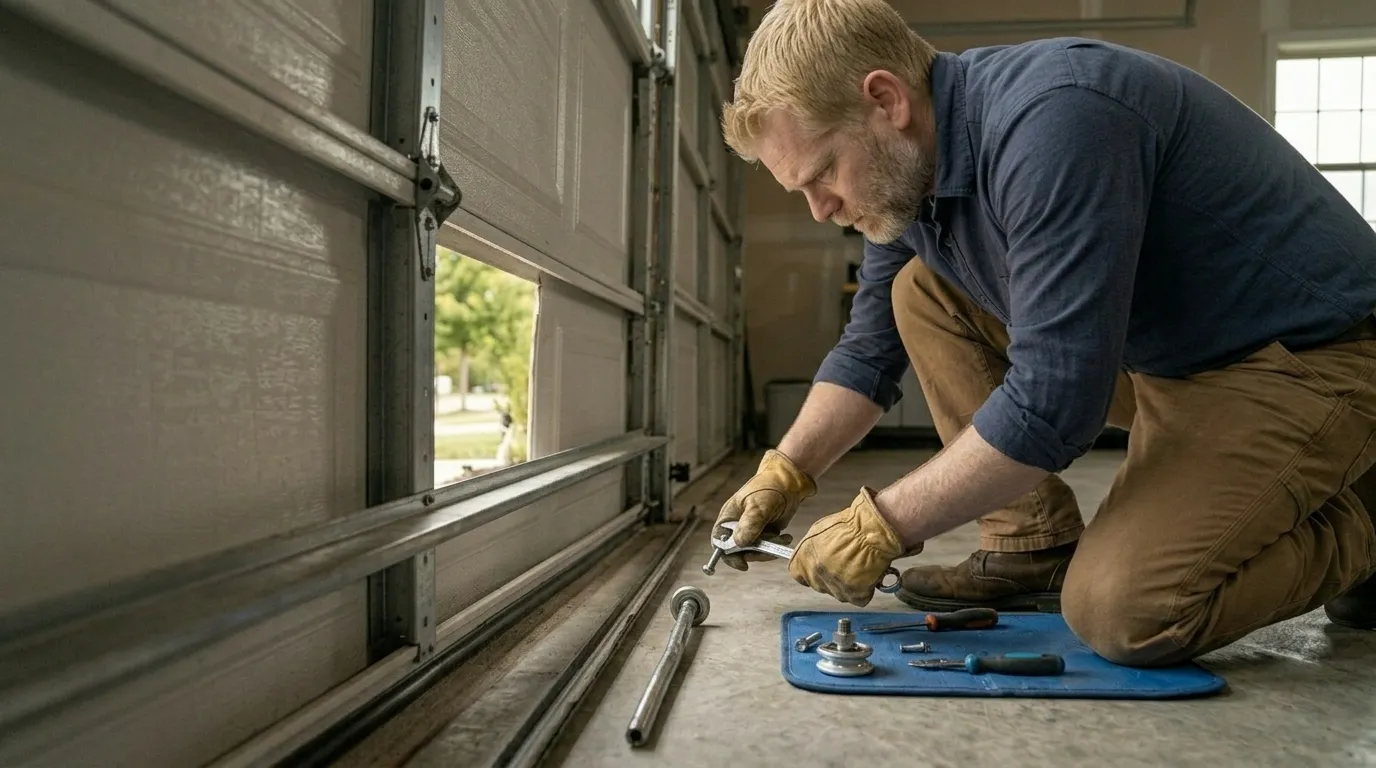
A standard torsion spring replacement starts with releasing tension on the old spring using winding bars - not a screwdriver, not vice grips - then pulling the shaft, swapping springs and bearings as needed, and rewinding to the door's actual weight, which varies more on custom doors than on standard builder units. We check the track alignment and roller condition at the same time, since a spring rarely fails in isolation on a door this old. On extension-spring systems we also inspect the safety cables running through the springs, since a snapped cable on an unsafety-caged extension spring is how the older injuries happen. Once the door's moving evenly, we cycle the opener through a full open-close run to confirm the force and travel limits are set correctly for the new spring tension - skipping that step is how a fresh spring job still ends with a door that reverses itself on the next cold morning.