The Cost of This Job
We don't quote a spring job over the phone without knowing the door, and in Hinsdale that means asking a few more questions than usual before a truck leaves Chicago. The drive is 13 miles each way, so the visit gets scheduled around a real diagnosis - spring size, single or double torsion setup, door weight - not a rough guess that turns into a second trip. Hinsdale's median household income runs around $250,201, and that number doesn't change what a torsion spring costs or how it fails; a spring on a $1.5 million house wears out the same way as one on a smaller property nearby. What does change the job is the door itself. Heavier insulated doors, common on larger garages, sometimes need a two-spring setup rather than one, and that's a different parts pull and a different labor time. We'll tell you which one you have before we tell you a number. If a door needs a spring size we don't carry that day, we're honest about it rather than forcing a part that's close enough - close enough on a torsion spring means it fails again in a year.
We don't publish a flat price here because the honest answer depends on the door in front of us, not the town it sits in.
What You Are Seeing
If the door won't budge and the opener strains or reverses on its own, that's usually not the opener - it's a torsion spring that's let go. Look above the door, on the shaft: a broken torsion spring usually shows as a visible gap in the coil, sometimes with the two halves twisted apart. You might also hear a bang from inside the garage before any of this happens - that's the spring snapping under tension, and it's loud enough that people sometimes think something fell.
A door that closes fine but is unusually heavy to lift by hand, or that drops fast once it's a foot or two open, is often a spring that's weakening rather than fully broken yet. On the 1979-and-later doors common in Hinsdale, this usually means one spring in a double-spring setup has gone while the other is still holding some of the load - which is why the door doesn't slam shut completely but isn't behaving right either.
We don't guess at this over the phone past a certain point. A cable that's frayed can look and sound similar to a spring problem, and pulling on the wrong assumption wastes your money and our time.
The DIY Question
Don't do this one yourself. A wound torsion spring holds enough stored energy to break a bone or worse if the winding bars slip, and that's true whether the door is on a starter home or a house with a $250,000-plus household income down the street. This isn't a caution we give to be dramatic - it's the reason the trade uses specific bars and a specific sequence, not a wrench and confidence.
What you can safely check yourself: whether the noise you heard lines up with a visible gap in the coil above the door, whether the door is unusually hard to lift by hand with the opener disconnected, and whether the cables on either side still look intact. That's useful information to have ready when you call, and it can shorten the visit.
What you shouldn't do is disconnect the spring, cut it, or try to rewind it to get the door open for the day. A door stuck closed is an inconvenience. A door that's been forced open with the spring half-tensioned is a hazard for the next person who walks past it, including anyone else in the house.
What the Fix Involves
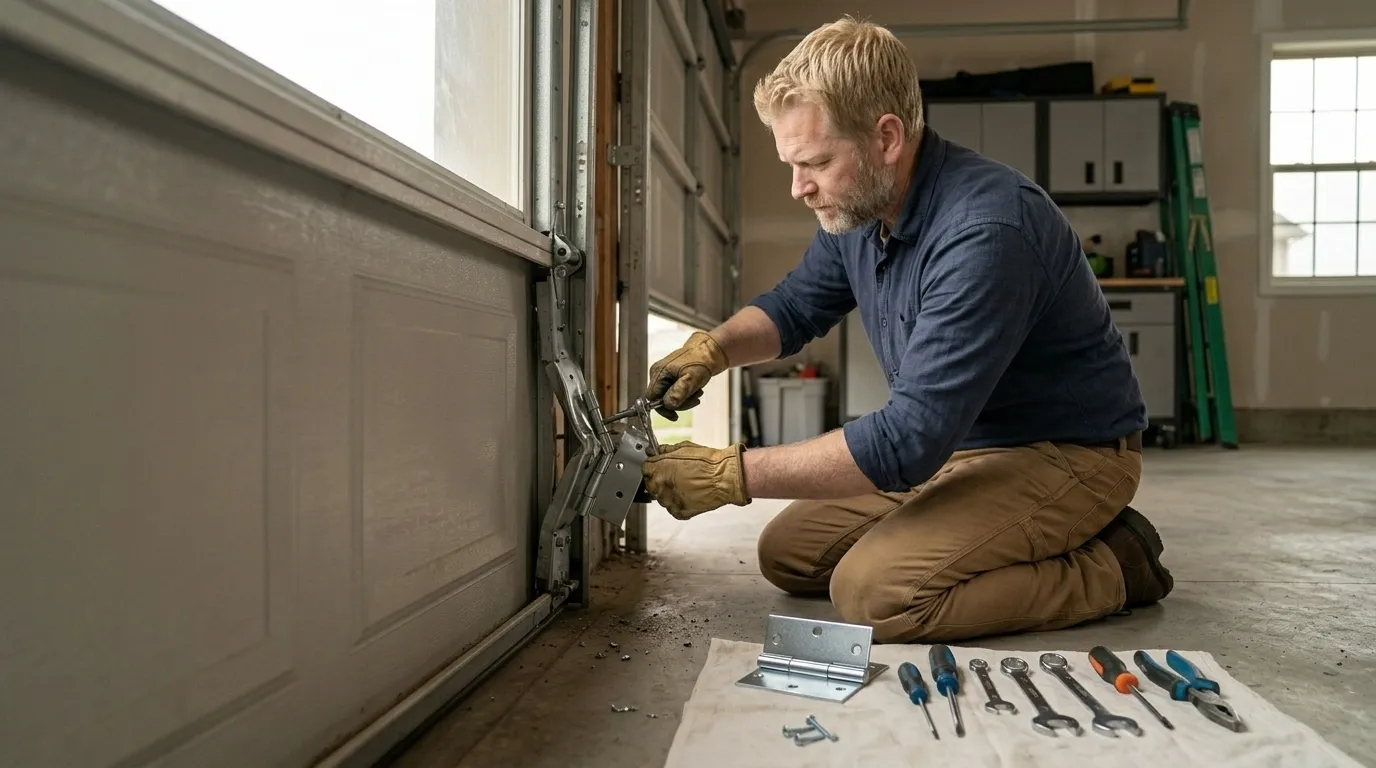
First, the door gets secured and the opener disconnected so nothing moves unexpectedly while we work. Then the old spring, or springs, come off using winding bars - not a drill, not a wrench, and not by hand. On a double-spring door built to the 1979-era spec common in Hinsdale, both springs usually get replaced together even if only one broke, since the surviving spring is close behind it in wear.
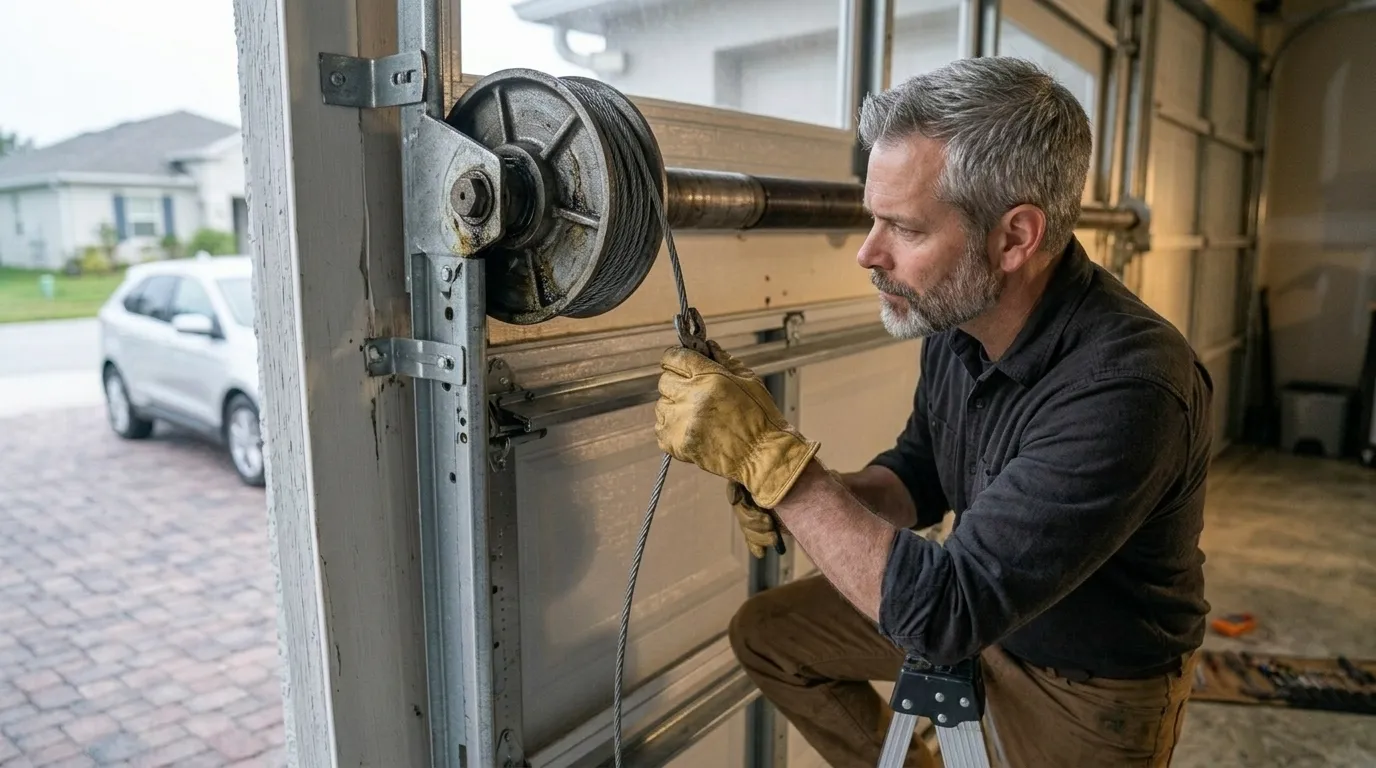
We check the cables, the drums, and the bearing plates at the same time, since a spring letting go under tension is exactly the kind of failure that can nick a cable or bend a bracket on its way. Replacing a spring and leaving a frayed cable behind means a second call sooner than anyone wants.
Last step is winding the new spring to the correct tension for the door's weight and testing it through a full open-close cycle by hand before the opener goes back on. A spring wound to the wrong tension either won't lift the door properly or will slam it - neither is acceptable, and neither takes extra time to get right the first time.