The Cost of This Job
Hinsdale's median home was built around 1979, about fifteen years newer than the 1964 median across the wider service area we cover from Chicago. That gap matters for openers because a house from that era was wired for a chain-drive unit on a garage circuit sized for a single incandescent bulb, not for a modern belt-drive with a battery backup and a smart-phone module. Most of those original units are long gone by now, replaced once or twice, so what's actually on the ceiling varies house to house more than the build year alone would suggest. We don't post a flat number for opener repair on this page because the job changes with what's up there - a logic board swap on a ten-year-old belt unit is not the same truck visit as freeing a stripped gear set on an older chain-drive box still running its original capacitor. We price the job once we've had eyes on the opener, not before. That's not evasive pricing, it's the honest version: two openers that look alike from the driveway can need completely different parts.
What You Are Seeing
The door opens partway and stops. The opener runs but the door doesn't move, which usually means a stripped gear rather than a dead motor. The remote works from inside the garage but not from the driveway, which points to a failing antenna or a receiver board losing signal strength, common once a board's been in service a long stretch. Grinding or a delayed start before the door catches is usually the drive gear giving out. A door that reverses right at the floor, or refuses to close at all, is almost always the safety sensors - either out of alignment or, in a cold garage, reading a false obstruction. None of these point to the same fix, and none of them are worth guessing at from a symptom list alone.
The DIY Question
Swapping a remote battery or wiping dust off a photo-eye lens is fine to do yourself, and we'd rather you try that first than pay a truck to come out for it. Past that, the opener's logic board and the high-tension spring above the door are where DIY stops making sense. A torsion spring under load can put someone in the hospital, and a board wired wrong can fry a new opener on first power-up. If a repair isn't worth doing - say, a unit old enough that the manufacturer no longer makes the circuit board - we'll say so and talk replacement instead of billing you for parts that don't exist anymore.
What the Fix Involves
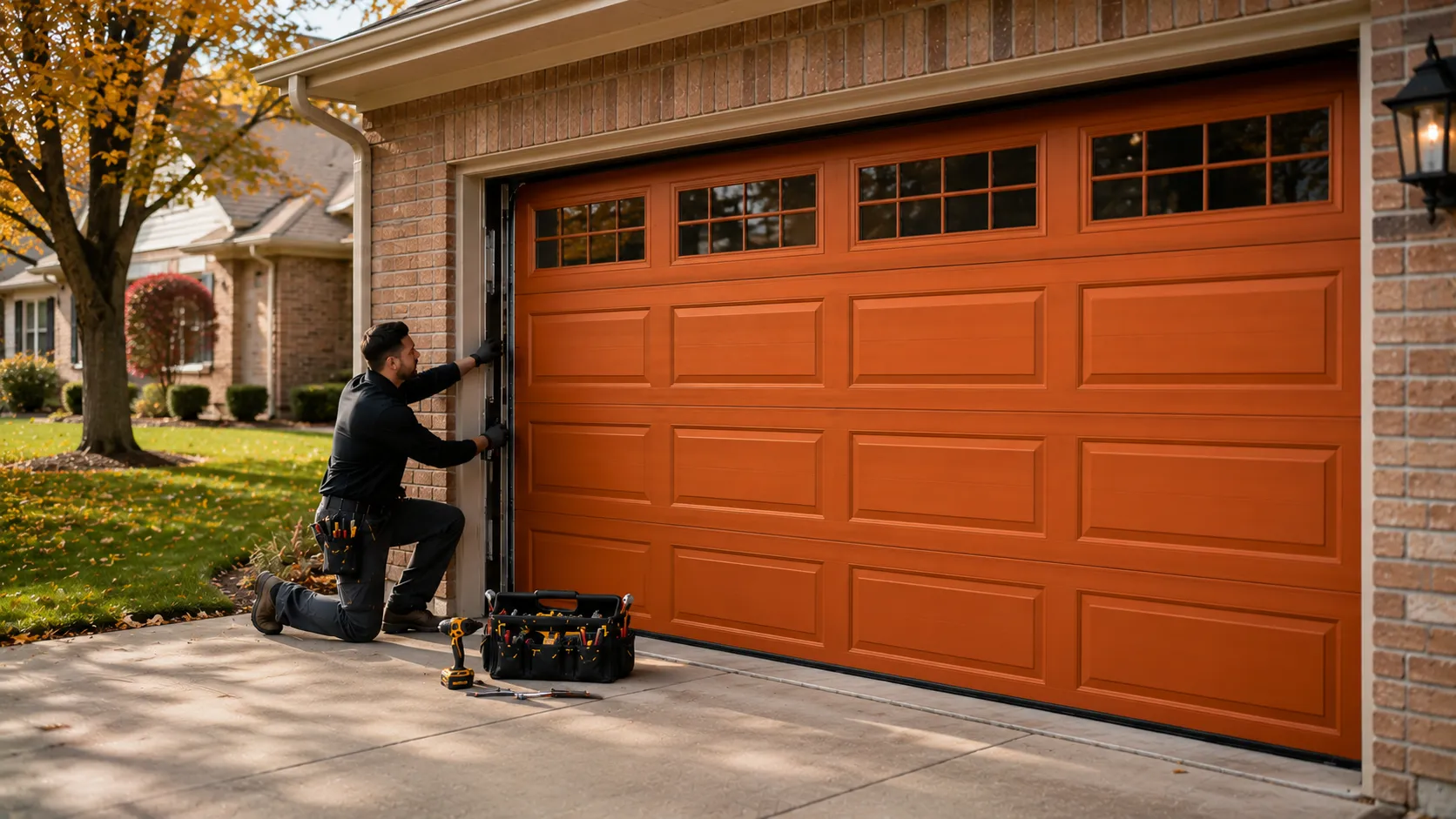
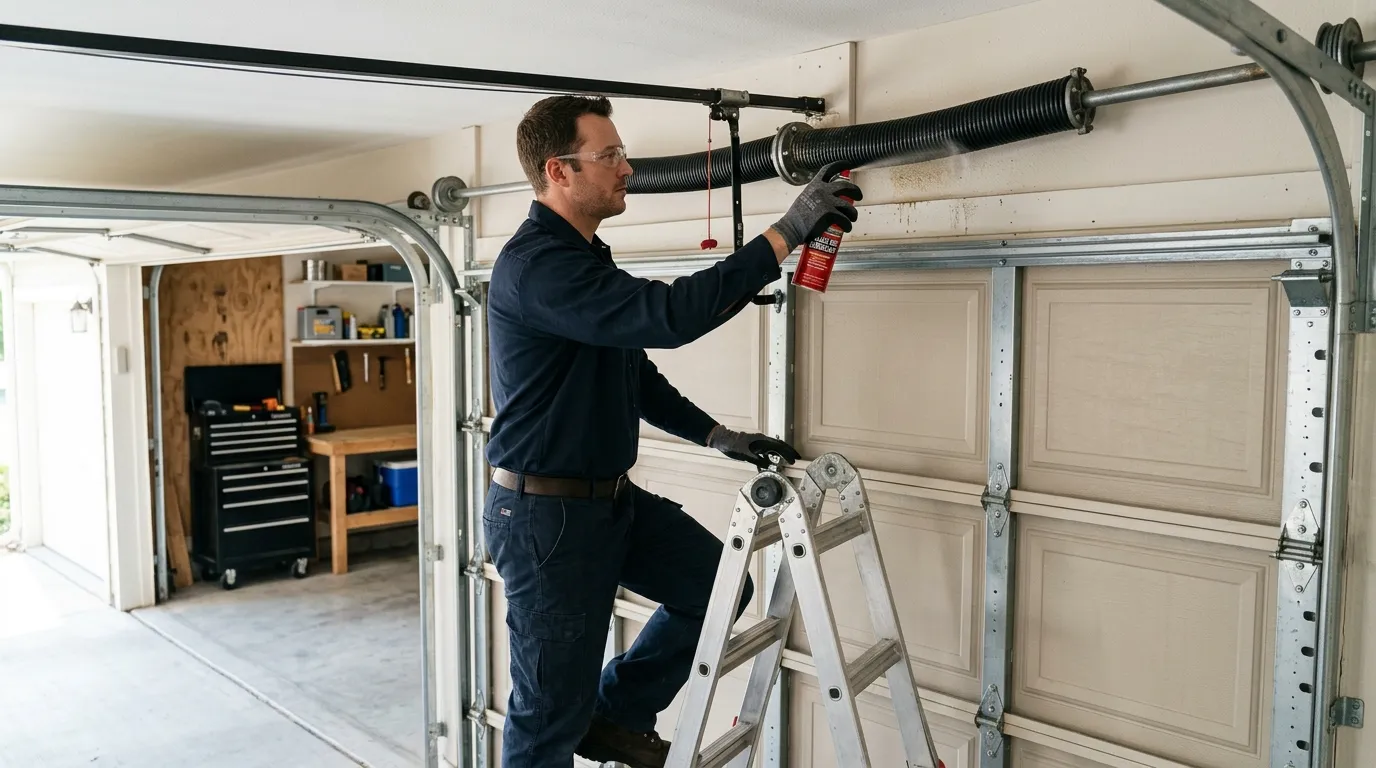
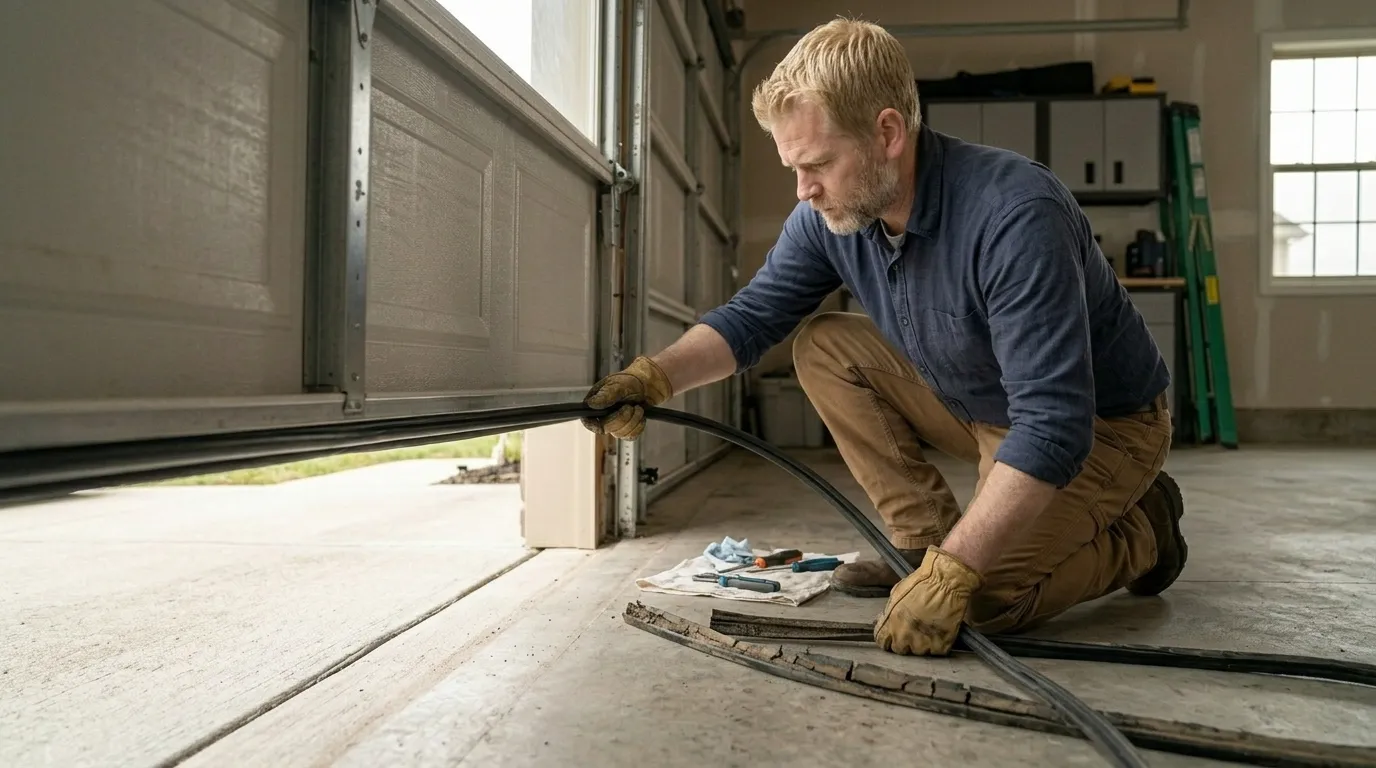
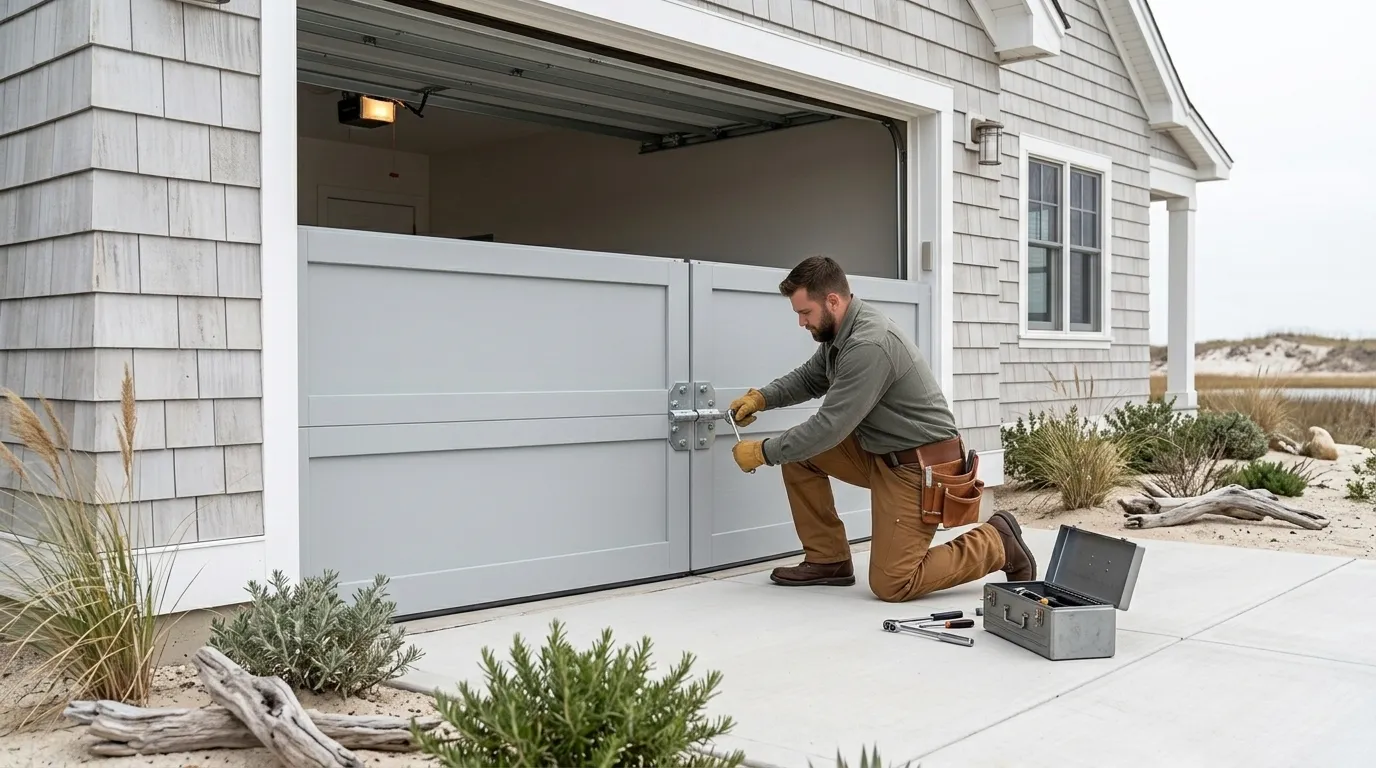
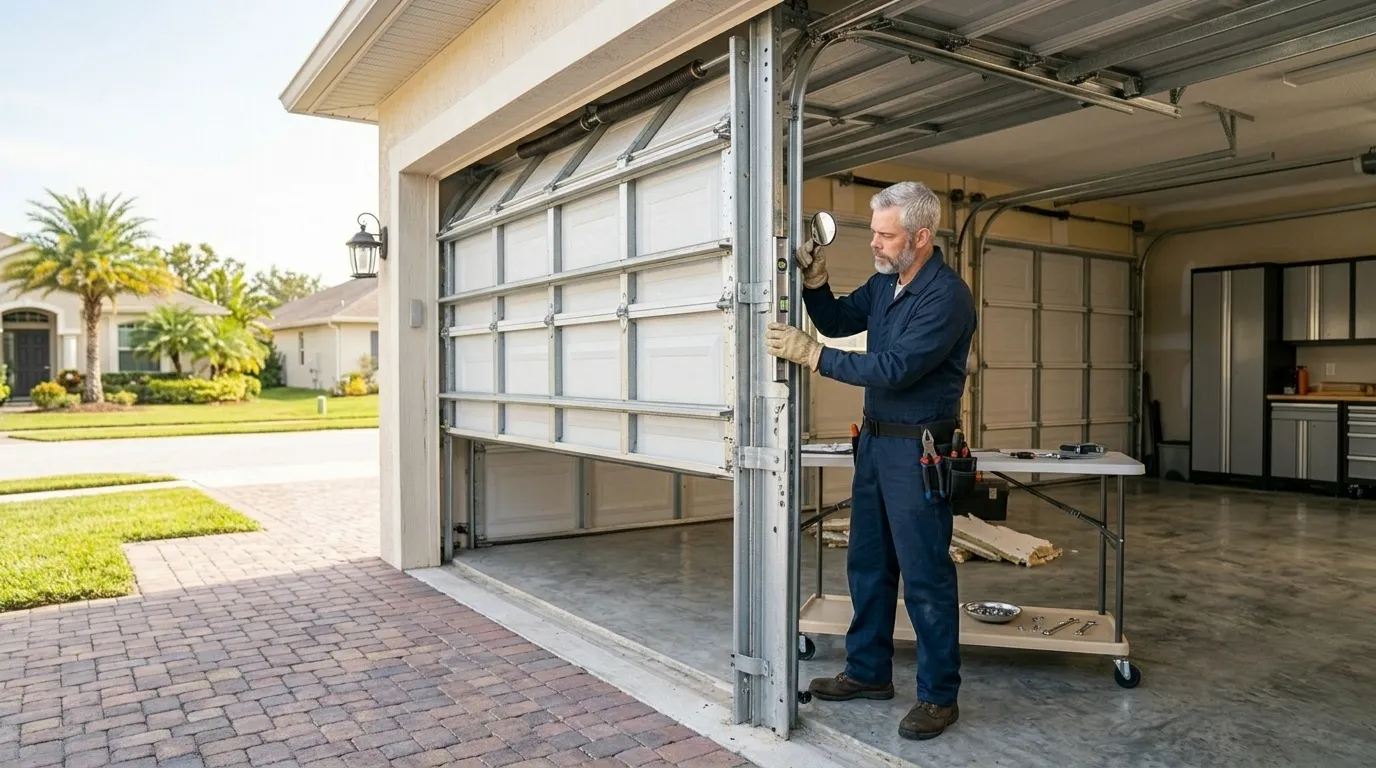
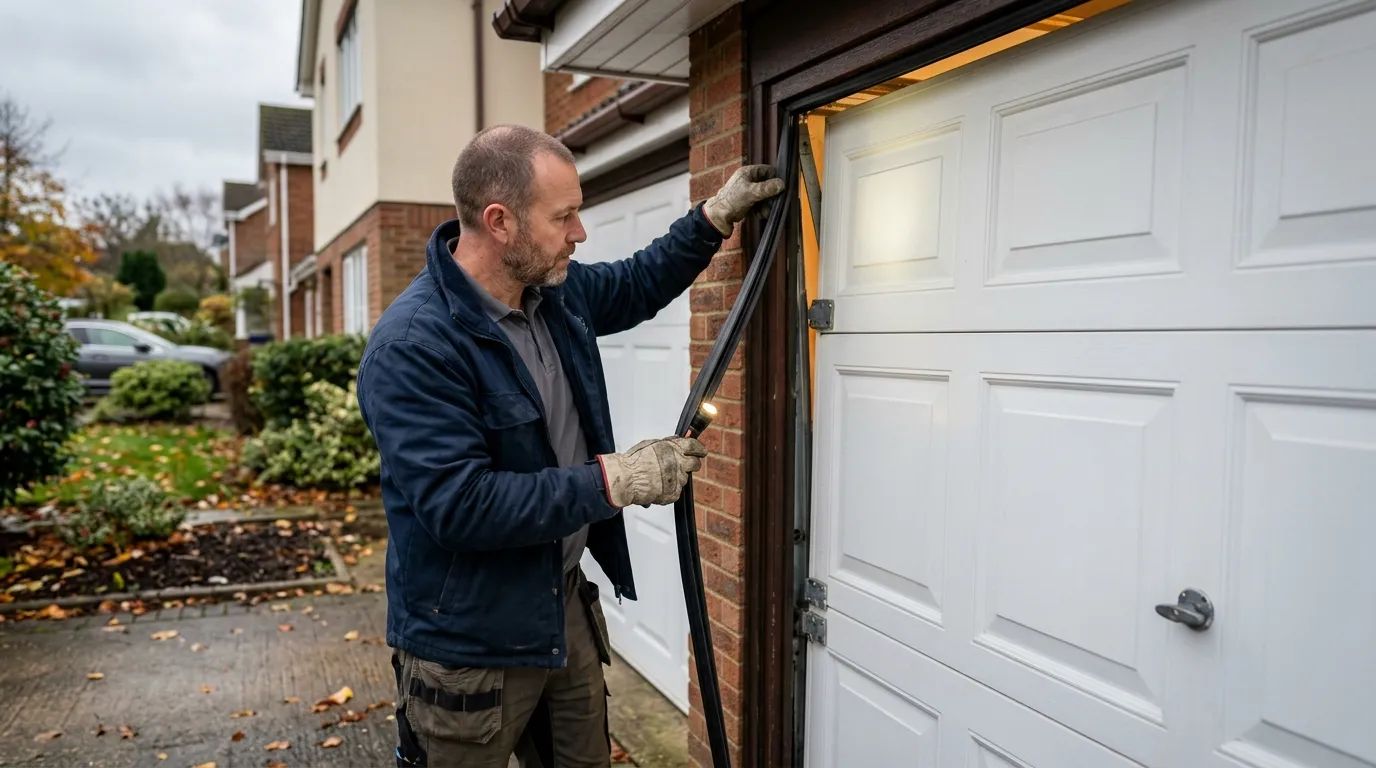
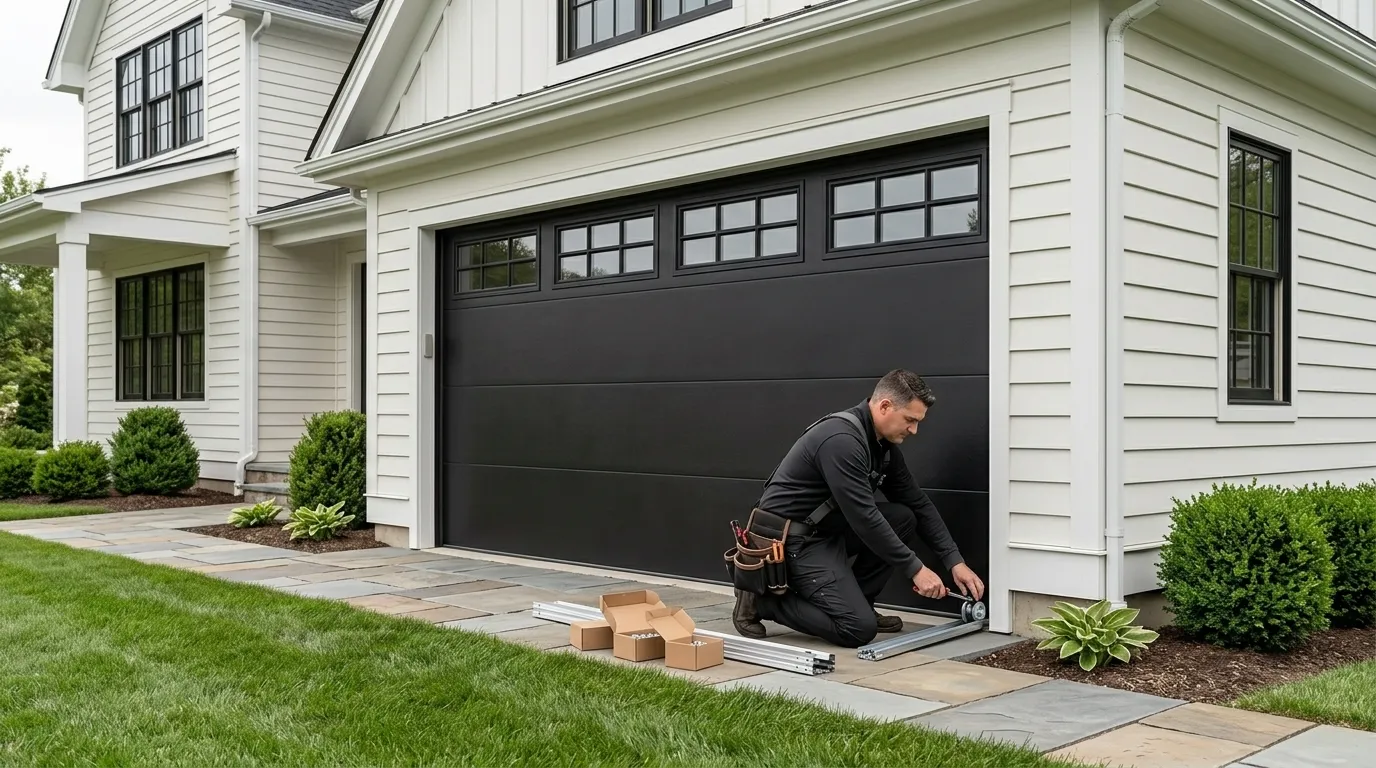
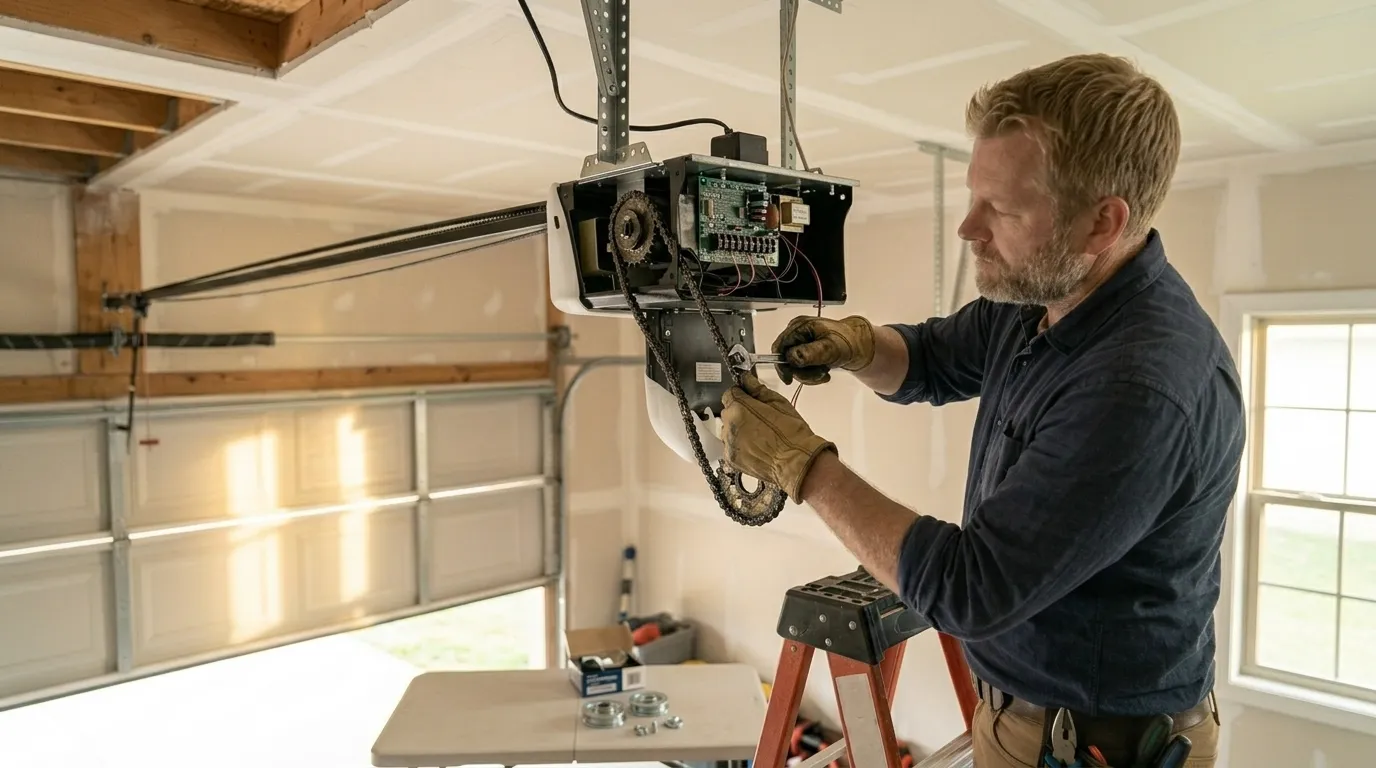
For a gear or sprocket failure, we open the housing, pull the worn gear set, and replace it - usually the fastest repair on the truck. A board failure means testing the wiring and the wall control first, since a bad board often looks identical to a bad wall switch from the homeowner's side. Sensor issues get realigned and cleaned, then tested with the door run through a full cycle in both directions. If the spring above the door is under- or over-tensioned, we reset it before we touch the opener at all, because an opener straining against bad springs will fail again in months even with a brand-new motor. We test the safety reverse - the door touching a 2x4 laid flat on the floor - before we call the job done.