24/7 Emergency Service Open 7 days · 7am–8pm Serving Chicago, IL & nearby
(708) 630-7529
Chicago, IL

Detached and Attached Garages Don't Age the Same Way Here

Chicago's alley garages and its 1960s-70s bungalow belt call for different door setups. Here's what a detached vs attached garage in Chicago actually needs.

Detached and Attached Garages Don't Age the Same Way Here

The Situation

Walk the alleys behind blocks in McKinley Park or Brighton Park and you'll see the pattern that repeats across a lot of this city: a detached garage set off the alley, built separate from the house, often decades after the house itself went up. Housing across this service area was built mostly between 1938 and 1994, with the median landing around 1964, and a big share of that stock is 1960s-70s construction. Detached garages from that era tend to be smaller openings, single-car more often than not, with headroom that wasn't built with today's springs and openers in mind.

Attached garages showed up more in the later part of that build window, when builders started putting the garage under the same roofline as the house. That changes more than just where the door sits. An attached garage shares a wall with heated living space, which means the door itself is doing more work holding back outside air from a room people actually walk through. A detached garage in the back of a Little Village or Archer Heights lot is its own cold box - nobody's furnace is fighting through that wall.

Both setups exist all over this footprint, sometimes on the same block, and the difference matters more than most owners realize when it comes to what door and hardware actually make sense.

What the Weather Here Does to It

This is a cold-moderate climate, and that hits detached and attached garages differently. A detached garage out back with no shared wall to a heated house swings with the outdoor temperature all day - steel panels contract, torsion springs lose a little tension in the cold, and cheap seals shrink away from the slab. Nobody's paying to insulate a structure nobody sleeps next to, so a lot of the older detached units in this area just take the weather straight.

An attached garage runs warmer because it's bleeding a little heat off the house, but that's a mixed blessing. It also means condensation shows up more on an attached door in a way it doesn't on a detached one, especially on doors installed when the housing stock here was going up in the 1960s and 70s and insulation wasn't part of the spec. Bottom-of-panel rust and a bowed bottom section are the two things I see most on attached doors that have been fighting that moisture cycle for years without anyone noticing.

Either way, the cold is the constant. Springs sized for a mild fall day don't behave the same in January, and that's true whether the door in question sits behind the house or under it.

Checking It Yourself

Start with the year your garage went up, not the house - on a lot of properties here they're not the same age, especially if the garage is detached and got added or rebuilt later. If your door and opener predate the 1990s, treat every moving part as suspect: springs, cables, rollers.

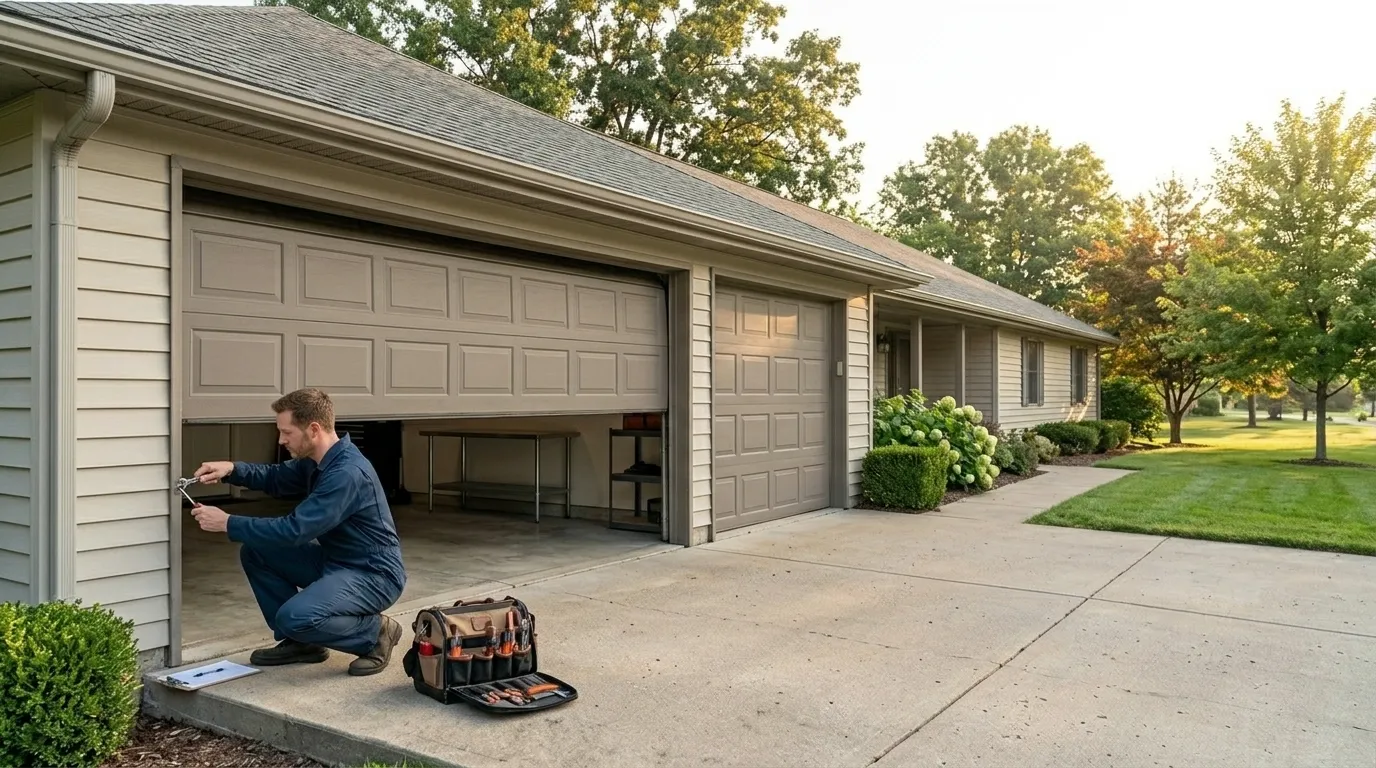
On a detached garage, check the bottom corners of the door for rust or rot where it meets the slab - with no heated wall nearby, that spot holds moisture longer after rain or snowmelt. On an attached door, run your hand along the inside top corner of the frame where it meets the house wall. If it's damp or you can feel a draft, the weatherstripping or the door's insulation rating isn't doing its job against that shared wall.

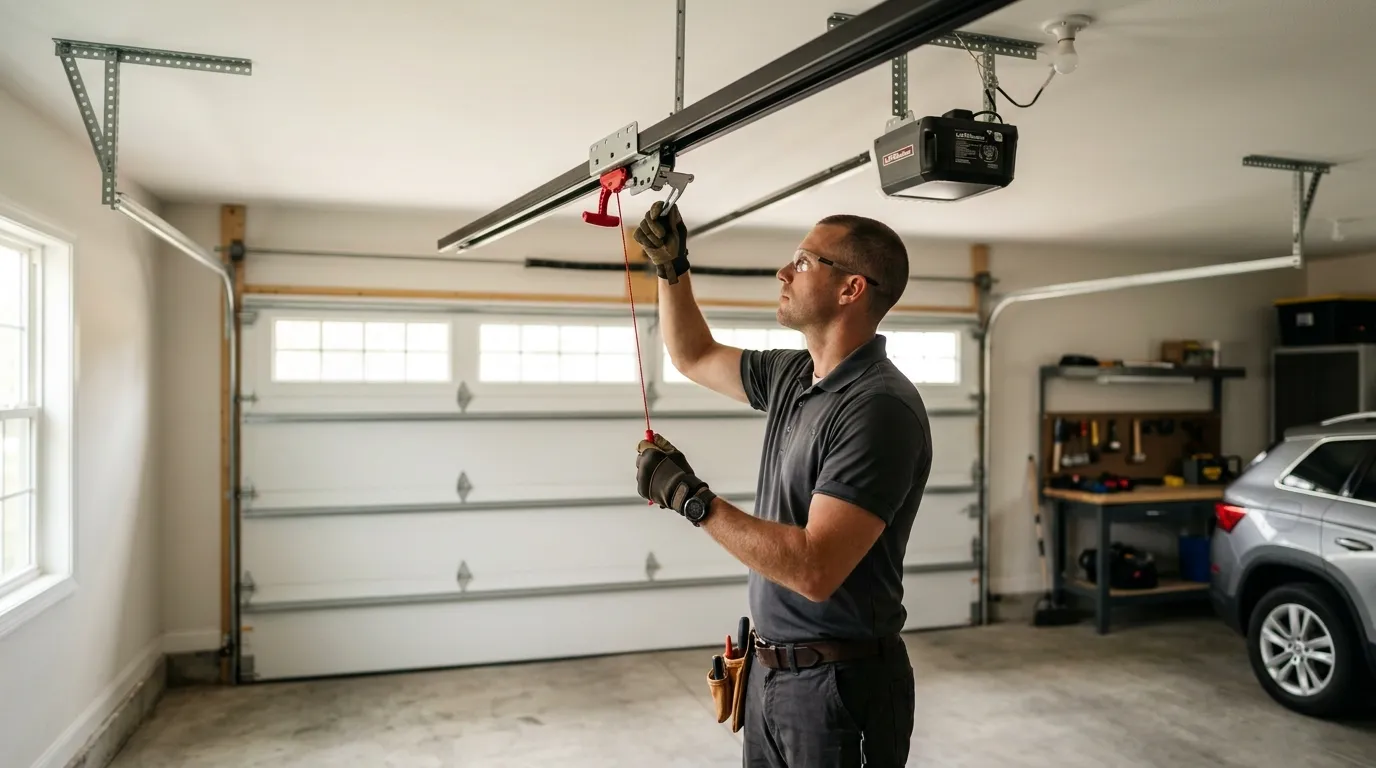
Pull the manual release cord (with the door closed) and try to lift the door by hand. It should move smoothly and stay roughly where you leave it. If it slams down or you can barely lift it, that's spring tension, not something to keep testing yourself.

Honest limitation: I can't tell you the age of your specific garage from here, and a lot of these lots have a garage that's older or newer than the house it sits behind. Check any permit sticker or the framing lumber stamp if you want a real answer.

When to Call Someone

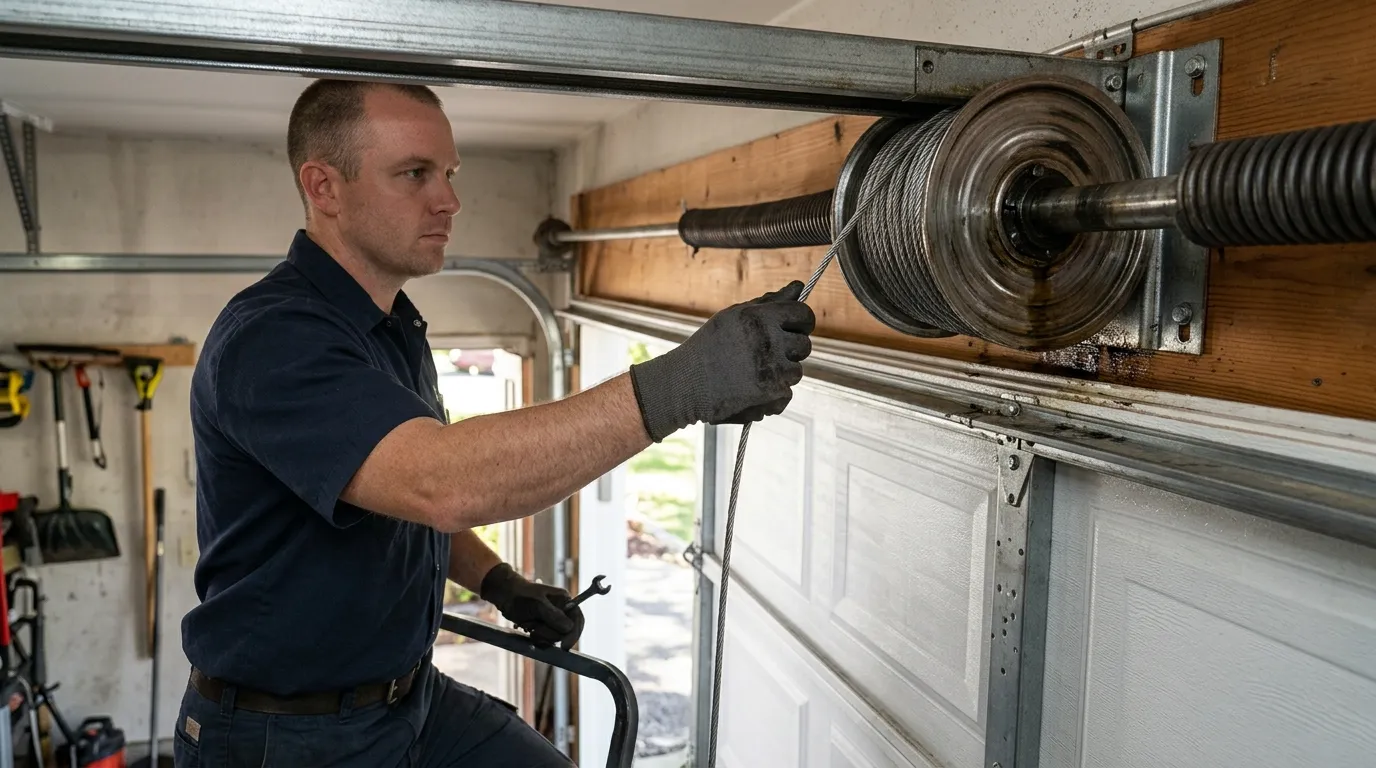
If the door won't stay in a lifted position when you test it by hand, that's a spring problem and it's not a weekend project - a torsion spring under tension can do real damage. Call before you touch it further.

If you've got a detached garage with visible rust at the panel seams or a bottom section that's gone soft, replacement usually makes more sense than patching, especially on doors old enough to predate this area's newer housing. Patching a 1960s-era steel door bought you another season, not another decade.

On an attached garage, if you're feeling cold air or seeing consistent condensation on the inside of the door, that's worth a call even if the door still opens fine - it's a comfort and moisture issue for the house, not just the garage.

We work across this service area, from the neighborhoods closest to the city center out through the nearby suburbs in Cook County. If you're not sure whether what you're looking at is a quick fix or a full swap, that's a normal call to make - most owners can't tell the difference from the outside, and they shouldn't have to.
How it works

From “it’s stuck” to “it’s fixed”

1
Tell us what’s wrong - Chicago garage door service

Tell us what’s wrong

Describe the symptom - won’t open, loud bang, opener runs but the door won’t move.

2
On-site diagnosis - Chicago garage door service

On-site diagnosis

A technician tests the door under power and by hand and finds what actually failed.

3
Clear, up-front plan - Chicago garage door service

Clear, up-front plan

You get the fix that’s needed and what drives the cost - before any work starts.

4
Repaired & tested - Chicago garage door service

Repaired & tested

The repair is done, the door is set true and tested, and the work area left clean.

Serving Chicago, IL - tell us what your door’s doing and we’ll take it from there.

How we work

What to expect

Diagnosis firstEvery visit starts by finding what actually failed - not a pre-written parts list.
The right part for the doorSprings and openers matched to the door’s weight and age, so the fix holds up.
Straight answersWhen a repair makes more sense than a replacement - or the reverse - you hear it plainly.
Clean, careful workTension released safely, hardware set true, the door tested under power before we leave.
Questions

Frequently asked

Straight answers about garage door repair in Chicago. Still unsure? Ask us directly.

Is a detached garage door harder to maintain than an attached one in Chicago?

Not harder, just different. A detached garage swings with outdoor temperature all day since it doesn't share a wall with heated living space, so springs and seals take more direct cold exposure. An attached door deals more with condensation from the shared wall. Both need seasonal checks, just for different symptoms.

My garage looks older than my house - is that normal here?

Yes, it's common. A lot of this area's housing went up between 1938 and 1994, and detached garages behind alley lots were frequently built or rebuilt separately from the main house, sometimes decades apart. Check for a permit sticker or framing stamp if you want the garage's actual age.

Why is my attached garage door damp on the inside?

That's usually condensation from the shared wall with your heated house meeting a door that wasn't built with much insulation - common on doors from the 1960s-70s stock that makes up a lot of this area. If the weatherstripping is intact and it's still happening, the door's insulation rating may be the issue.

Ready to get your garage door sorted?

Tell us what it’s doing and where you are in Chicago - we’ll take it from there.

Request a QuoteCall