The Situation
Most of the housing across this service area went up between 1938 and 1994, with the bulk of it dating to the 1960s and 70s. That matters because garage doors and their hardware age on a schedule, and a door installed when a Little Village or McKinley Park two-flat was built has had five or six decades of freeze-thaw cycles to work springs loose, dry out rollers, and shift track that was never leveled to today's standard. In neighborhoods like Brighton Park, Archer Heights, and Back of the Yards, where a lot of garages sit on older slabs, you'll hear the settling in the door before you see it in the foundation. A noise that shows up gradually, over months, is usually wear. A noise that shows up suddenly, especially after a cold snap, is usually something that let go. Both are worth listening to, because a door built to 1960s hardware standards doesn't fail the way a new one does - it doesn't give you much warning, and torsion springs on original one-piece setups aren't stocked the way modern parts are. Knowing what decade your garage came from tells you more about what's about to happen than any general checklist does.
Checking It Yourself
Start with your ears before your hands. A rhythmic thump once per rotation usually means a flat spot on a roller - not urgent, but it'll get louder. A sharp metallic bang, especially near the top of the door, is worth stopping and looking at rather than running the opener again; that's the sound a spring makes right before or right after it lets go. Squealing that rises in pitch as the door moves is almost always dry rollers or hinges, and a household can often quiet that down without calling anyone. Run the door manually, with the opener disconnected, and feel for spots where it drags or binds - that tells you if it's a track issue versus a spring issue. What you should not do is keep operating a door that's making a new grinding or grating sound under load, because that's usually a bearing or cable under stress, and running it further can turn a $150 repair into a full replacement. I'll say plainly: if you're not comfortable putting weight on a ladder near a wound spring, don't. That's not a DIY repair regardless of how simple it looks.
When to Call Someone
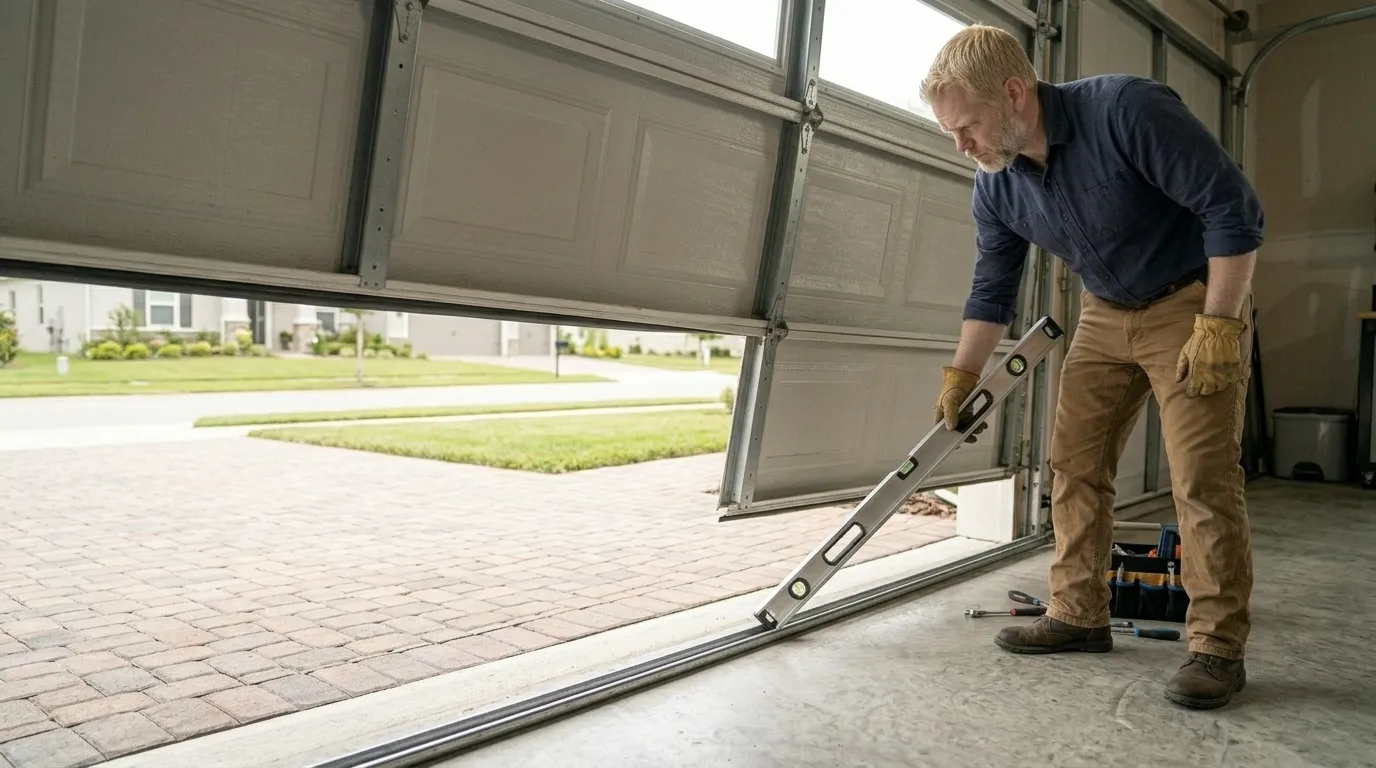
Call if the door makes a loud bang and then won't lift, or lifts unevenly on one side - that's a spring or cable problem, and it's not safe to keep forcing it. Call if the noise is new, sudden, and paired with the door feeling heavier than usual to lift by hand; that combination points to broken or badly weakened springs, common enough in a housing stock where a lot of original hardware from the 1960s and 70s is still in service. Call if a scraping sound is getting worse week over week rather than staying steady - that's a track working its way out of alignment, and it won't fix itself. What I won't do is tell you every noise needs a truck out; a lot of squeaks are a five-minute fix with the right lubricant. But grinding, banging, or a door that won't move evenly on both sides is past the point where guessing is worth the risk.