24/7 Emergency Service Open 7 days · 7am–8pm Serving Chicago, IL & nearby
(708) 630-7529
Chicago, IL

Garage Door Work in East Garfield Park

Garage door repair for East Garfield Park, about 3 miles NNW of the service area center, where housing dates mostly from 1938 to 1994 and winters run cold.

Garage Door Work in East Garfield Park
Chicago, IL
Licensed & insured
Free estimates
Residential & commercial

What Is on These Garages

East Garfield Park sits about 3 miles north-northwest of the center of the service area, in housing stock that mostly went up between 1938 and 1994, with the median build year landing around 1964. That range covers a lot of ground - some blocks still carry older single-panel doors on side-mounted track that predate the sectional door as the default, and others got sectional steel doors and chain or belt-drive openers whenever the original setup wore out or a garage got rebuilt. What you don't see much of here is anything installed as original equipment after 2000 with the newer safety sensors and rolling-code openers as the factory standard - most of that came in as a replacement, not day one.

The winters in this part of the country fall into the cold-moderate band, which matters more than people think for a door built in the 1960s. Steel contracts in cold weather, torsion springs lose a little tension, and nylon rollers that were fine in July start binding in January. If your door is original to a house from that era, the hardware holding it up is original too, unless someone's already swapped it.

Houses on These Streets

With most of the housing here dating to a build window of 1938-1994, the garages attached to or standing behind these houses were built to the codes and habits of that stretch, not to what's standard now. A house from the 1950s or early 60s typically has a single-car or narrow two-car garage opening, often with a header that was never sized for a heavier insulated door - so when a homeowner upgrades from a light old panel to a modern insulated steel door, the spring size and drum setup usually need to change with it, not just the door.

The honest limitation here: we can't tell you what's behind your specific garage wall without opening it up. Track alignment, header strength, and what the last owner did with a repair 20 years ago vary house to house even on the same block. What we can say from the build era is that original torsion hardware from the 1960s and 70s is past its expected service life on most doors that still have it, and a spring failure on that hardware is a matter of when, not if.

Where You Are

East Garfield Park is about 3 miles north-northwest of the center of the broader service area we cover, which runs out to towns like Berwyn, Cicero-adjacent Stickney, and Brookfield at the 6-to-8-mile mark, and closer-in neighborhoods like North Lawndale and Near West Side within a couple miles of downtown. That puts East Garfield Park on the inner edge of the area we run trucks through, not out at the far perimeter - which is mostly relevant for how quickly a truck already working nearby can swing over.

Across the full service area, there are 461,017 households and 223,261 owner-occupied houses, with a median household income of $80,202. Those numbers describe the wider area we serve rather than this block specifically, but they're the honest context for the kind of work we see - a mix of owner-occupied homes making practical repair-versus-replace calls rather than blanket upgrades.

Typical Work

Given the build era here, the calls we get from this part of the service area skew toward torsion spring replacement on doors that have never had the spring swapped since the house was built or last renovated, cable replacement on the same original drums, and opener swaps where a chain-drive unit from decades back finally quits. Roller replacement comes up often too - old steel rollers on track that was never widened for anything bigger than the original single-panel or early sectional door.

We don't push full door replacement when a repair will hold. A tuned-up 1960s door with a new spring and rollers can run for years. Where replacement does make sense is when the header or track has been reworked so many times that hanging new hardware on it isn't a safe bet, or when someone wants the insulation and quieter operation a modern door and belt-drive opener give you, which is a different job with different pricing than a repair call.
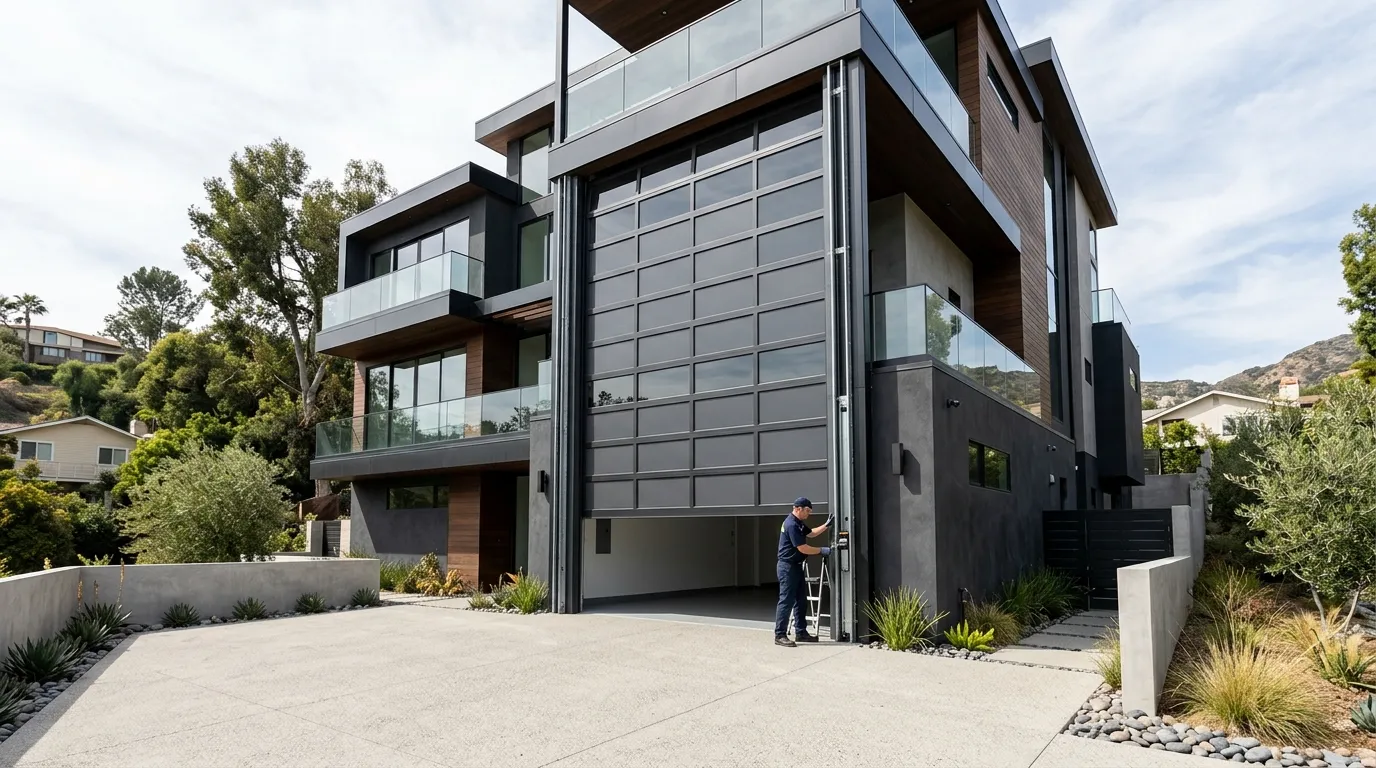
How it works

From “it’s stuck” to “it’s fixed”

1
Tell us what’s wrong - Chicago garage door service

Tell us what’s wrong

Describe the symptom - won’t open, loud bang, opener runs but the door won’t move.

2
On-site diagnosis - Chicago garage door service

On-site diagnosis

A technician tests the door under power and by hand and finds what actually failed.

3
Clear, up-front plan - Chicago garage door service

Clear, up-front plan

You get the fix that’s needed and what drives the cost - before any work starts.

4
Repaired & tested - Chicago garage door service

Repaired & tested

The repair is done, the door is set true and tested, and the work area left clean.

Serving Chicago, IL - tell us what your door’s doing and we’ll take it from there.

How we work

What to expect

Diagnosis firstEvery visit starts by finding what actually failed - not a pre-written parts list.
The right part for the doorSprings and openers matched to the door’s weight and age, so the fix holds up.
Straight answersWhen a repair makes more sense than a replacement - or the reverse - you hear it plainly.
Clean, careful workTension released safely, hardware set true, the door tested under power before we leave.
2,664,452Residents in Chicago
4Garage door services
110Neighborhoods & suburbs
ILServing Chicago, IL
Who we help

Residential & commercial

Residential garage doors

Homes in Chicago

  • Single- and double-car garages
  • Spring, cable & opener repair
  • New door installation
See services
Commercial garage doors

Businesses & property

  • Rolling steel & sectional doors
  • Loading-dock doors
  • Built for higher cycle counts
See services
Questions

Frequently asked

Straight answers about garage door repair in Chicago. Still unsure? Ask us directly.

Is my garage door original to the house if my house was built in the 1960s?

It might be, but a lot of doors from that era have already been swapped at least once, especially the opener. Original torsion springs and steel drums from a 1960s install are past their expected life if they're still in place, so that's worth checking even if the door itself looks fine.

Do you replace doors or just repair them?

Both, depending on what's actually wrong. If the spring, cables, or rollers have failed but the track and header are sound, a repair is usually the right call. If the header's been reworked repeatedly or you want insulation and a quieter opener, replacement makes more sense - we'll tell you which situation you're in.

Does the cold affect an older garage door more than a newer one?

Yes. This area sits in a cold-moderate climate band, and steel components from the 1960s and 70s - springs, rollers, drums - have less tolerance built in than modern hardware. Cold snaps are when older torsion springs are most likely to finally let go.

Ready to get your garage door sorted?

Tell us what it’s doing and where you are in Chicago - we’ll take it from there.

Request a QuoteCall