The Situation
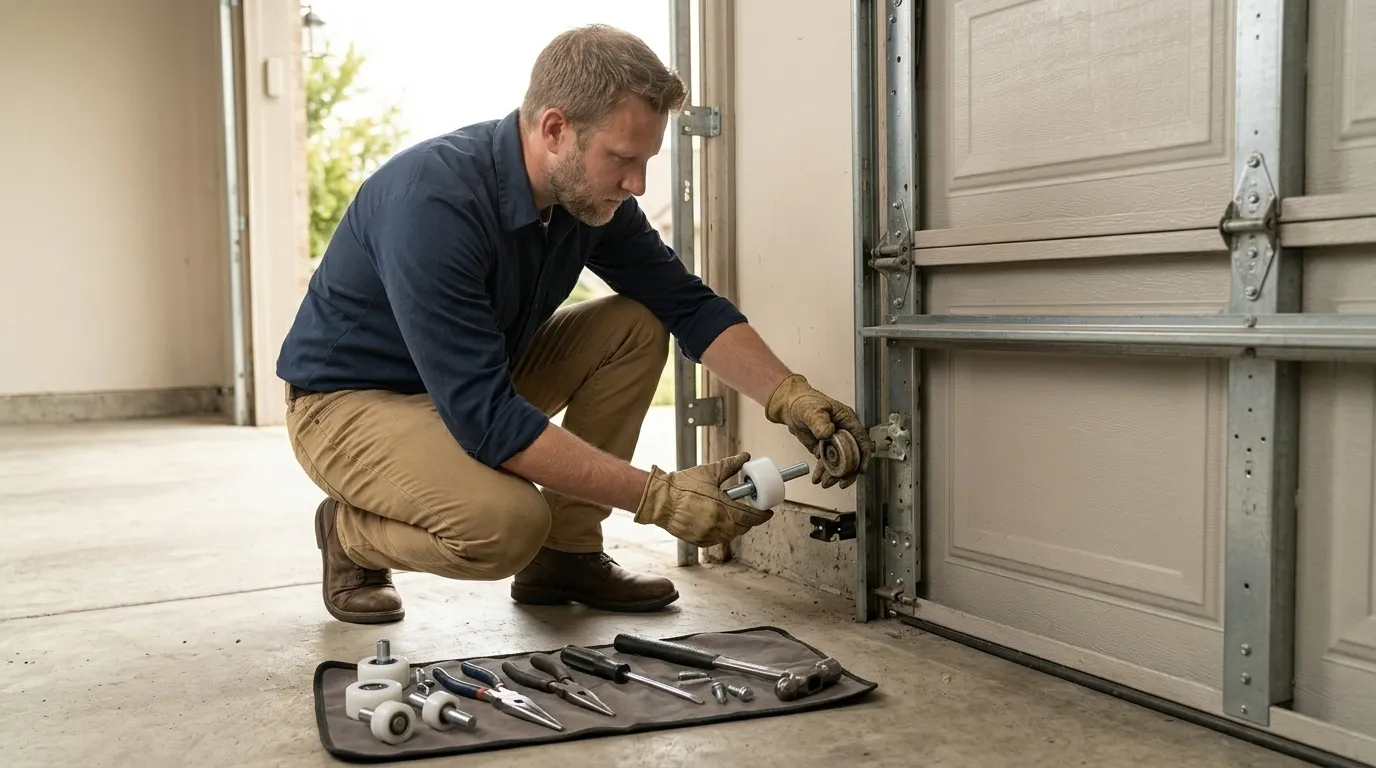
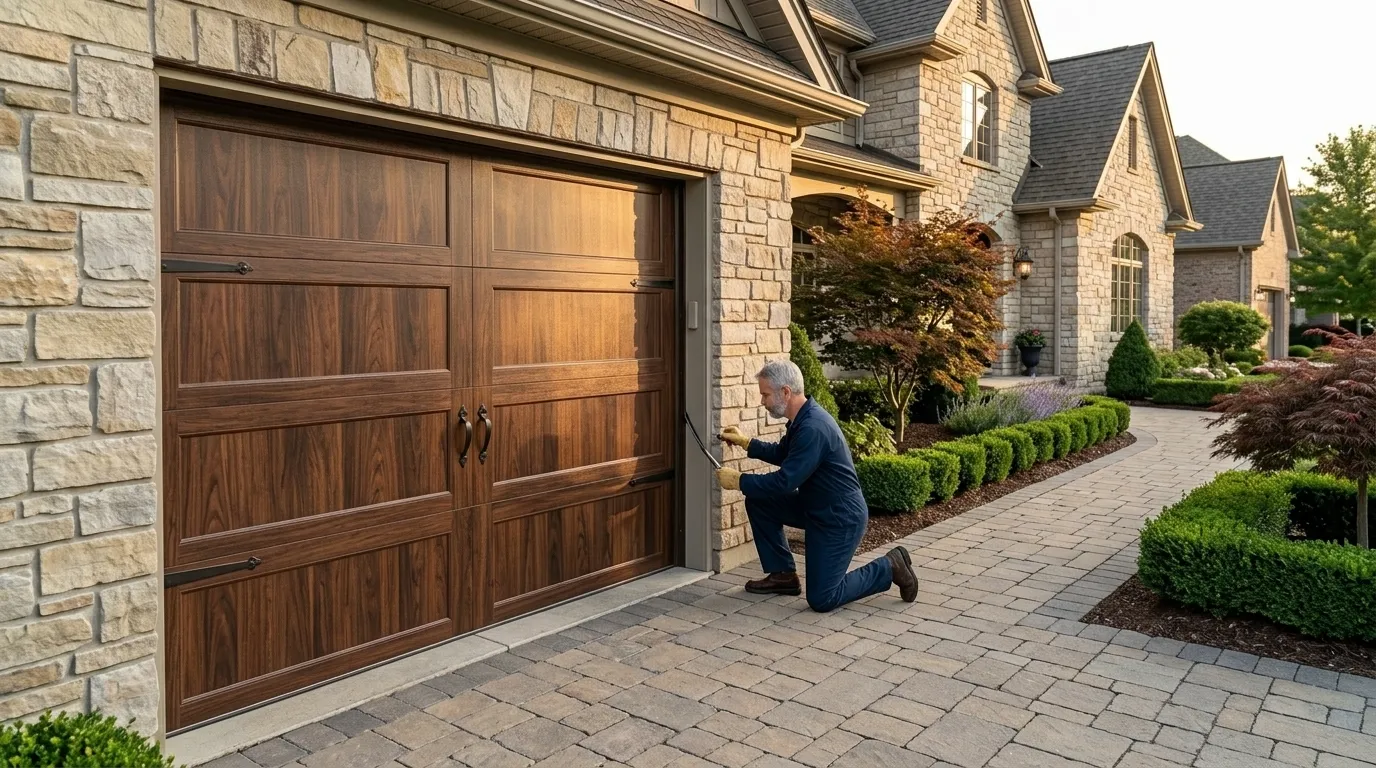
Most of the housing near this side of the city went up between 1938 and 1994, with the median build year sitting around 1964. That covers a wide stretch of the 86 named areas this shop works, from McKinley Park and Brighton Park down through Little Village and Marshall Square, a mile or two off the Loop. A door on a house from that stretch is still, in a lot of cases, running the track and roller setup it was built with. Steel track from that era was bolted to a wood jamb, not lagged into masonry or shimmed with the adjustable brackets you'd find on a newer install. Over five or six decades, that jamb moves. Houses settle, wood shrinks and swells with the seasons, and the track bolts loosen a fraction of a turn at a time. You don't notice it happening. You notice the door one day when a roller pops the lip of the rail and the panel binds halfway up, or a cable jumps its drum and the door hangs crooked. That's not a random failure. It's the accumulated slack of fifty-plus years of a track that was never designed to be adjusted after the fact.
Checking It Yourself
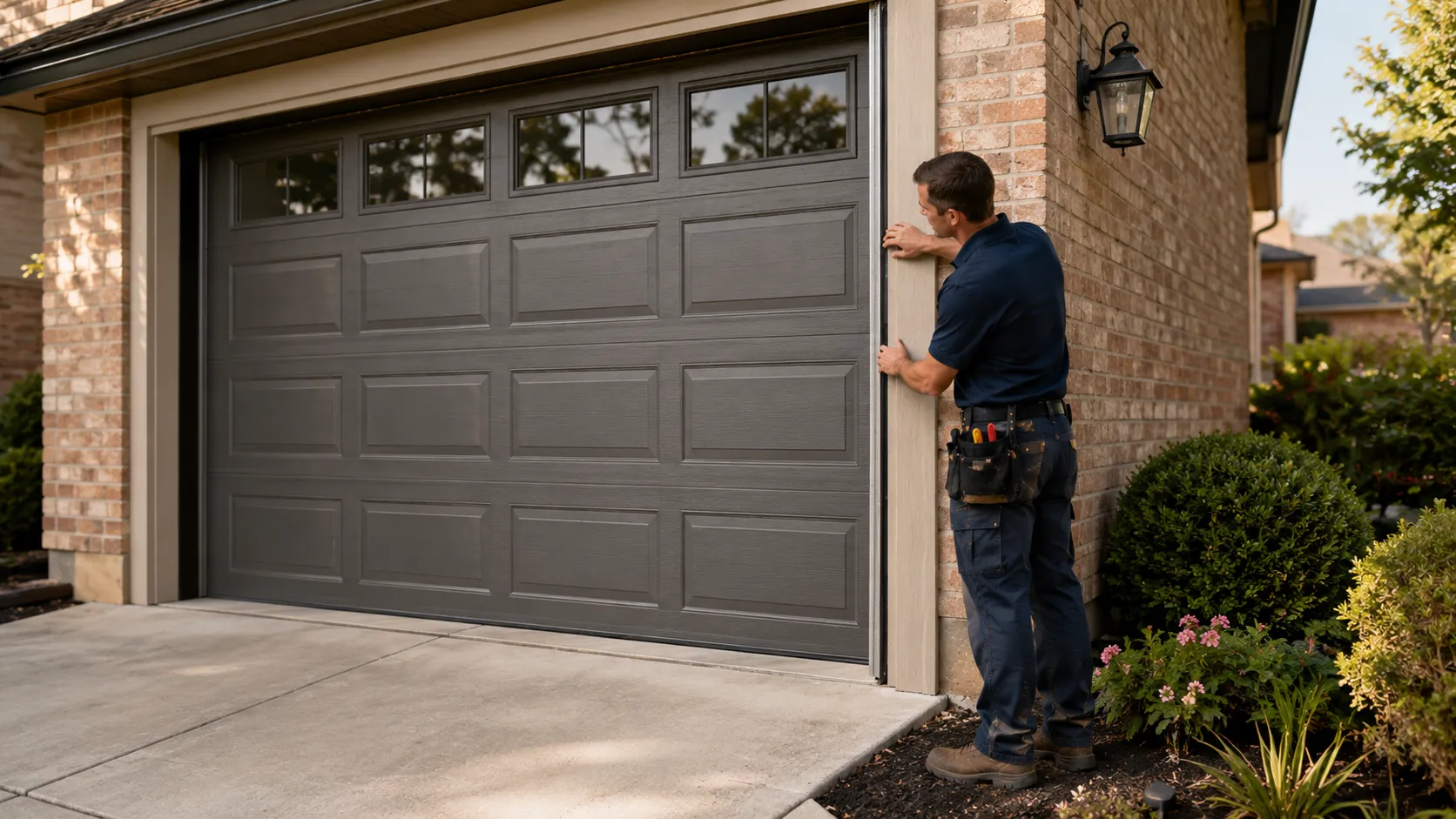
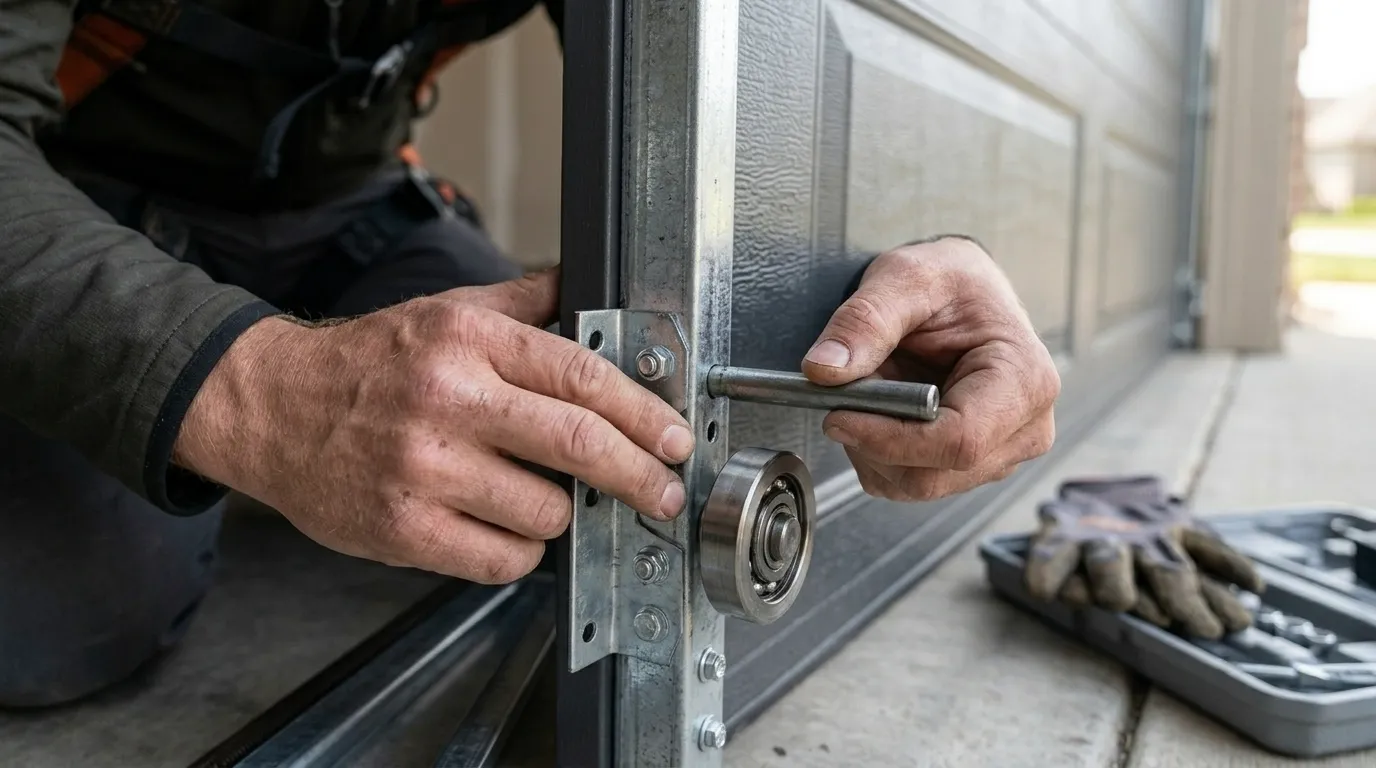
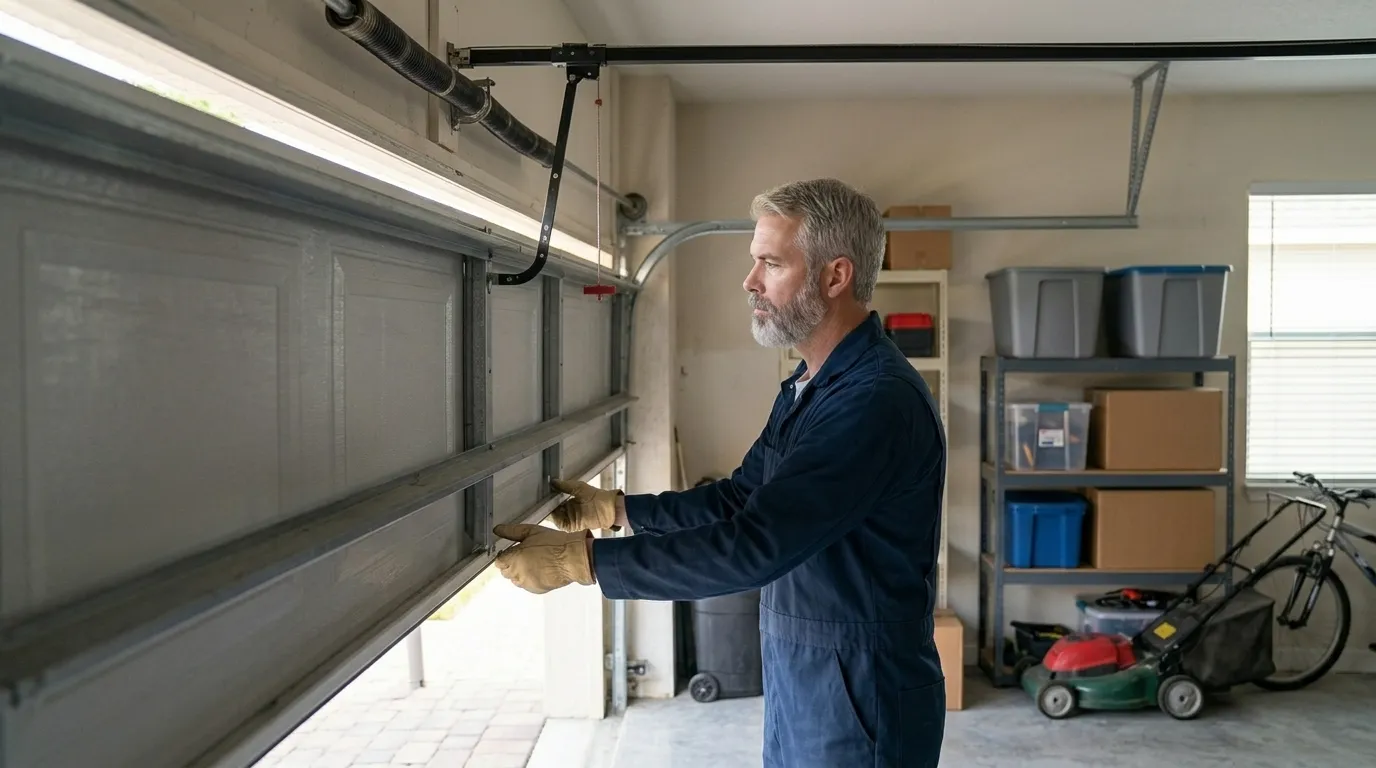
Before you call anyone, look at three things. First, stand back and check the gap between the roller and the track wall on both sides - it should look even top to bottom. If one side has a visible lean, that's your off-track side. Second, check the lag bolts where the track meets the wall bracket. On a house from the 1960s-70s stock common here, those bolts are often the original ones, and you can sometimes see daylight where the bracket has pulled a sixteenth of an inch off the jamb. Third, run your hand along the bottom two feet of track for ice or rust buildup, especially if the garage sits on a slab that doesn't get afternoon sun. None of this requires tools beyond a flashlight. What it doesn't cover is anything involving the torsion spring or the cable under tension - don't touch those. A door that's only slightly off track from a loose bracket is a different job than a door that's dropped a cable, and you want to know which one you're looking at before anyone touches it.
When to Call Someone
Call if the door is visibly cocked in the opening, if a cable has jumped the drum, or if you hear a bang followed by the door refusing to move - that's very likely a spring, and a spring under tension is not a repair to try yourself. Call too if the track bracket has actually pulled away from the jamb rather than just loosened; re-drilling into fifty-year-old wood framing so it holds is a job worth doing right the first time. What we won't do is talk you into a full replacement when a bracket reset and a bolt tighten will get the door running true again - on a lot of these older frames that's genuinely all it needs. Where replacement does make sense is a track that's rusted through at the base from years of ice, since bent or corroded rail rarely holds alignment for long even after a repair. You can see more about the work at Chicago Garage Door Co.