The Situation
Most of the houses this company works on went up between 1938 and 1994, with the median build year sitting around 1964. That matters for openers because a huge share of what's still running is either an original chain-drive unit from a much later retrofit, or a replacement installed sometime in the 80s or 90s before battery backup was standard equipment. When the power goes out - and in a service area covering 461,017 households, it goes out somewhere every winter - those older openers just stop. No backup, no soft landing, the door sits wherever it was when the lights died.
Newer openers with battery backup exist and work fine here, but retrofitting one onto a garage built with 1960s wiring and framing isn't always a drop-in job. Wall outlets in these older detached garages sometimes weren't run with a dedicated circuit, which is a separate problem from the opener itself and outside what a garage door call typically covers.
The honest version: if your opener is original to a house built in that 1938-1994 window, it has outlived its expected service life and a power cut is often the moment that finally exposes it, not the cause of the failure.
Checking It Yourself
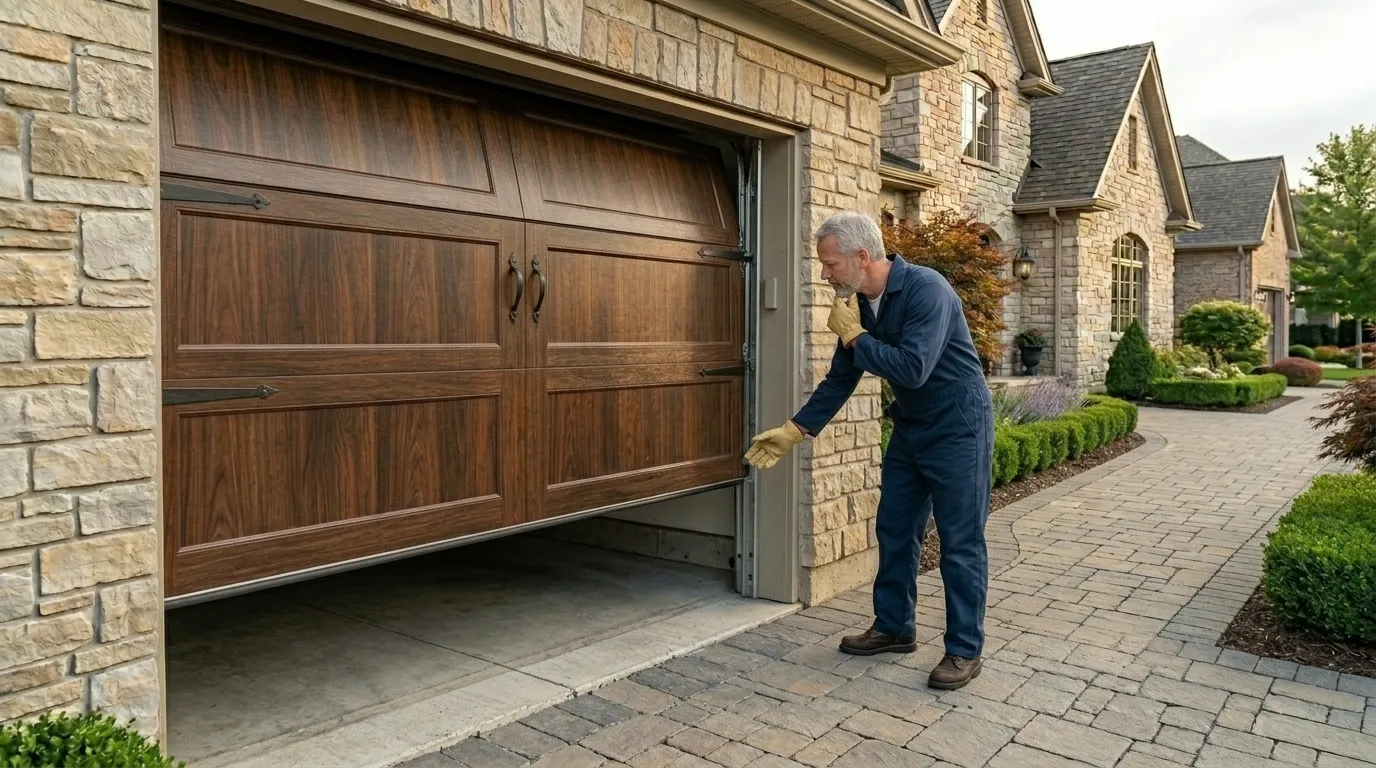
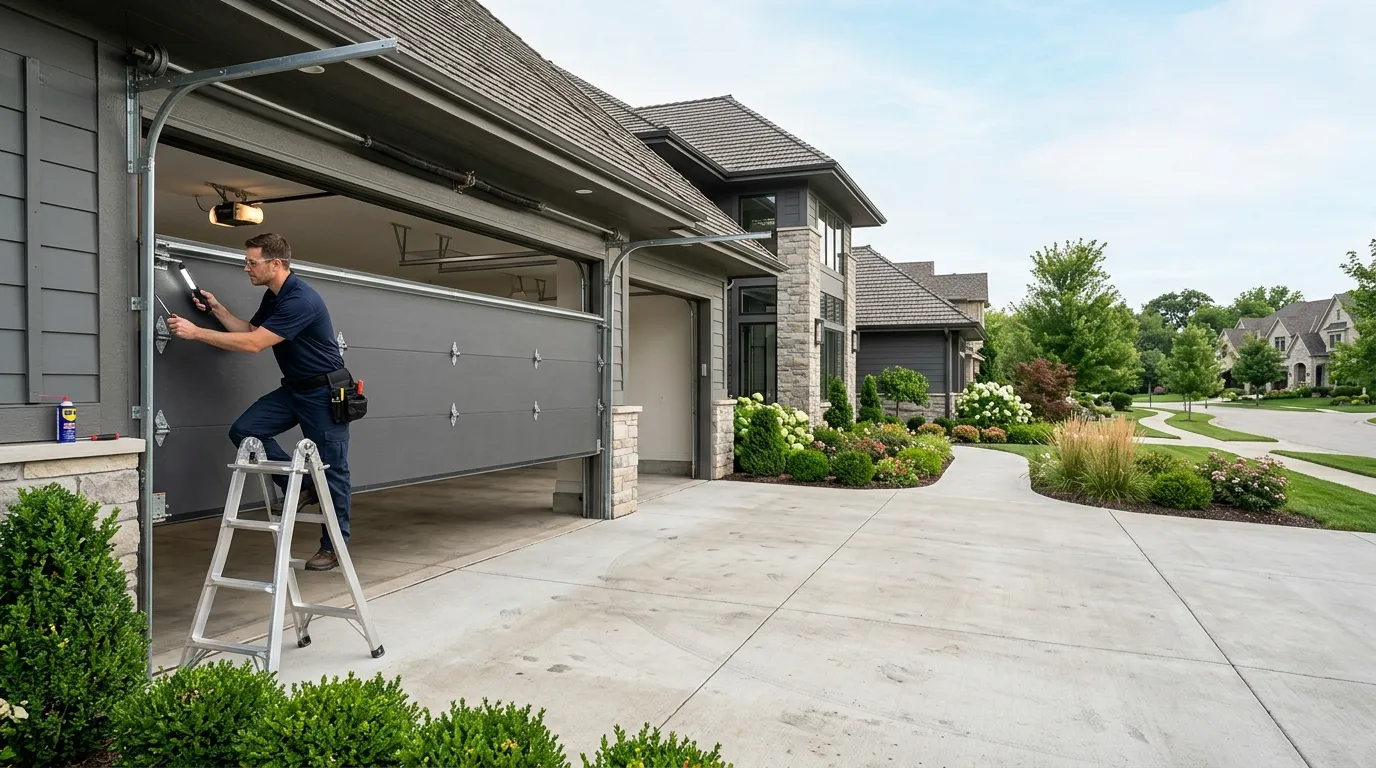
Before calling anyone, find the manual release cord - the red handle hanging from the trolley on the opener rail. Pulling it disconnects the door from the opener so you can lift by hand. If the door lifts smoothly by hand, the springs are fine and the problem is electrical: no power to the opener, a tripped circuit, or the opener itself is dead. If the door is heavy or won't stay up on its own, that's a spring problem, and pulling harder on a heavy door with a dead opener is how people get hurt.
Check the obvious things first: is the outlet the opener plugs into actually live, is a breaker tripped, is the wall switch still lit. On older 1960s-era garages, the opener sometimes shares a circuit with something else in the house, so a tripped breaker somewhere unrelated can take out the opener too. If you've confirmed power is out house-wide, the opener isn't the problem - wait it out or use the manual release to get the car out.
When to Call Someone
Call if the door is heavy to lift by hand after you've pulled the manual release - that's spring tension, not a wiring issue, and it's not a DIY fix. Call if power is confirmed on at the outlet but the opener does nothing: motor, capacitor, or logic board, all things that need a look in person. Call if you're on an older chain-drive unit and want to talk about whether a battery-backup replacement makes sense for your garage's wiring, rather than trying to retrofit backup power onto a unit that's already near the end of its run.
One limitation worth saying plainly: this company repairs and replaces garage door hardware and openers, but doesn't run new electrical circuits into a garage. If the fix is really about the garage's wiring rather than the door or opener, that's a licensed electrician's job, and it's worth knowing that going in so you're not waiting on the wrong call.