24/7 Emergency Service Open 7 days · 7am–8pm Serving Chicago, IL & nearby
(708) 630-7529
Chicago, IL

Why Cold Snaps Break Springs on Chicago's Older Doors

Chicago homes built between 1938 and 1994 often carry original torsion springs that fail in cold snaps. Here's what to check before you call for repair.

Why Cold Snaps Break Springs on Chicago's Older Doors

The Situation

A lot of the calls we get start the same way: the door won't budge, there's a loud bang from the garage a few hours earlier, and the owner has no idea what happened. Here's the pattern. Housing across this part of Chicago was built mostly between 1938 and 1994, with the median year sitting around 1964, and most of the 86 named areas we work in are dominated by that 1960s-70s wave of construction. That means a huge share of the garage doors still running are original or close to it, hung on torsion springs sized for a door and hardware combination nobody has manufactured in decades. Neighborhoods like McKinley Park, Brighton Park, Little Village, and Bridgeport all carry that same mid-century housing stock, and it shows up in the spring wear we see. A spring rated for 10,000 cycles doesn't care how old the house is, but a house from 1964 has had a lot more winters to put cycles on that spring than one built in 2005. That's the situation: older stock, older springs, and a climate that doesn't do them any favors.

What the Weather Here Does to It

Chicago sits in a cold-moderate climate band, and that matters more for garage door springs than most people think. Steel contracts in the cold, and torsion springs lose a measurable amount of tension when the temperature drops hard and fast, the way it does here during a winter cold snap. A spring that's already near the end of its life cycle from 40-plus years of opening and closing suddenly gets asked to do the same job with less give in the metal. That's when it snaps, and it's almost always in the first bitter stretch of the season, not the dead of a mild January. The grease in the bearing plates and rollers stiffens too, which puts more strain on the opener trying to compensate for a door that isn't moving as freely as it should. None of this is unique to any one street, but it's consistent across a service area where most of the doors in question are the same age as the houses, meaning original hardware from the 1960s and 70s meeting a climate that stress-tests steel every winter.

Checking It Yourself

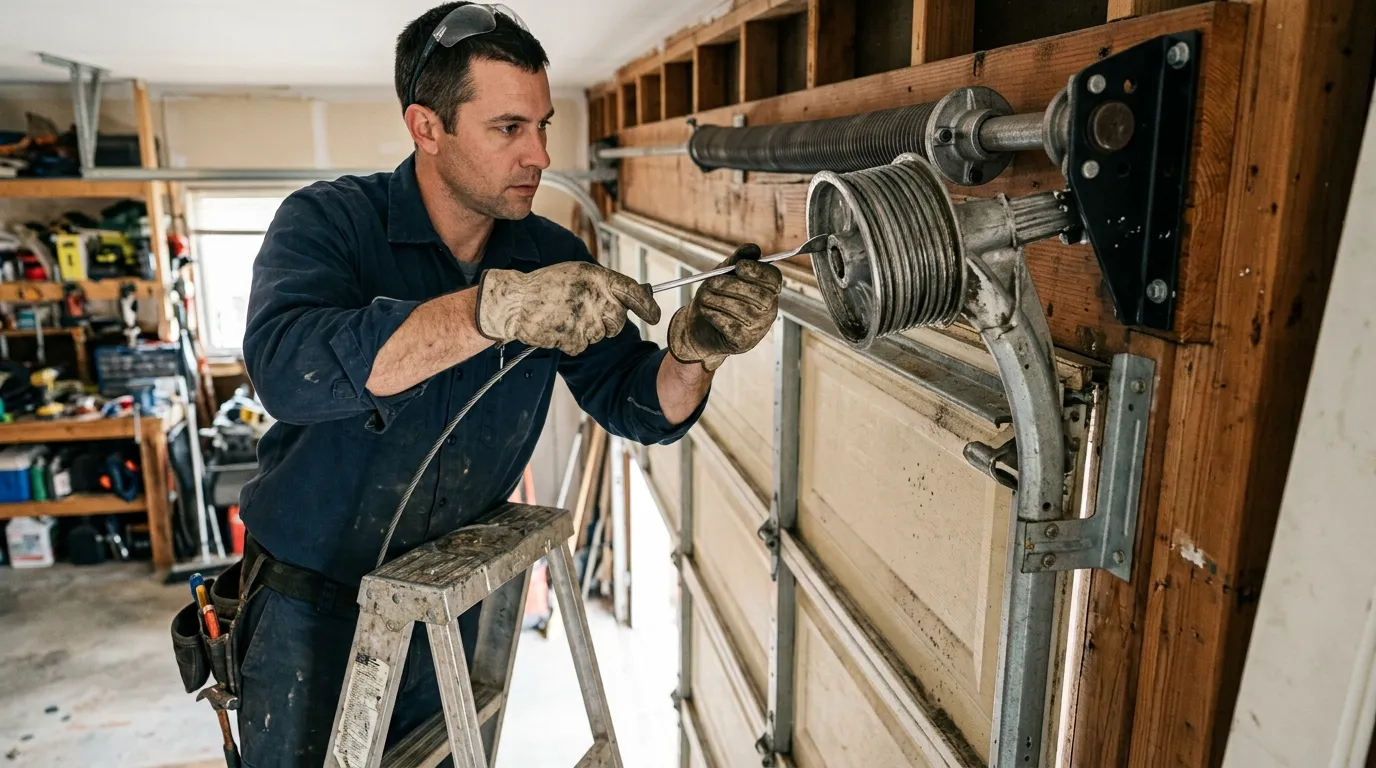
Before you call anyone, there are a few things worth looking at yourself, especially if your door is original to a 1960s or 70s build. Pull the emergency release and try lifting the door by hand, slowly, about halfway. If it feels heavy or drops on its own, the spring has lost tension, even if it hasn't fully snapped. Look at the spring itself, mounted above the door on a torsion bar or on either side if it's an older extension-spring setup, and check for a visible gap in the coil. A broken spring usually shows a clean separation you can see from across the garage. Check the cables too. If one is frayed or the drum looks off-center, don't force the door with the opener; that's how a cable snaps under load. Honest limitation here: if you're not sure what you're looking at, don't start disassembling torsion hardware. A wound torsion spring holds enough stored energy to break fingers, and that's not a place to learn by trial and error.

When to Call Someone

If the spring's visibly broken, don't run the opener at all, that just wears out the motor trying to lift a dead weight. Call at that point rather than waiting. If the door is just heavy or slow and you're not sure why, that's still worth a look, because a spring close to failure in cold weather rarely gives much warning before it goes. For houses built in that 1938-1994 window that still have their original hardware, replacement often makes more sense than a patch repair, since matching parts for older torsion setups isn't always straightforward. With median household income across this area around $80,202, most owners we talk to want a straight answer on repair versus replacement rather than a sales pitch, and that's a fair ask. We serve the households throughout this area, including the roughly 223,261 owner-occupied houses across it, a lot of which are carrying that same original-era hardware. If you're within the area we cover, get in touch through the site.
How it works

From “it’s stuck” to “it’s fixed”

1
Tell us what’s wrong - Chicago garage door service

Tell us what’s wrong

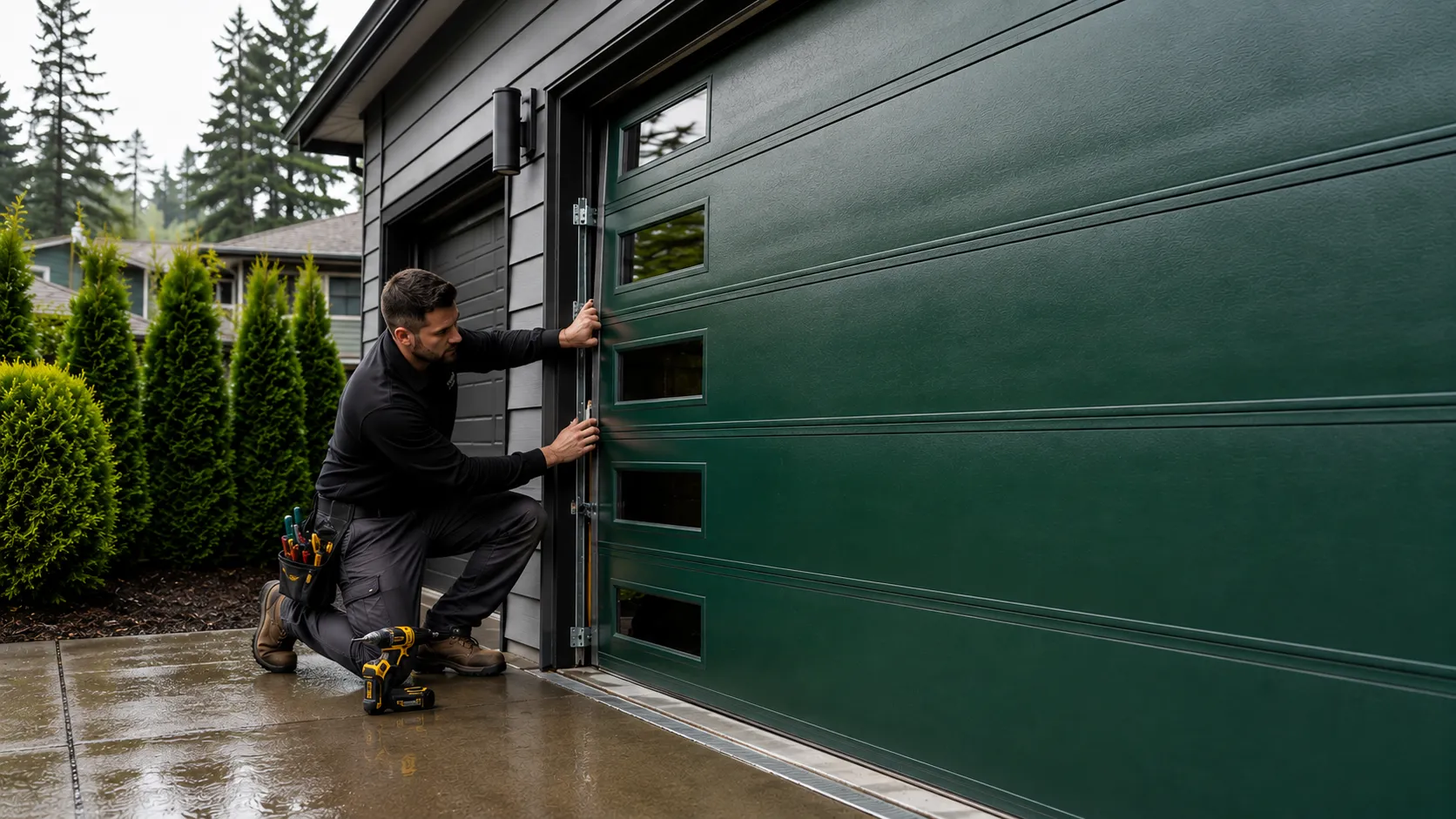
Describe the symptom - won’t open, loud bang, opener runs but the door won’t move.

2
On-site diagnosis - Chicago garage door service

On-site diagnosis

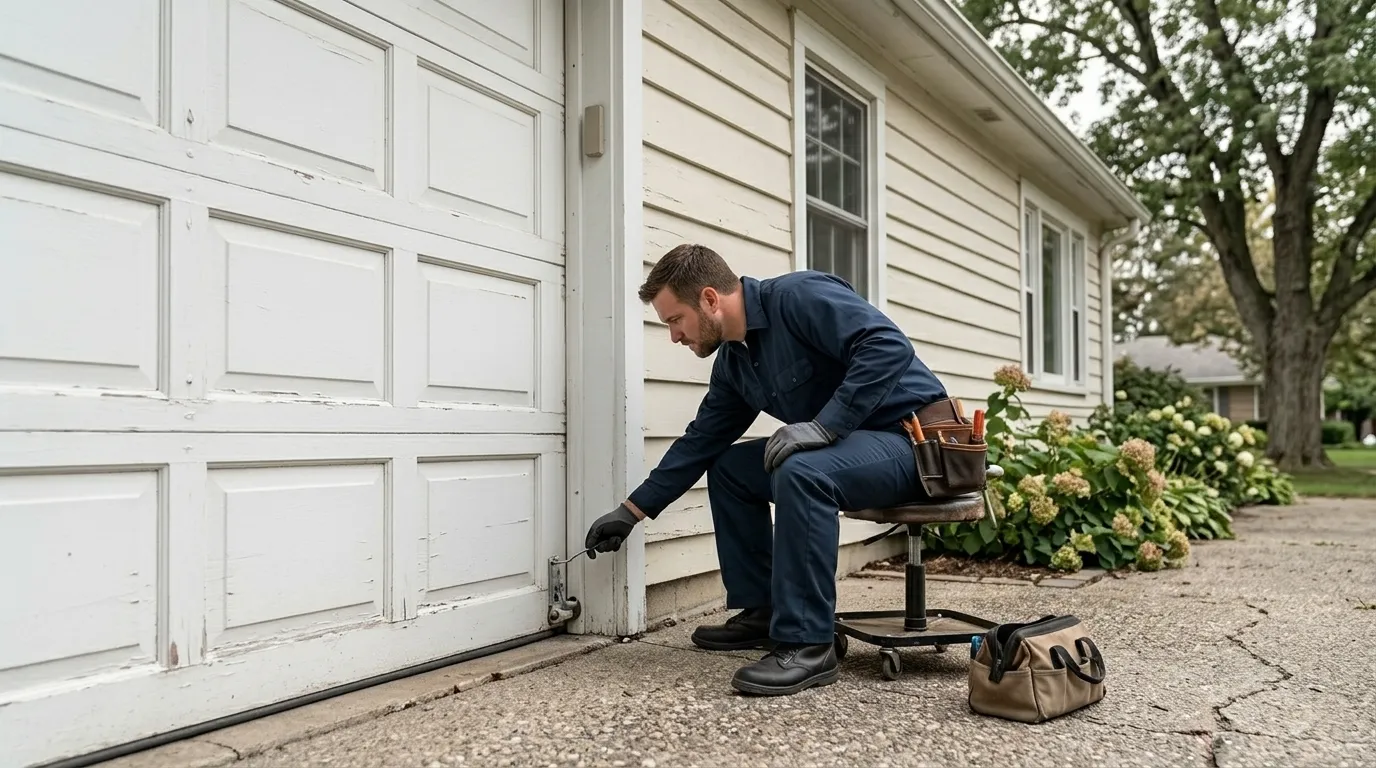
A technician tests the door under power and by hand and finds what actually failed.

3
Clear, up-front plan - Chicago garage door service

Clear, up-front plan

You get the fix that’s needed and what drives the cost - before any work starts.

4
Repaired & tested - Chicago garage door service

Repaired & tested

The repair is done, the door is set true and tested, and the work area left clean.

Serving Chicago, IL - tell us what your door’s doing and we’ll take it from there.

How we work

What to expect

Diagnosis firstEvery visit starts by finding what actually failed - not a pre-written parts list.
The right part for the doorSprings and openers matched to the door’s weight and age, so the fix holds up.
Straight answersWhen a repair makes more sense than a replacement - or the reverse - you hear it plainly.
Clean, careful workTension released safely, hardware set true, the door tested under power before we leave.
Questions

Frequently asked

Straight answers about garage door repair in Chicago. Still unsure? Ask us directly.

Why does my garage door spring always seem to break in the cold?

Steel loses tension as it gets colder, and a spring that's already worn from years of cycles has less margin to handle that. In a cold-moderate climate like Chicago's, the first hard cold snap of the season is when a marginal spring usually gives out completely.

Is it normal for a 1960s house to still have its original spring?

It happens more than you'd think given how much of the housing stock here dates to that 1938-1994 stretch. A spring that old has usually outlived its rated cycle count, which is part of why failures cluster in older neighborhoods.

Can I just replace one spring on a two-spring door?

You can, but the second spring is usually close behind in wear if the door is original hardware from the same build era. We'd rather tell you that upfront than have you call again in six months.

Ready to get your garage door sorted?

Tell us what it’s doing and where you are in Chicago - we’ll take it from there.

Request a QuoteCall