The Situation
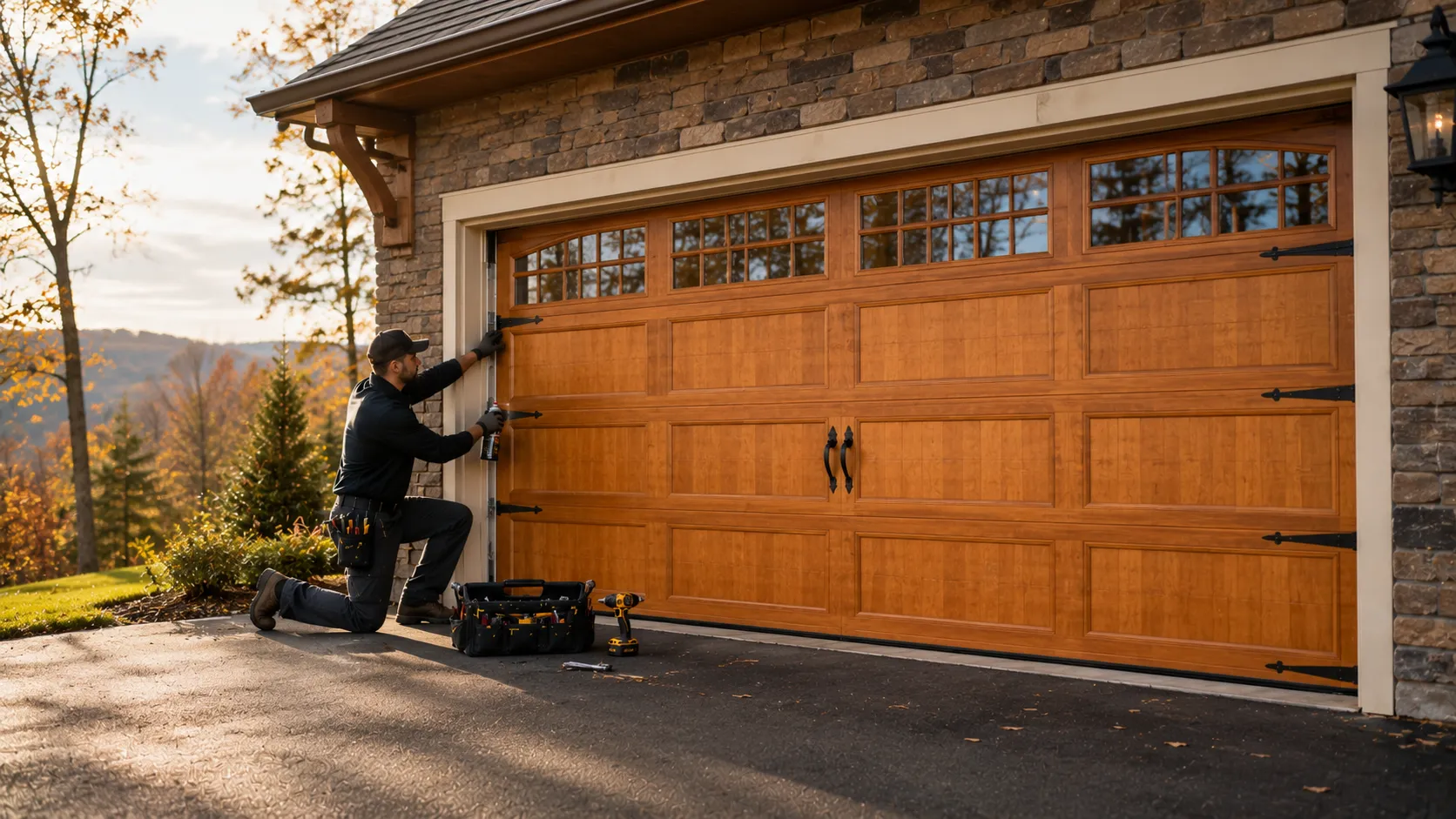
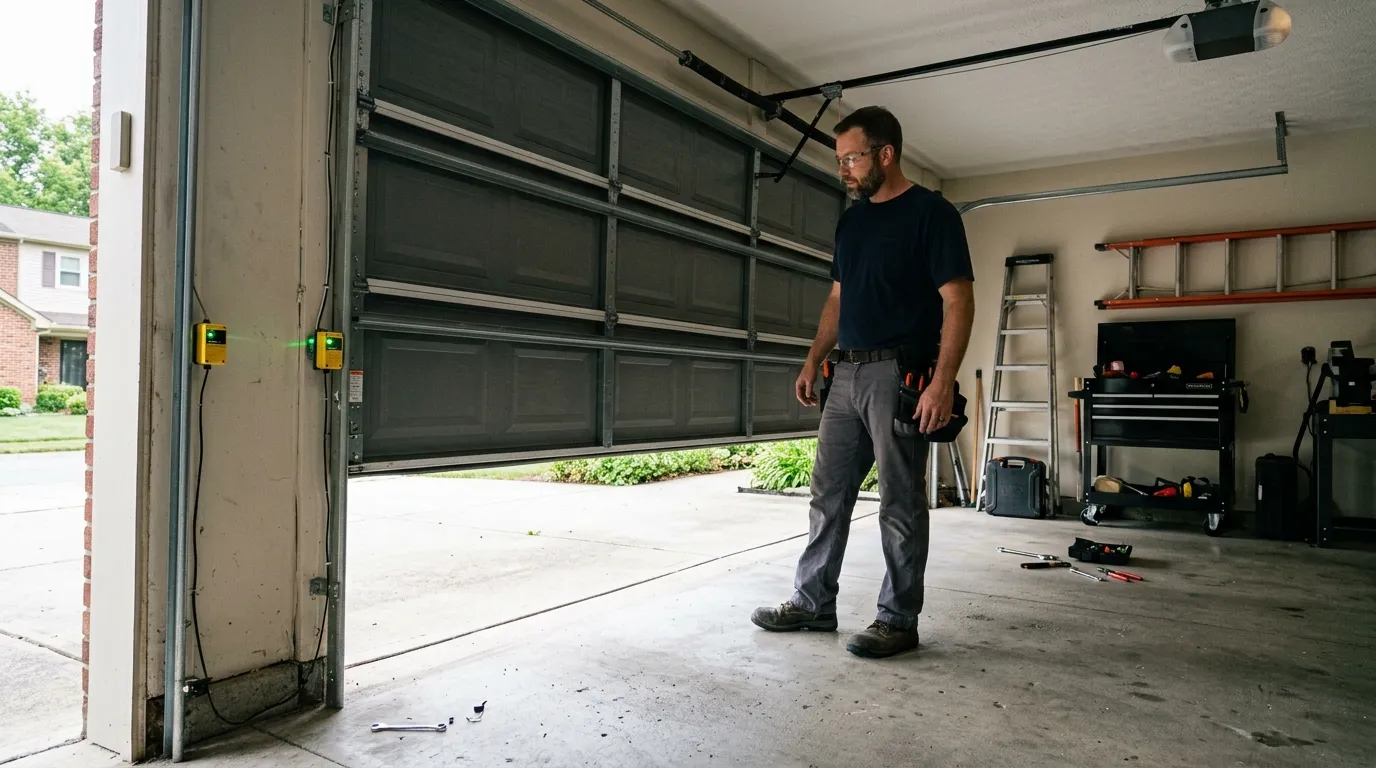
Most of the houses and two-flats we work on in this part of Chicago went up somewhere between 1938 and 1994, with a heavy concentration from the 1960s and 70s. That spread matters because it means we're rarely working on one style of door or one generation of hardware. A call in McKinley Park or Brighton Park might turn up an original torsion setup from a 1960s build, while a job a few blocks over in West Loop or Near South Side could be a door installed during a later renovation. A service call starts with figuring out which era of hardware you actually have, because the parts, the spring wind, and the mounting all differ. We're not walking in assuming a cookie-cutter setup - the housing stock here doesn't allow for that. That's also why a call takes longer here than a quick bolt-swap: half the job is identifying what's actually on the wall before we touch a wrench to it.
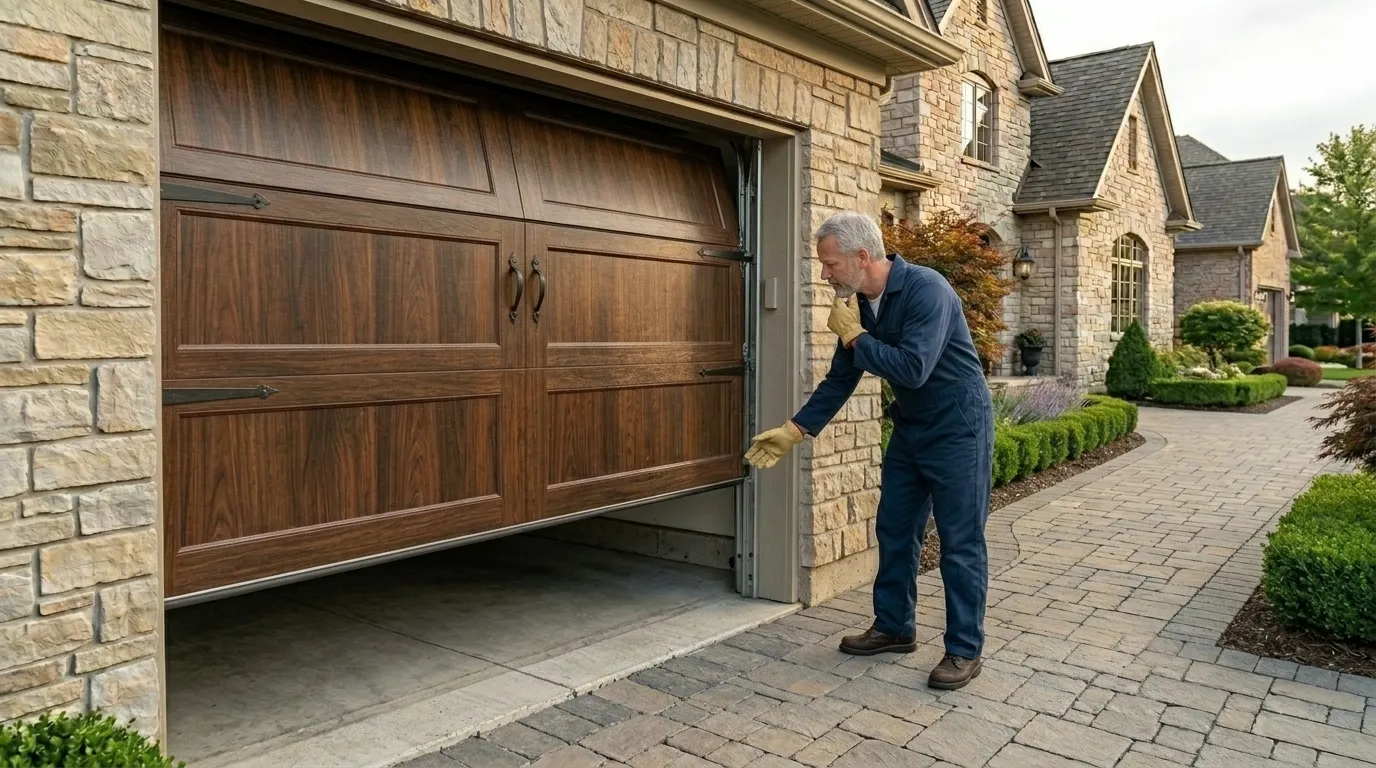
Across the area we cover - more than 461,000 households, roughly 223,000 of them owner-occupied houses - the range of doors we see on a given week runs from decades-old wood panel doors to newer steel sectional units. A service call has to account for that range from the first phone question.
Checking It Yourself
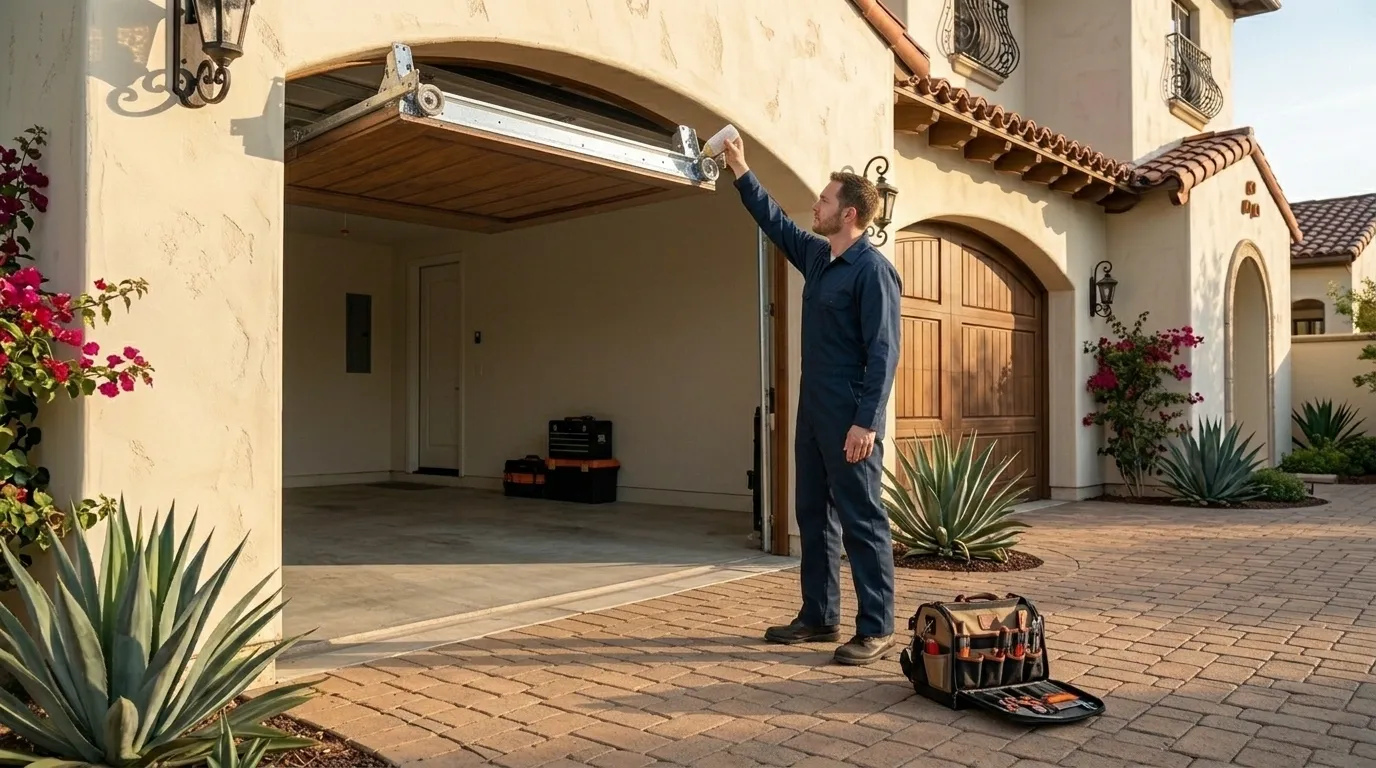
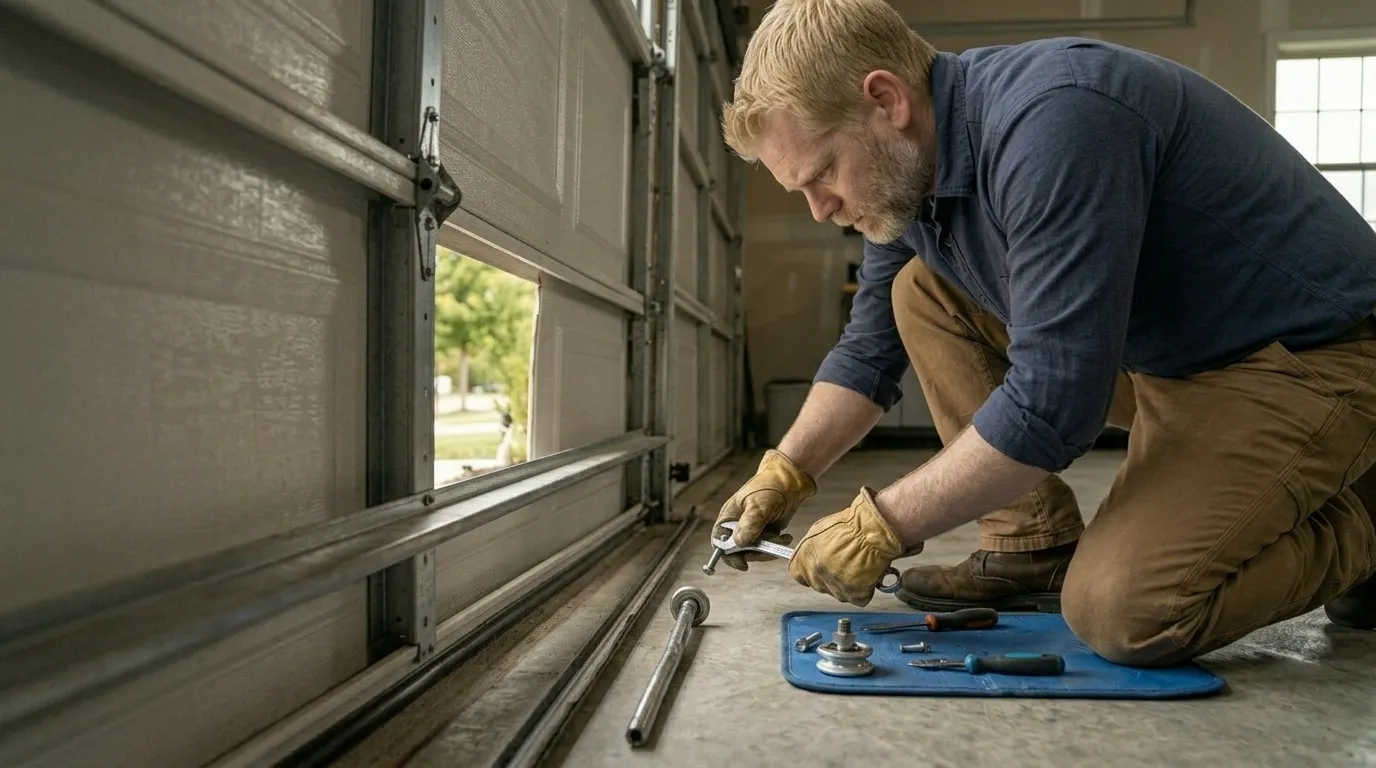
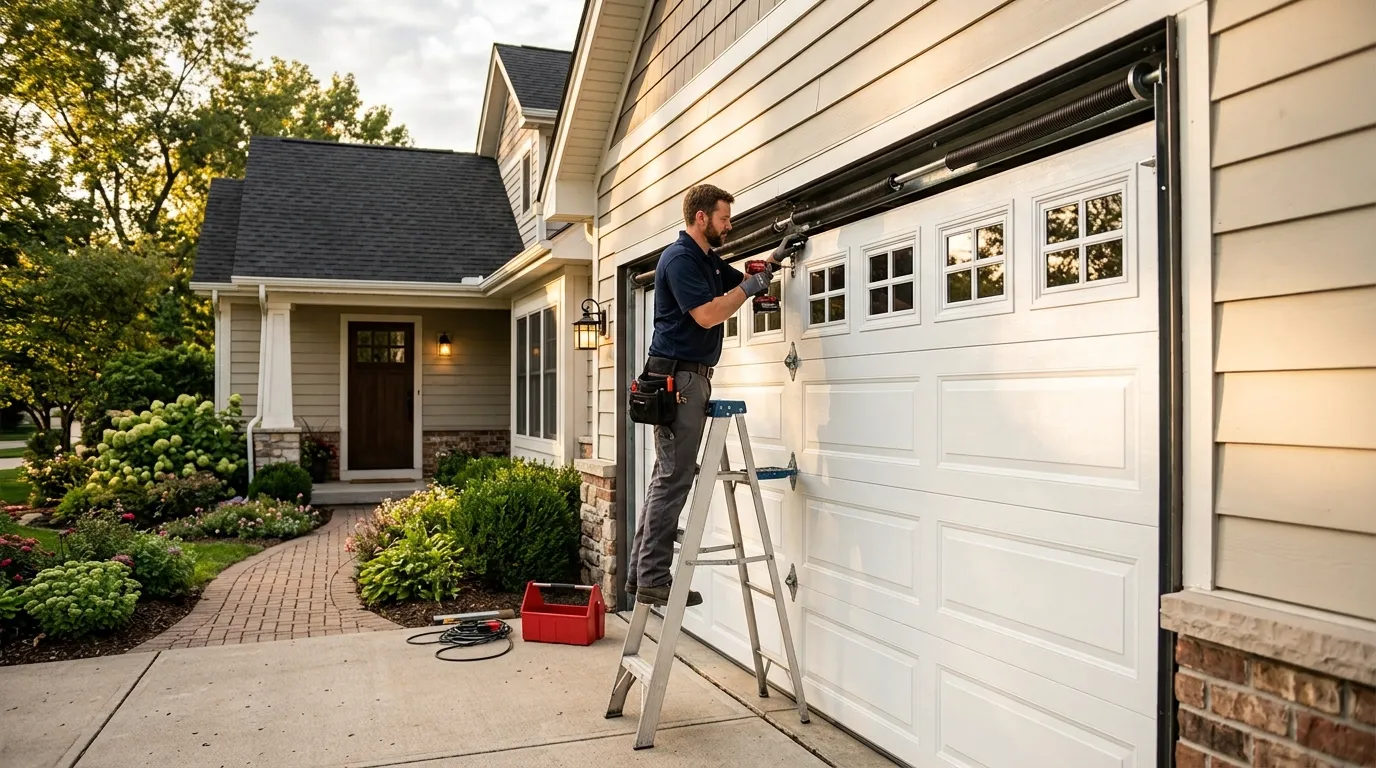
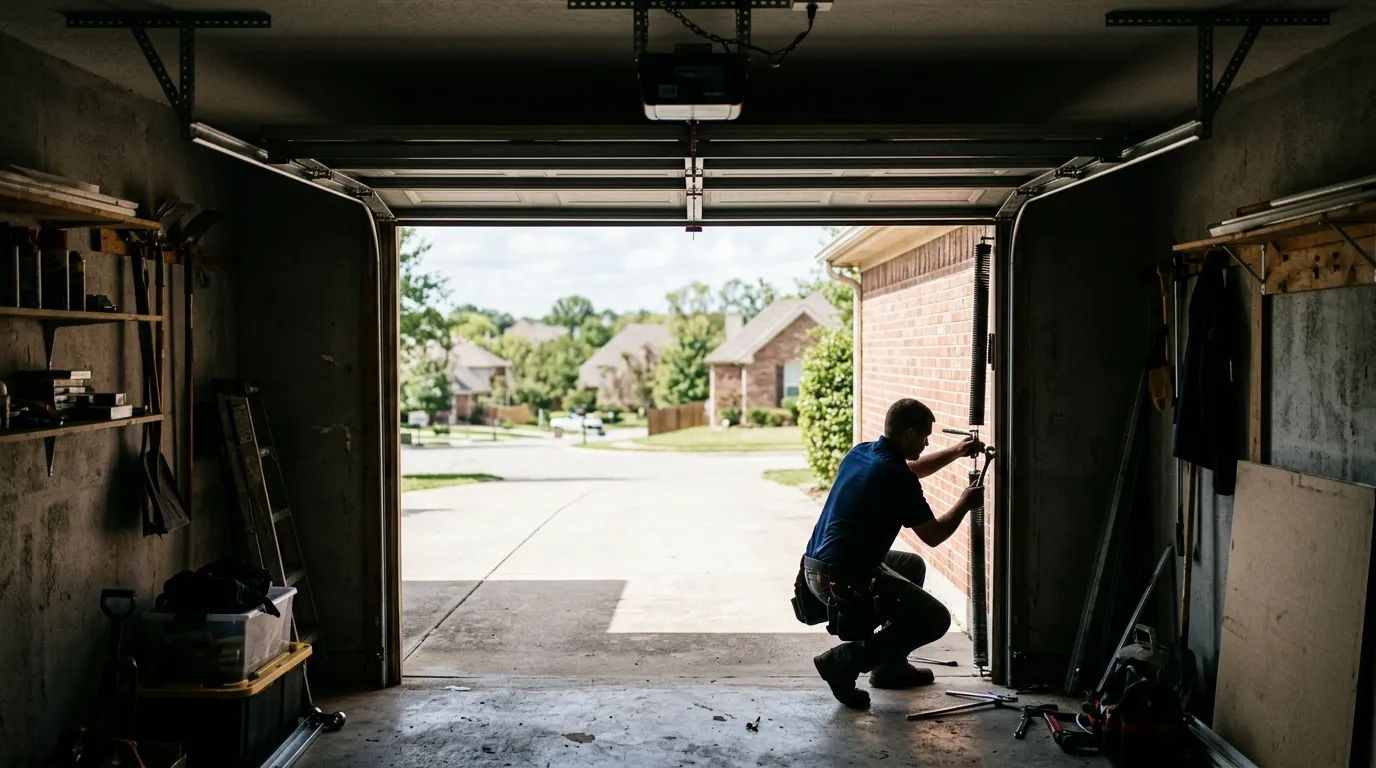
Before you call, there are a few things you can look at yourself, especially if your house falls into that common 1960s-70s build range. Look at the torsion spring above the door - if you see a visible gap in the coil, that spring is broken and the door should not be opened by the automatic opener until it's replaced. Check the cables on either side of the door for fraying near the bottom bracket; frayed cable is a sign the whole system is under more strain than it should be. Run your hand along the track for rust or pitting - in a cold-climate house without insulated garage walls, this shows up faster than you'd expect. Listen for a grinding or popping sound when the opener runs; that's usually a roller or hinge, not the opener motor itself. None of this requires tools, just a flashlight and five minutes. What you shouldn't do is touch the torsion spring itself, loosen the set screws, or try to release tension on a wound spring - that's the one thing on this list that isn't a homeowner task, cold weather or not.
When to Call Someone
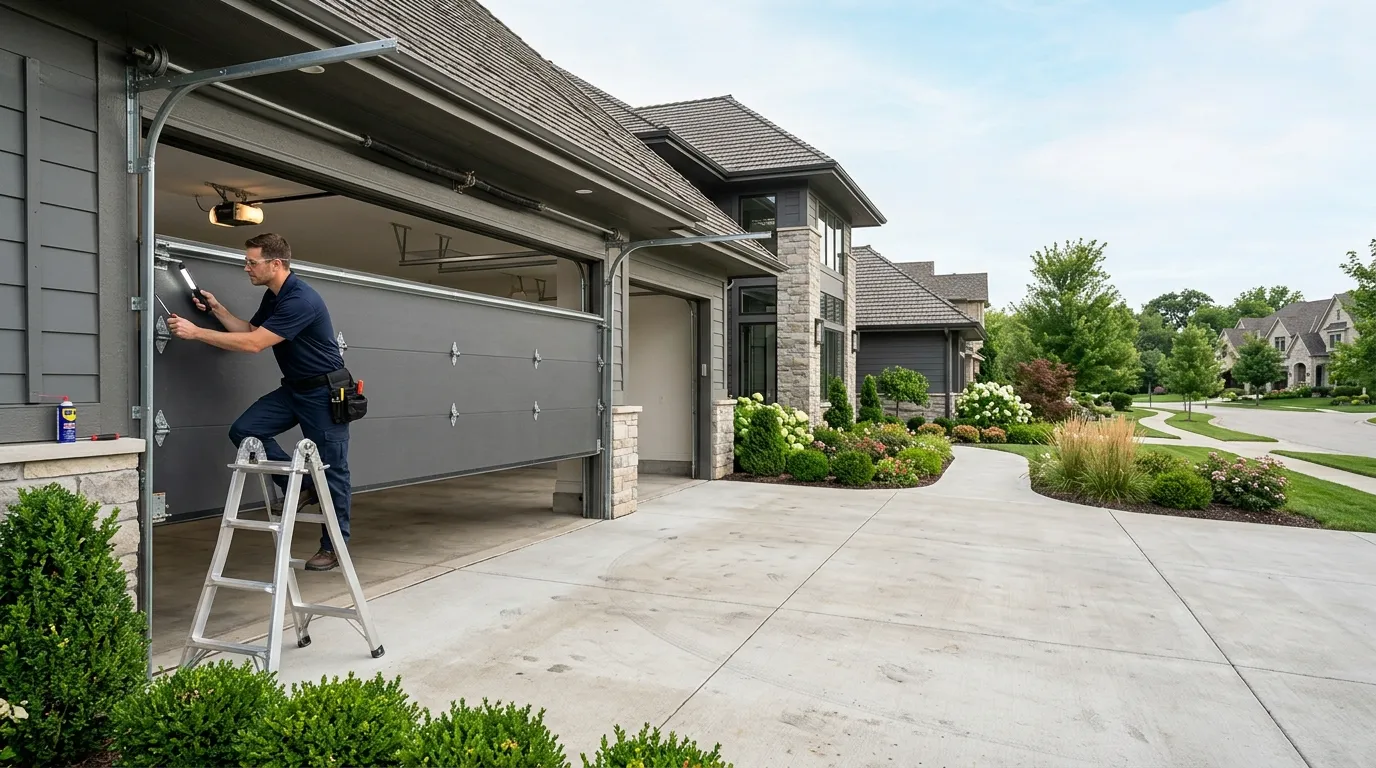
Call when you've spotted a broken or visibly gapped spring - that's not a wait-and-see repair, and running the opener against a broken spring usually damages the opener too. Call when a cable has frayed strands, when the door is off its track, or when it drops instead of lowering evenly, since any of those can mean the door comes down uncontrolled. We'll be straight with you: if the door is original to a house built well before 1964 and the track, hinges, and panel are all showing wear at once, replacement is usually the better call than another repair, because parts for some of that older hardware are getting harder to source. We cover the households and neighborhoods across this part of Chicago - from areas like Little Village, Bridgeport, and Archer Heights out to Berwyn, Brookfield, and La Grange - and the diagnosis is free to figure out; you don't pay to find out which category your door falls into.