24/7 Emergency Service Open 7 days · 7am–8pm Serving Chicago, IL & nearby
(708) 630-7529
Chicago, IL

The Uninsulated Door Problem in Chicago Garage Stock

Chicago's garage doors mostly date to 1964-era construction, before insulation codes existed. Here's what that means for your door in a cold-moderate climate band.

The Uninsulated Door Problem in Chicago Garage Stock

The Situation

Housing across this service area was built mostly between 1938 and 1994, with a median build year of 1964, and the bulk of it - across 86 named neighborhoods and suburbs we cover, from Little Village to Brighton Park to Bridgeport - went up in the 1960s and 70s. That matters for one plain reason: insulation requirements for garage doors didn't exist when these houses were framed. A single-layer steel or wood panel door was standard, and a lot of those original doors, or their direct steel replacements from decades later, are still hanging on the same tracks today.

An uninsulated door on a 1964-era house isn't a defect. It's just what the code allowed at the time. But it means the door is a thin barrier between an unheated garage and whatever's on the other side of that wall - a bedroom above, a mudroom, ductwork running through the joist bay. The house was built to a standard from before anyone worried about that gap.

We see this pattern block after block in this part of the city and the near suburbs: same era, same door type, same failure points, because the housing stock itself is that consistent.

What the Weather Here Does to It

This area sits in a cold, moderate climate band - real winters, real temperature swings, and that's the exact condition an uninsulated steel panel handles worst. Steel contracts in the cold. On a door with no insulation layer bonding the skin to a backer, that contraction shows up as oil-canning (the wavy panel look), loosened rivets at the hinge points, and stiffer springs that were sized for warmer, more forgiving conditions.

The track hardware suffers too. Cold makes grease thicken and rollers bind, and on a door that's been fighting temperature swings since the 1960s or 70s, the rollers and hinges have usually already outlived a couple of spring cycles. If your garage sits under a bedroom or next to living space, an uninsulated door is also just a cold surface radiating winter straight into the house - not a safety issue, but a comfort and energy one that's baked into the age of the door, not something a tune-up fixes.

We're not going to tell you every uninsulated door here is failing. Plenty still run fine. But the failure modes we get called for in this area track the age of the housing stock closely enough that it's not a coincidence.

Checking It Yourself

Start with the panel. Press a hand flat against the inside of the door on a cold day - if it's noticeably colder than the wall next to it, there's no insulation layer doing anything, which lines up with what you'd expect from a door built to a pre-insulation-code standard.

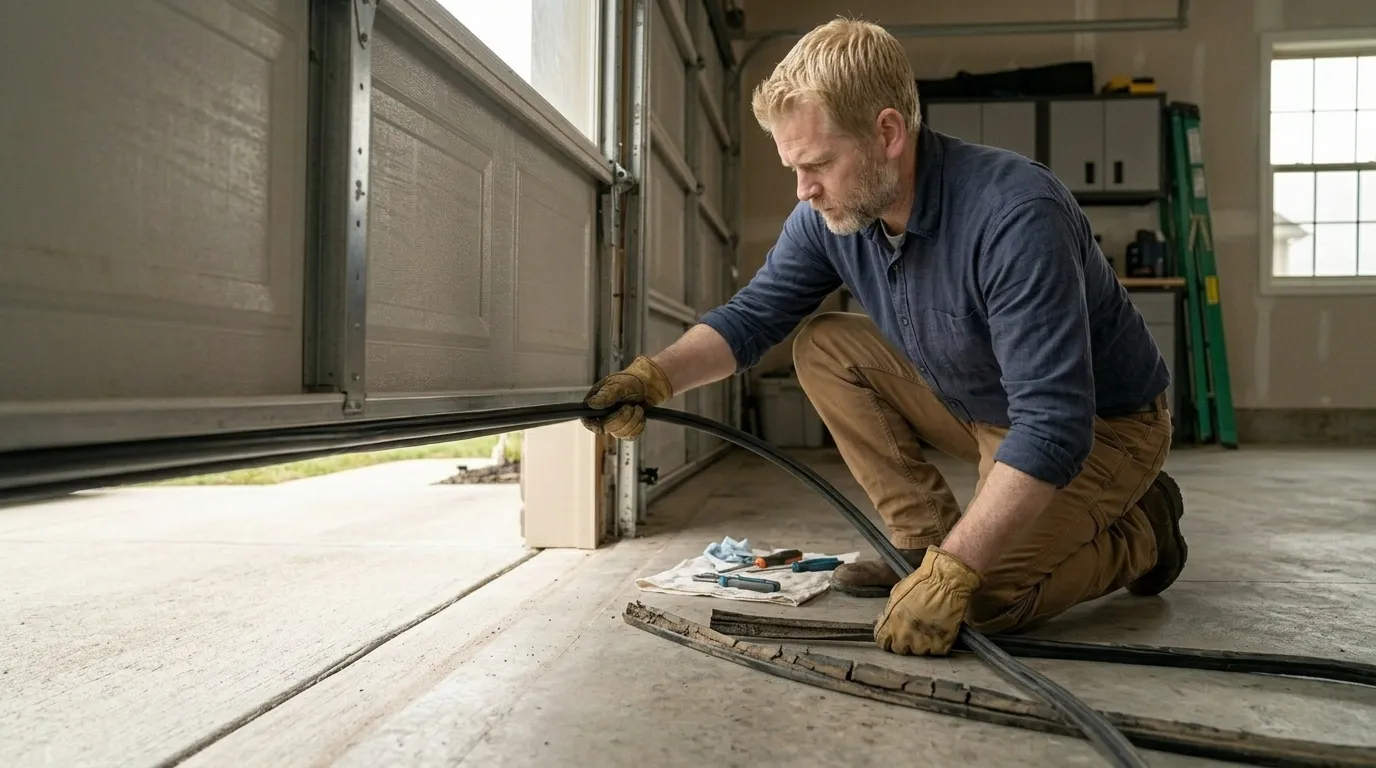
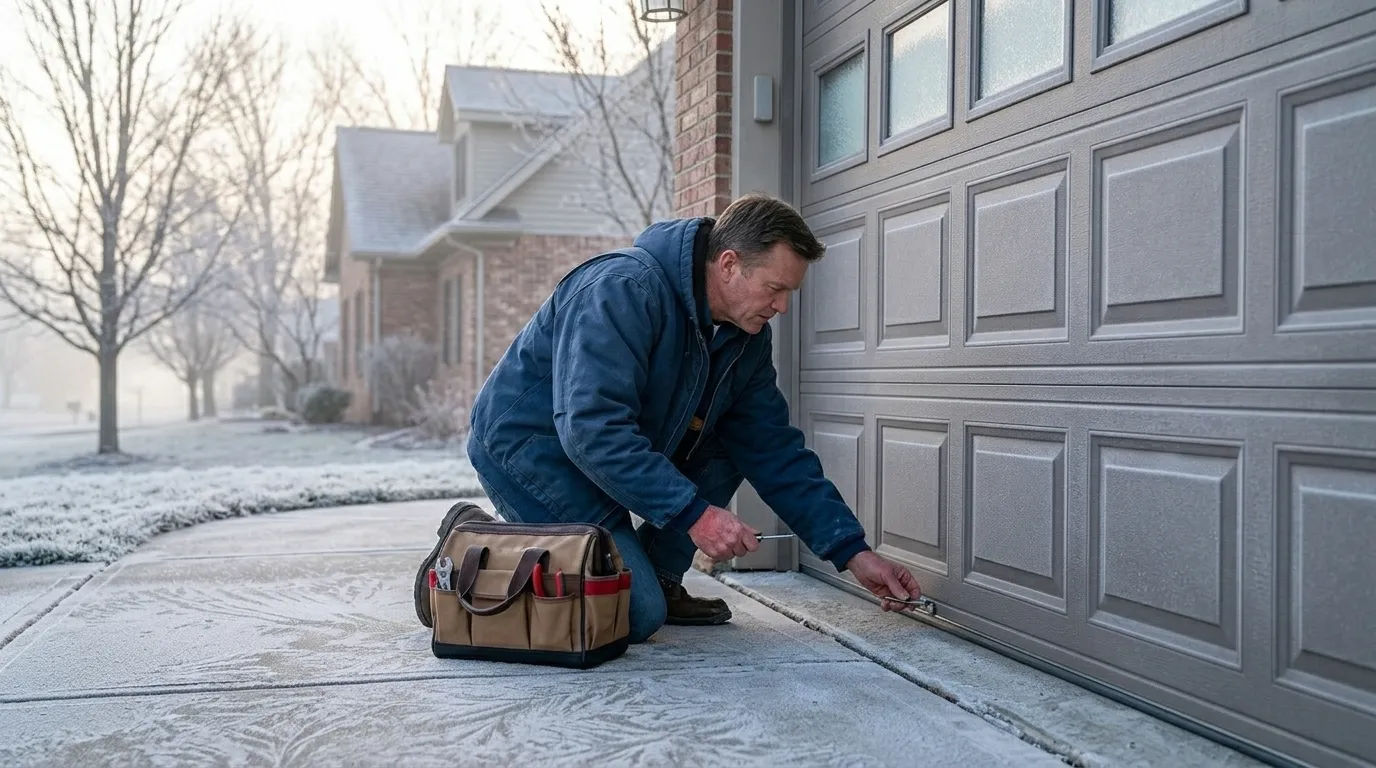
Look at the seams between panels for daylight gaps, and check the bottom weatherstrip for cracking or flattening - rubber that's been through fifty-plus winters of this climate band doesn't stay pliable. Cycle the door by hand (opener disconnected) and listen for grinding at the rollers; cold-thickened grease and worn bearings sound different from a smooth roll.

Check the spring, too, if you can see it safely from the floor without touching it. On original torsion or extension springs from this era, rust at the coil ends is common, and rust plus cold plus decades of cycles is the combination that leads to a snap. Don't test tension yourself - just look.

One honest limit here: a visual check tells you about age and wear, not about spring tension or safe cable condition. Those need a hand on a wrench, not a hand on the door.

When to Call Someone

If the panel is cold to the touch, the seams gap, and the door is original or close to it, replacement with an insulated door usually makes more financial sense than patching an uninsulated one - you're not fighting the design, you're fixing it. That's a bigger job and worth a real quote rather than a guess.

If what you're seeing is stiff rollers, a slow open, or noise at the hinges, that's often serviceable without replacing the whole door, especially if the panel itself is still square and unbowed.

A broken spring, a cable off the drum, or a door that's stuck half-open are all calls to make right away - not projects for a Saturday. Springs under tension on old, rusted coils are the one place we'd say don't experiment.

We work across this service area, from the city neighborhoods out through the near west suburbs listed in our coverage. Get in touch through our site at /.
How it works

From “it’s stuck” to “it’s fixed”

1
Tell us what’s wrong - Chicago garage door service

Tell us what’s wrong

Describe the symptom - won’t open, loud bang, opener runs but the door won’t move.

2
On-site diagnosis - Chicago garage door service

On-site diagnosis

A technician tests the door under power and by hand and finds what actually failed.

3
Clear, up-front plan - Chicago garage door service

Clear, up-front plan

You get the fix that’s needed and what drives the cost - before any work starts.

4
Repaired & tested - Chicago garage door service

Repaired & tested

The repair is done, the door is set true and tested, and the work area left clean.

Serving Chicago, IL - tell us what your door’s doing and we’ll take it from there.

How we work

What to expect

Diagnosis firstEvery visit starts by finding what actually failed - not a pre-written parts list.
The right part for the doorSprings and openers matched to the door’s weight and age, so the fix holds up.
Straight answersWhen a repair makes more sense than a replacement - or the reverse - you hear it plainly.
Clean, careful workTension released safely, hardware set true, the door tested under power before we leave.
Questions

Frequently asked

Straight answers about garage door repair in Chicago. Still unsure? Ask us directly.

Is my garage door original to the house if my house was built in the 1960s?

Not necessarily, but it's common. A lot of houses in this area from the 1960s-70s stock still have either the original door or a steel replacement installed decades ago on the same tracks. If you don't know your door's age, cold-to-the-touch panels and rust at the spring coils are signs it predates any insulation upgrade.

Do I need an insulated door for a Chicago winter?

You don't need one by code on an existing house, but in this cold-moderate climate band an insulated door cuts down the cold-air transfer noticeably, especially if the garage shares a wall or ceiling with living space. It's a comfort and durability upgrade, not a requirement.

Why does my old steel door look wavy?

That's oil-canning, and it's common on uninsulated steel panels that have gone through many winters in this climate. Without a bonded insulation layer, the steel skin flexes with temperature swings, and over decades that flex shows up as a permanent wave in the panel.

Ready to get your garage door sorted?

Tell us what it’s doing and where you are in Chicago - we’ll take it from there.

Request a QuoteCall