The Situation
Most houses in Chicago and the neighborhoods around it - McKinley Park, Brighton Park, Little Village, Archer Heights, Back of the Yards - went up between 1938 and 1994, with the median build year sitting around 1964. That means a huge share of garage doors on this side of the city are original steel or wood panel units on hardware nobody manufactures anymore: narrow-track rollers, single-spring setups sized for lighter doors, openers bolted onto framing that's shifted with sixty-plus years of freeze-thaw. When a door from that era starts sticking or sagging, the question isn't whether it's old. It's whether the frame, track, and header are still square enough to hang a new door properly, and whether the existing hardware is even safe to keep running. A door built for a household earning near the area median of $80,202 wasn't a luxury item - it was basic, functional steel, and thousands of them are still out there doing the job, just not doing it well anymore.
Checking It Yourself
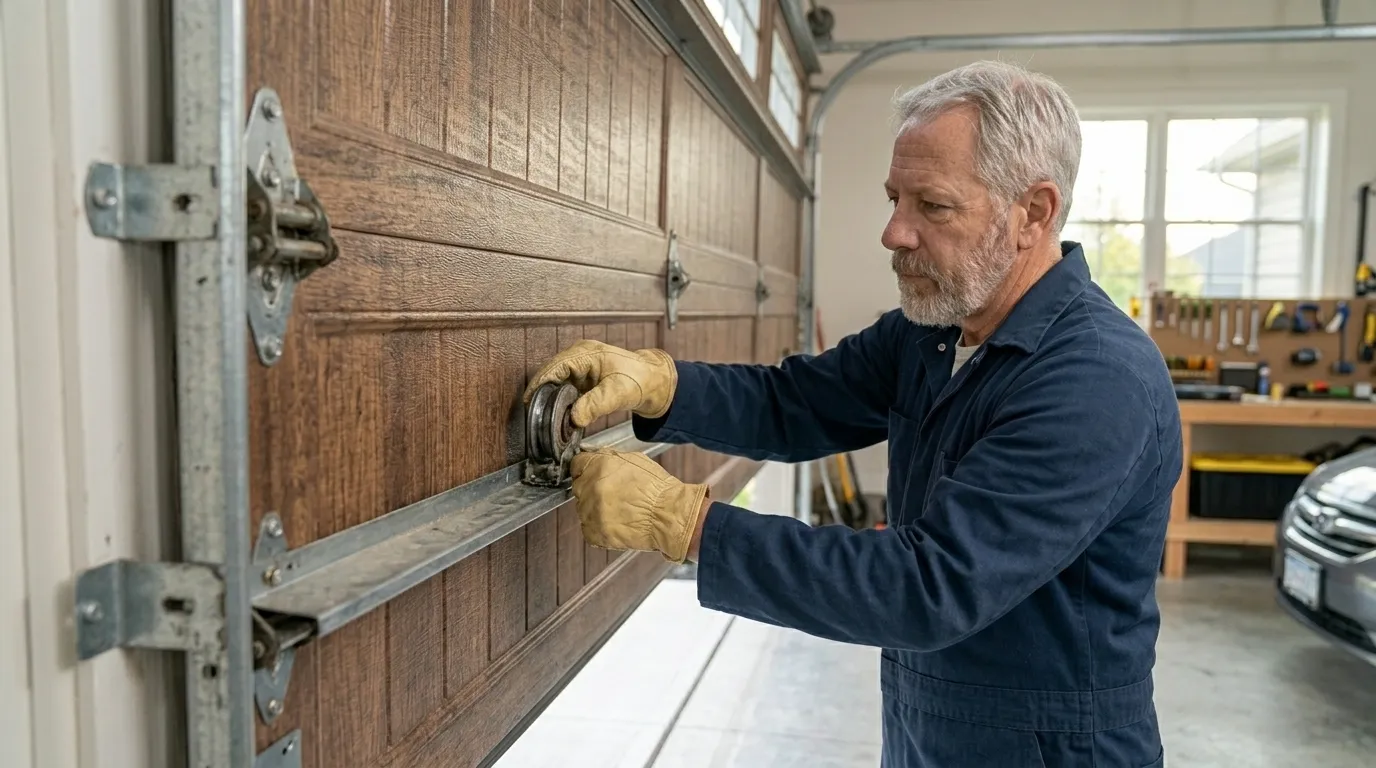
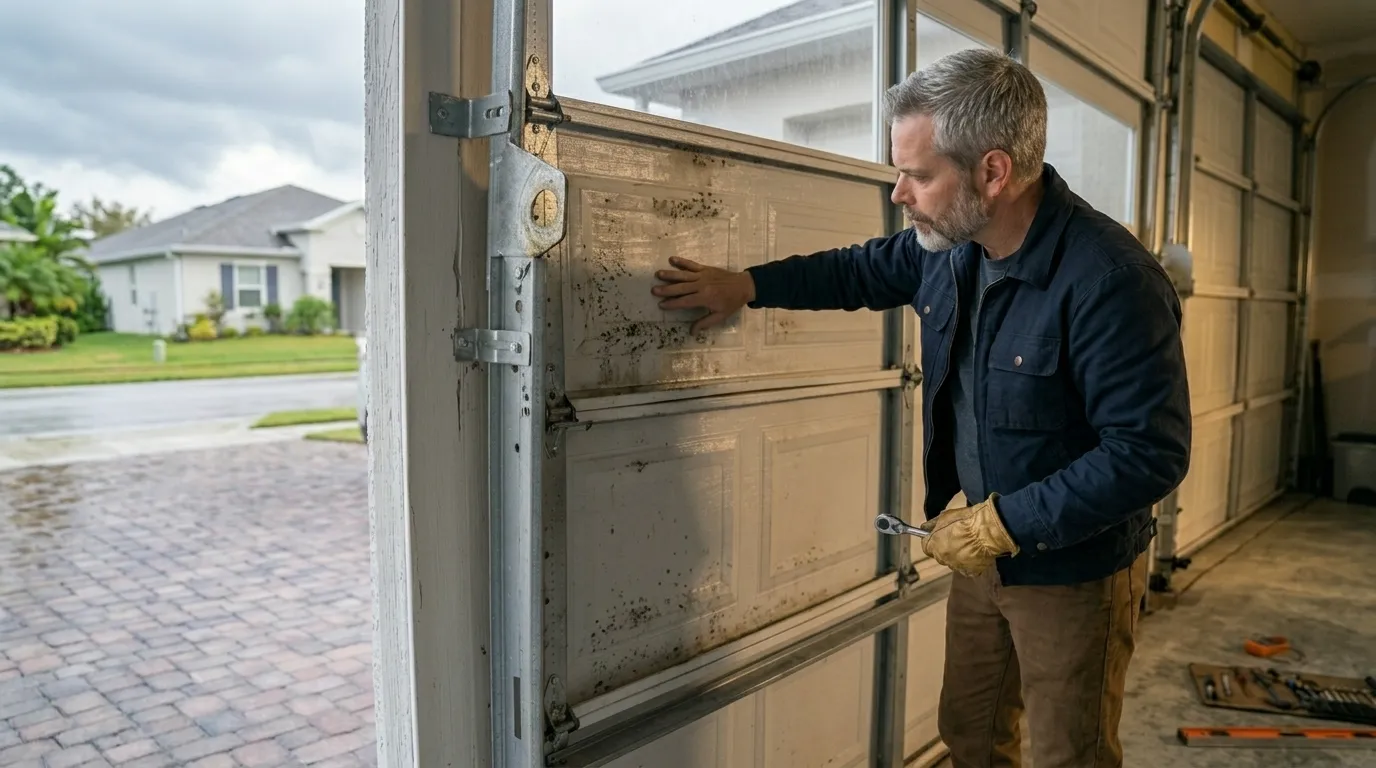
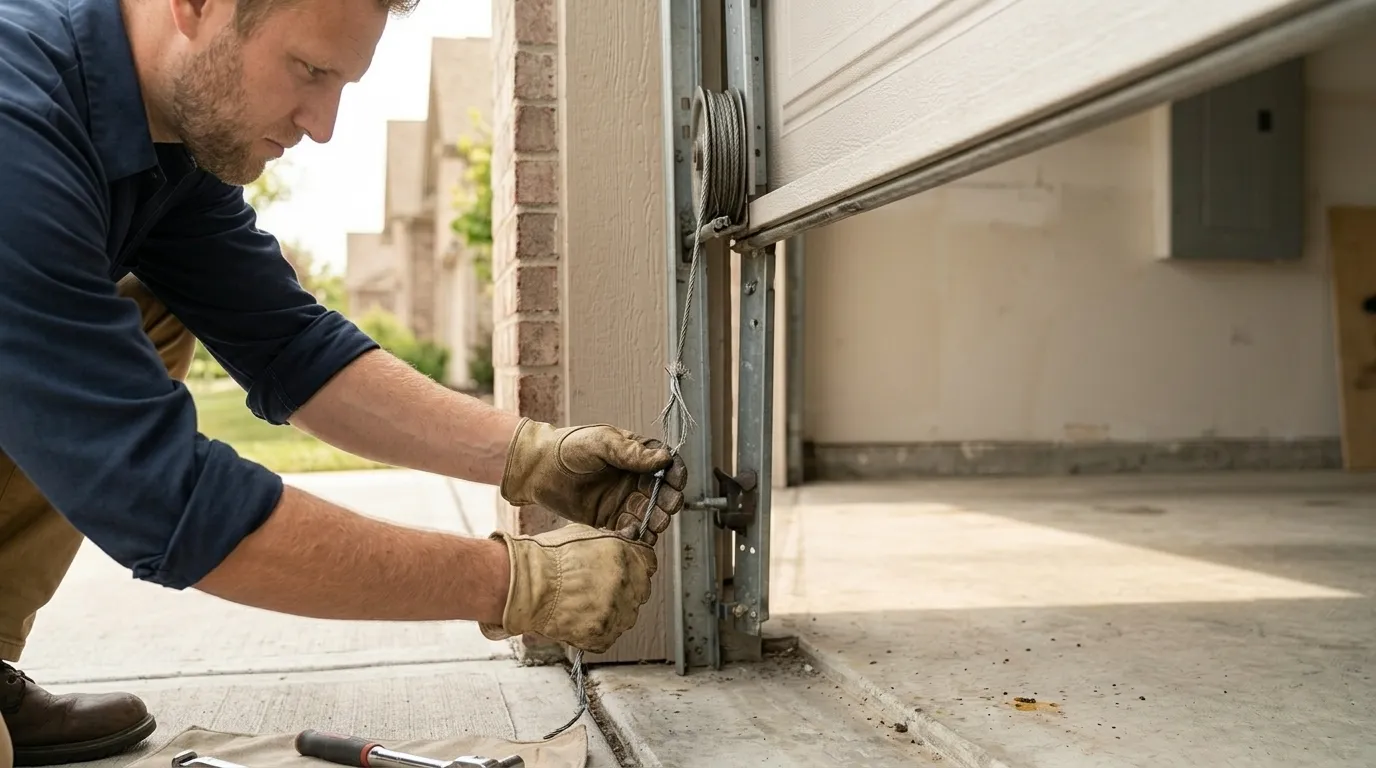
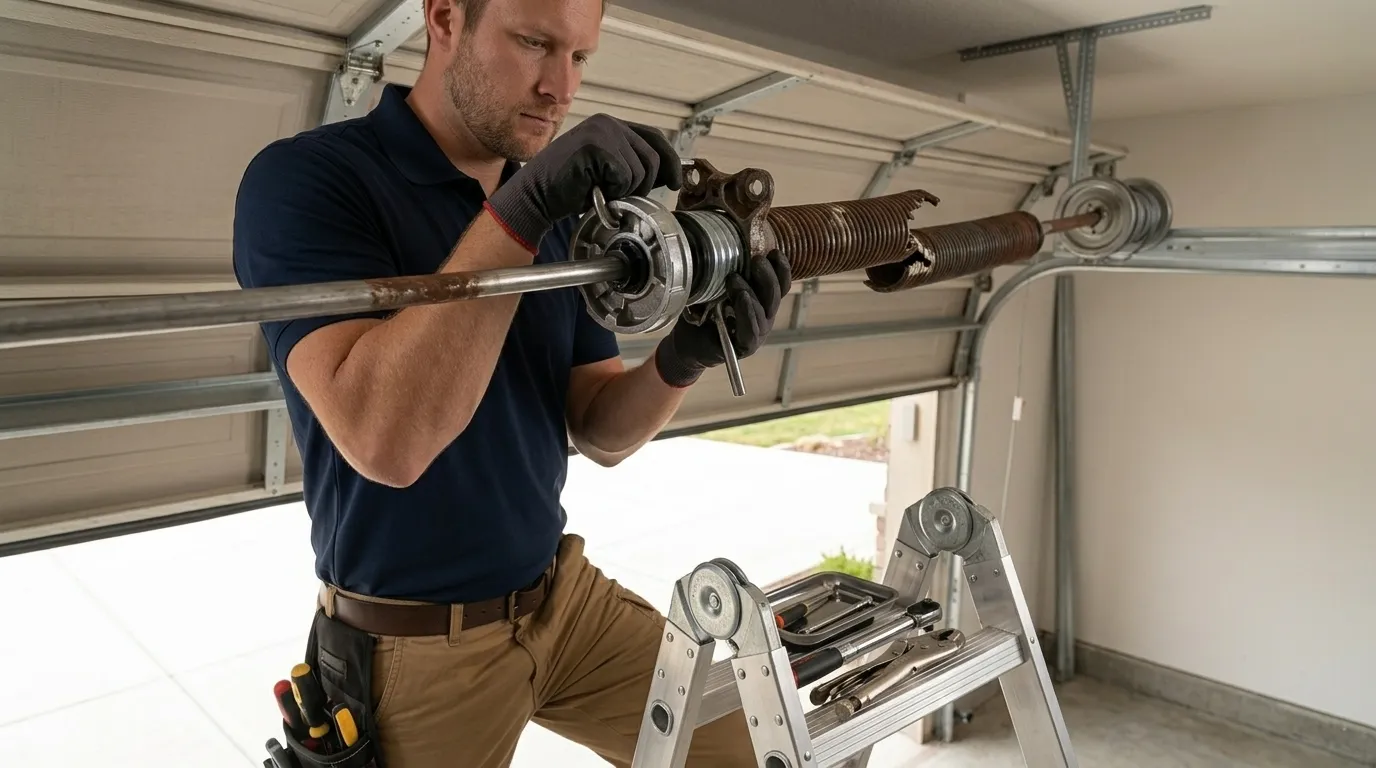
Before you call anyone, look at three things. First, the panels - rust-through, not just surface rust, means the steel is structurally compromised and patching won't hold. Second, the springs - if you can see daylight through a gap in a torsion spring's coil or the door drifts open or shut on its own when disconnected from the opener, that spring is near failure. Third, the track and rollers - with housing stock this old, a lot of doors still run on steel rollers instead of nylon, and steel-on-steel wear shows up as grinding noise and visible flat spots on the roller wheels. None of this requires tools beyond a flashlight and a stepladder. What it does require is honesty about what you're looking at: a door with sound panels and worn hardware is worth fixing. A door with rusted-through panels and a bent track rail usually isn't, no matter how good the springs still are.
When to Call Someone
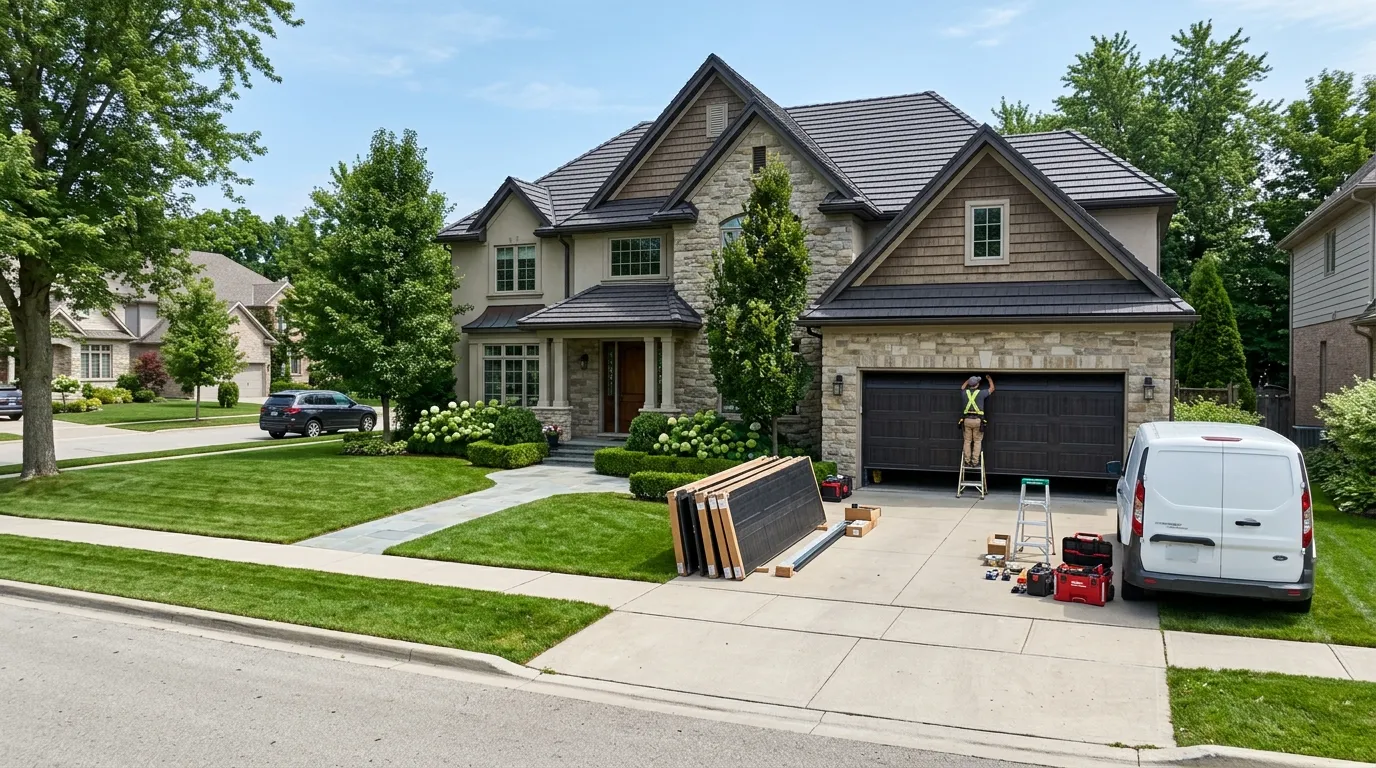
Call before you touch a torsion spring yourself - that's the one repair on this list that hurts people, full stop, regardless of how old or new the door is. Beyond that, if your door is from the 1960s-70s stock that's common across this area and it's the panels or the opener acting up rather than the spring, it's worth getting someone to look at it before you replace the whole unit. We don't push replacement on a door that just needs new rollers and a spring set - that's a fraction of the cost and it'll run another decade. Where we do recommend replacement is when the section rust is through the steel or the frame itself has racked out of square, because at that point new hardware on an old door is just delaying the same call a year or two out.