The Situation
Most of the housing in this service area went up between 1938 and 1994, with the median build year sitting around 1964. A lot of that stock - across the 86 named areas we cover, from McKinley Park and Bridgeport out to Brookfield and La Grange - started life with single-car, narrower garage openings, the kind that came standard with post-war construction. Where you see a wide double door today, on a two-car attached garage, it's often a later addition or a full replacement bolted onto framing that was never built with a 16-foot opening in mind. That mismatch matters more than people think. A door twice as wide has twice the surface area catching air, but the same basic track and jamb attachment as a narrower one, unless someone specifically reinforced it. On older houses in this area, that reinforcement is the exception, not the rule.
Checking It Yourself
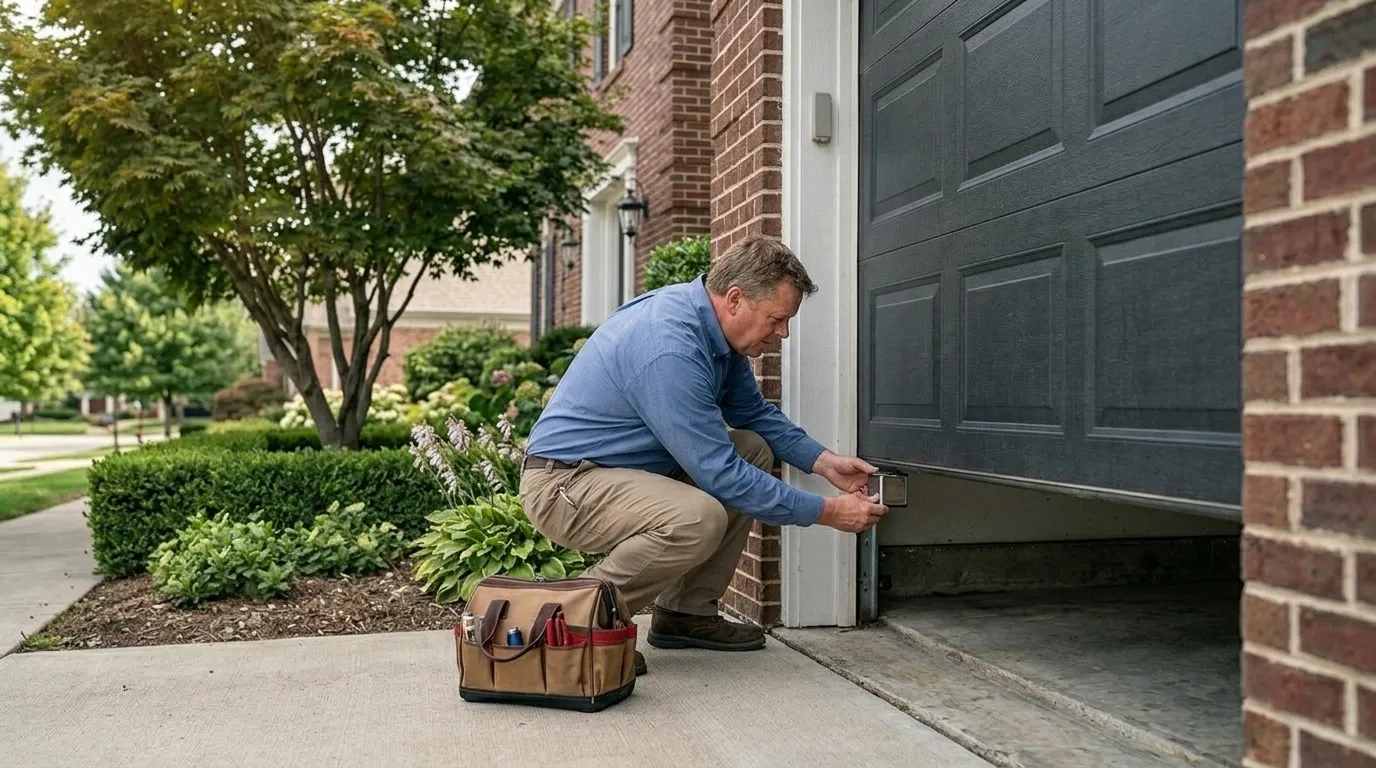
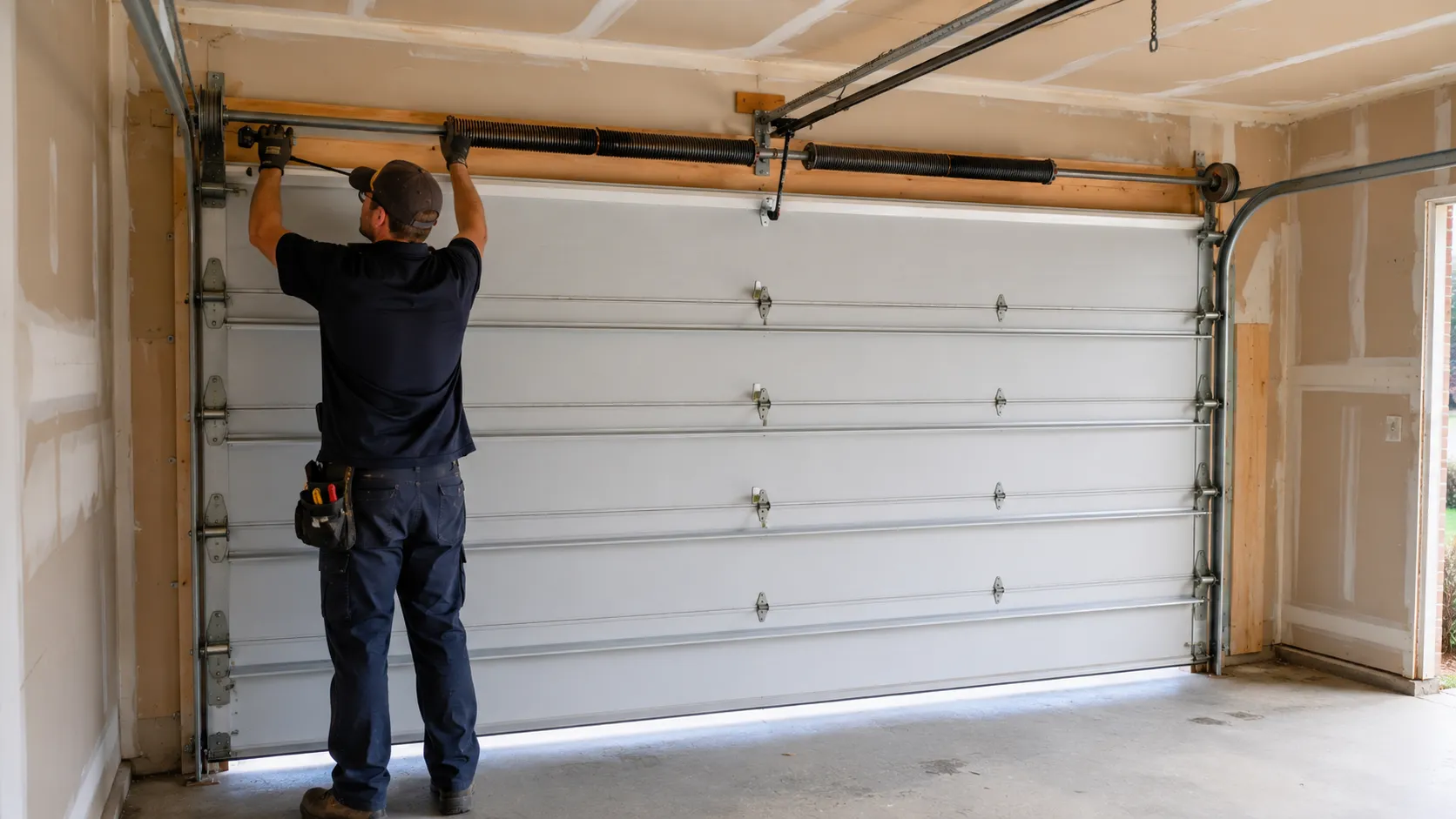
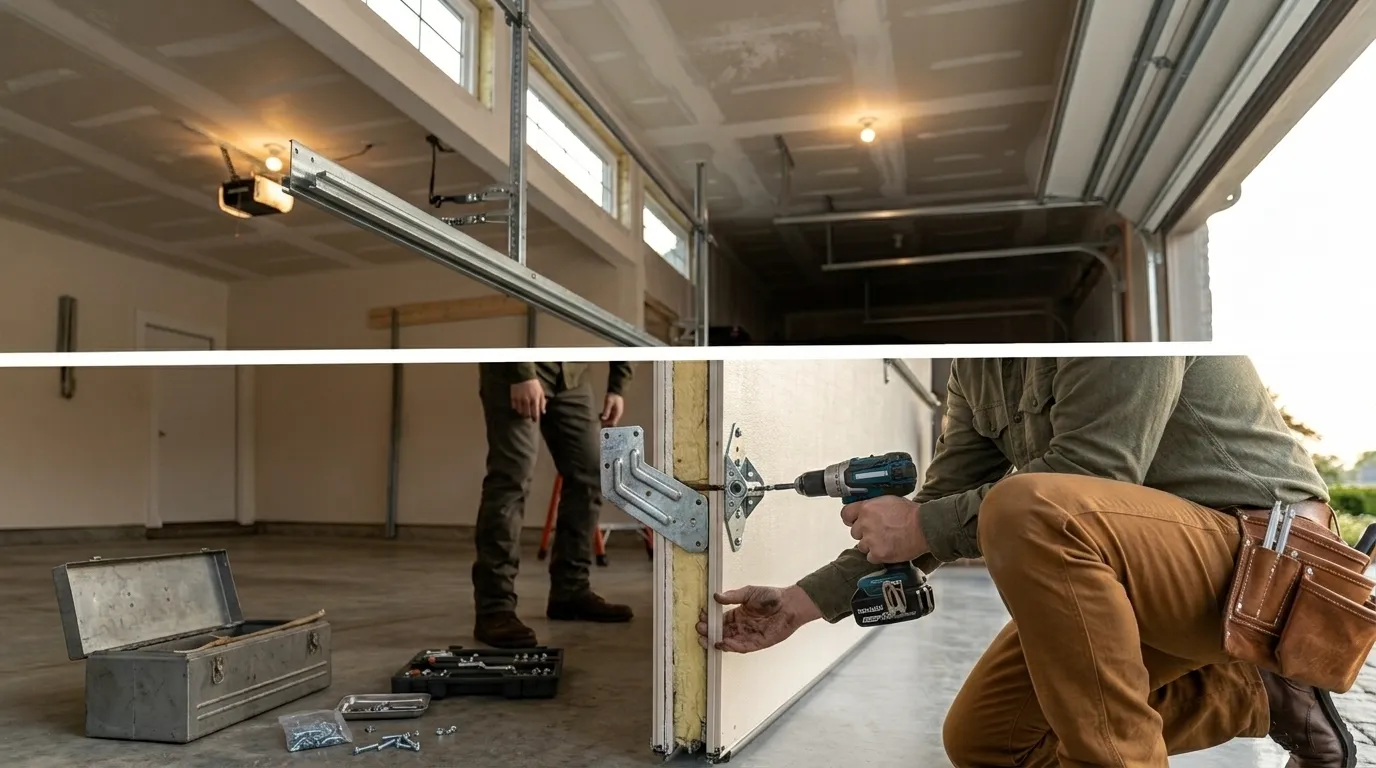
Stand inside the garage with the door closed and look at the horizontal struts across the back of the panels, if it's a double-wide door - most have at least one. On windy days, watch whether the middle of the door visibly moves in and out more than the edges near the tracks. That's flex, and a little is normal; a lot means the strut isn't doing its job anymore or was never sized for the opening. Check the top and bottom brackets where the door is lag-bolted to the framing - on houses built in the 1938-1994 range that make up most of this area, that framing is old enough that screws can back out or the wood around them can split without it being obvious from a quick look. Give the bolts a hand-check for movement. Also check the astragal seal at the bottom for cracking or gaps, since a stiff, cracked seal lets wind get a grip on the door's edge instead of sliding off it.
When to Call Someone
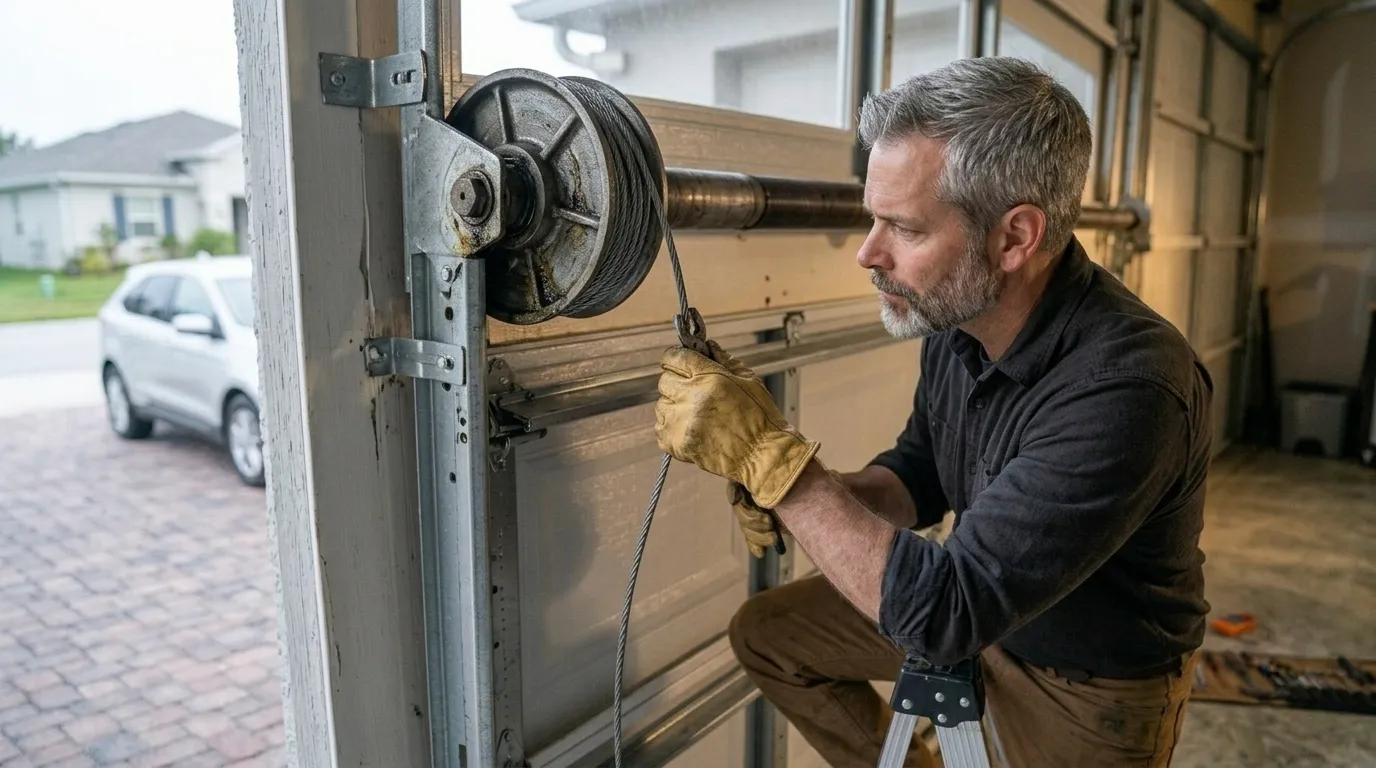
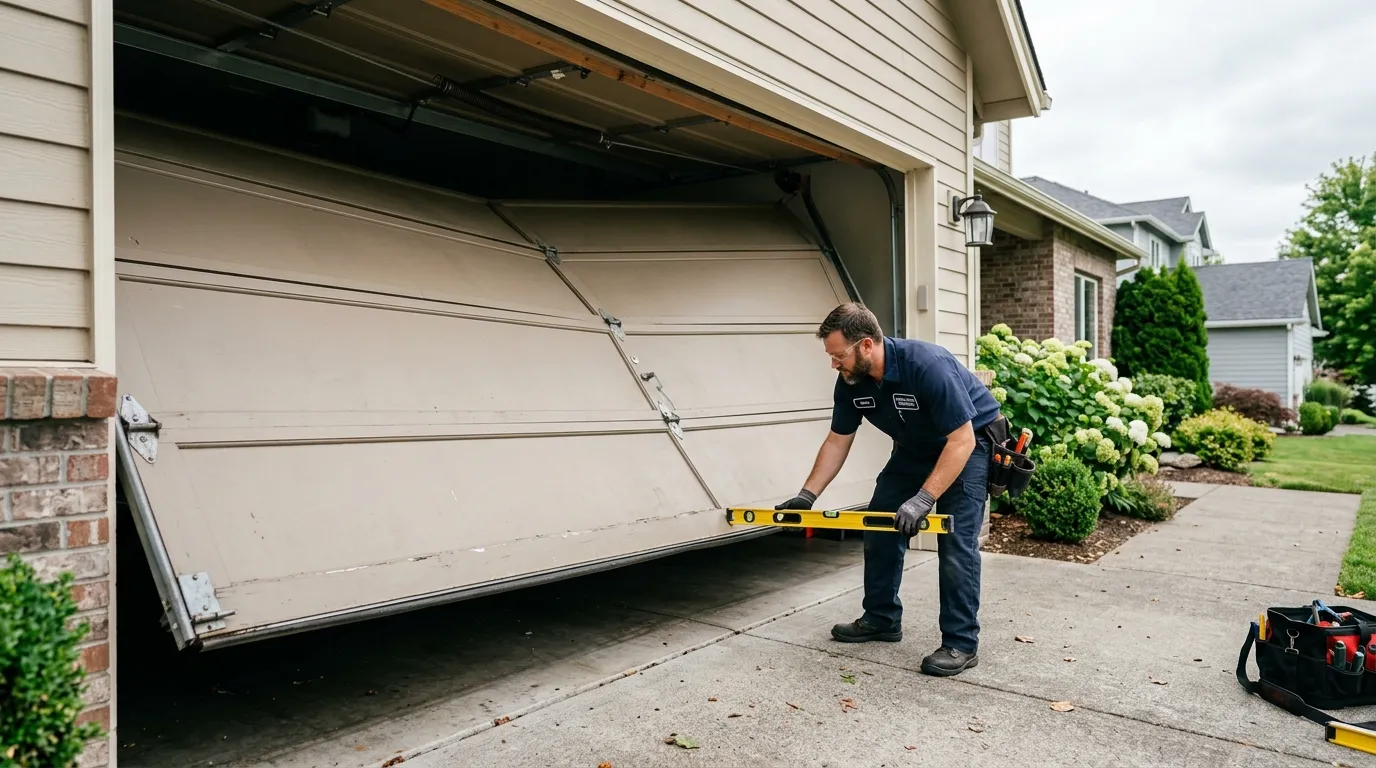
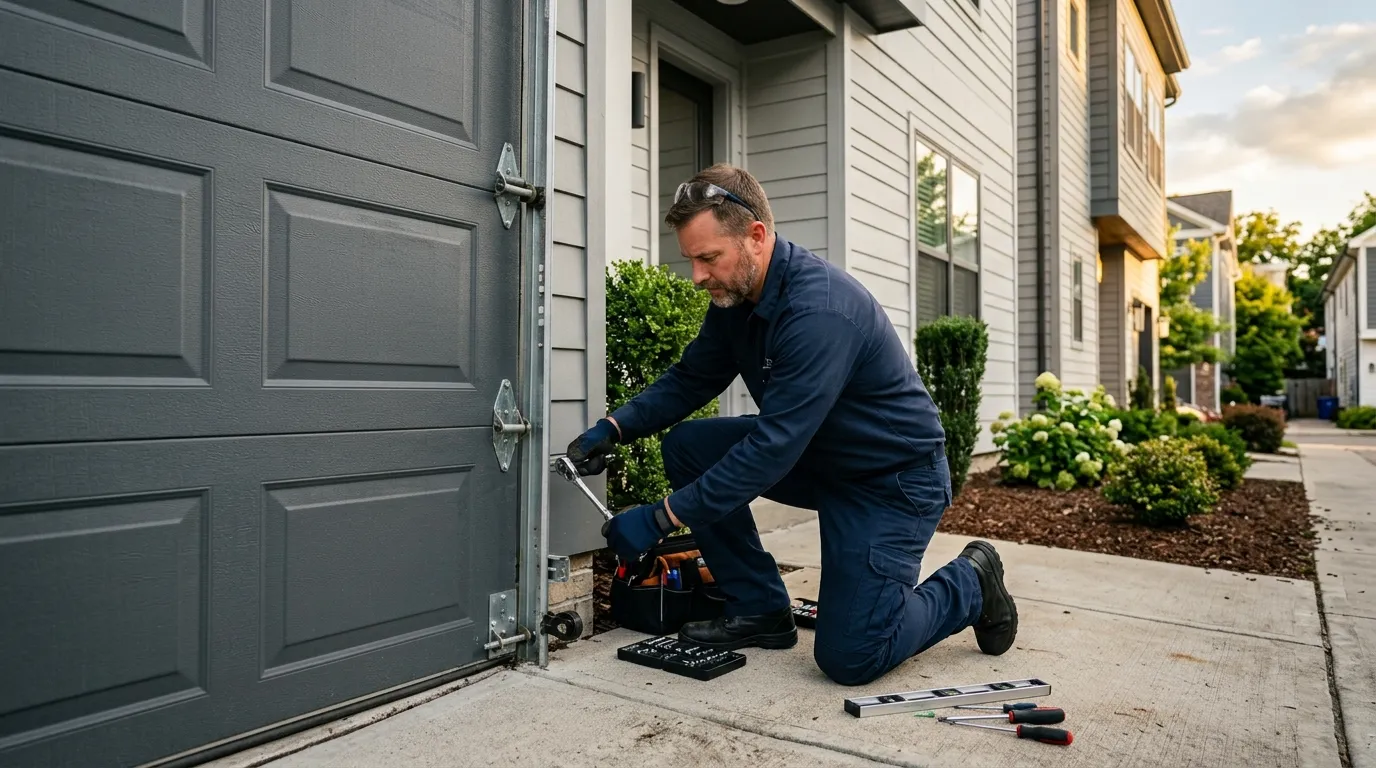
If the middle of a wide door is flexing more than an inch or two under wind, or you find a bracket that's loose at the wood rather than just at the bolt, that's past a homeowner fix. We don't recommend just tightening loose lag bolts into old, worn-out wood and calling it done - if the wood around the anchor point has degraded, redriving the same screws just fails again, usually sooner. That's a case for adding backing or resetting the anchor point properly, and it's worth having someone look at it in person rather than guessing. One honest limit: we can't tell you over the phone whether your issue is a quick strut adjustment or a full jamb repair - wide doors on older Chicago-area framing vary too much house to house for that. A short visit settles it.