
This Area's Housing
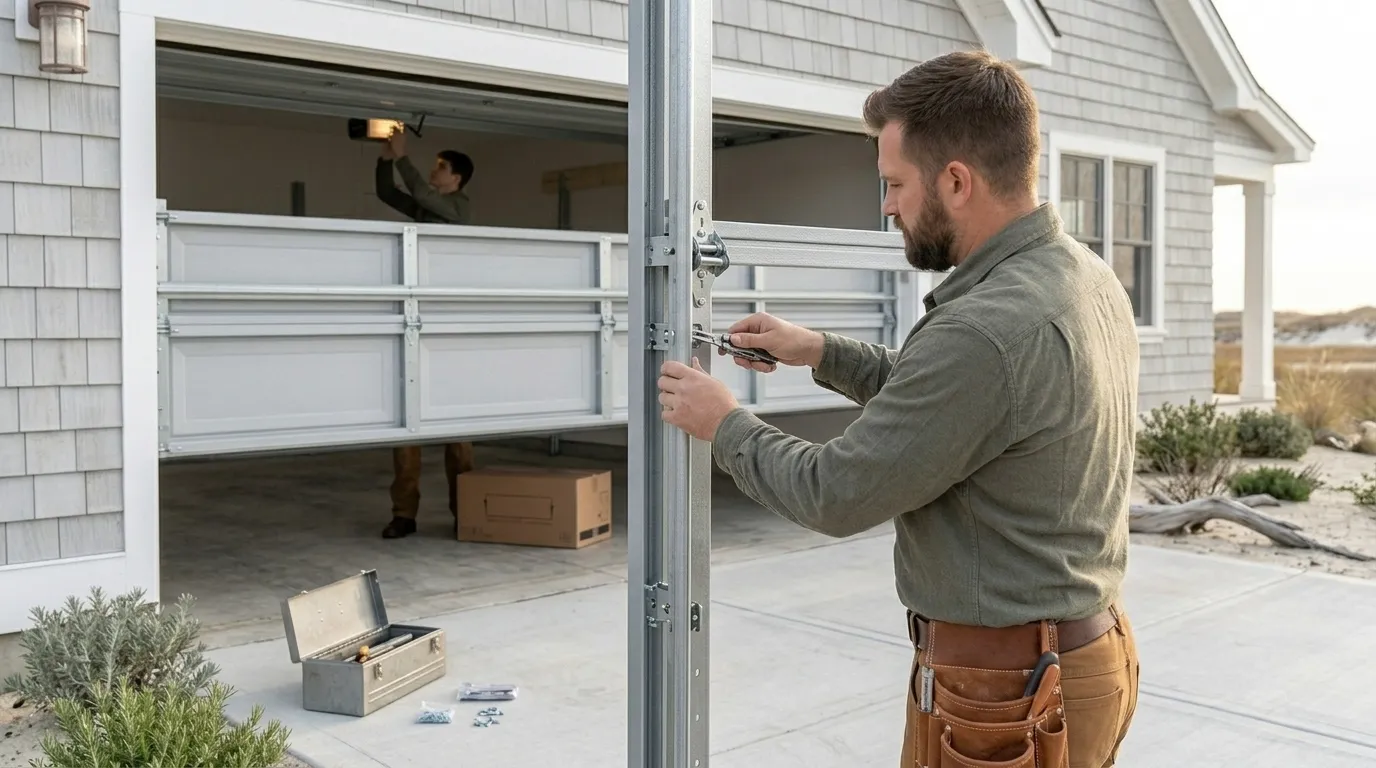
Bensenville's housing stock centers on 1970, a bit newer than the 1938-to-1994 spread you see across the wider service area, where the midpoint sits closer to 1964. That six-year gap matters more than it sounds. A house built in 1970 was more likely to leave the factory with a torsion spring system already in place, rather than the older extension-spring setups still common on the earliest post-war blocks. It also means galvanized track and steel panel doors instead of the wood carriage doors you find on the oldest stock nearby.
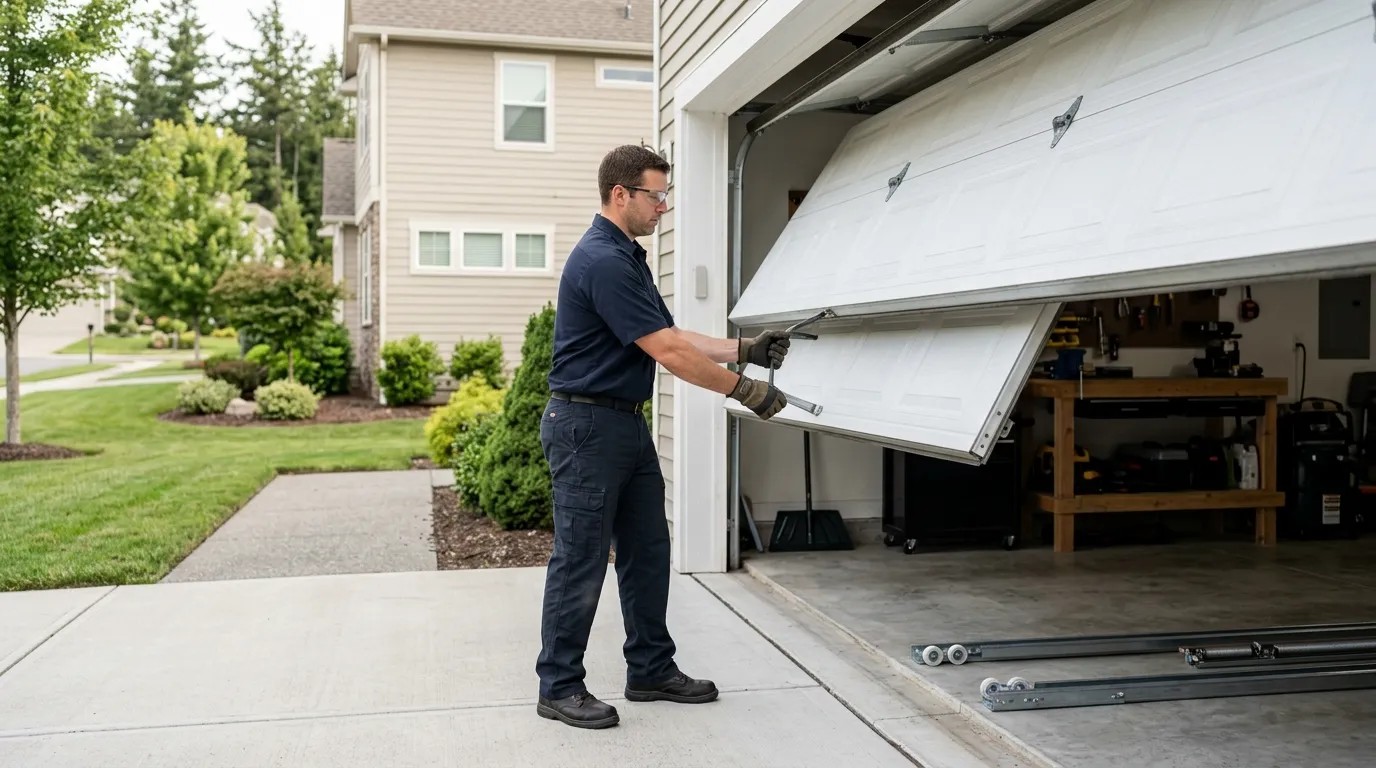
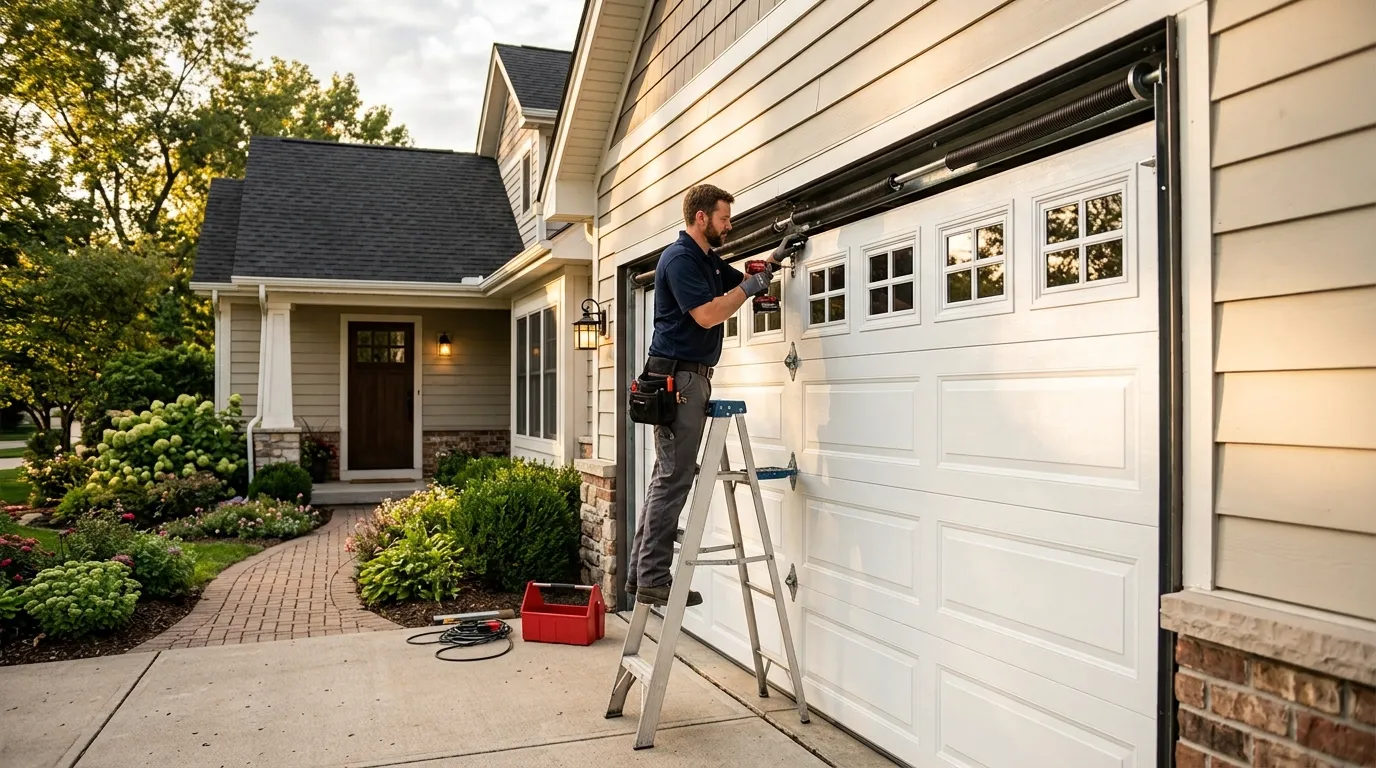
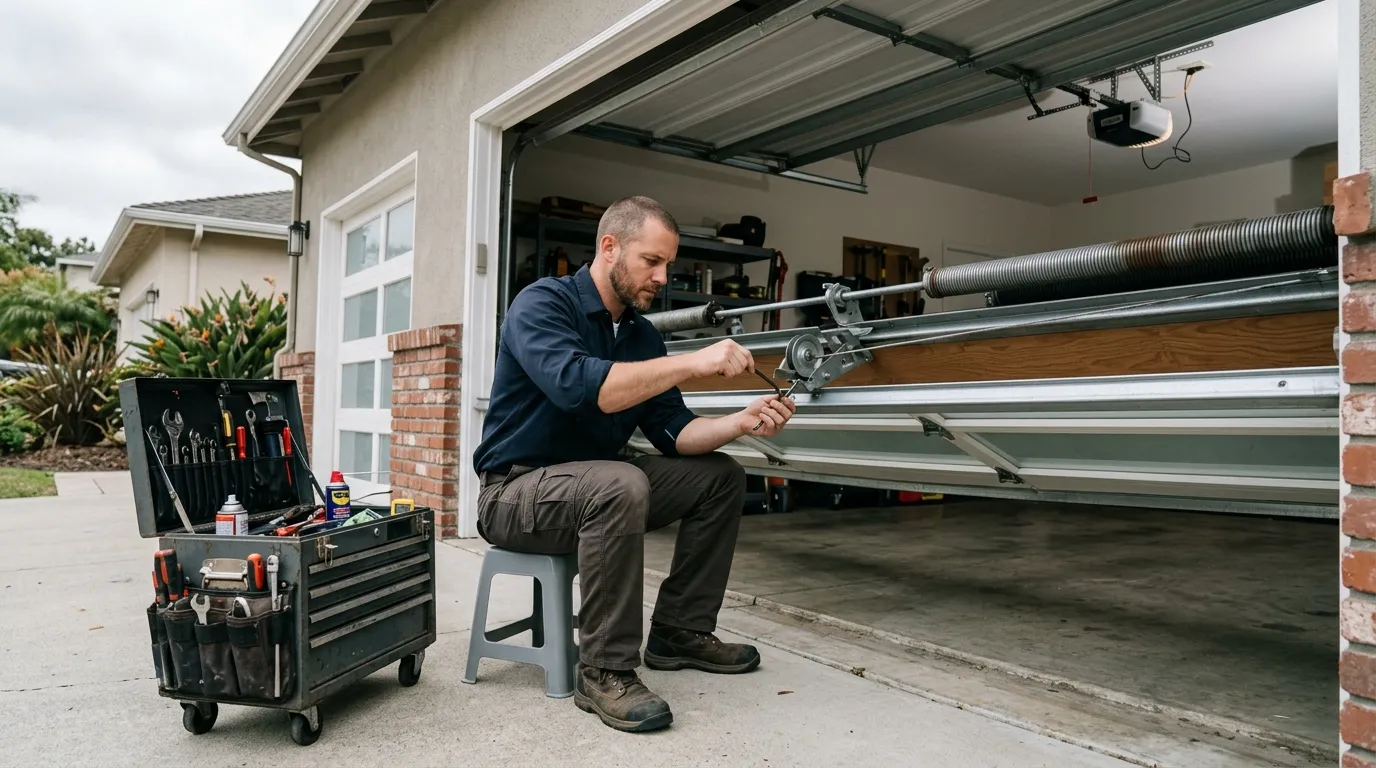
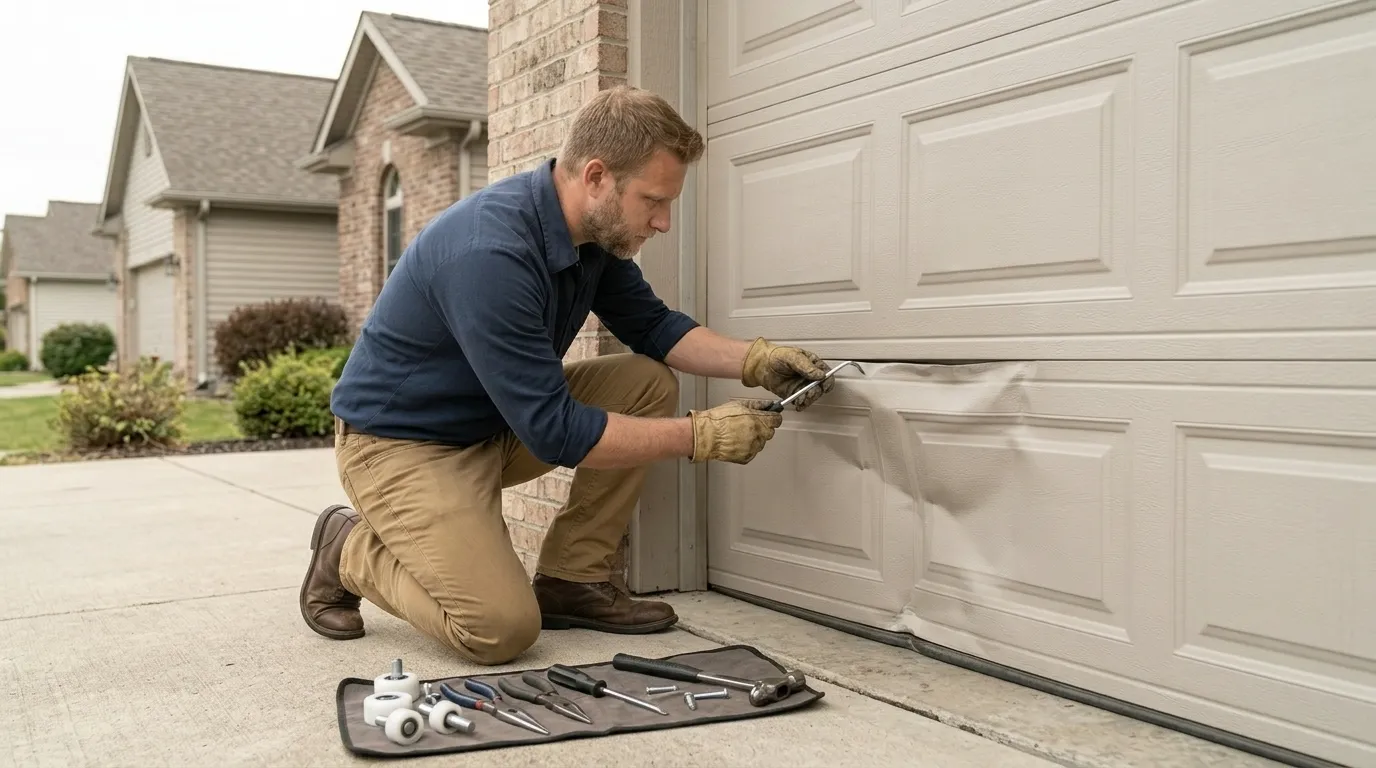
We still see plenty of original hardware here - a torsion spring rated for a lighter door than what's actually hanging on it, or a jackshaft opener bolted in later without touching the worn rollers underneath. Early-1970s steel doors also tend to run thinner gauge than what's sold today, so a dent from a bumper tap dents deeper and stays. None of this is exotic. It's just what forty-plus-year-old torsion hardware does when nobody's replaced the springs on schedule.
We don't guess at what's on your door before we see it. A quick look at the spring wire gauge and the drum stamps tells us more than the build year alone.
What That Means for Doors
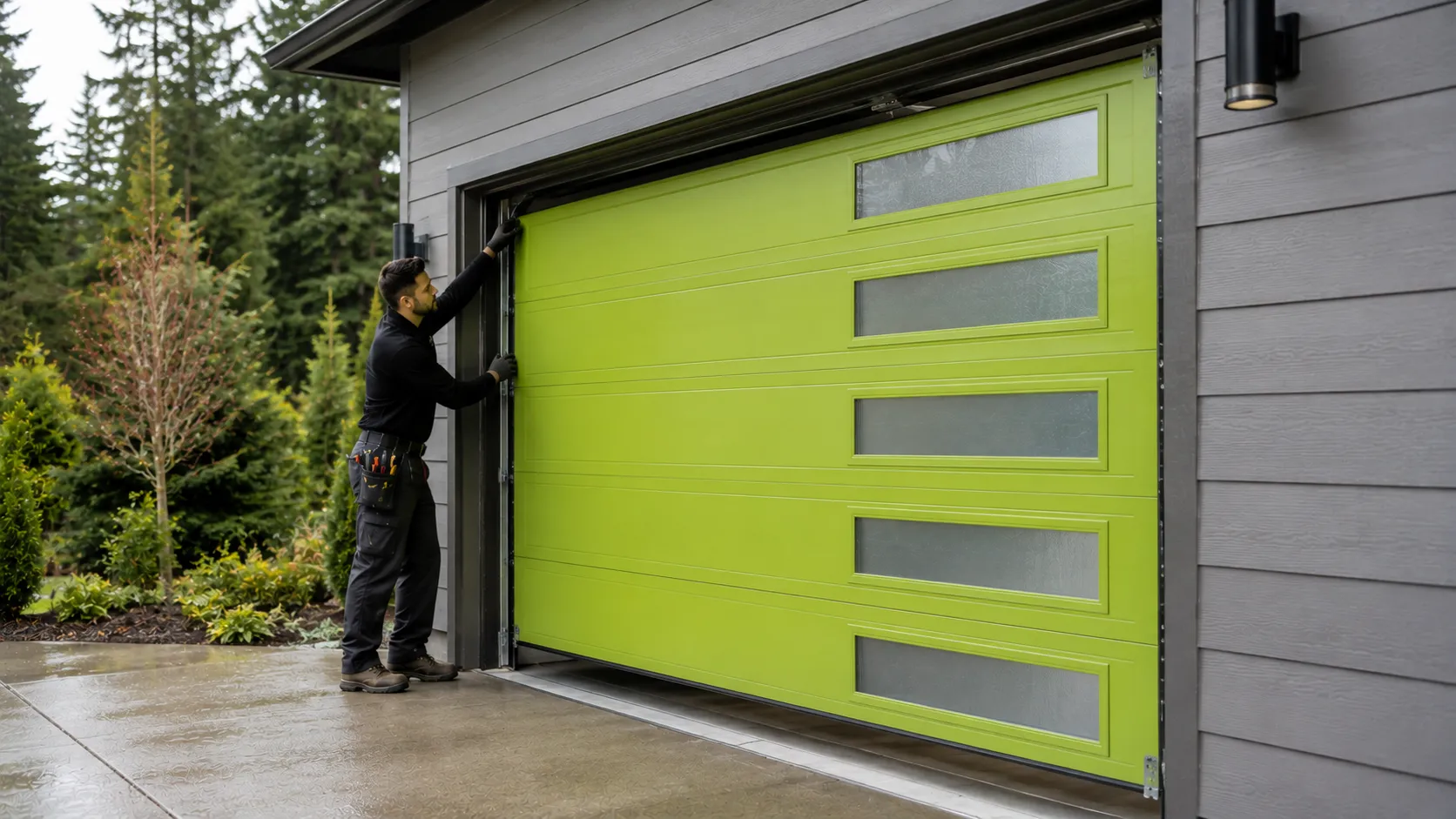
With a median build year of 1970, the doors we replace most in Bensenville are the second-generation steel sectional doors - the ones that came after the earliest wood and single-panel doors but before insulated cores became standard. These doors are light, which is good for the opener but bad for the springs: a torsion spring sized decades ago for a thinner door, replaced once with an off-the-shelf spring instead of a properly matched pair, will overwork and snap early.
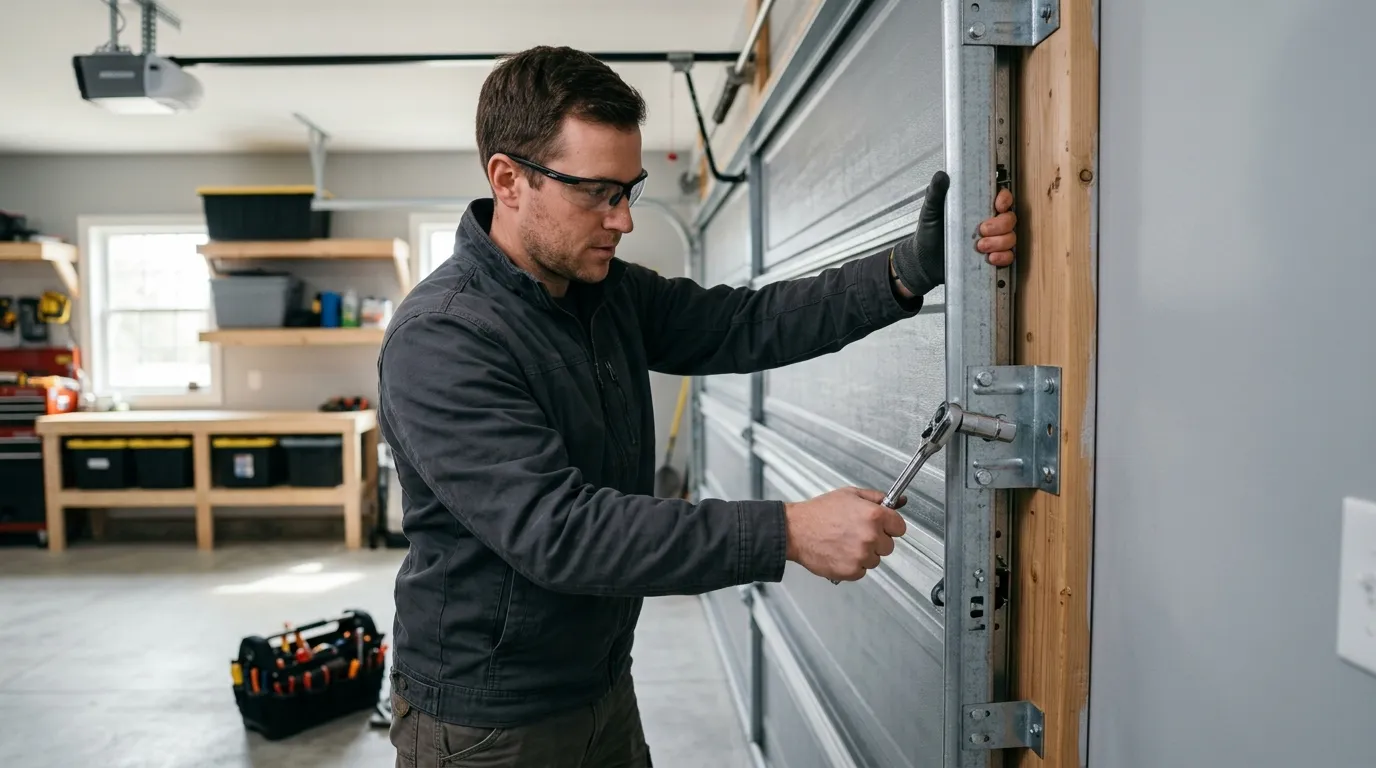
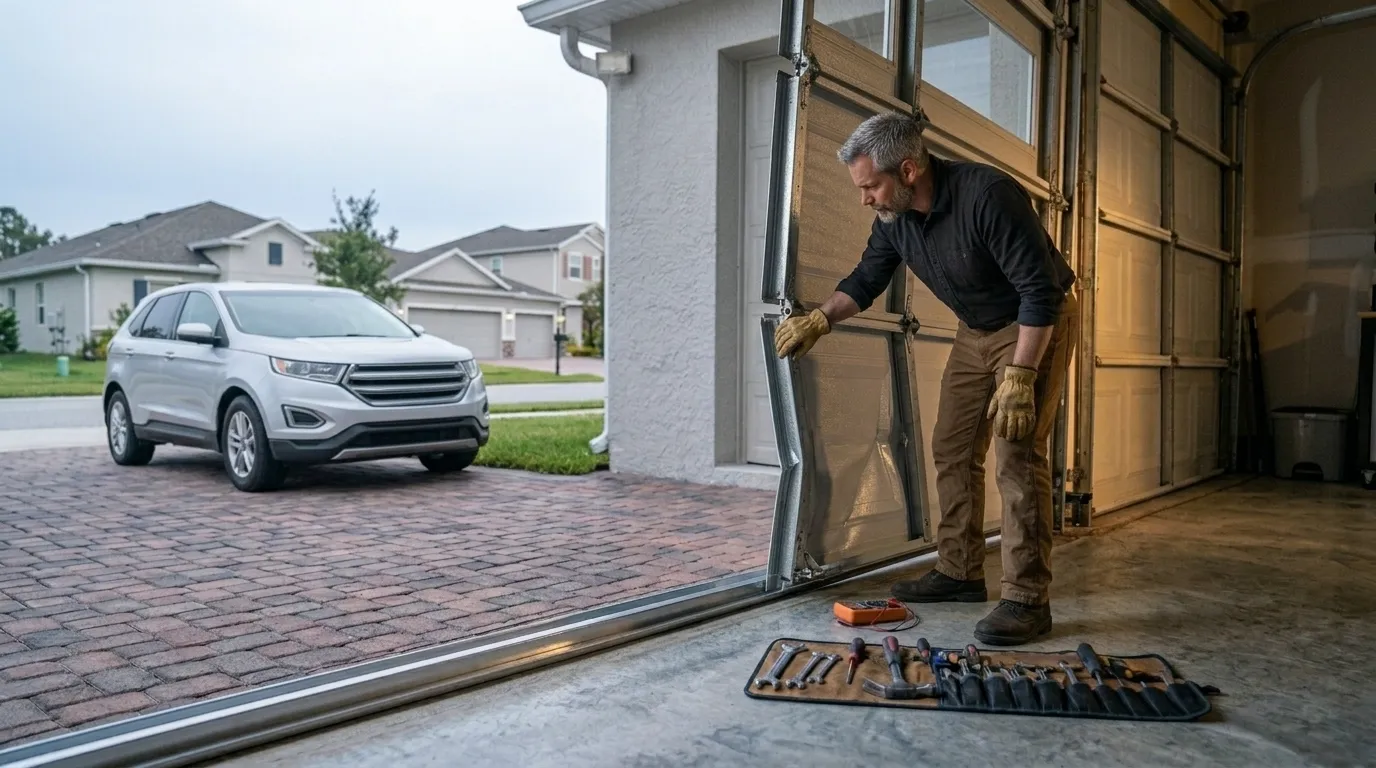
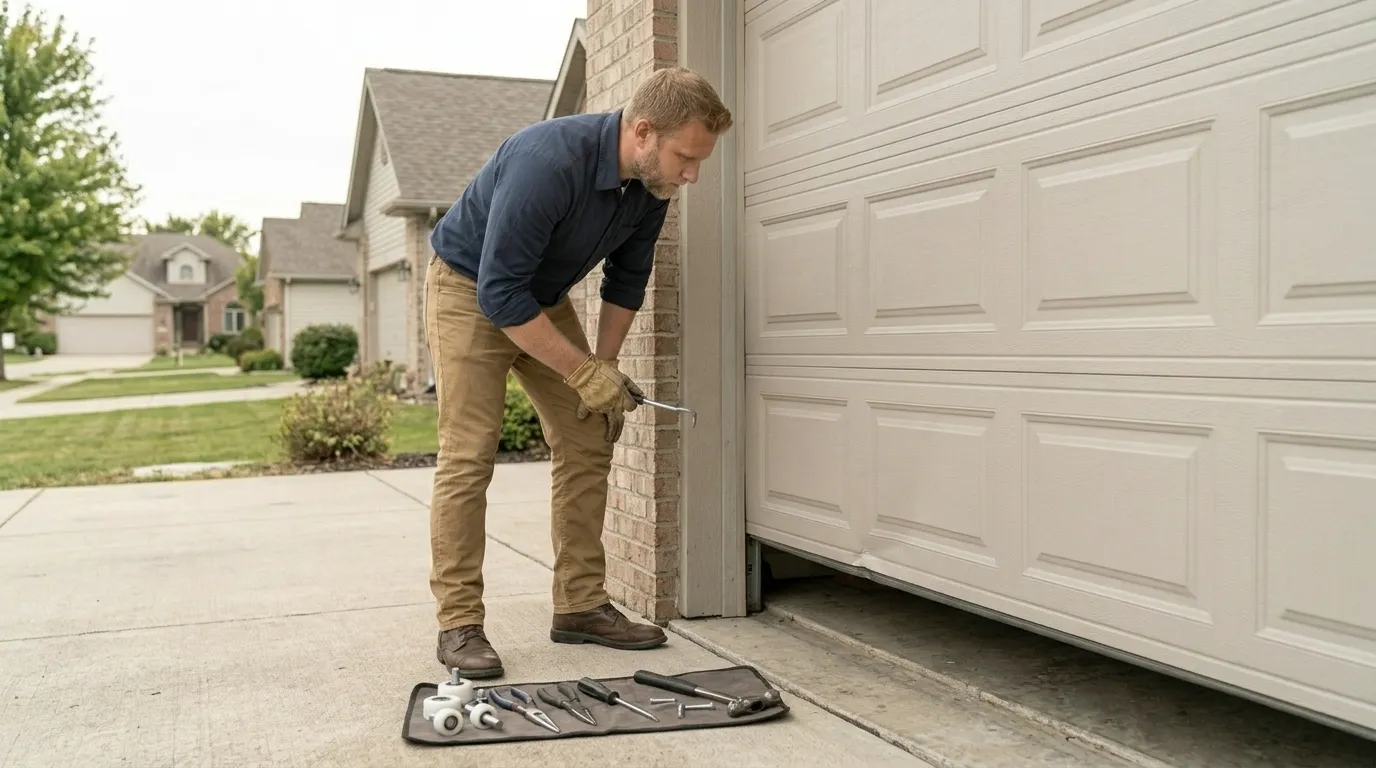
The area sits in a cold-moderate climate band, which means steel doors here go through real freeze-thaw cycling every winter. Track brackets loosen as wood jambs shrink and swell, and nylon rollers from the original install get brittle and start chipping. On a 1970-era door, that usually shows up as a door that binds partway up on a cold morning rather than one that won't move at all.
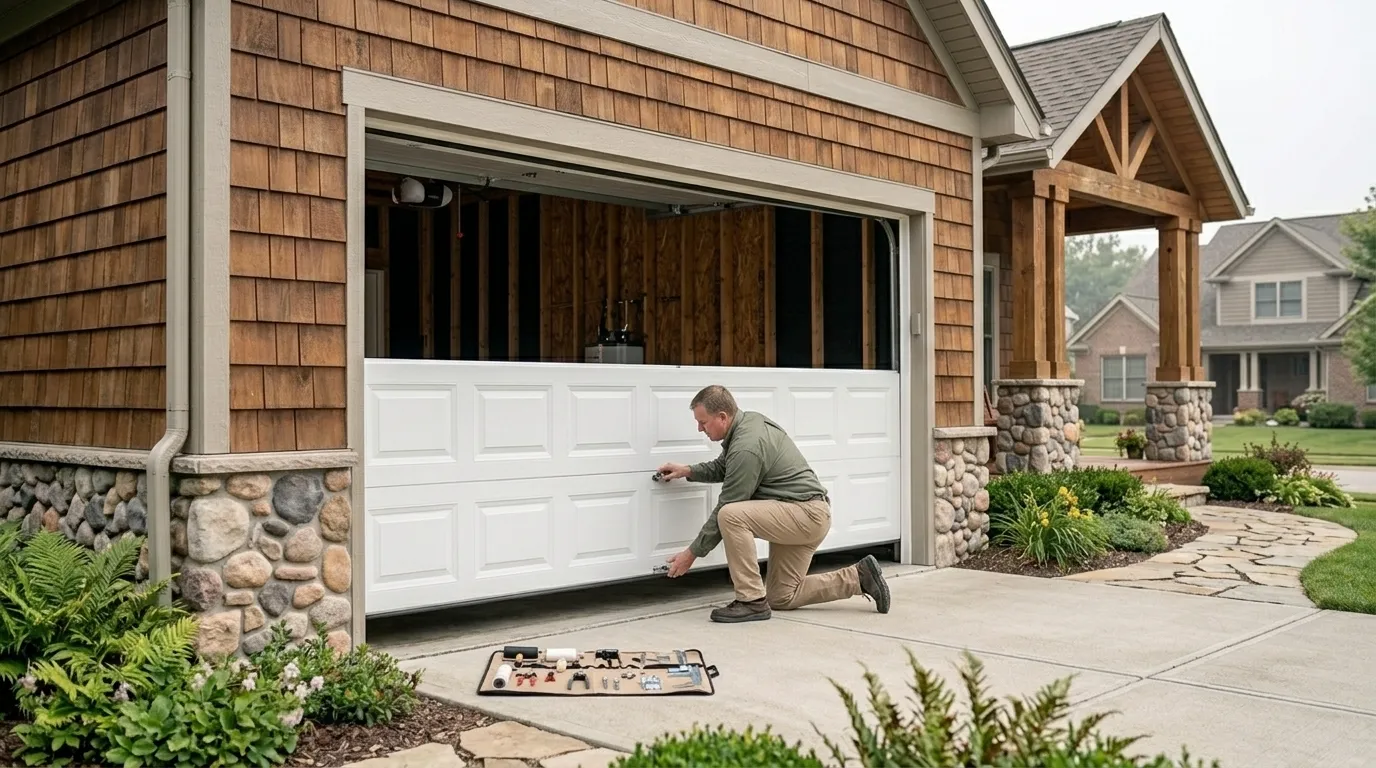
We don't push full replacement on a door that's still structurally sound. If the panels are straight and the track is true, a spring and roller job costs a fraction of a new door and buys years. Replacement makes sense once the frame's racked or the bottom panel's rusted through - not before.
What People Here Ring About
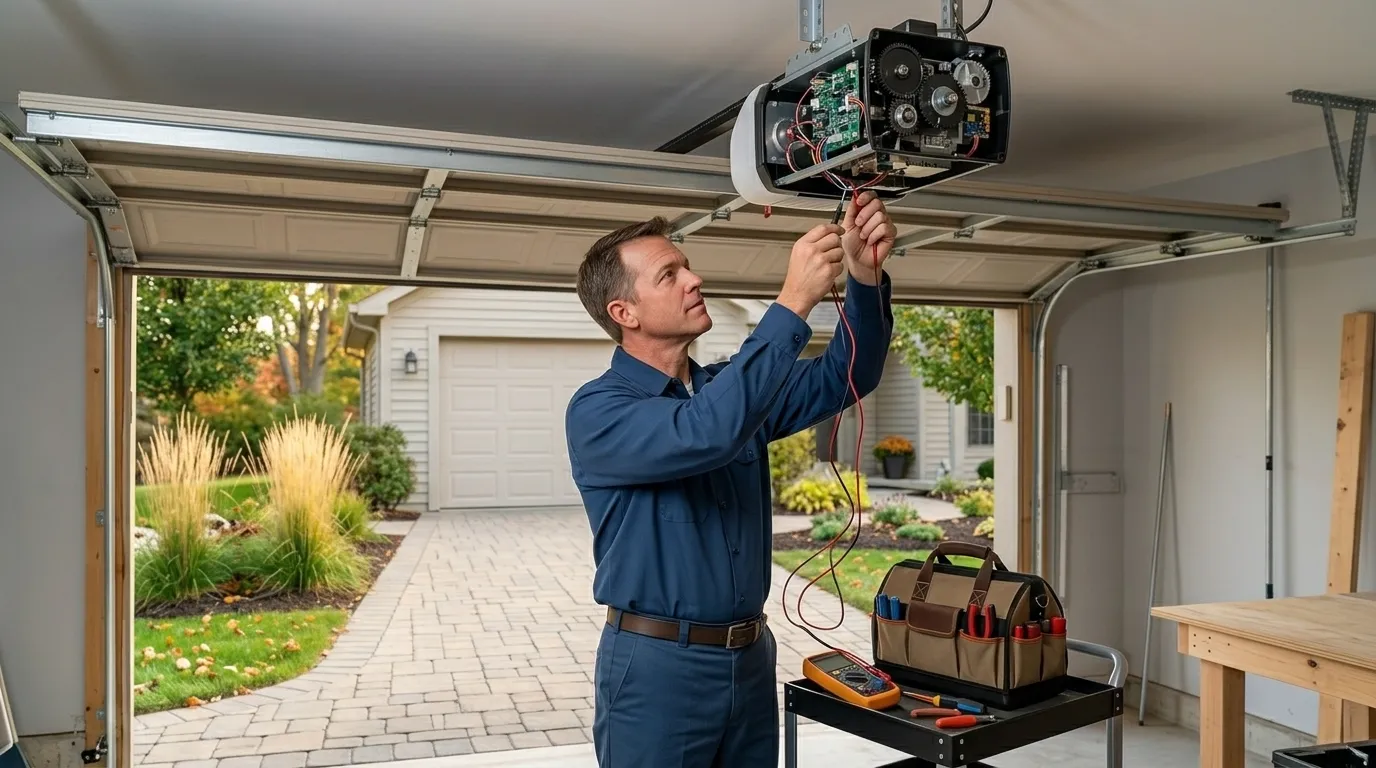
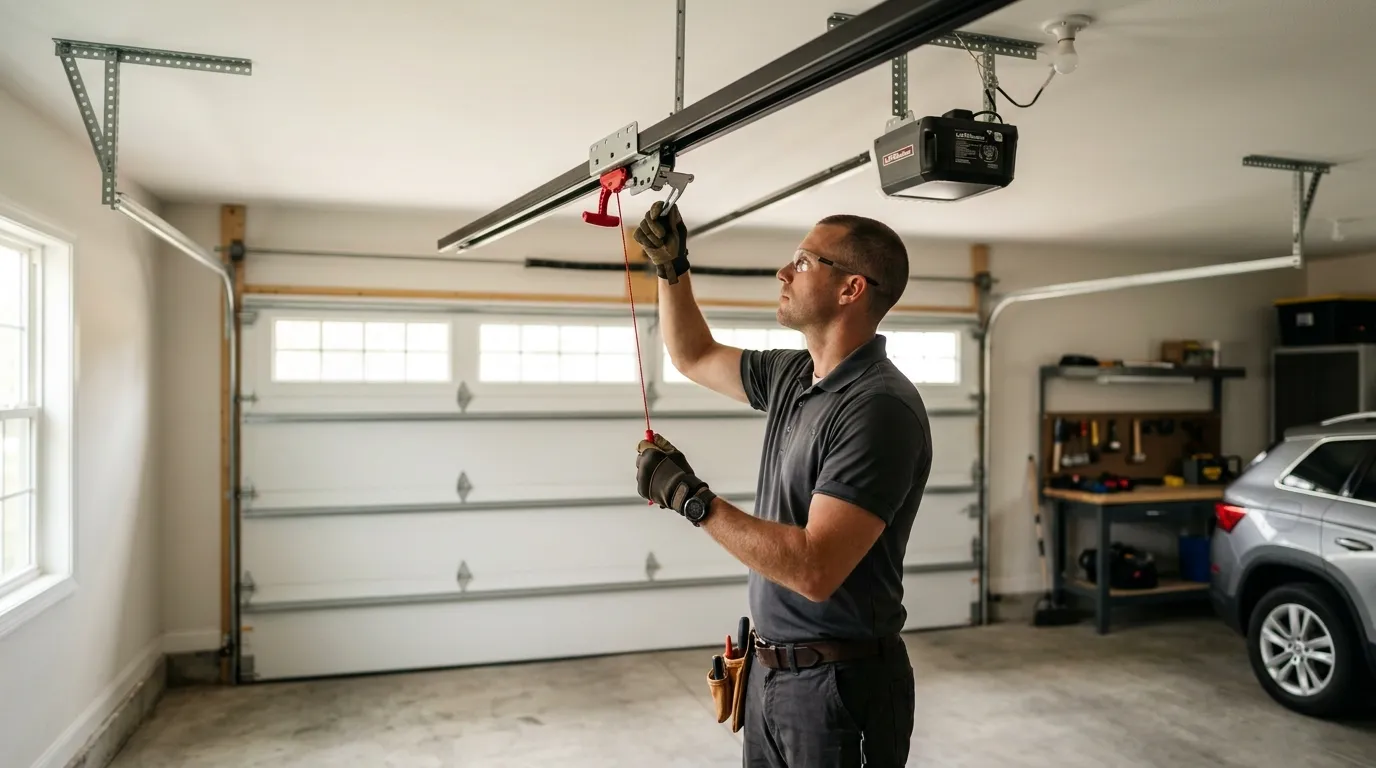
The calls we get from Bensenville skew toward hardware fatigue rather than storm damage or accident repair. A torsion spring that finally snaps after years of being slightly undersized for the door. A cable that frays off a worn drum. An opener from the same era as the house, still running but grinding on the gears because it was never given a tune-up.
Across the wider service area median household income runs around $80,202; in the Bensenville area itself it's closer to $78,298 across roughly 6,834 households, which tracks with what we see on the ground - owners who'd rather repair a working door than replace it outright, and who ask for the cheaper fix first. That's a reasonable instinct on a door with straight track and sound panels.
One thing we're upfront about: if the opener is original to a 1970-built house, parts for that specific unit are usually gone. We're not going to chase down a 50-year-old gear kit that doesn't exist anymore. At that point the honest answer is a new opener, not a repair quote that keeps growing.