24/7 Emergency Service Open 7 days · 7am–8pm Serving Chicago, IL & nearby
(708) 630-7529
Chicago, IL

Garage Door Service for Clarendon Hills, IL

Service for Clarendon Hills homes built mostly around 1981 - later stock than much of Chicago's service area, with different springs, tracks and opener failures to match.

Garage Door Service for Clarendon Hills, IL
Chicago, IL
Licensed & insured
Free estimates
Residential & commercial

This Area's Housing

Clarendon Hills sits later on the timeline than most of the towns we cover out of Chicago. Across the wider service area the median home dates to 1964, but here the typical house went up around 1981 - a full generation newer. That gap matters more than it sounds. A 1981 build is past the era of thin single-layer steel and into double-track torsion setups, wider door openings for two-car garages, and the first wave of chain-drive openers with circuit boards instead of pure mechanical relays.

With 3,313 households and a median income of $125,826, this is also a higher-income pocket relative to the roughly 461,017 households across the full area we serve. That shows up in the doors themselves: more insulated steel and composite panels, more custom finishes, fewer of the bare single-panel doors you still find on the older 1940s-50s blocks closer to the city. It doesn't mean nothing breaks here - it means what breaks, and how it gets fixed, looks different from a house built forty years earlier.

Getting Here

We run out of Chicago, and Clarendon Hills is about 14 miles out - noticeably farther than closer-in stops like Berwyn (6 miles) or Riverside and Forest Park (7 miles each). We don't keep a depot or crew stationed in the area, so a call here is a truck trip, not a walk-around-the-corner job. That's worth knowing up front if you're comparing us to a company that's physically closer.

We still take the calls and still make the drive; it just means we're candid that turnaround on a same-day emergency can depend on where the truck already is that morning. If timing is tight, say so when you call and we'll tell you straight whether we can make it work that day.

What That Means for Doors

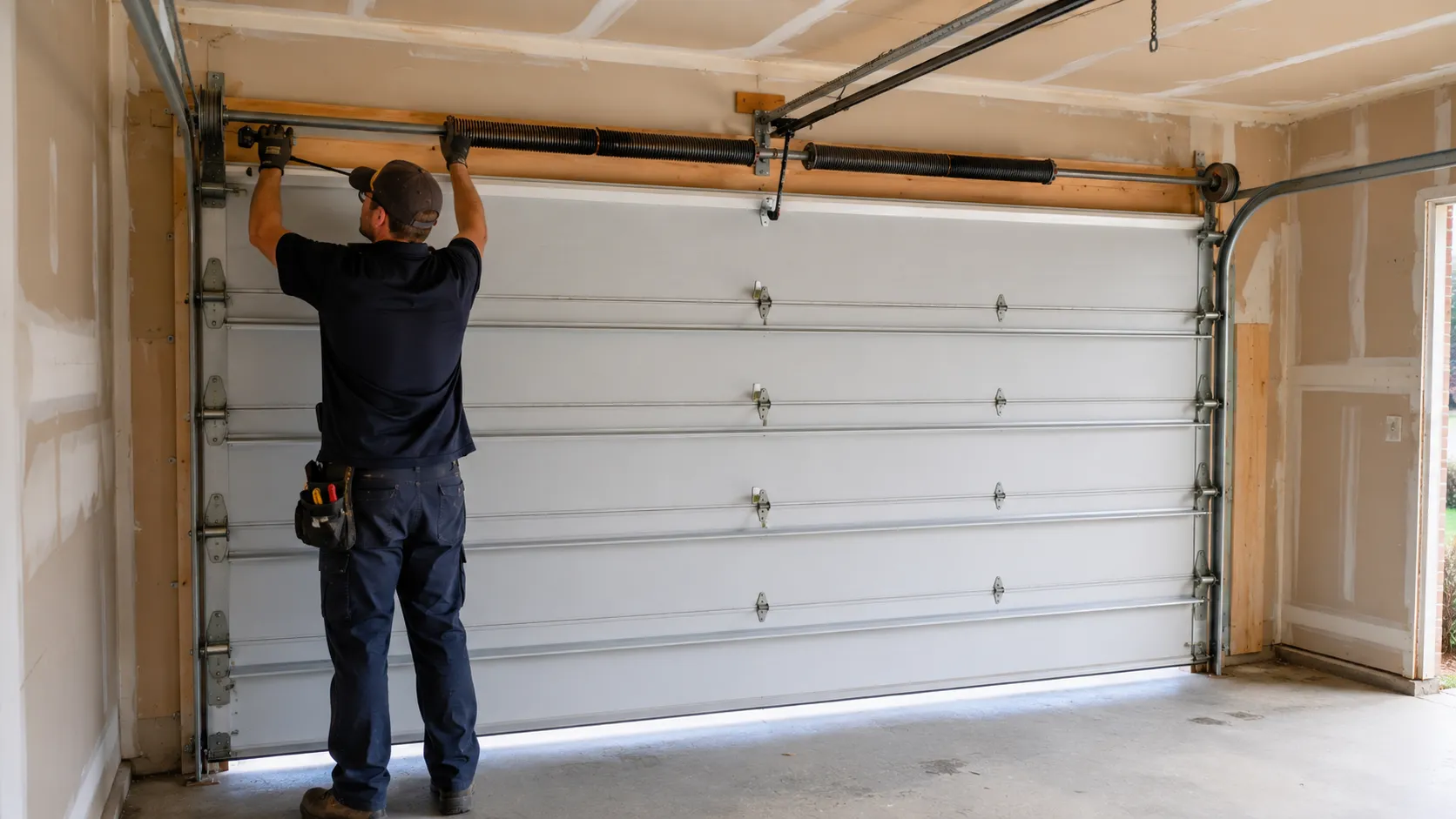
Because most Clarendon Hills garages date to around 1981 rather than the 1960s median you see closer to the city, the common failure points are different. You're less likely to be dealing with the ancient side-mounted torsion hardware that plagues the oldest 1950s stock, and more likely dealing with standard torsion springs that are simply 40-plus years old and at or past the end of their cycle count, or first- and second-generation chain-drive openers whose logic boards have started to fail rather than their motors.

The climate here is the same cold-moderate band as the rest of the region, so winter is still hard on doors either way - cold makes springs more likely to snap under load and stiffens weatherstripping and rollers. But on a 1981 door, we're usually replacing a spring or a board, not fighting decades of accumulated rust and mismatched replacement parts on hardware nobody makes any more. One honest limit: if your door is an original builder-grade unit from that era with a discontinued panel style, we may not be able to match the exact look with a repair, and replacement ends up being the straighter path.

What People Here Ring About

The calls we get from this stretch tend to cluster around a handful of things: a torsion spring that let go on a heavier insulated door, an opener that's started grinding or stopping mid-cycle, and rollers or hinges that have finally worn out after decades of daily two-car use. We also hear from people who've had a board-level opener failure - the kind where the motor still hums but the door won't respond to the wall button or remote, a common symptom on openers from that early circuit-board generation.

Less common but still real: doors that were sized for wider two-car openings and need springs rated for that extra weight, not a standard single-door spring swapped in as a shortcut. Given the median income here, we also get more requests for insulated or composite panel replacements rather than bare repair - people upgrading the look, not just patching the break.
How it works

From “it’s stuck” to “it’s fixed”

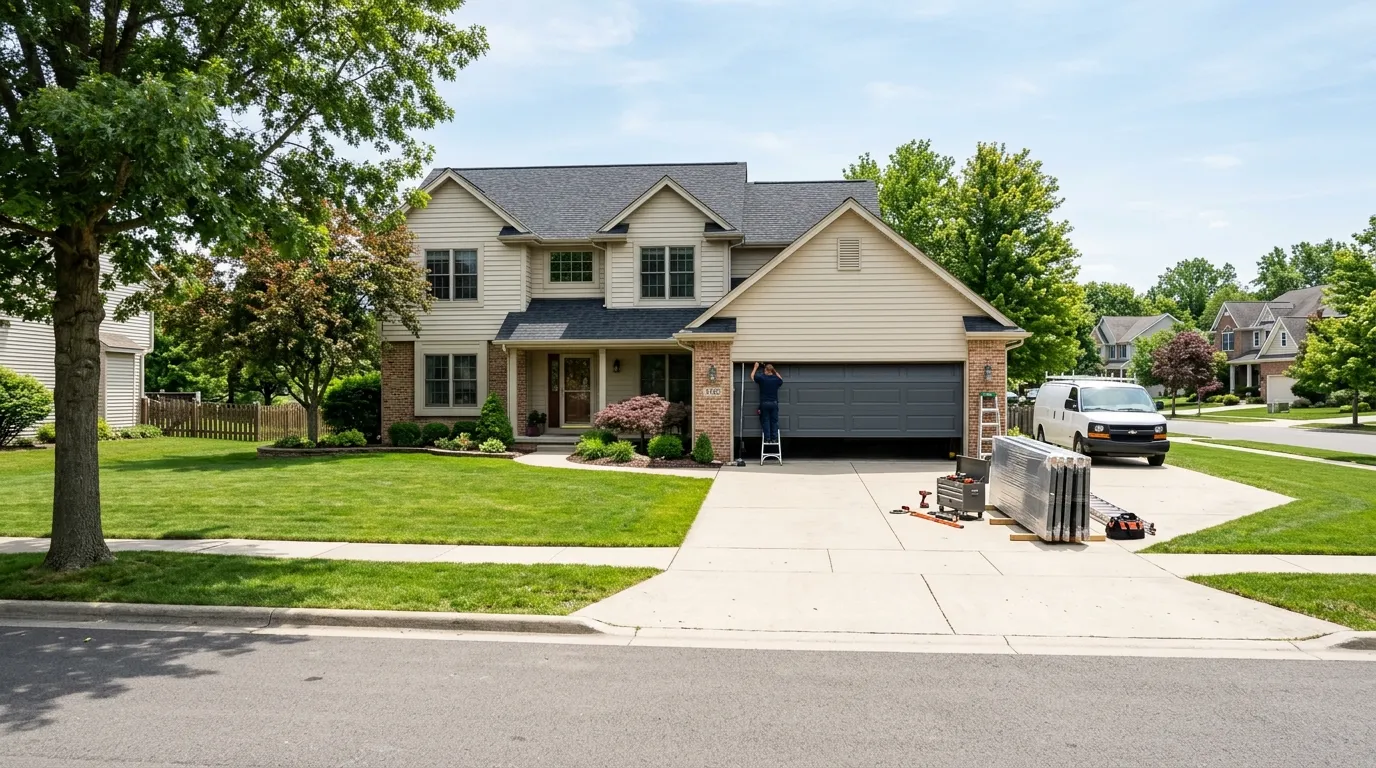
1
Tell us what’s wrong - Chicago garage door service

Tell us what’s wrong

Describe the symptom - won’t open, loud bang, opener runs but the door won’t move.

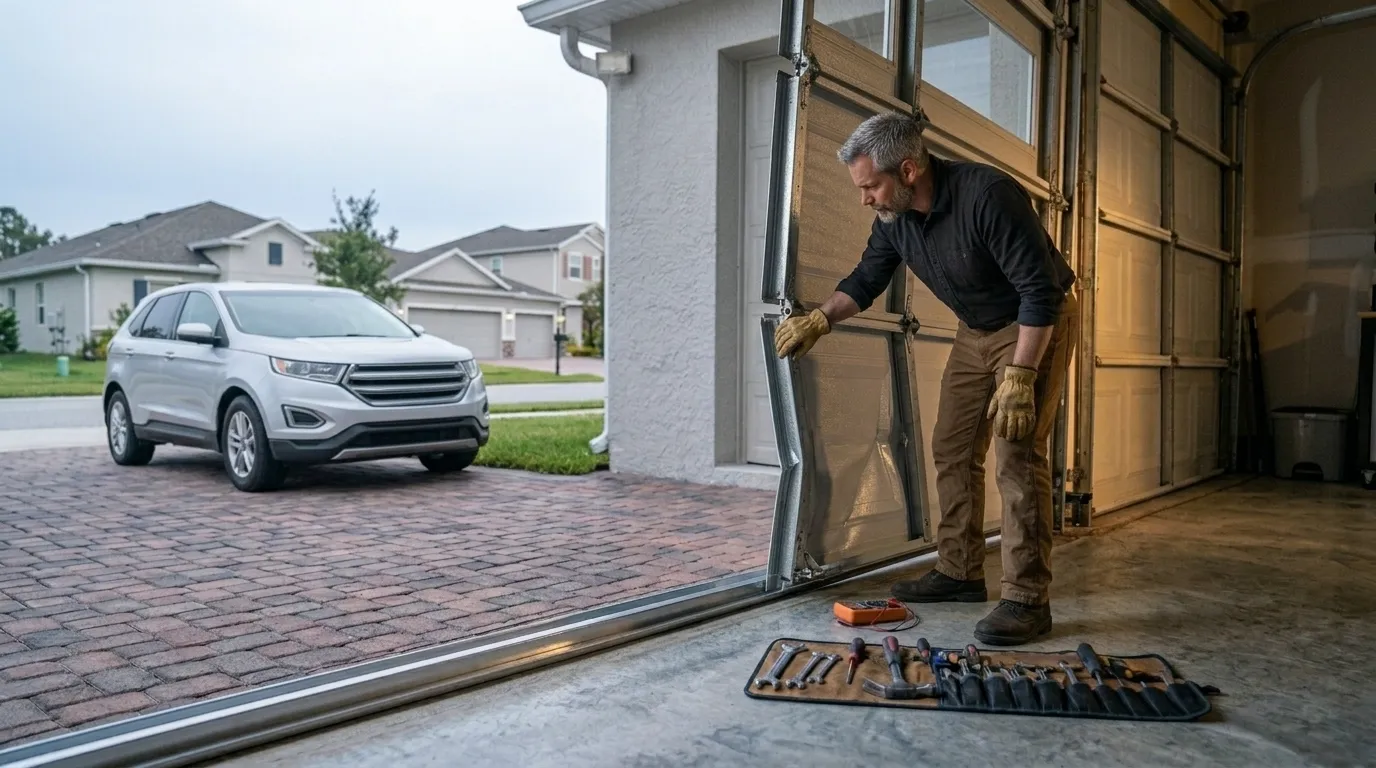
2
On-site diagnosis - Chicago garage door service

On-site diagnosis

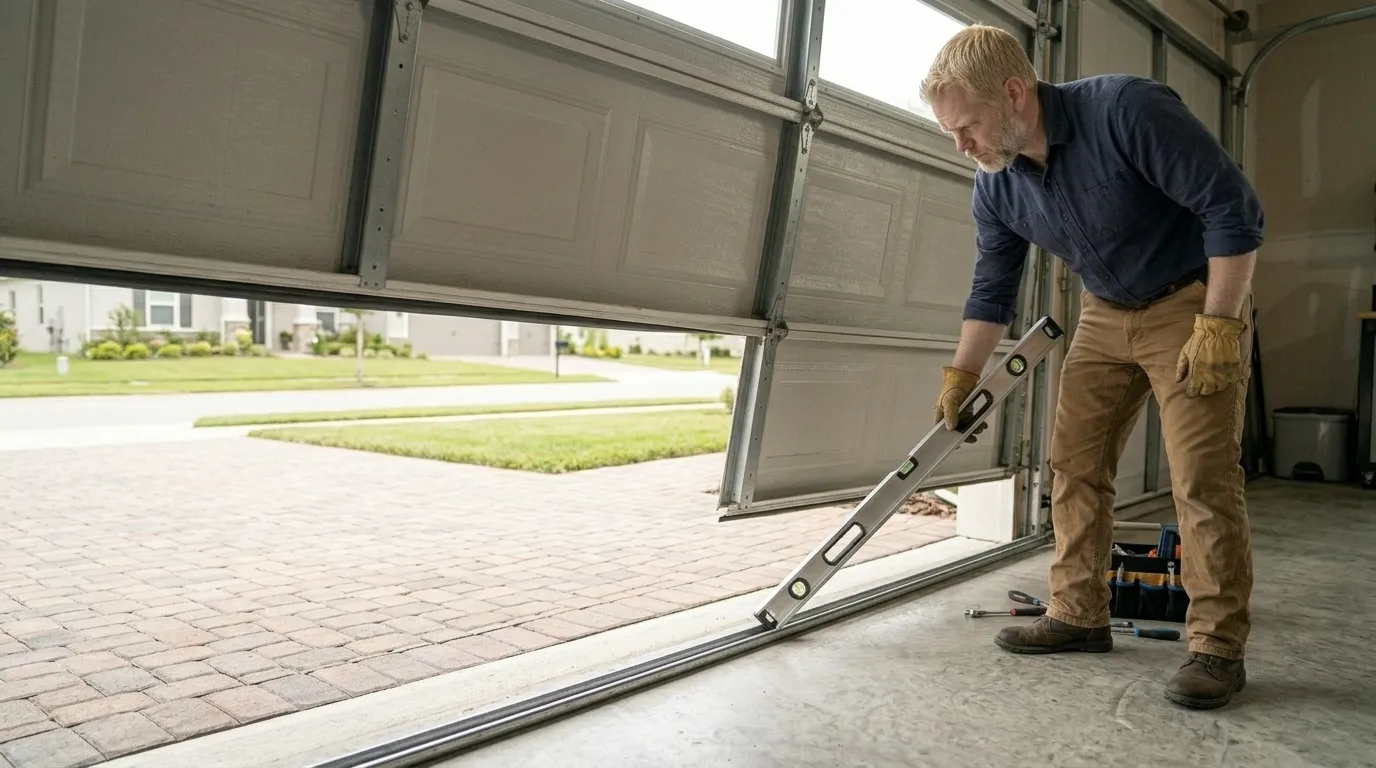
A technician tests the door under power and by hand and finds what actually failed.

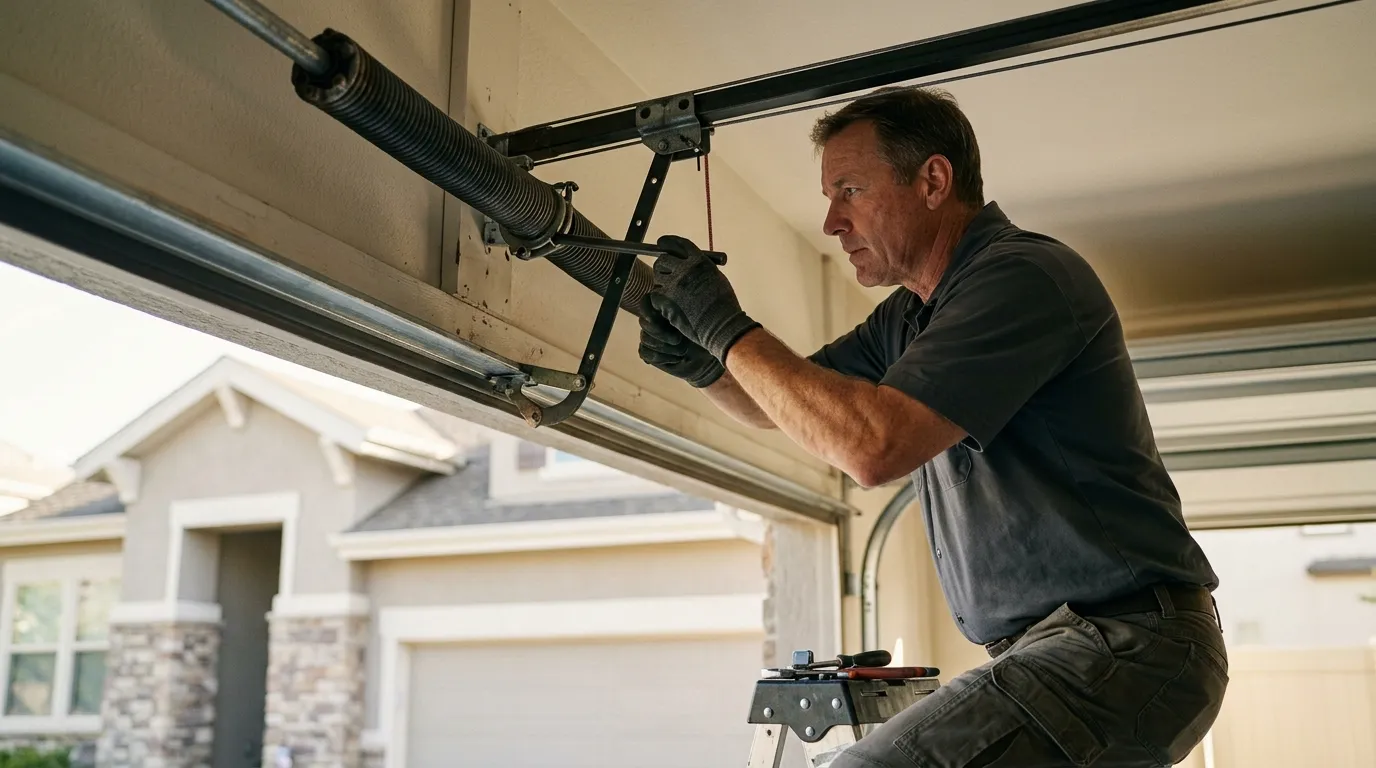
3
Clear, up-front plan - Chicago garage door service

Clear, up-front plan

You get the fix that’s needed and what drives the cost - before any work starts.

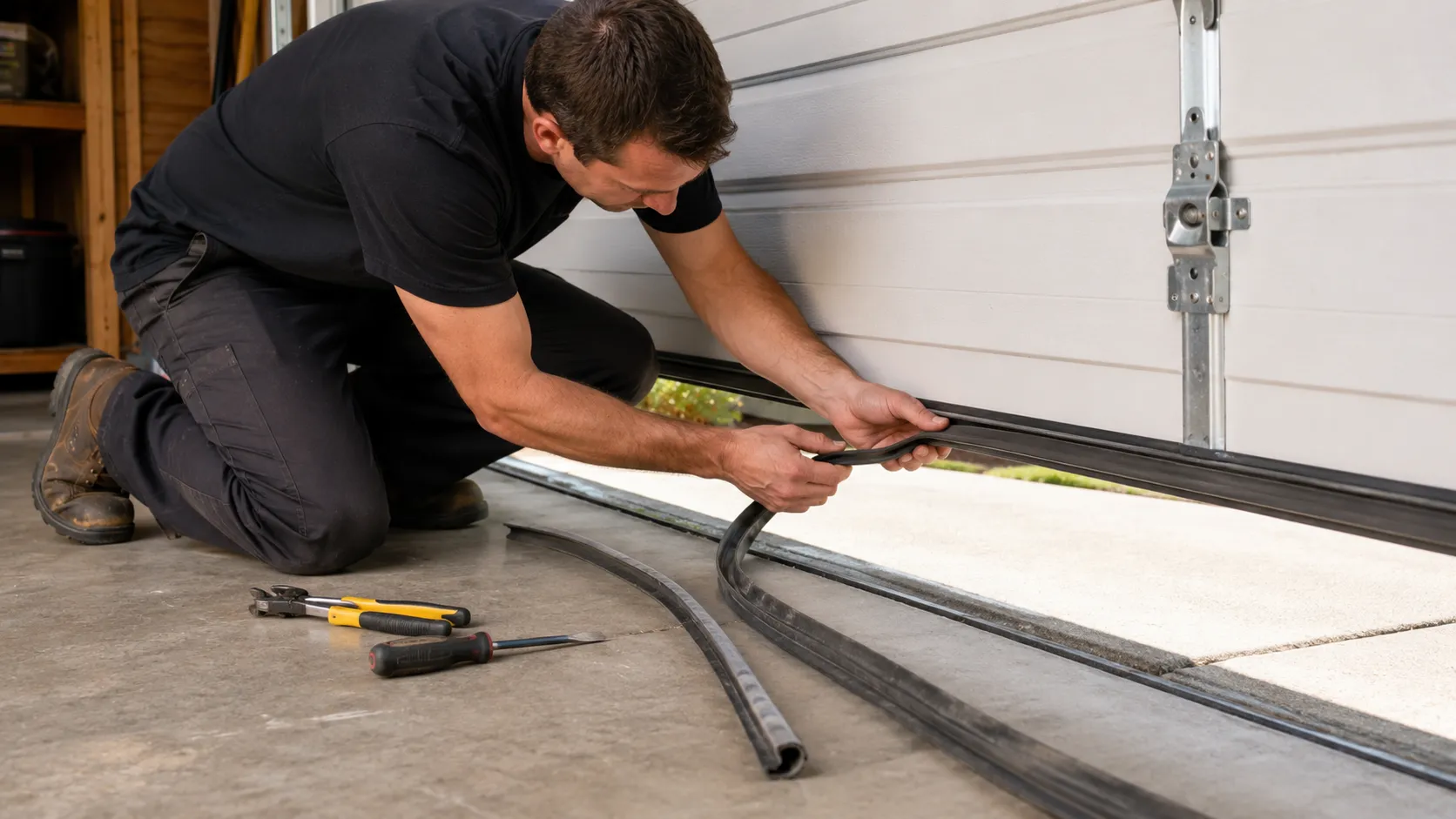
4
Repaired & tested - Chicago garage door service

Repaired & tested

The repair is done, the door is set true and tested, and the work area left clean.

Serving Chicago, IL - tell us what your door’s doing and we’ll take it from there.

How we work

What to expect

Diagnosis firstEvery visit starts by finding what actually failed - not a pre-written parts list.
The right part for the doorSprings and openers matched to the door’s weight and age, so the fix holds up.
Straight answersWhen a repair makes more sense than a replacement - or the reverse - you hear it plainly.
Clean, careful workTension released safely, hardware set true, the door tested under power before we leave.
2,664,452Residents in Chicago
4Garage door services
110Neighborhoods & suburbs
ILServing Chicago, IL
Who we help

Residential & commercial

Residential garage doors

Homes in Chicago

  • Single- and double-car garages
  • Spring, cable & opener repair
  • New door installation
See services
Commercial garage doors

Businesses & property

  • Rolling steel & sectional doors
  • Loading-dock doors
  • Built for higher cycle counts
See services
Questions

Frequently asked

Straight answers about garage door repair in Chicago. Still unsure? Ask us directly.

Why would a Clarendon Hills garage door break differently than one closer to Chicago?

Because the housing stock is newer here - median build year around 1981 versus 1964 across the wider area. That means torsion springs and chain-drive openers with circuit boards, not the older side-mounted torsion hardware common on 1950s houses. The failures are more about age of standard parts than mismatched vintage hardware.

Do you have a crew based in Clarendon Hills?

No. We run out of Chicago, about 14 miles away. We still take calls and send a truck, but we're upfront that we're not a local depot with someone already on your block. If timing matters, tell us when you call.

Will cold weather affect a door built in 1981?

Yes. The area sits in a cold-moderate climate band, and winter cold stiffens weatherstripping and rollers and raises the odds of a torsion spring snapping under load, regardless of the door's age. A 40-year-old spring that's already near the end of its cycle count is especially exposed.

My opener hums but the door won't move - is that common here?

It's one of the more frequent calls from this area. Many houses have first- or second-generation chain-drive openers from around the early 1980s, and a common failure mode is the circuit board going bad while the motor itself still runs. It looks like a bigger problem than it usually is.

Can you match the panel style on an original 1981 door?

Sometimes, but not always. Builder-grade panel styles from that era are frequently discontinued, and we won't pretend we can source an exact match. When that's the case, we'll tell you plainly and talk through replacement options instead of forcing a mismatched repair.

Ready to get your garage door sorted?

Tell us what it’s doing and where you are in Chicago - we’ll take it from there.

Request a QuoteCall