This Area's Housing
The broader service area we cover runs from houses built as early as 1938 up through the 1990s, with a median year of 1964 across the whole territory. Country Club Hills sits later than that curve - the typical house here was built around 1976. That decade-plus gap matters more than it sounds. A house from the mid-1970s was built during the shift from single-layer steel doors on basic extension springs toward the torsion-spring setups that became standard by the early 1980s. Depending on when a given block went up, you can find either style still in service, sometimes on the same street.
Median household income here runs $77,463, close to but under the $80,202 median for the service area as a whole. That's not a housing-quality signal by itself, but it tracks with what we see on calls: owners who want a repair done right rather than a full teardown, and who ask up front what a fix versus a replacement will run before committing either way. We don't push a new door on a homeowner when the existing hardware still has service life in it.
What That Means for Doors
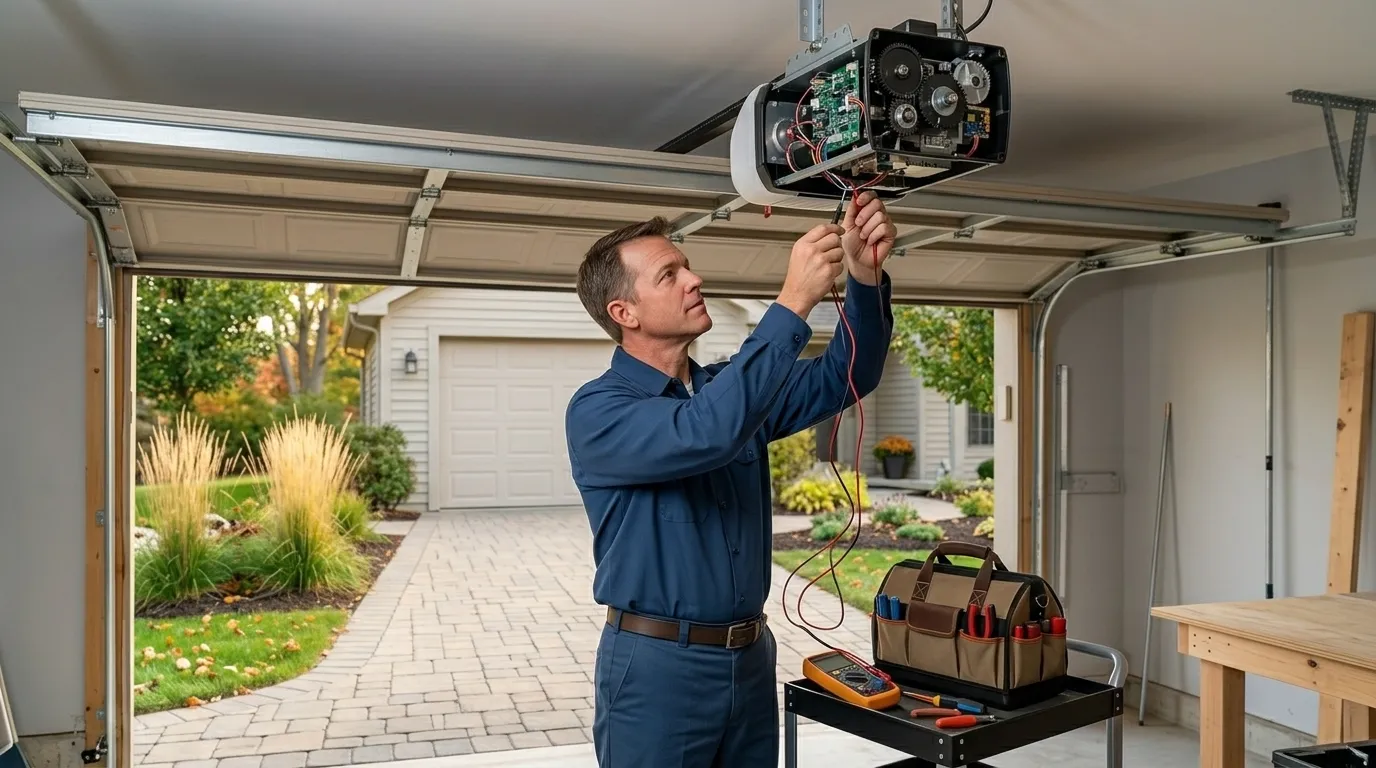
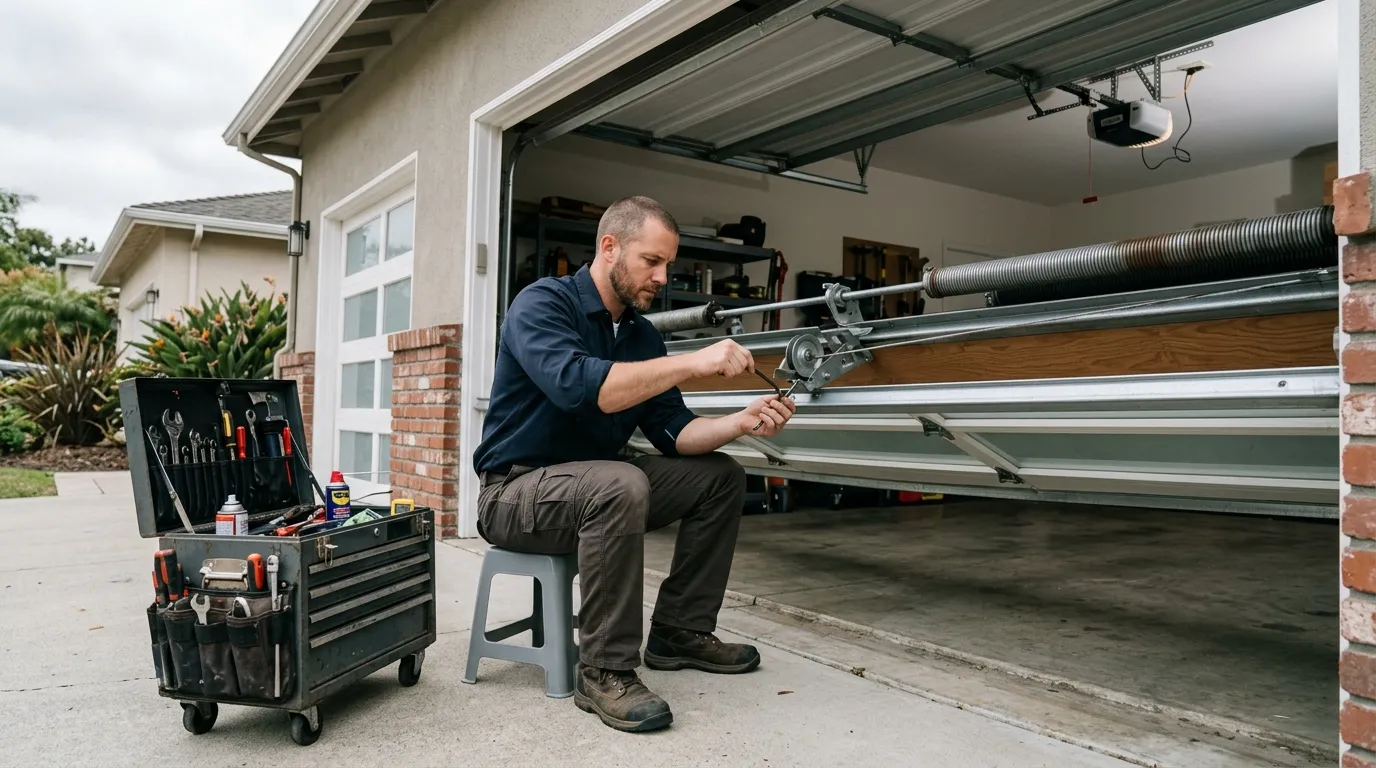
A 1976-era door in this area is old enough to have gone through at least one spring replacement already, sometimes two, and old enough that the original opener - if it's still the original - is well past the manufacturer's expected life on the motor and the logic board. Torsion spring setups from that period were sized to older, heavier steel door panels; if a previous owner swapped in a lighter insulated door without resizing the spring, the door will feel wrong to lift by hand and wear the opener out faster than it should.
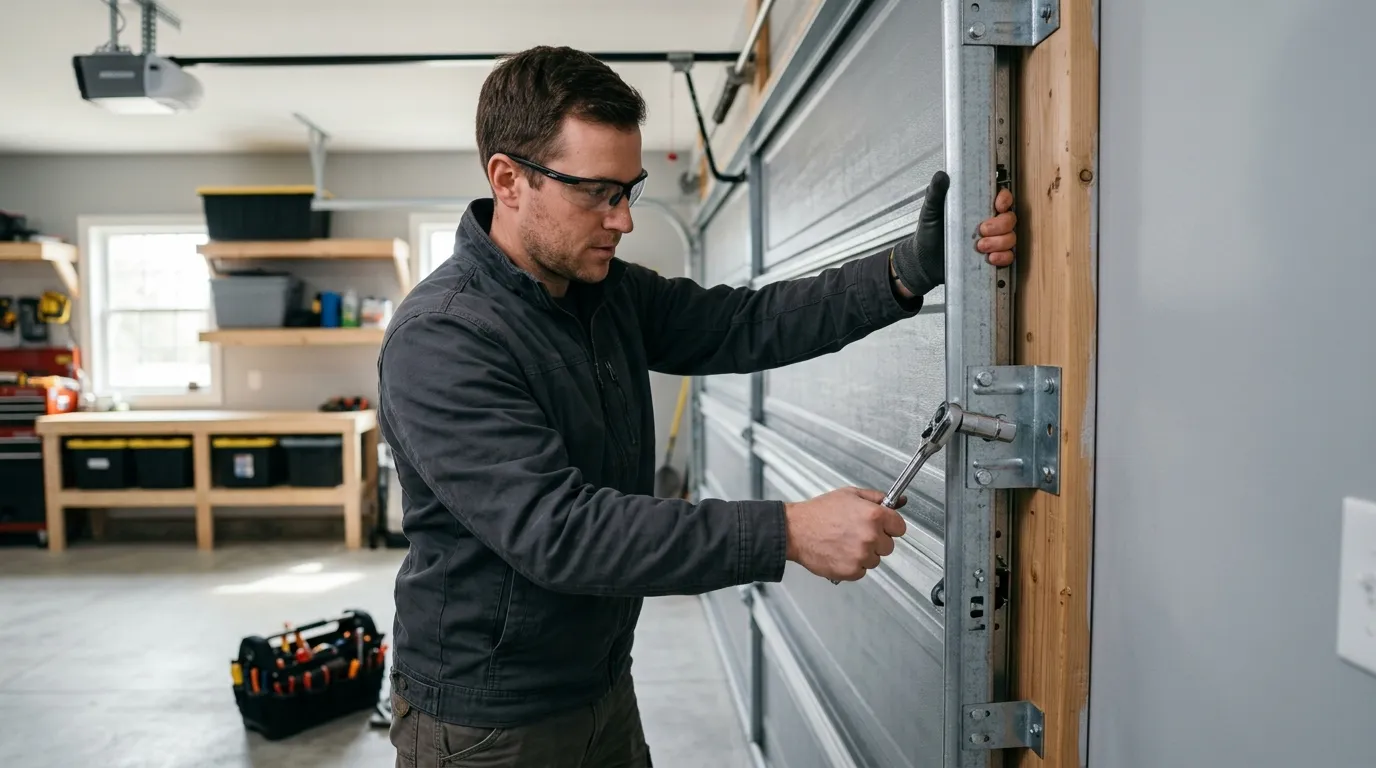
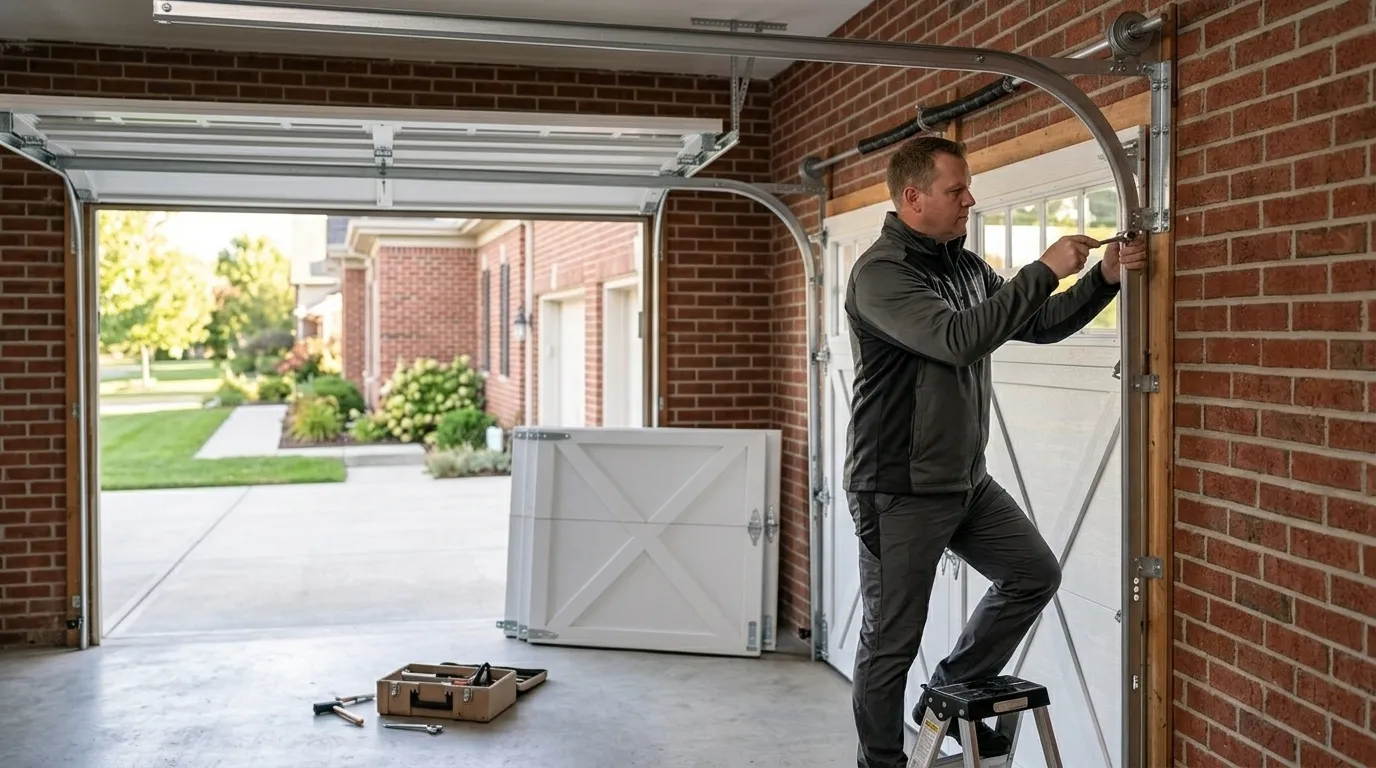
The cold band this whole area sits in adds its own wear pattern regardless of decade: steel contracts in winter, and a track that's a hair out of alignment in July becomes a binding, grinding problem in January. On a house built around 1976, that usually shows up first as a stiff spot a foot or two off the floor, before it becomes a door that won't move at all. We check spring balance and track alignment together, not one without the other, because on hardware this age they're rarely separate problems.
What People Here Ring About
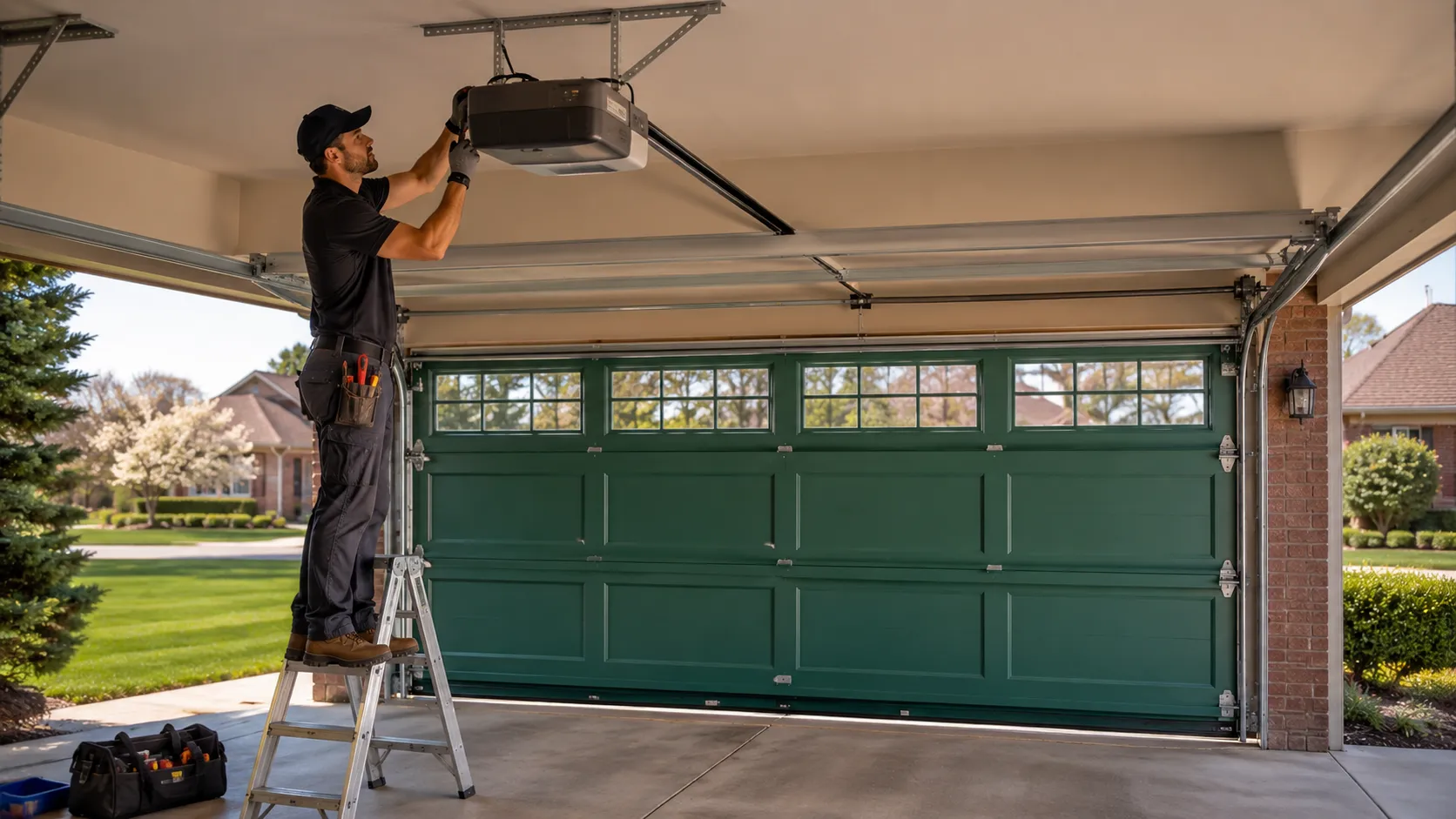
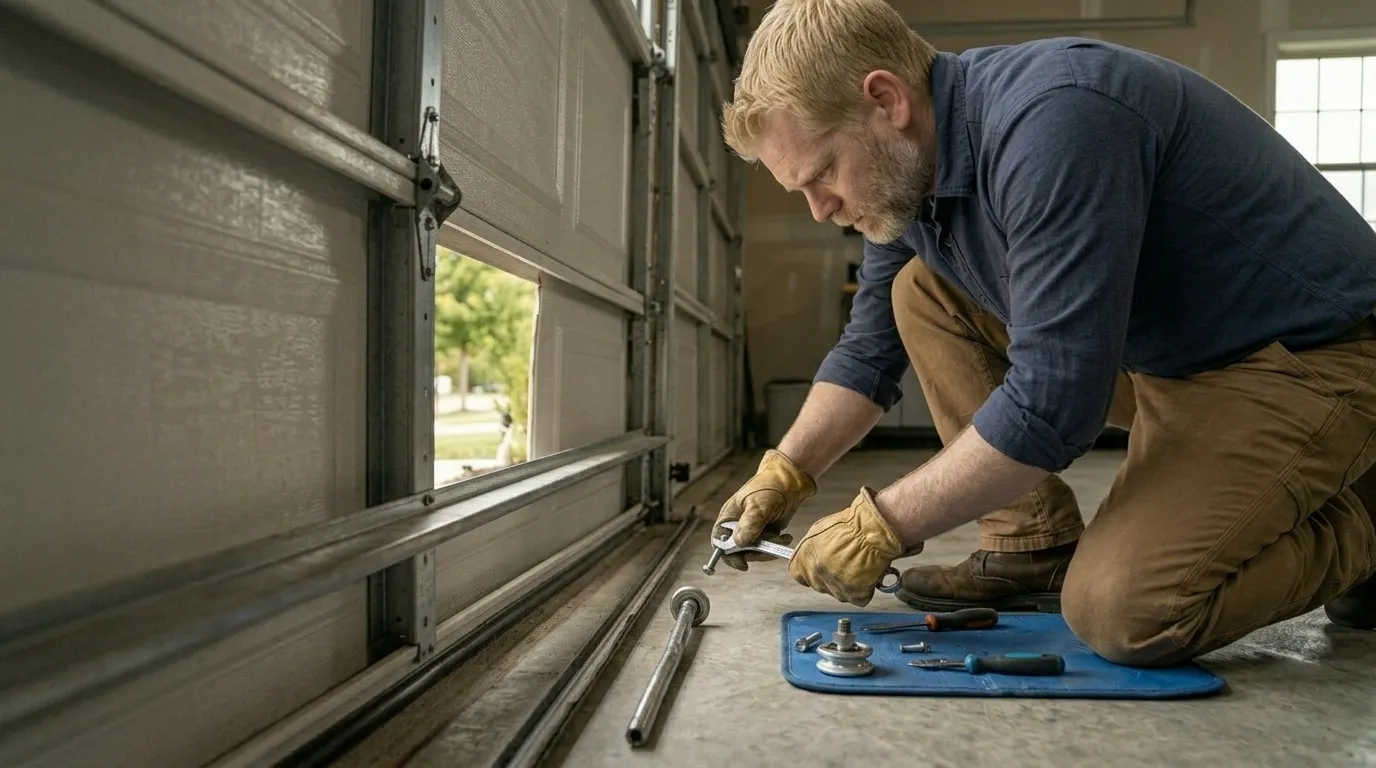
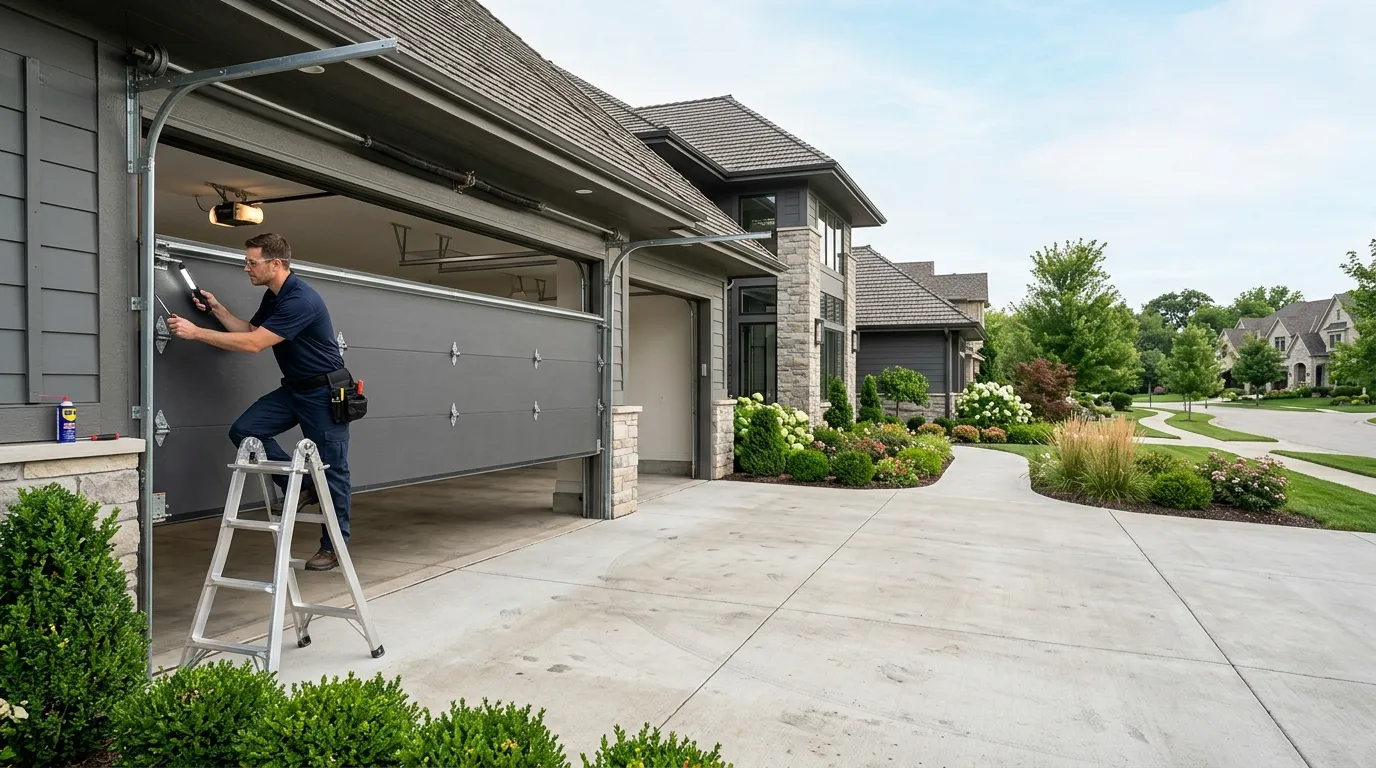
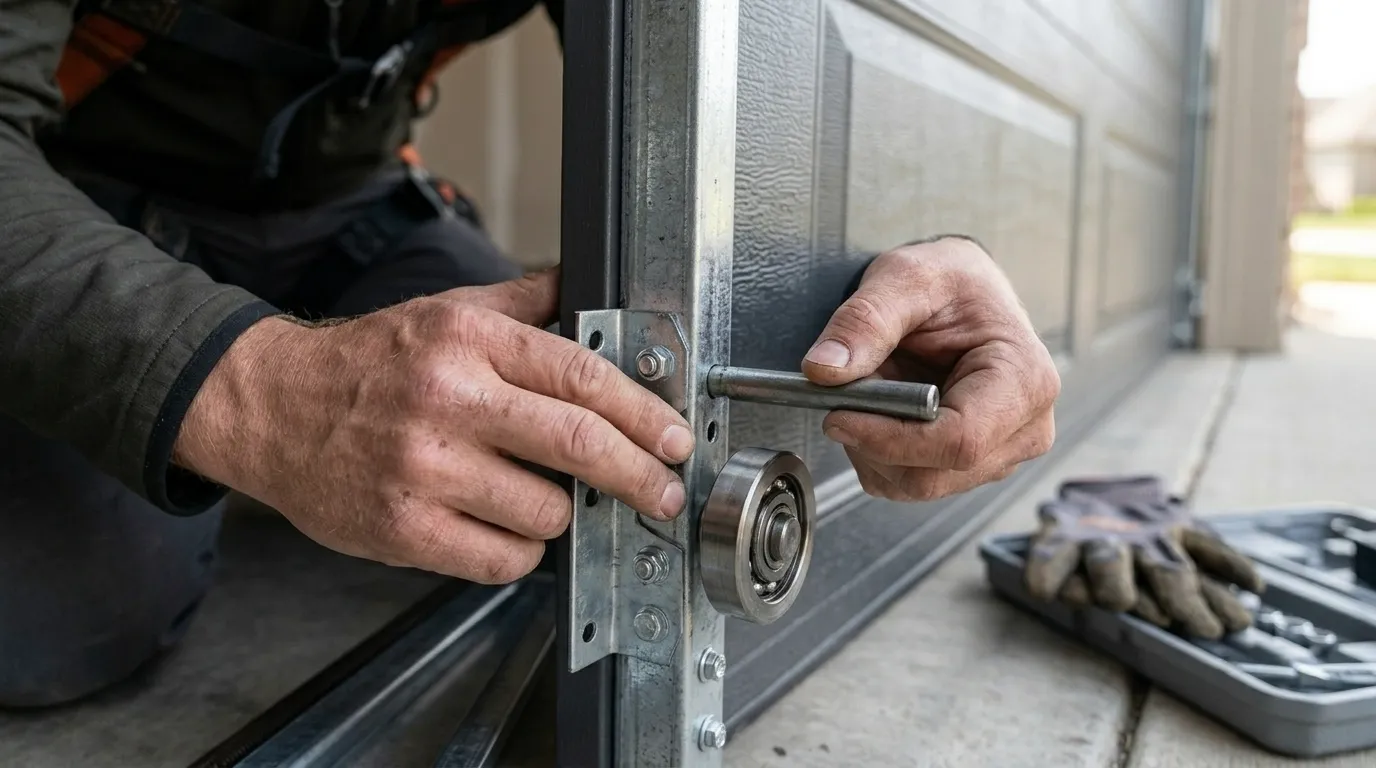
Most calls from this area fall into a short list: a torsion spring that's snapped clean (usually loud, usually mid-lift), a cable that's frayed or jumped its drum, or an opener that runs but won't fully close - often a sensor alignment issue rather than the motor itself. On older aluminum panel doors we also get rollers that have worn oval instead of round, which makes the whole door shudder on the way up.
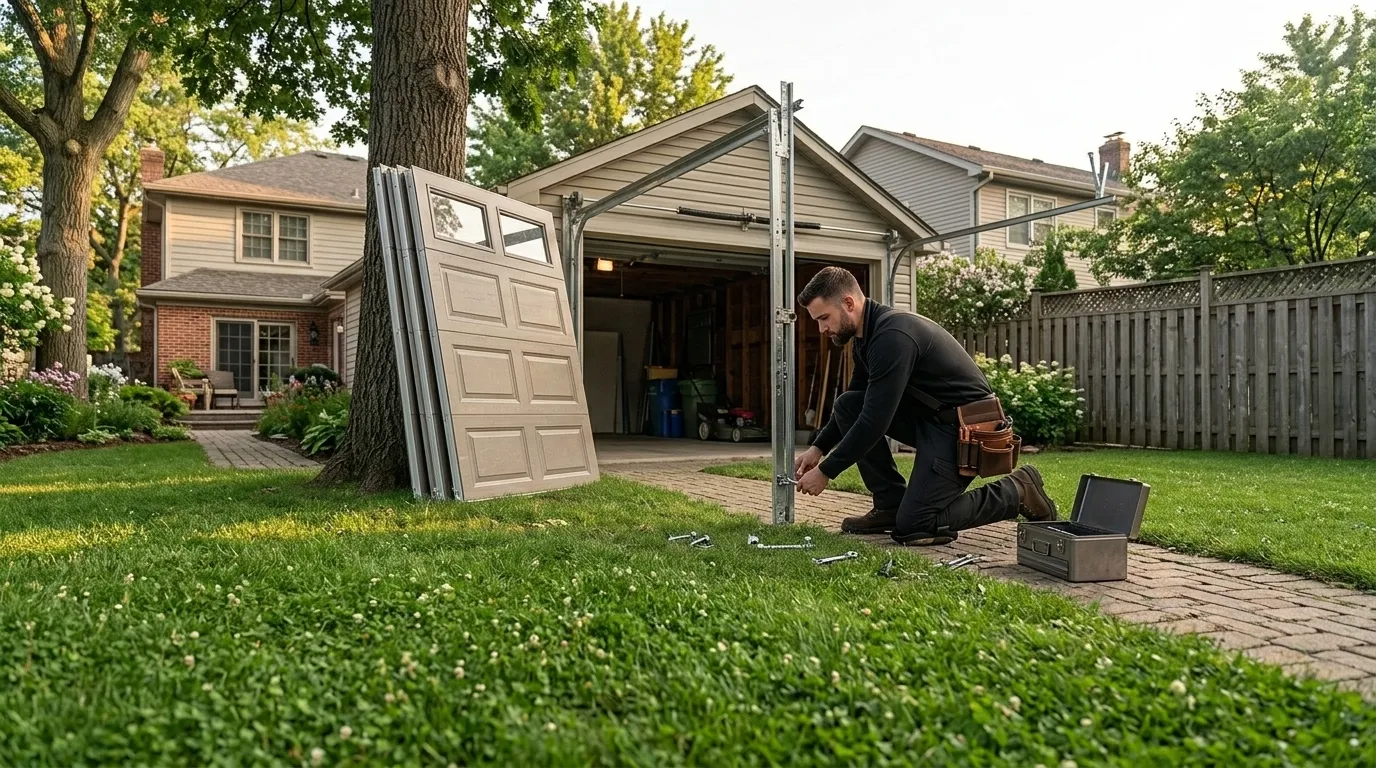
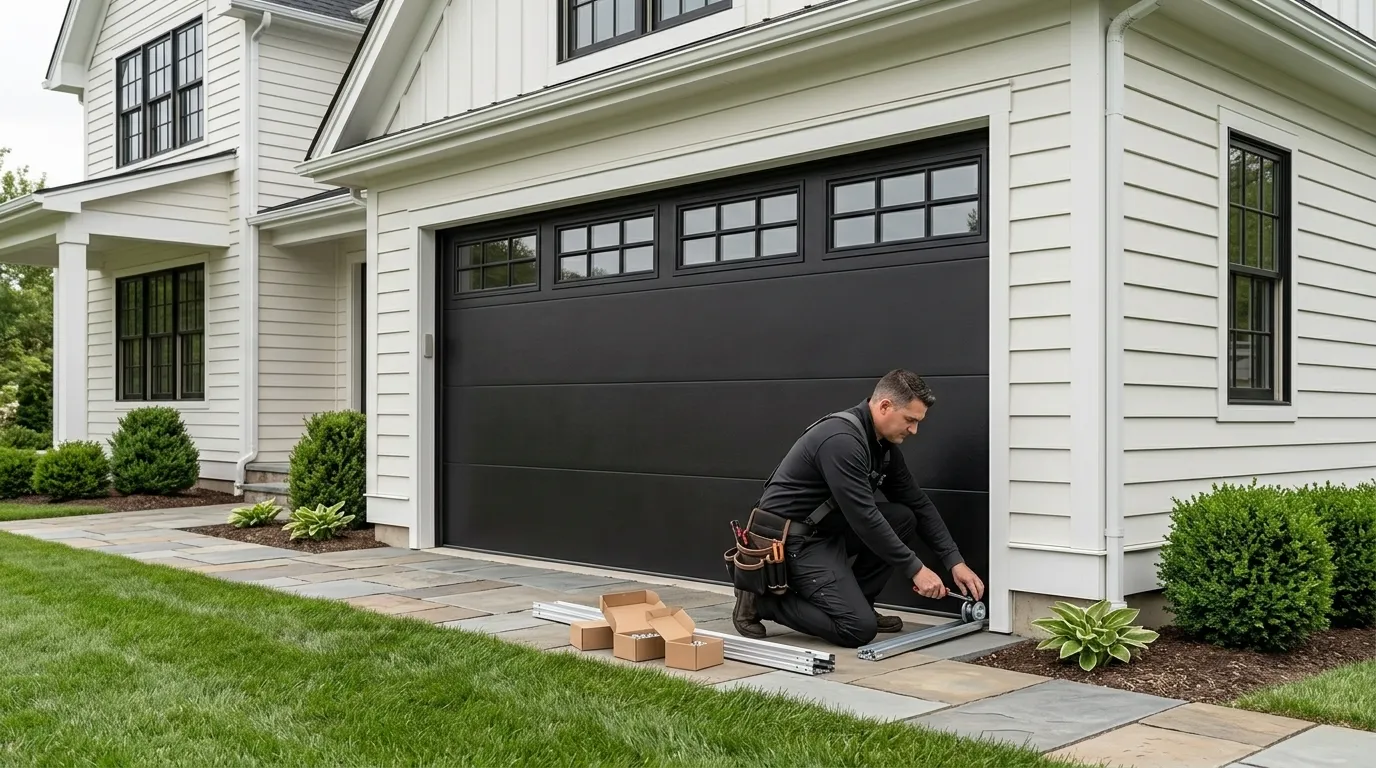
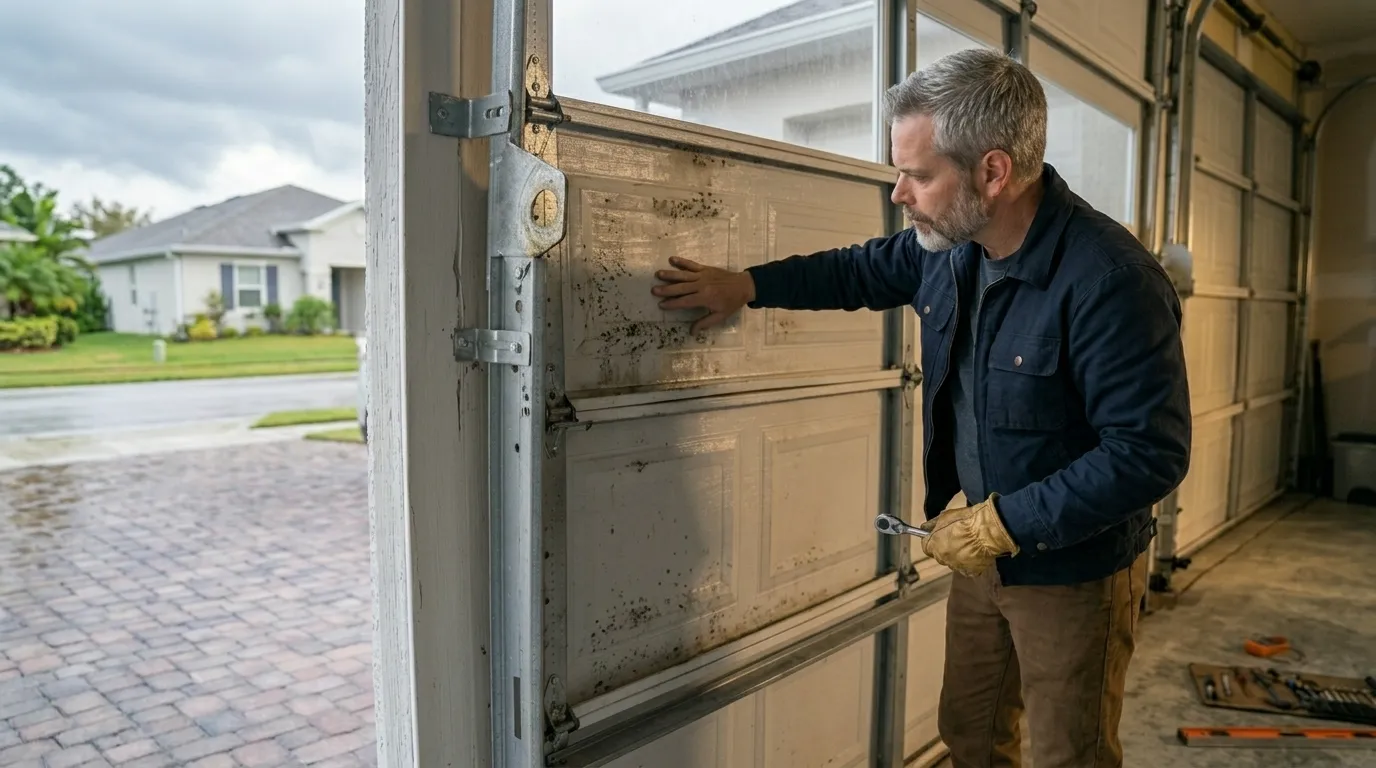
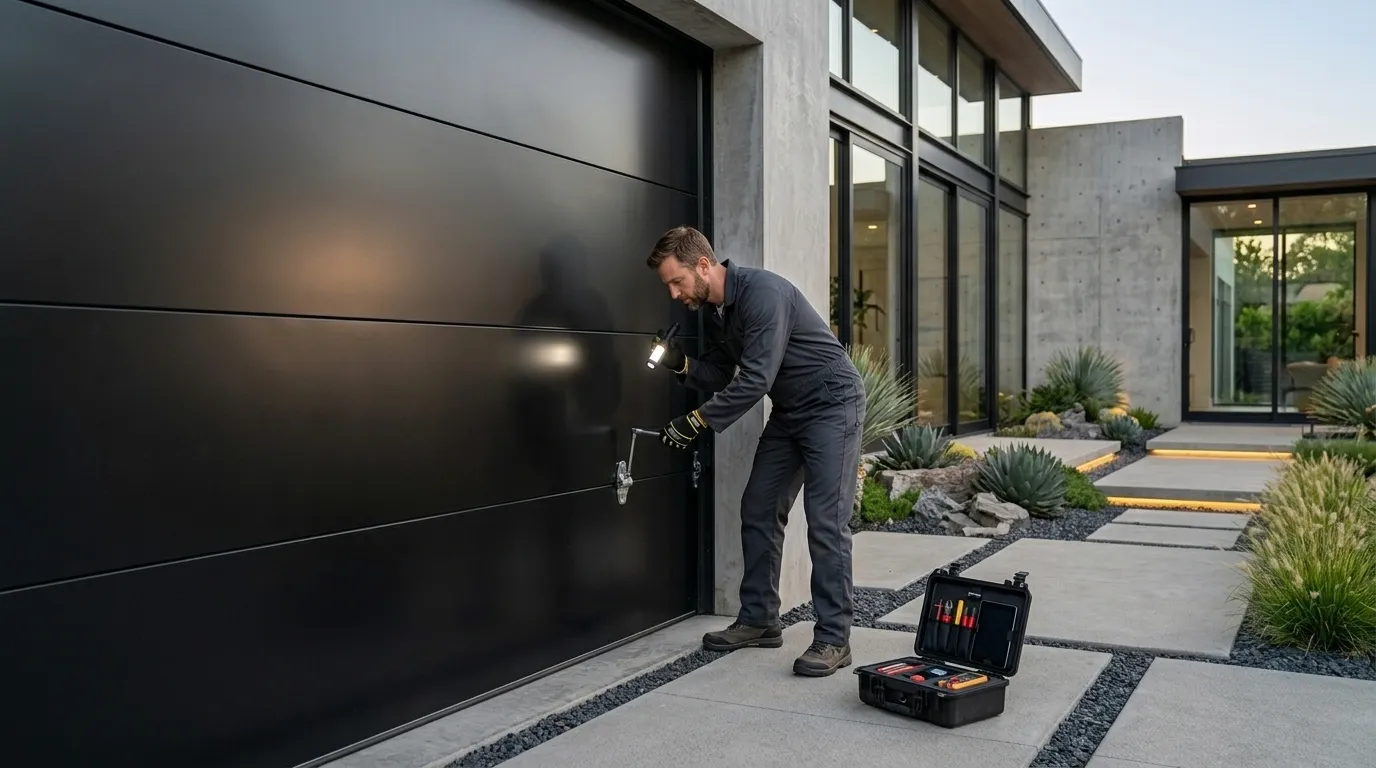
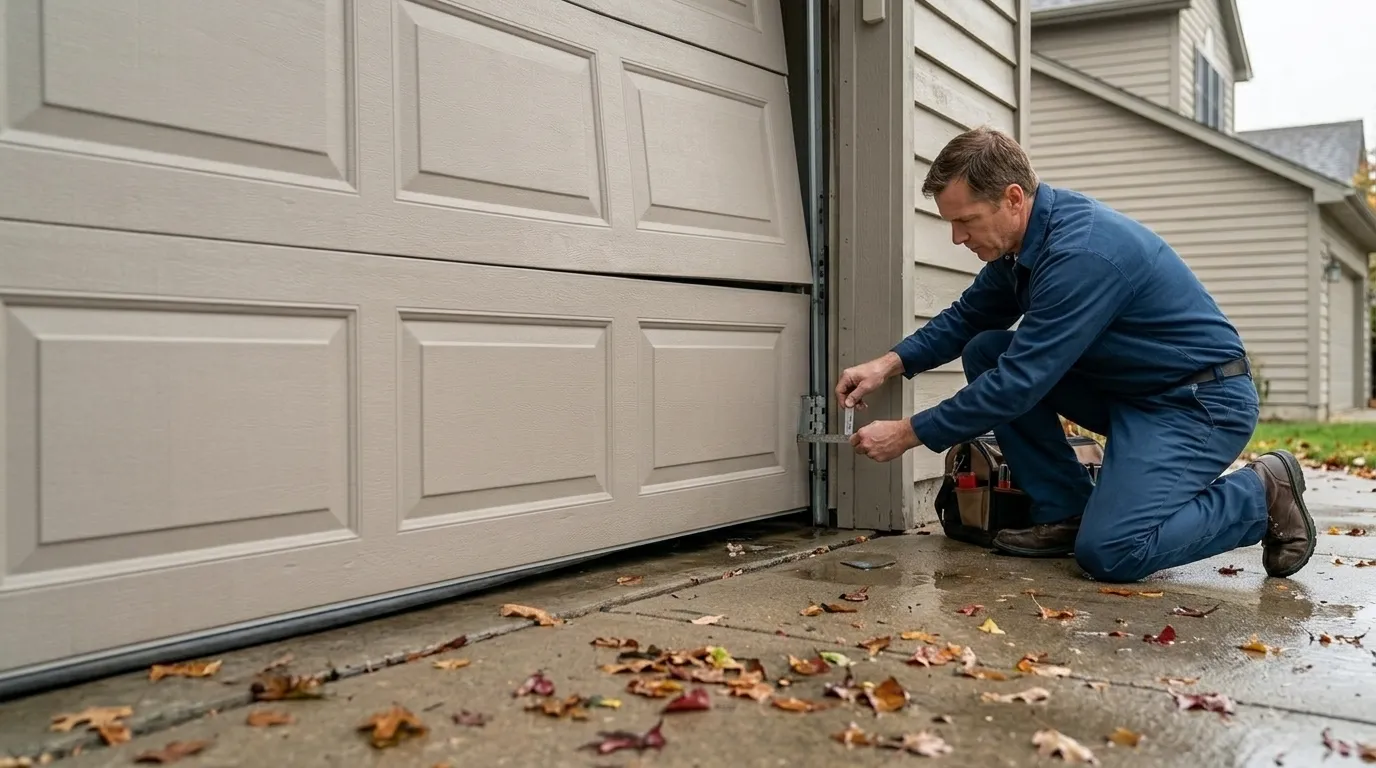
One thing we're upfront about: if a door's steel has rusted through at the bottom panel or the track is bent badly enough that it's pulling off the wall, that's a replacement conversation, not a repair one. We'd rather tell a homeowner that on the phone than quote a patch job that fails again in six months. For anything short of that, we generally can work with what's already installed rather than starting over.