This Area's Housing
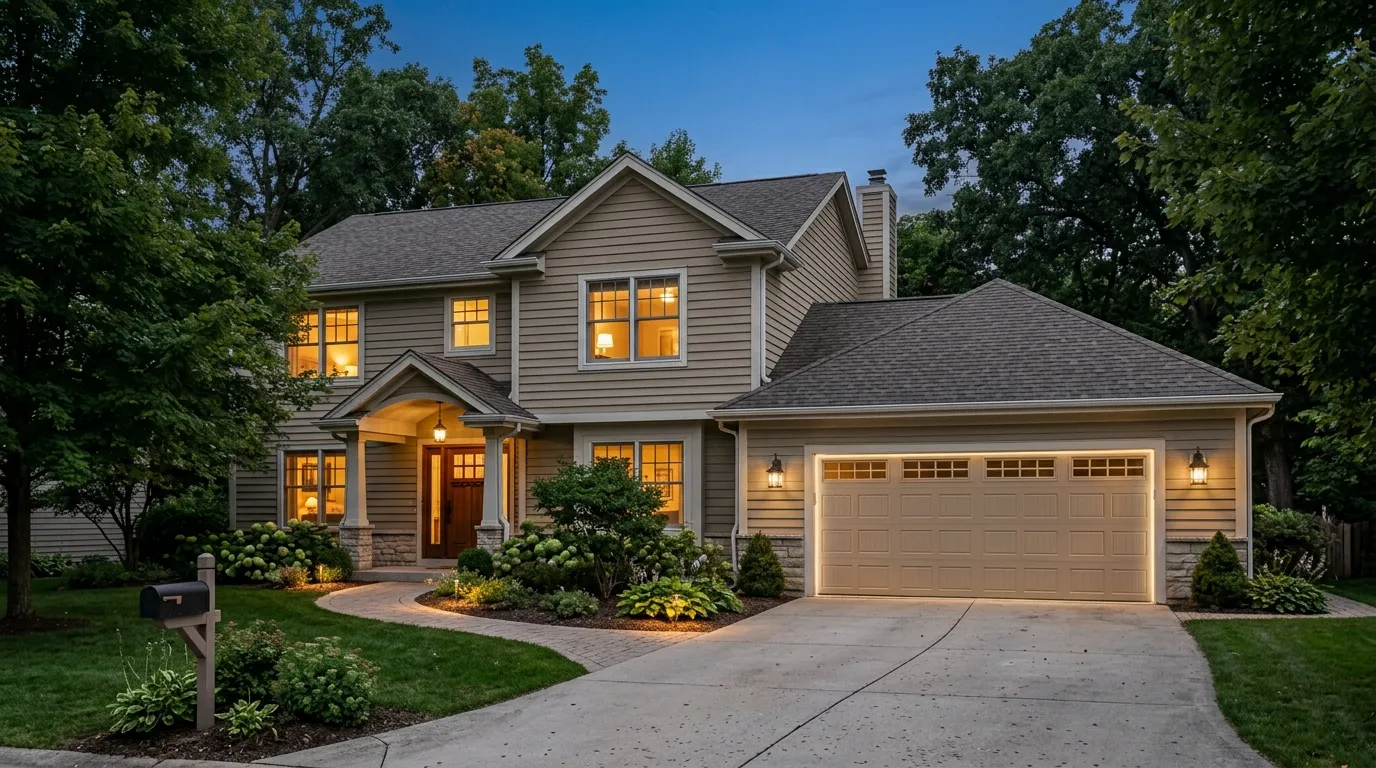
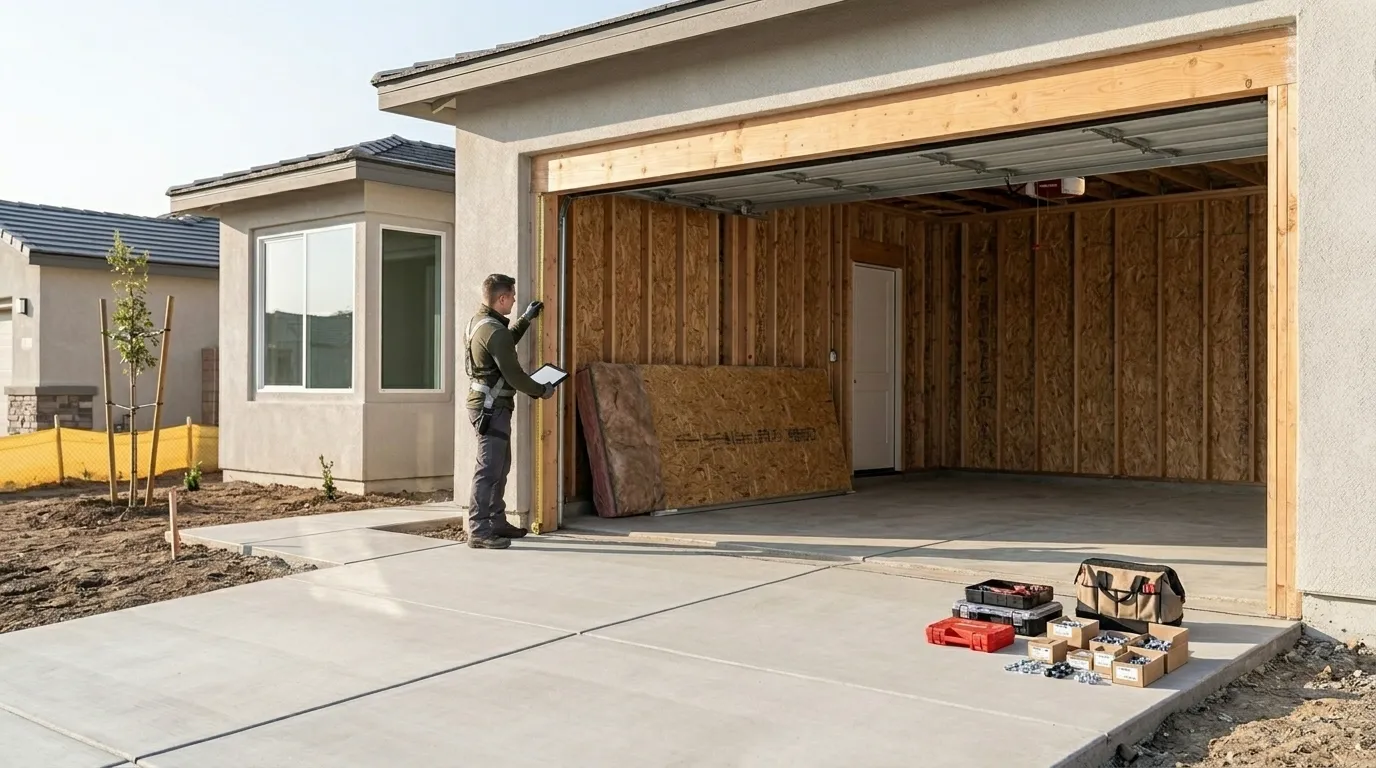
The median home in Elmwood Park went up around 1956, which puts most of the neighborhood squarely in the postwar building wave - earlier than the 1964 median you'd see if you averaged the whole service area together. That eight-year gap matters more than it sounds. Houses built in the mid-1950s here tend to have narrower original garage openings, often single-car, framed for hardware that predates the sectional doors most manufacturers push today. A lot of these openings have been retrofitted over the decades, but the header and jamb framing underneath is still doing 1950s work. With 9,094 households in the area, that's a lot of garages built to a spec nobody follows anymore. Median household income here runs about $84,121, a bit above the wider area's $80,202, and we see that reflected in upgrade choices - insulated steel replacing older wood panel doors rather than patch repairs stacking up over the years. None of this is dramatic. It just means the door in front of you probably isn't the door the house was built with, and the bracket behind it might be closer to original than the door itself.
What That Means for Doors
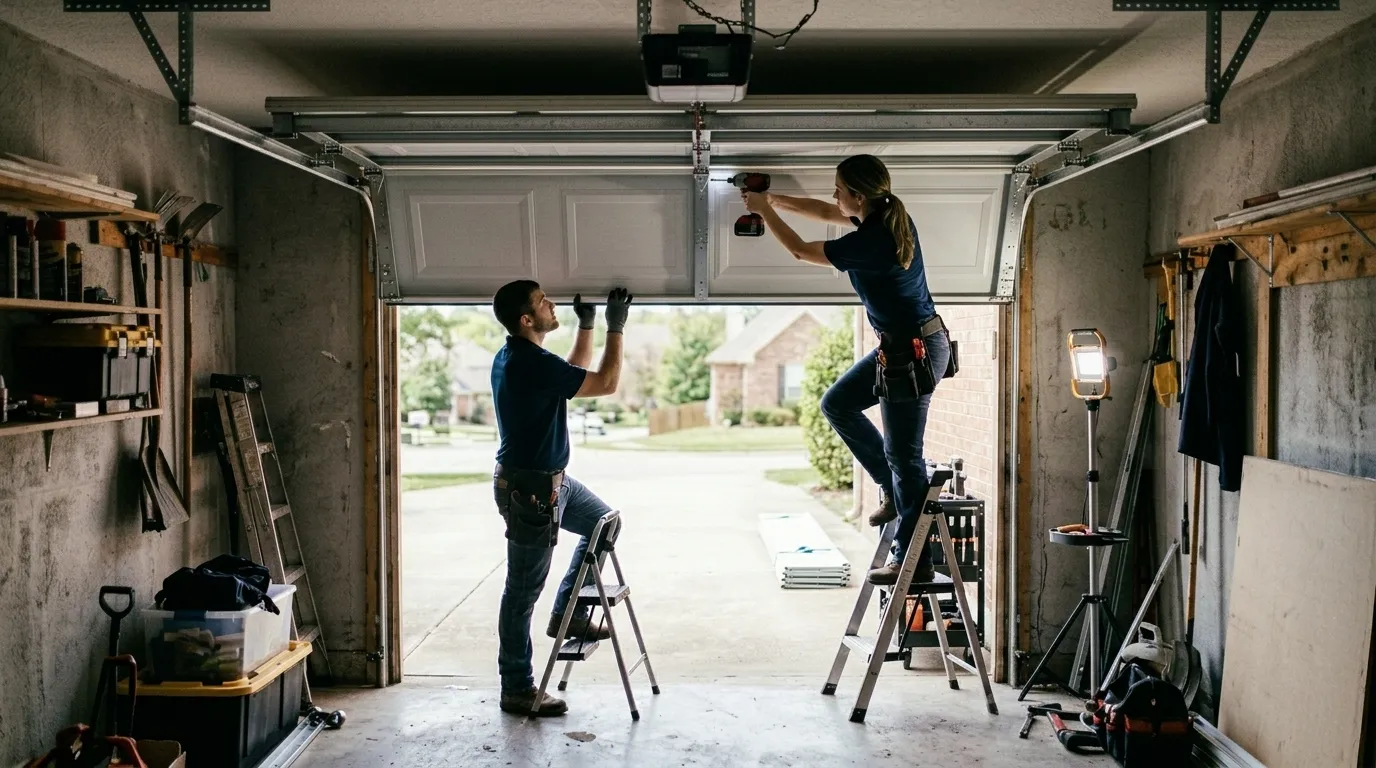
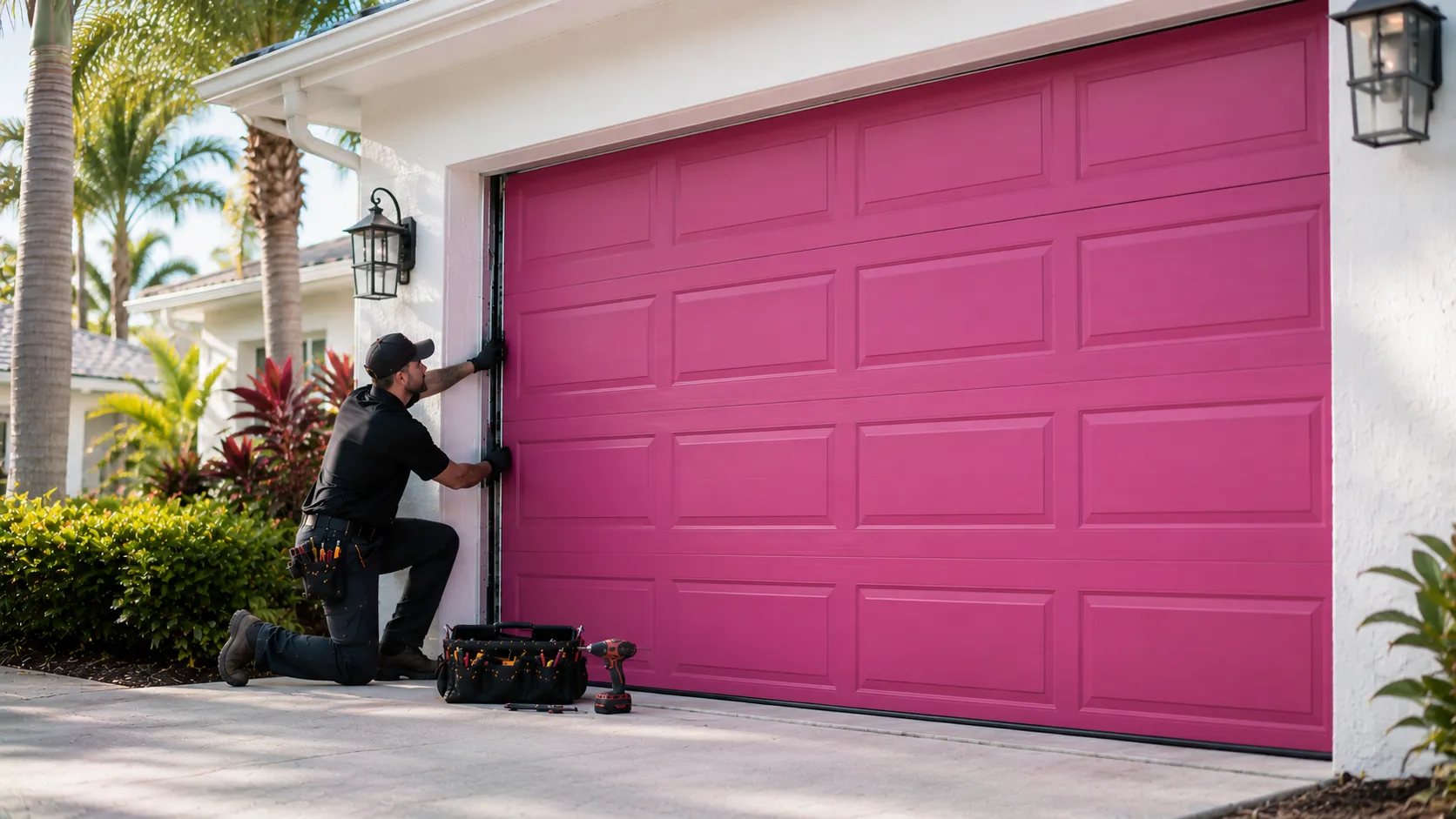
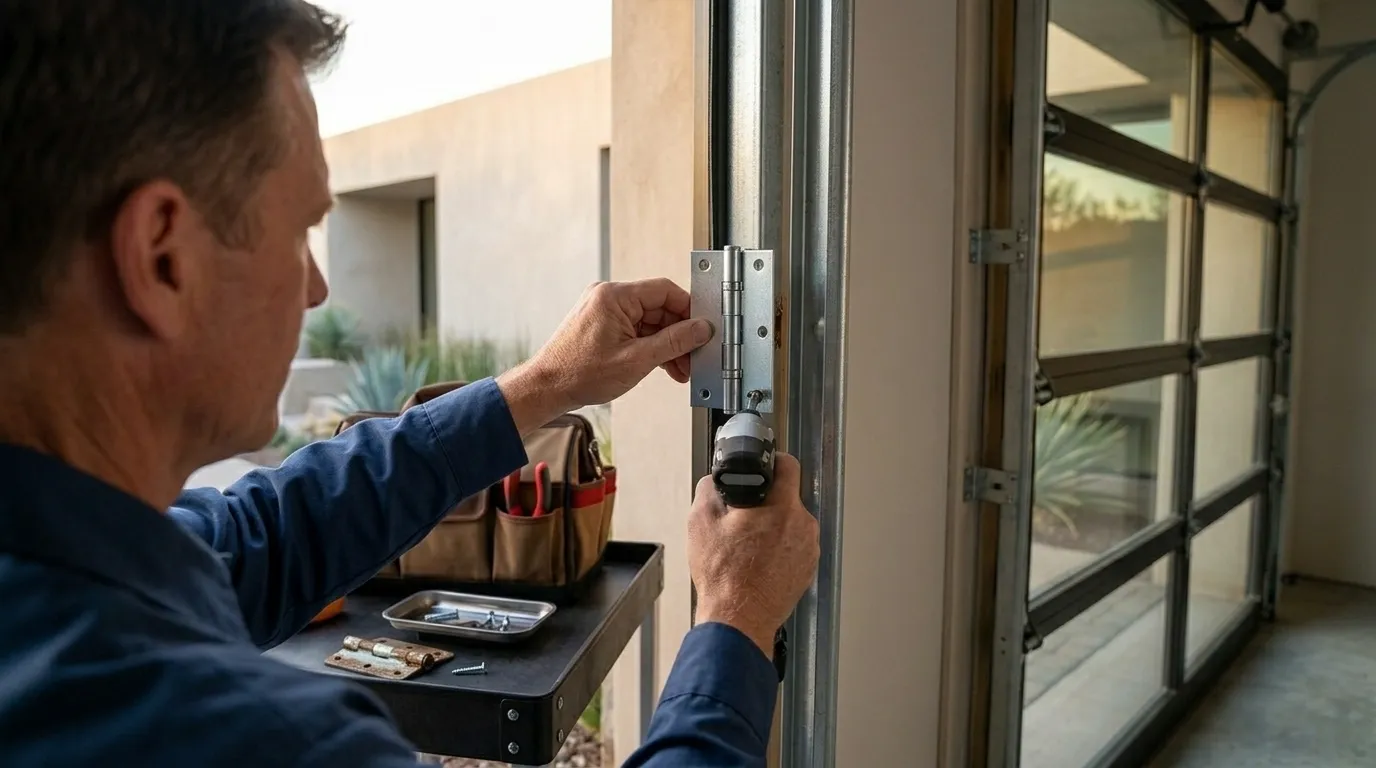
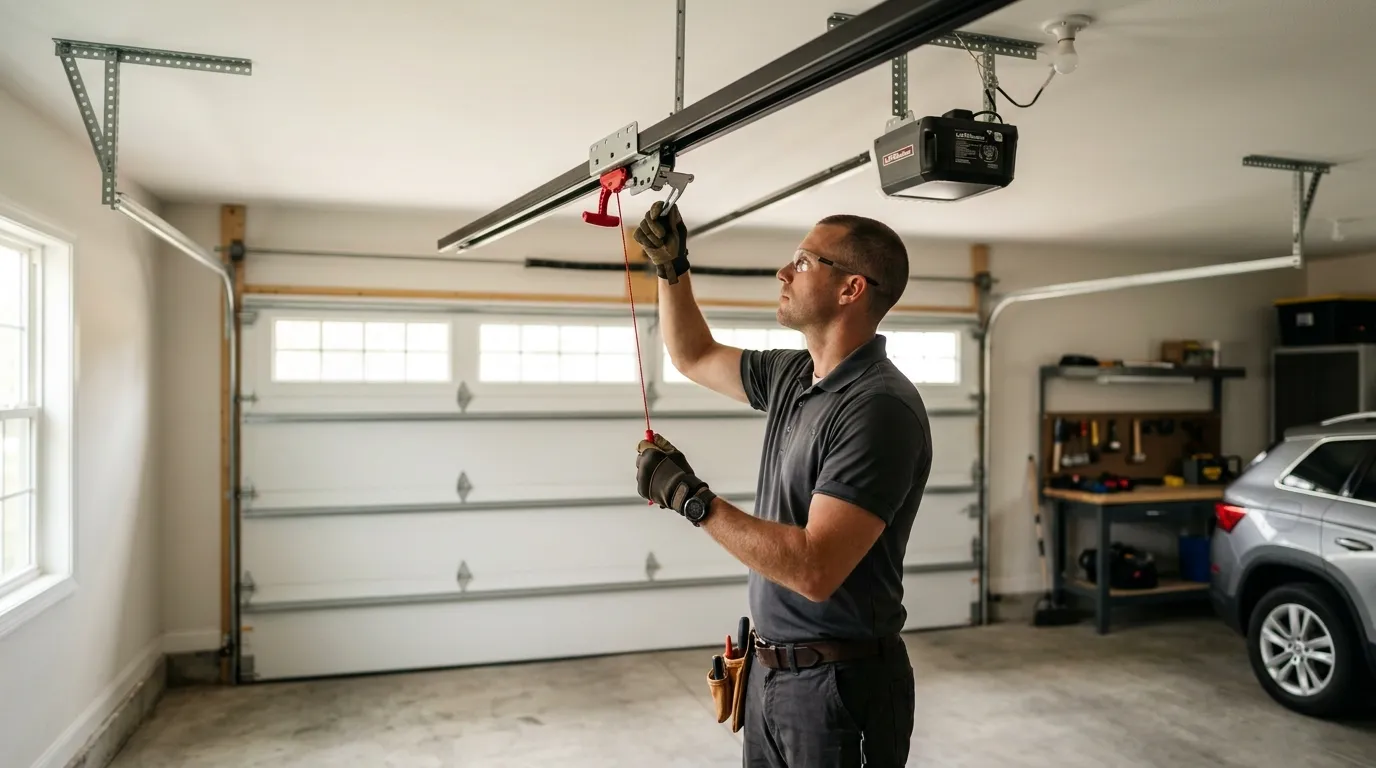
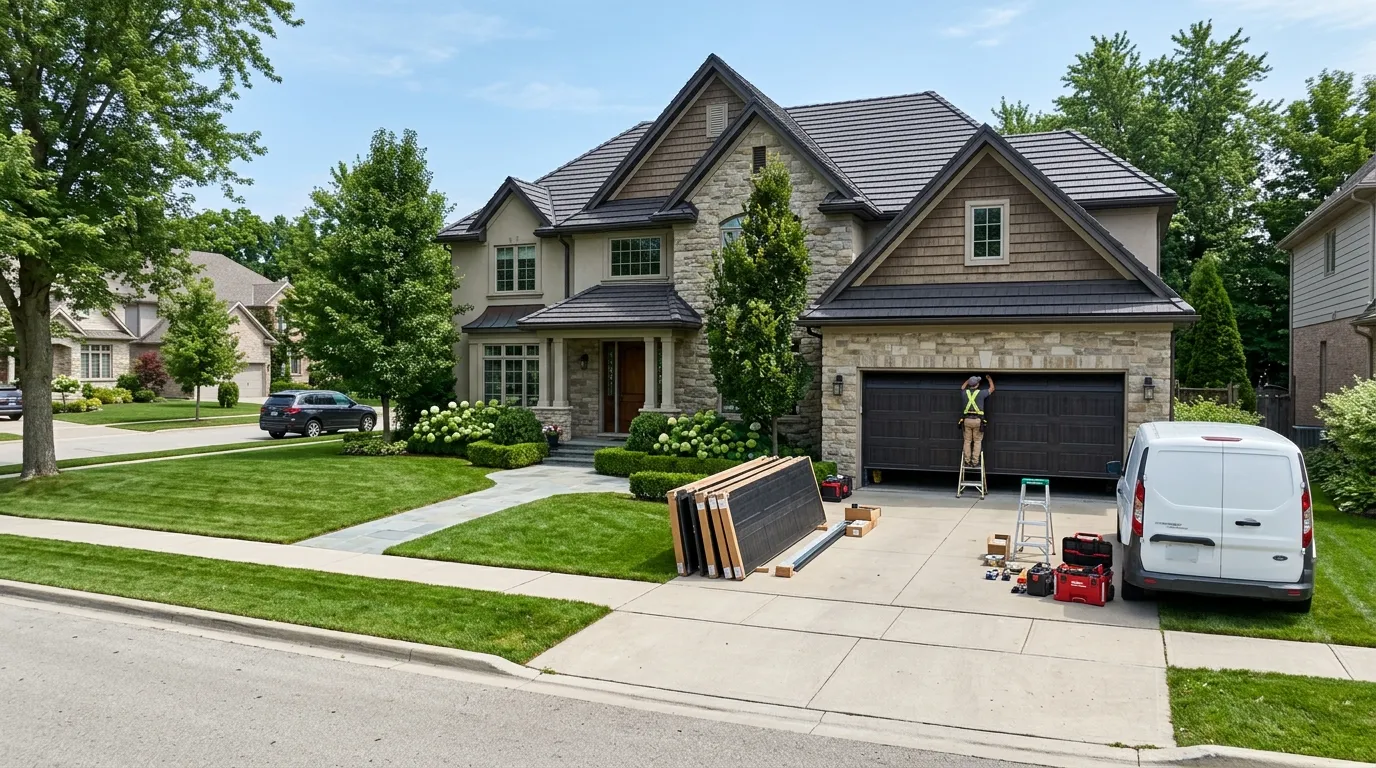
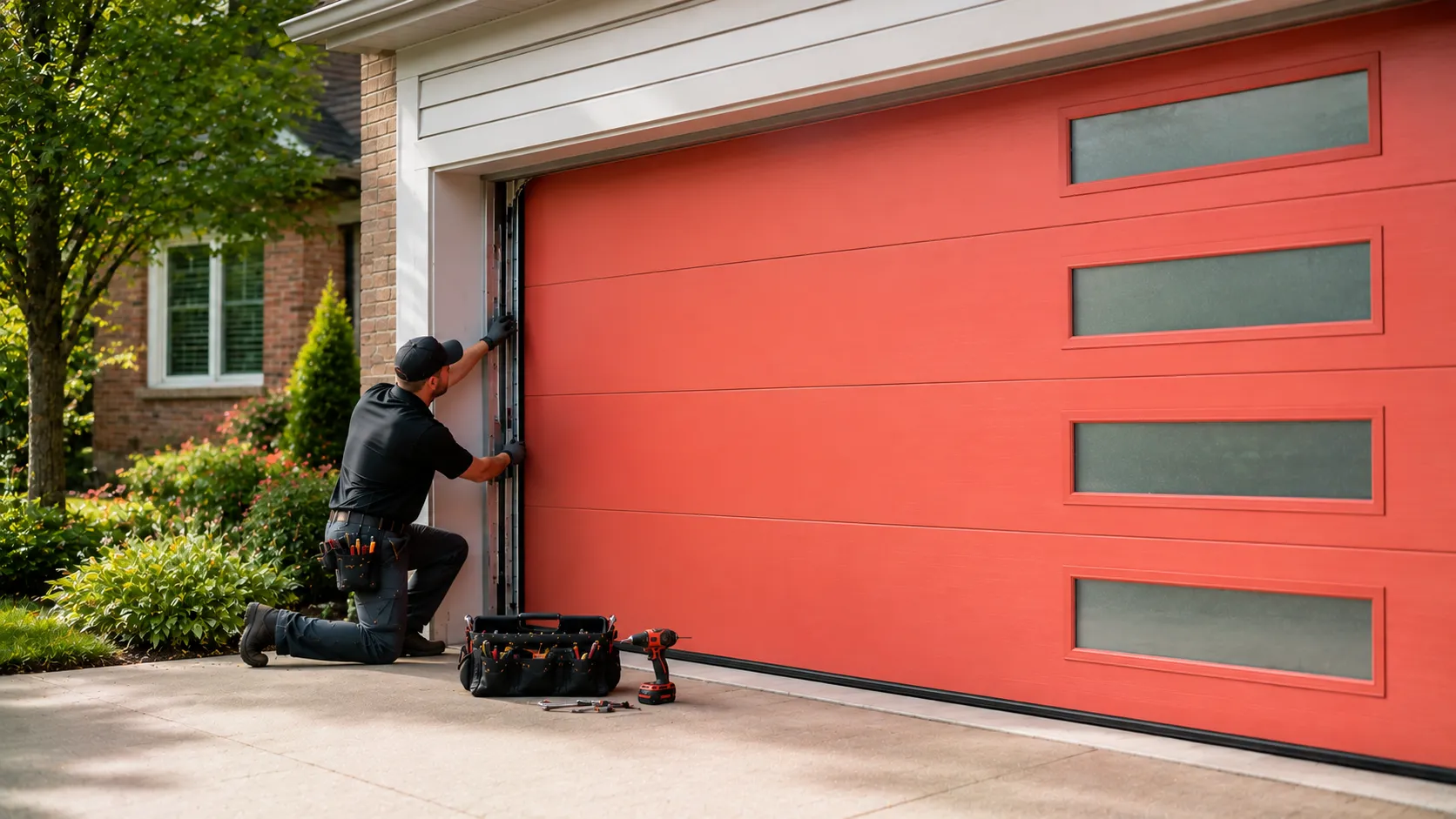
A door installed when the house was built in the mid-1950s has usually been replaced at least once by now, but the track spacing and header clearance often haven't changed, which limits what fits without carpentry work. We see a fair number of single-car openings here that were never widened, so a straightforward 16-foot double door swap isn't always on the table - sometimes the fix is matching a narrower panel or reinforcing what's there. Cold-climate winters do the usual damage regardless of era: springs fatigue faster with temperature swings, and steel rollers seize up if they haven't been serviced. Openers are a mixed bag - chain-drive units from decades back are still common, and some homeowners are happy to keep running them rather than pay for a belt-drive swap that doesn't fix anything actually broken. That's a case where replacement isn't the better move; a working chain-drive opener with a new sensor or gear kit will usually outlast the cost of tearing it out.
What People Here Ring About
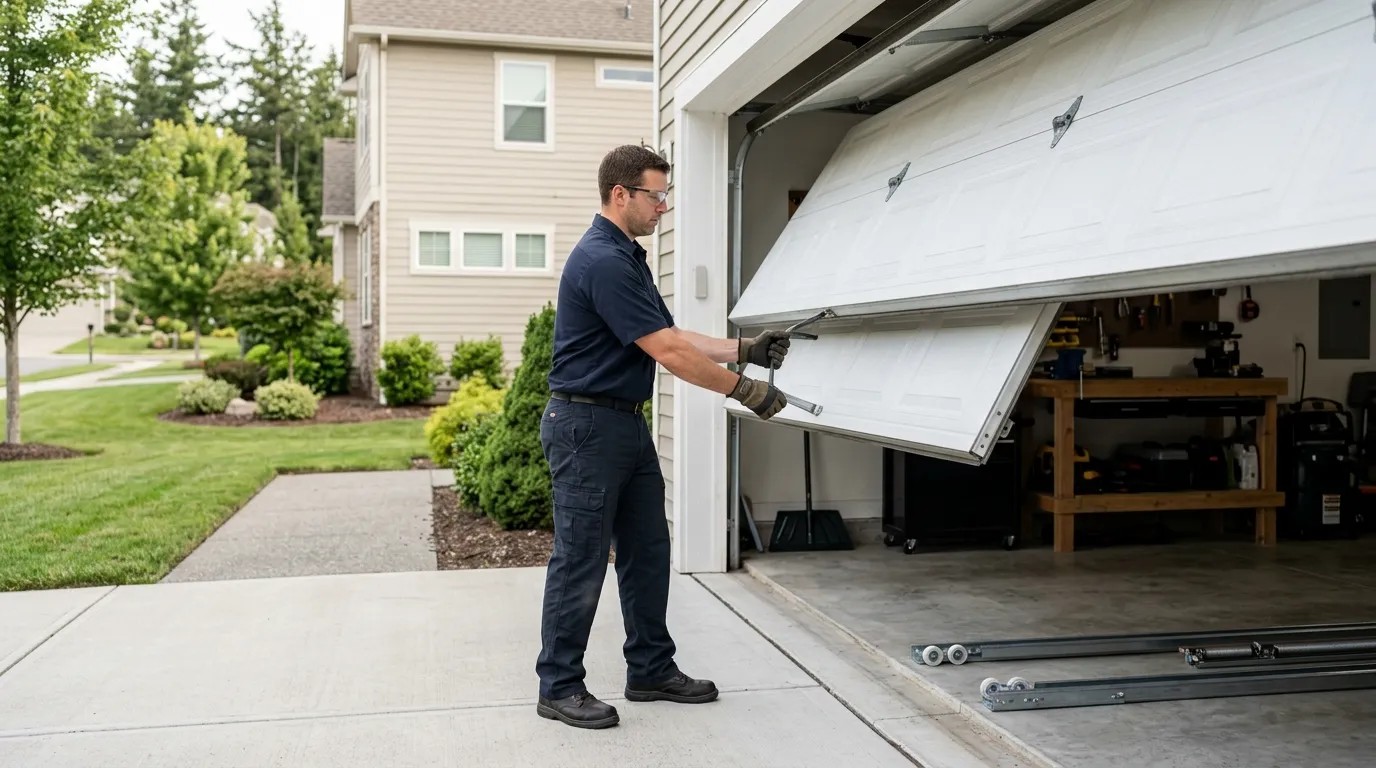
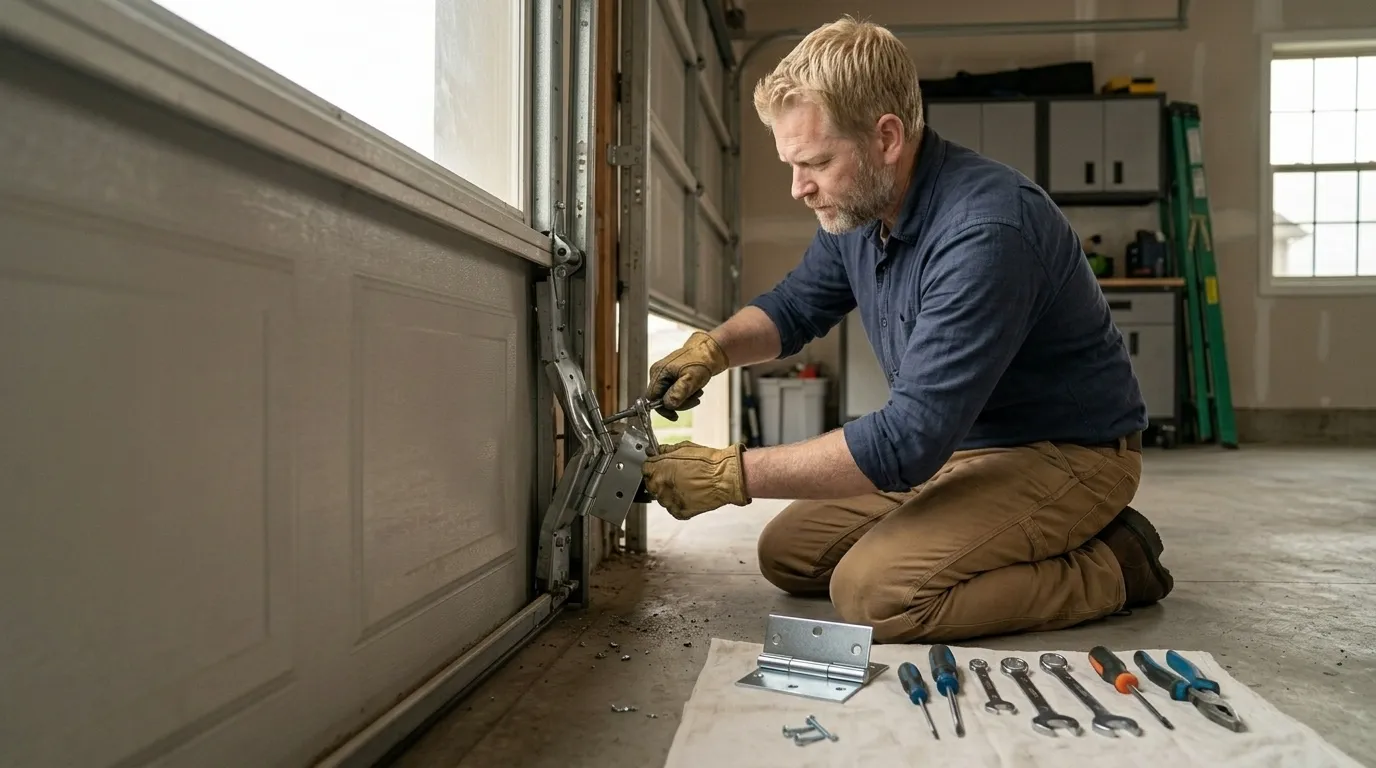
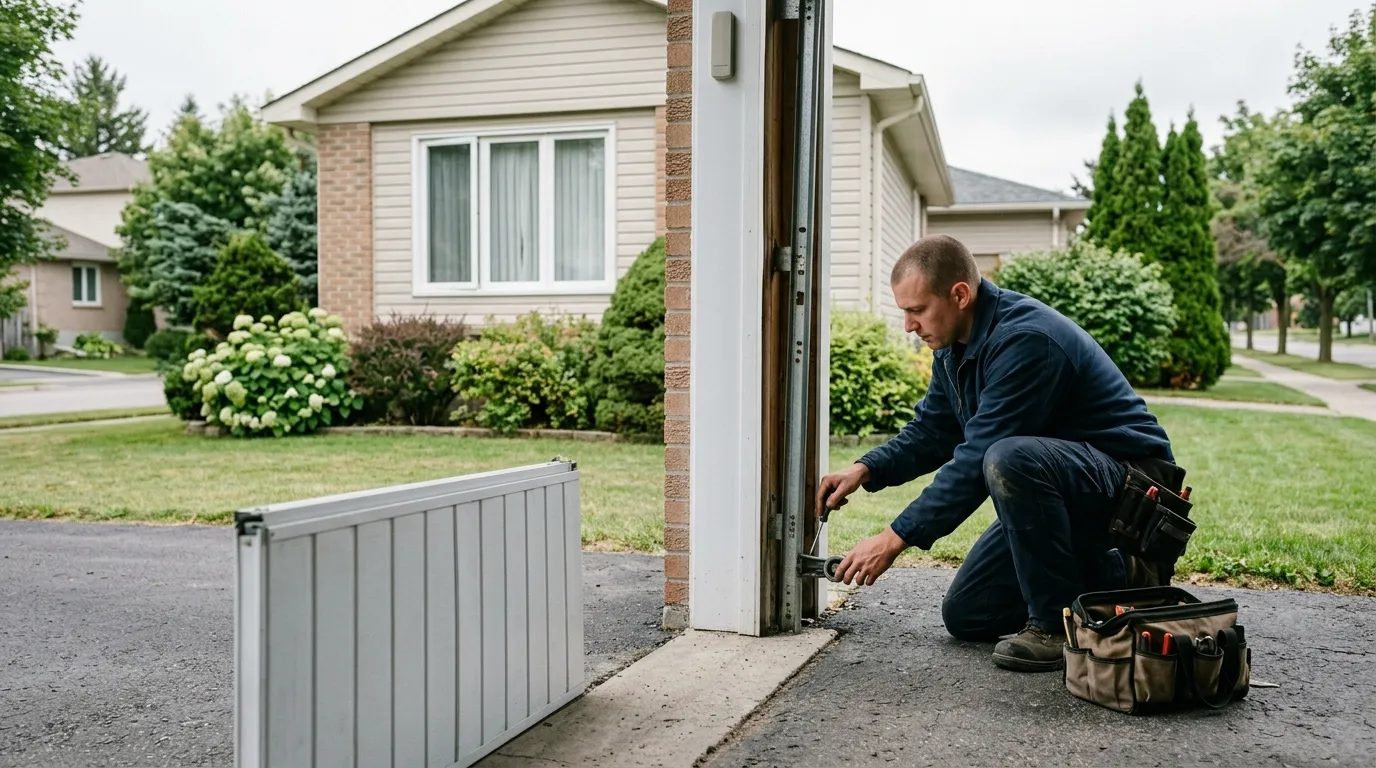
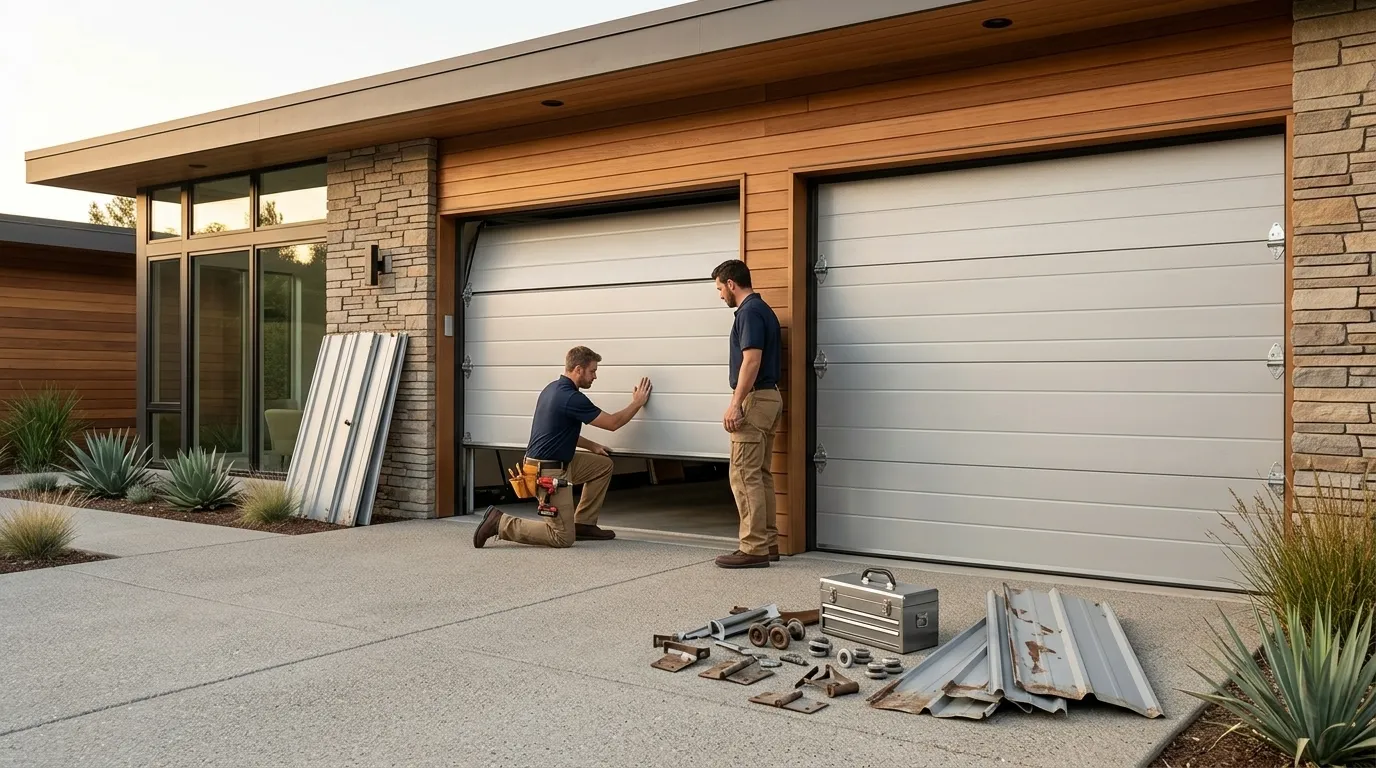
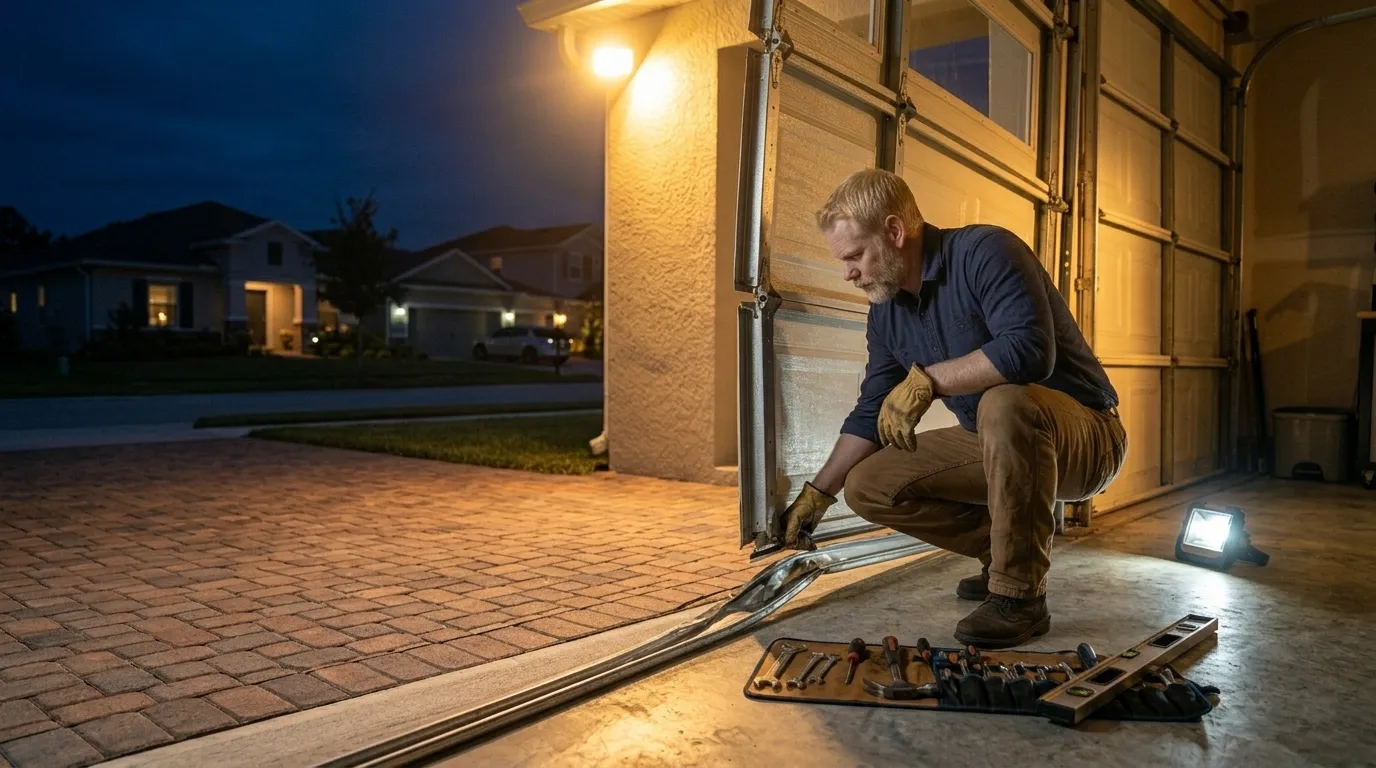
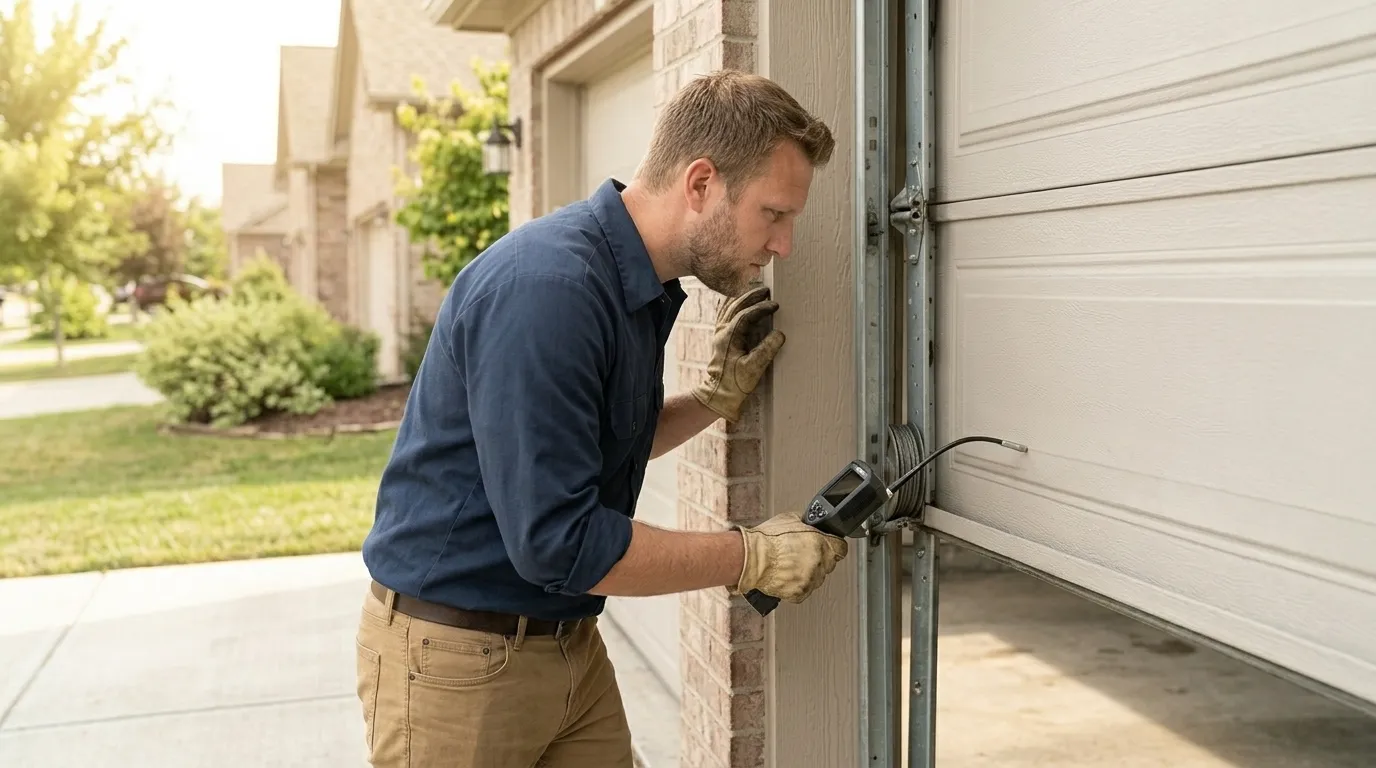
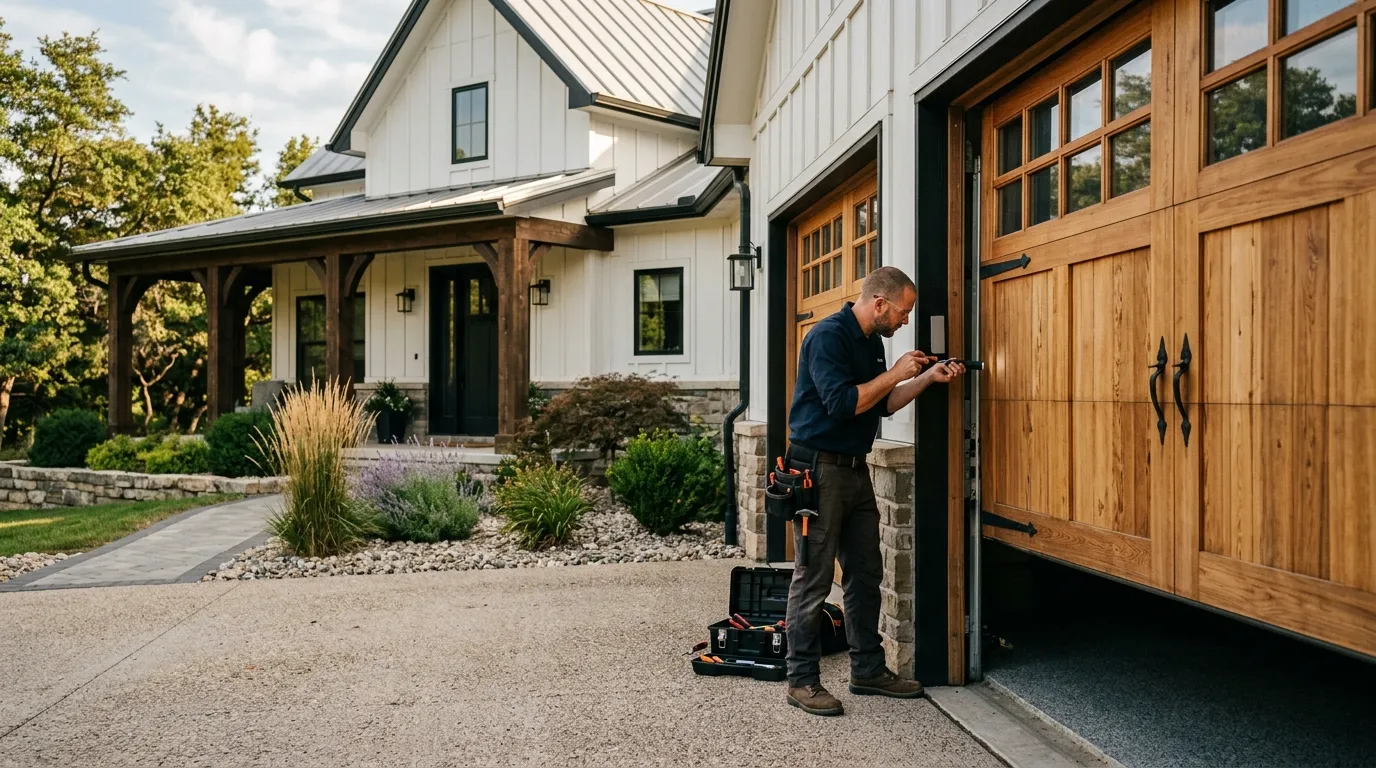
Broken torsion springs top the list, especially on older single-panel and narrow double doors where the spring was never upgraded to match a heavier replacement door. Second most common: openers that stopped responding to remote or keypad, usually a logic board or sensor issue rather than the motor itself. We also get calls about doors that bind partway up - often a sign the track was never adjusted after the original opening was widened at some point, a detail that shows up more in a neighborhood with this much retrofit history than in a subdivision built all at once. One thing we're upfront about: if the door itself is original steel from a mid-century replacement and the panels are rusted through, we'll tell you replacement beats another repair. Patching a door that age past a certain point just moves the next call a few months down the road.