This Area's Housing
Forest Park's housing stock runs older than most of the towns we cover out of Chicago. The median build year here is 1949, while the broader service area we work across (461,017 households) centers closer to 1964. That fifteen-year gap matters more than it sounds. A house built in the late 1940s was framed before pre-hung steel door sections were standard, and a lot of these garages still carry the hardware that came with the original build or a 1960s-era replacement bolted onto it.
With 7,035 households in Forest Park and a median income of $81,323, you've got a town where people tend to fix what's there rather than gut it. That shows up in our calls: owners who want a spring replaced or a panel swapped, not a full teardown. It also means we run into older torsion setups more here than in the newer-stock towns to the west, where post-1970 construction dominates.
We're not guessing at this from a spreadsheet. The build-year skew changes what breaks and how it breaks, and that's the whole reason this page exists separately from the general service-area page.
What That Means for Doors
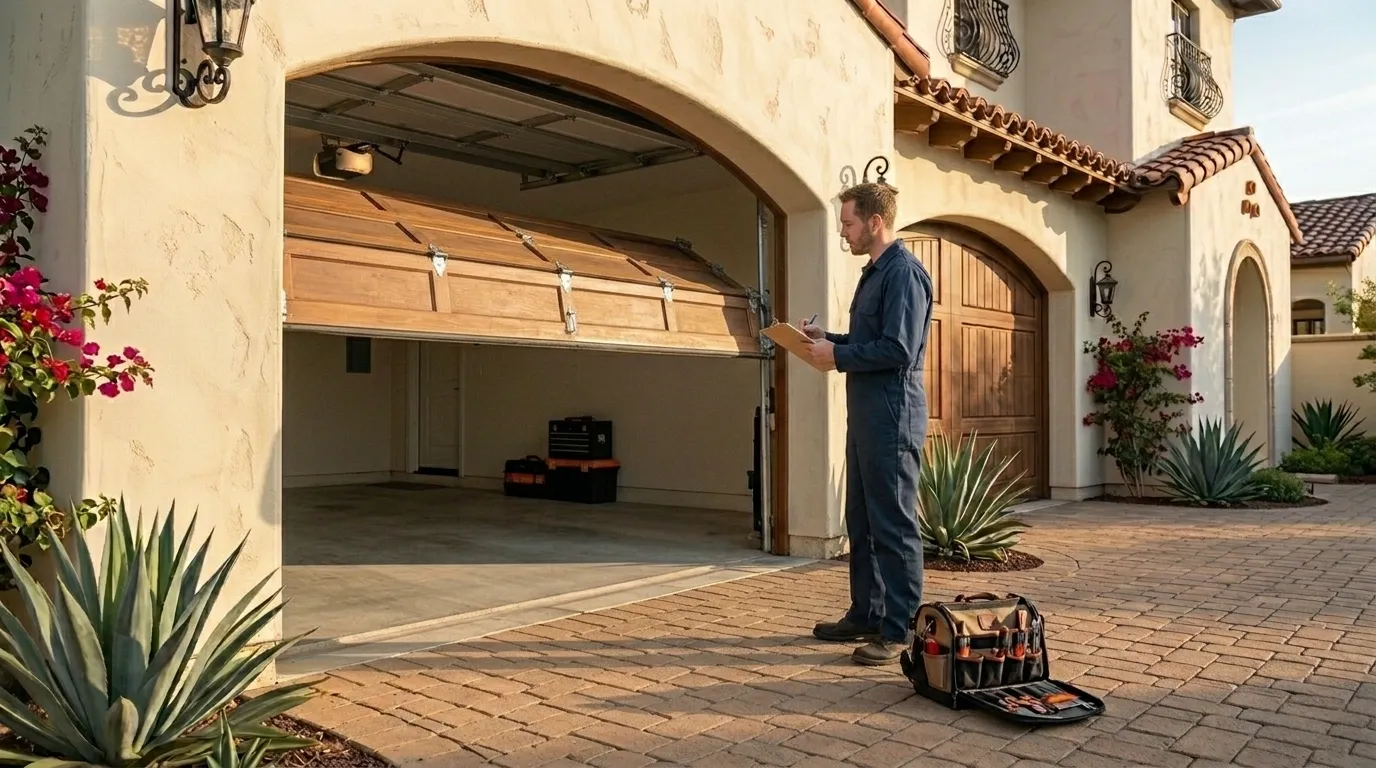
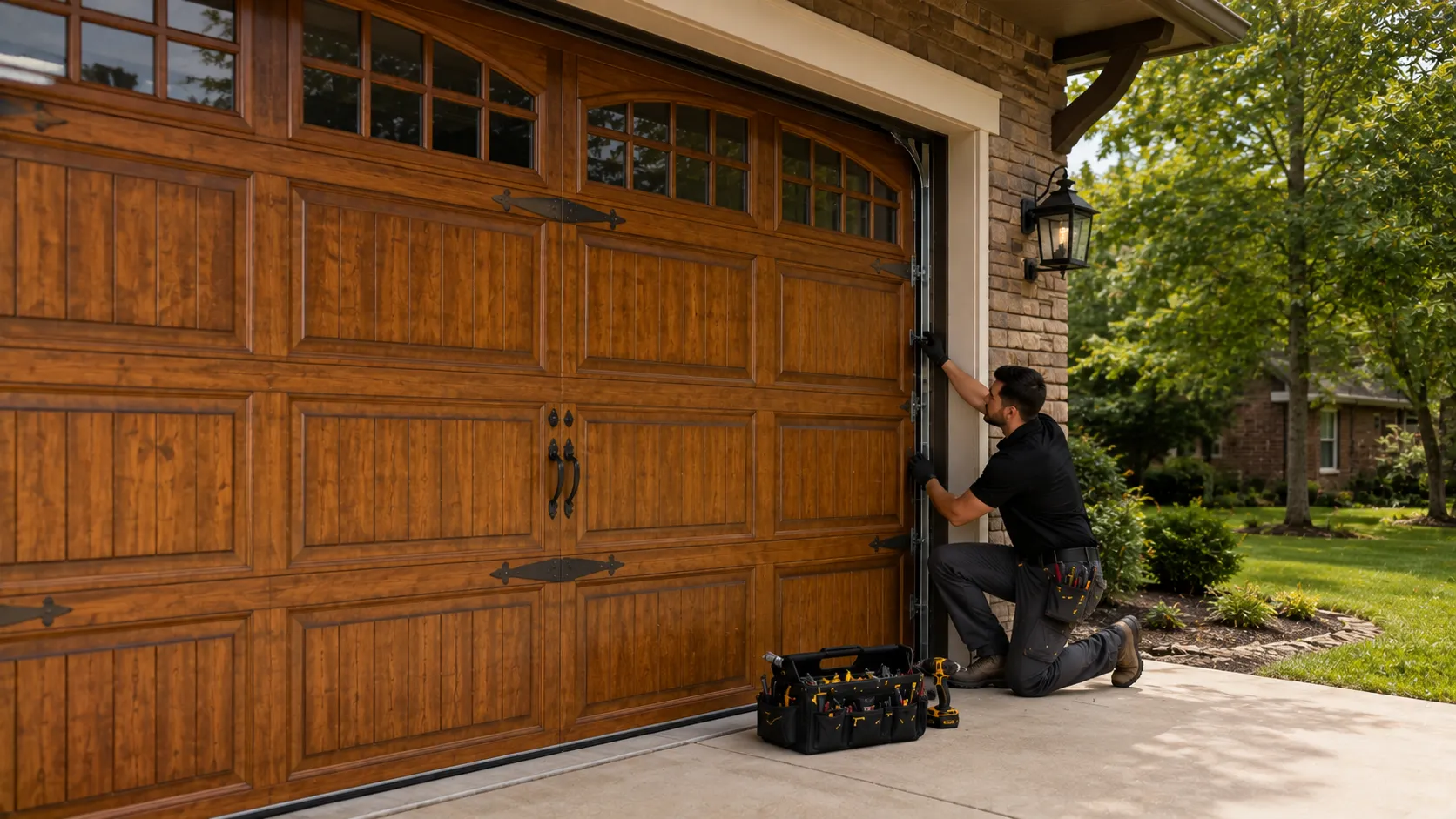
A garage built around 1949 in Forest Park was almost never designed with a pre-hung insulated steel door in mind. Most of what we find are retrofits - a door swapped in decades after the house went up, mounted on framing and tracks that were never updated to match. That's fine when the retrofit was done right, but it means the spring sizing, the track gauge, and the header clearance can all be slightly off from what a modern kit expects.
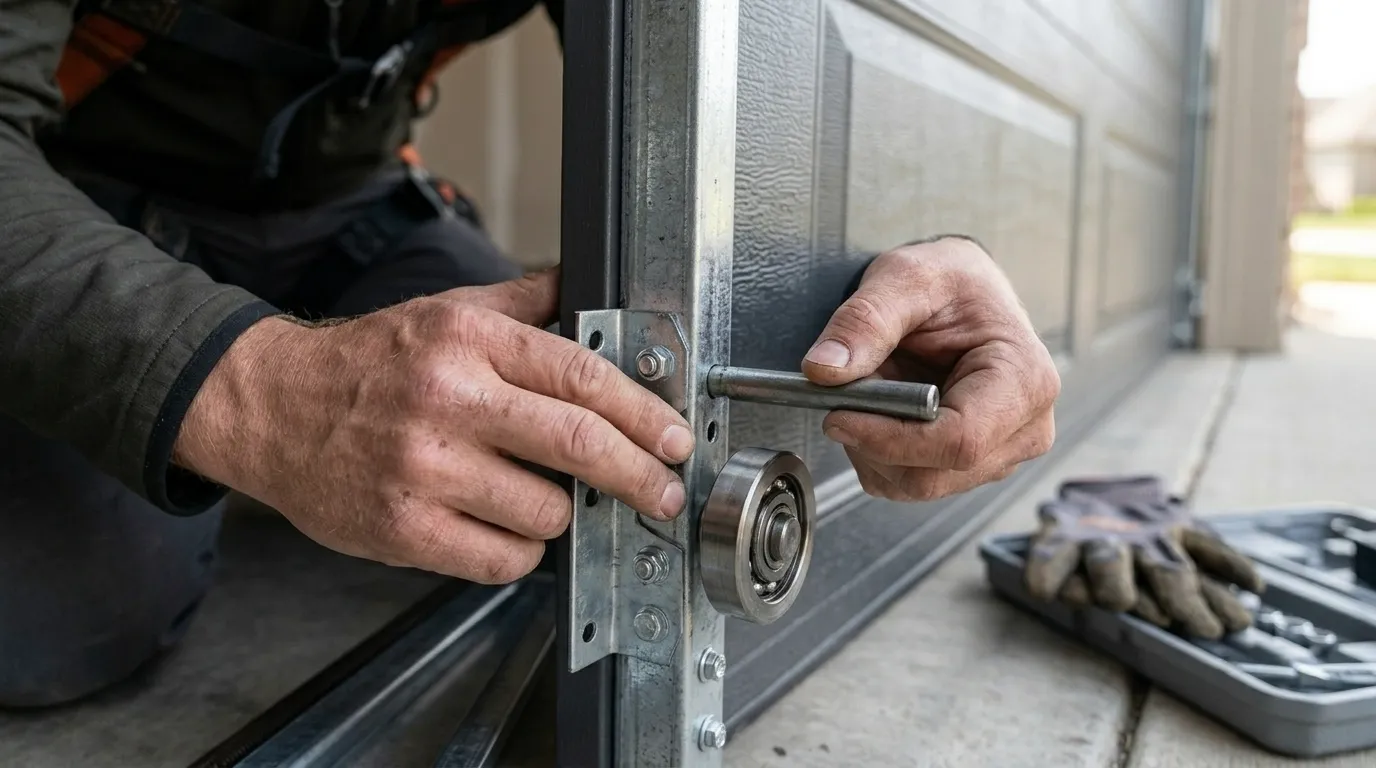
In practice, that translates to a specific set of jobs: torsion springs sized for an older, heavier wood-panel door that's since been replaced with a lighter steel one, or headers that were never reinforced when an opener bracket got added later. Cold-climate swings (we're in a COLD moderate band here) also stress the older steel and hardware harder over the years, since expansion and contraction cycles wear worn rollers and dry cables faster than in a mild climate.
We don't do full structural framing work - if a header needs rebuilding to take a new door properly, that's a carpenter's job before it's ours. But the door and hardware side of a 1949-era garage is exactly the kind of mismatch we see often enough to plan for, not something we're guessing at on arrival.
What People Here Ring About
The calls out of Forest Park skew toward hardware fatigue rather than storm damage or new-construction tuning. Broken torsion springs on double doors come up often, especially on houses that never upgraded from the original spring size when a heavier door went in at some point. Worn rollers and stretched cables are common too - symptoms of decades of use on a door system that's older than most of the opener technology attached to it.
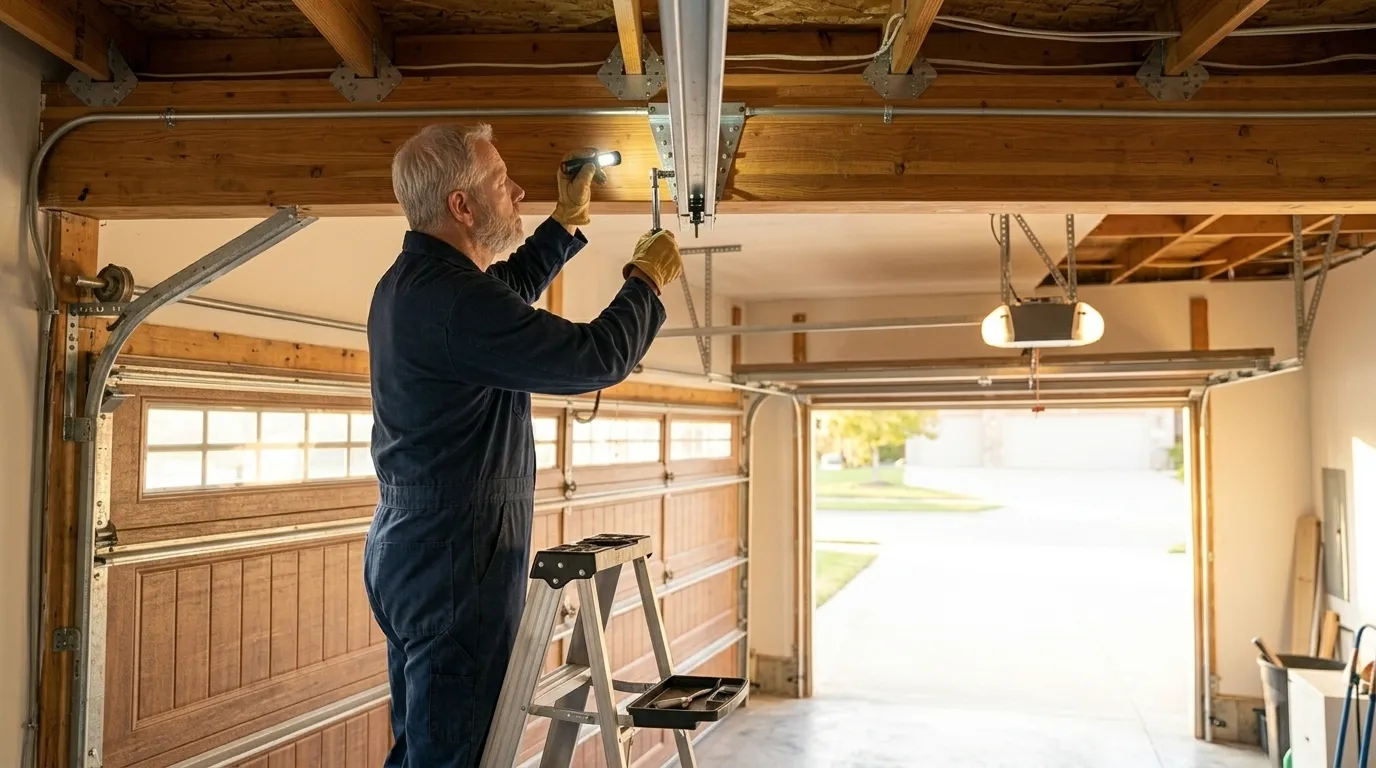
Opener swaps are a steady share of the work as well, usually because the opener has outlived the bracket or rail it's mounted to, and the fix ends up being both at once rather than just one part. We also hear from owners dealing with a door that binds partway on the track - often traceable to a track that's shifted slightly over 70-plus years of settling, not a defect in the new parts someone installed.
We price and schedule these individually rather than off a flat menu, since a 1949 garage in Forest Park can need a different fix than the same complaint would need in a house built twenty years later.