24/7 Emergency Service Open 7 days · 7am–8pm Serving Chicago, IL & nearby
(708) 630-7529
Chicago, IL

Garage Door Service for Glen Ellyn Homes

Serving Glen Ellyn's 1970s housing stock, 20 miles west of Chicago. We know the extension-spring setups and steel doors common on this area's median 1972 builds.

Garage Door Service for Glen Ellyn Homes
Chicago, IL
Licensed & insured
Free estimates
Residential & commercial

This Area's Housing

Glen Ellyn's median home here was built in 1972, which puts it a good eight years past the 1964 median across the wider service area we cover from Chicago. That gap matters more than it sounds. A house built in the early '70s almost never has the same door hardware as one built in the '50s or '60s - by 1972 steel sectional doors were common, extension springs were still standard in a lot of installs, and openers (where they exist at all from that era) are long gone, replaced piecemeal over fifty years by whatever the last owner had on hand.

With 10,833 households in this area, you get a fairly consistent build wave rather than a scattered mix of eras. That means when we get a call about a stuck door or a snapped cable, the odds are decent it's tied to hardware that's original to a 1965-1985 build, later swapped for a mid-2000s steel replacement door but still riding on old track brackets that were never updated. We don't guess at what's behind your wall - but we do walk in expecting extension springs and older track spacing more often than we would on a newer-build street.

Getting Here

We run out of Chicago, about 20 miles east of Glen Ellyn. There's no local depot here - the truck comes from the city, same as it does for every stop along the way. That's worth saying plainly: if you need a same-day fix on a Saturday afternoon, call and ask what's realistic, because distance is a real factor in scheduling, not a marketing line.

What that distance does buy is a crew that sees a wide range of housing stock in a single day, from dense city blocks close to Chicago's own 1960s-70s inventory out to areas like this one with higher household incomes and later build years. We're not learning your street layout for the first time when we show up - the truck is stocked for the range of door ages we expect to see, torsion and extension both, steel and older aluminum panel.

What That Means for Doors

The median household income here is $133,346, well above the $80,202 median across the broader area. That income level shows up in the calls we get: more requests for insulated steel replacement doors, more openers with battery backup and smart-phone control, fewer patch jobs on a door that's clearly at the end of its life. People here tend to replace rather than keep nursing a door along, once repair costs start climbing.

Climate is the other variable, and it's the same cold-moderate band across this whole region - real winters, real temperature swings on the panels and the springs. A steel door on 1970s-era track hardware sees more strain over a Chicago-area winter than the same door would somewhere warmer, and that's true whether the house is worth $150,000 or $700,000. Springs rated for the weight of an older wood-panel door often get reused under a newer, heavier insulated door - that's a common mismatch we find on inspection, not something you can spot by looking at the door from the driveway.

What People Here Ring About

Broken springs top the list, and given the 1972 median build year, a lot of these are extension springs on side rails rather than the torsion setups you'd expect on a newer install. Opener failures come in close behind - capacitors and gear sets wearing out on units that have been running for a decade or two longer than they were built for.

We also get calls about doors that open unevenly or bind partway up, which on older track brackets is often a sign the track itself has shifted slightly over fifty-plus years of settling, not just a roller problem. Here's the honest limit: if your door and opener are both original from a 1960s or '70s build and something major goes on either one, replacement is usually the better call than repair - parts for openers that old aren't stocked anywhere, ours included, and chasing a fix on a door that age can cost more than a new one installed.
How it works

From “it’s stuck” to “it’s fixed”

1
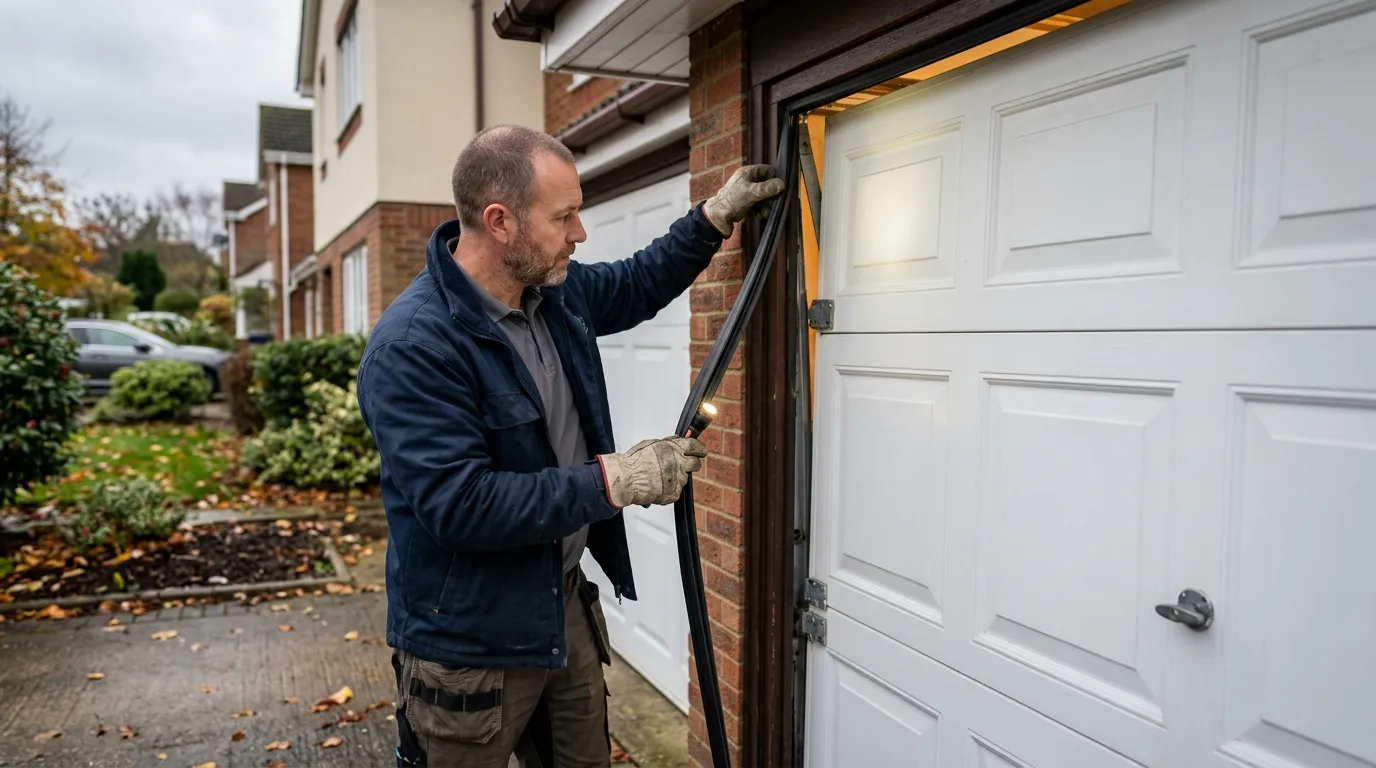
Tell us what’s wrong - Chicago garage door service

Tell us what’s wrong

Describe the symptom - won’t open, loud bang, opener runs but the door won’t move.

2
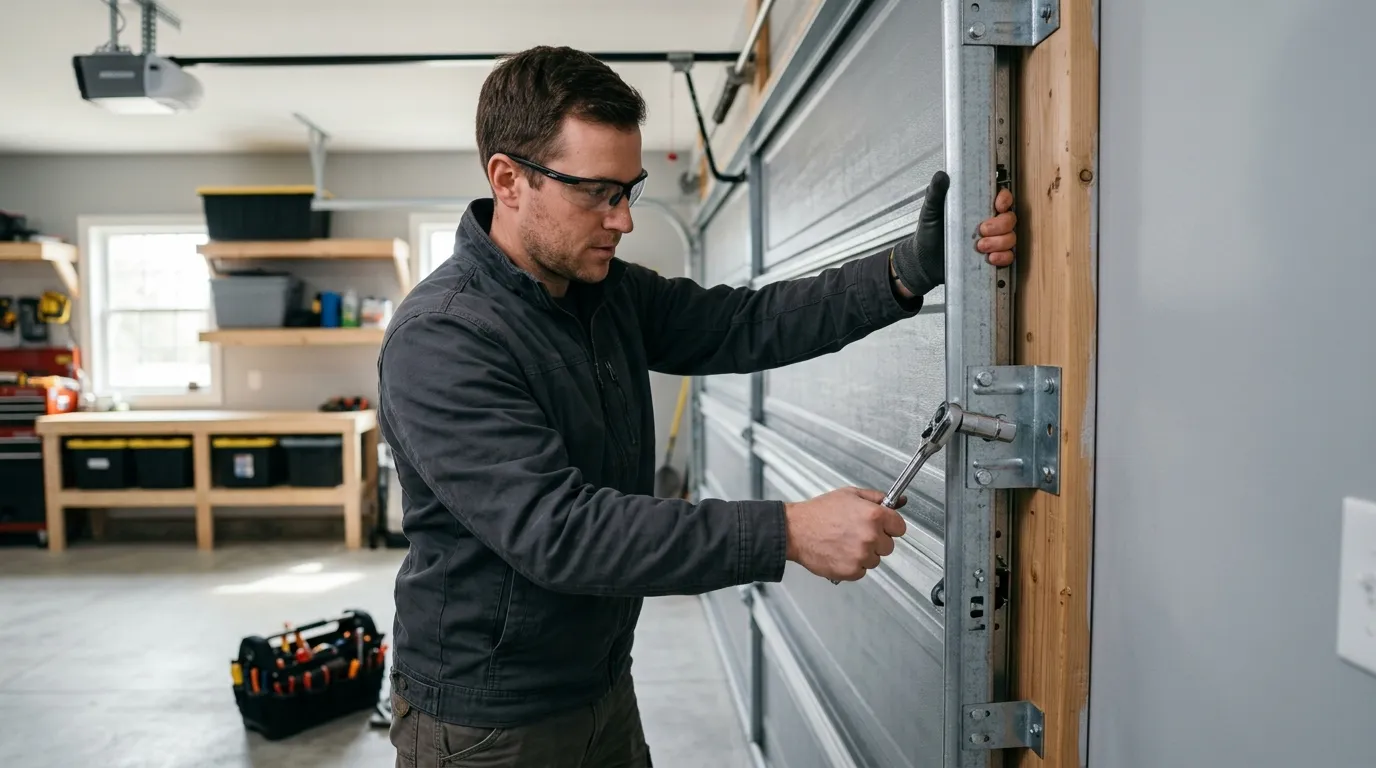
On-site diagnosis - Chicago garage door service

On-site diagnosis

A technician tests the door under power and by hand and finds what actually failed.

3
Clear, up-front plan - Chicago garage door service

Clear, up-front plan

You get the fix that’s needed and what drives the cost - before any work starts.

4
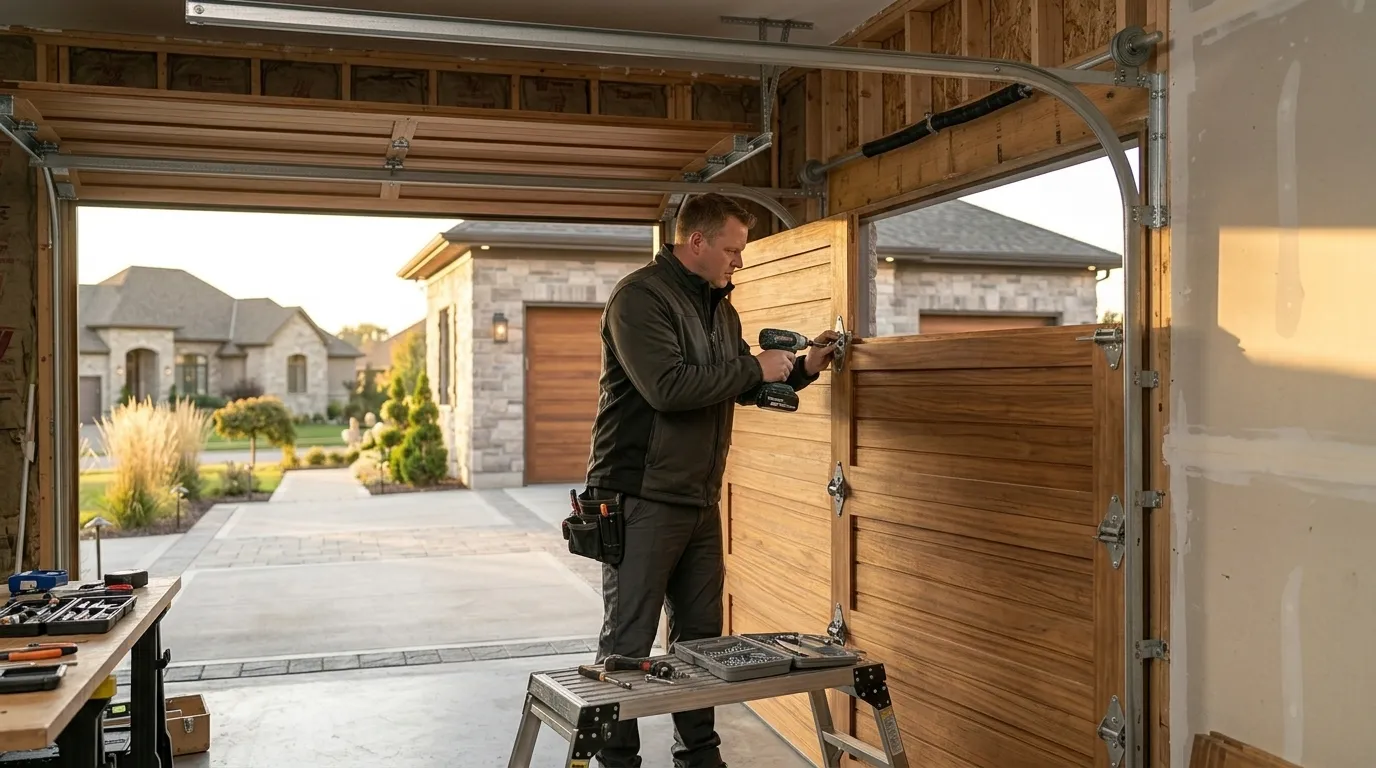
Repaired & tested - Chicago garage door service

Repaired & tested

The repair is done, the door is set true and tested, and the work area left clean.

Serving Chicago, IL - tell us what your door’s doing and we’ll take it from there.

How we work

What to expect

Diagnosis firstEvery visit starts by finding what actually failed - not a pre-written parts list.
The right part for the doorSprings and openers matched to the door’s weight and age, so the fix holds up.
Straight answersWhen a repair makes more sense than a replacement - or the reverse - you hear it plainly.
Clean, careful workTension released safely, hardware set true, the door tested under power before we leave.
2,664,452Residents in Chicago
4Garage door services
110Neighborhoods & suburbs
ILServing Chicago, IL
Who we help

Residential & commercial

Residential garage doors

Homes in Chicago

  • Single- and double-car garages
  • Spring, cable & opener repair
  • New door installation
See services
Commercial garage doors

Businesses & property

  • Rolling steel & sectional doors
  • Loading-dock doors
  • Built for higher cycle counts
See services
Questions

Frequently asked

Straight answers about garage door repair in Chicago. Still unsure? Ask us directly.

Do you have a location in Glen Ellyn?

No, we run out of Chicago and travel to this area, about 20 miles from our base. We don't claim a local depot or a guaranteed same-day window here - ask when you call and we'll give you a straight answer on scheduling.

Why does my 1970s garage door use different springs than my neighbor's newer one?

Houses in this area median out around 1972, and that era commonly used extension springs on side rails rather than the torsion spring over the door that became standard later. If your door's been replaced since, the springs may or may not have been updated to match - that mismatch is one of the more common issues we find.

Is it worth repairing an old opener instead of replacing it?

Depends on the age and the fault. If the opener is original to a 1960s-70s build, parts usually aren't available and a repair can cost close to what a new unit runs. For a newer opener with a single failed part, repair usually makes sense.

Ready to get your garage door sorted?

Tell us what it’s doing and where you are in Chicago - we’ll take it from there.

Request a QuoteCall