This Area's Housing
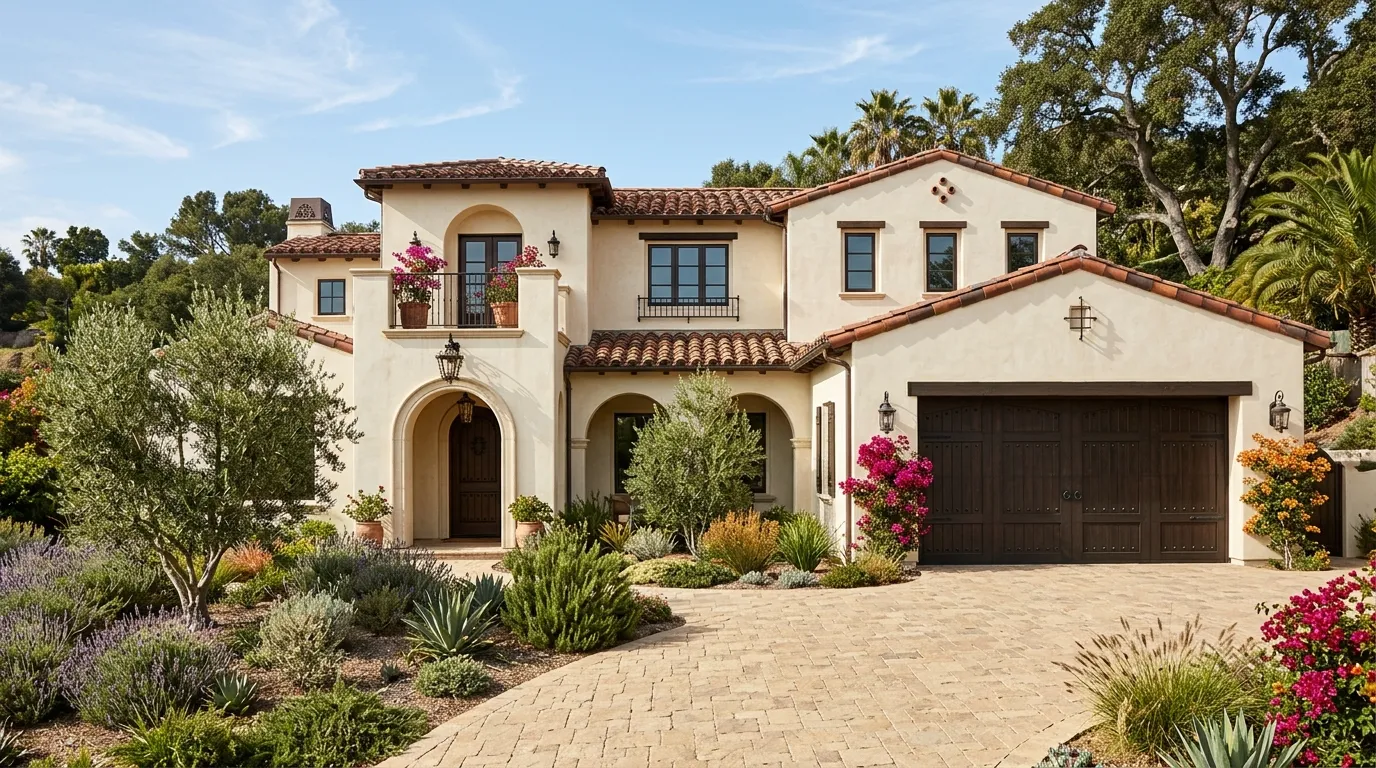
Hometown's houses cluster tight around 1955, which puts this pocket right in the middle of the wider area's 1938-1994 build range but noticeably earlier than a lot of the postwar subdivisions further out. A house built in 1955 usually came with a single-panel door on a side-mounted torsion spring, or in some cases an extension spring setup bolted straight to the track. Steel sectional doors didn't become the default until later, so a fair number of these original garages never got upgraded, they just got the door replaced once and the hardware left alone. With 1,916 households in Hometown, that's a small, dense area where the same handful of housing types repeat block after block. Median household income here runs $59,265, well under the wider service area's $80,202, and that gap shows up in the calls: more repair requests, fewer full replacements, more people asking what the cheapest fix is before they ask for anything else. None of that is a knock on the town. It just means the work here looks different than it does in a subdivision built in the 1980s.
What That Means for Doors
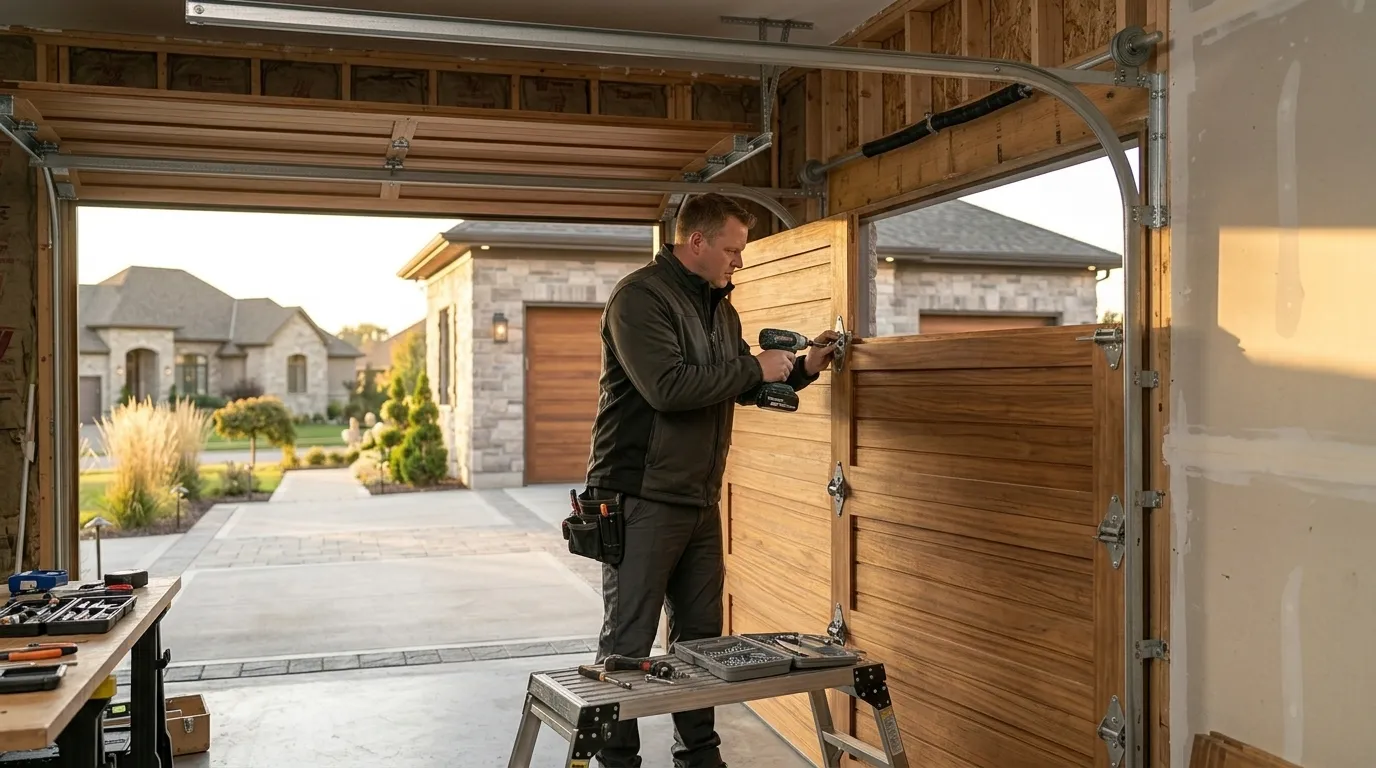
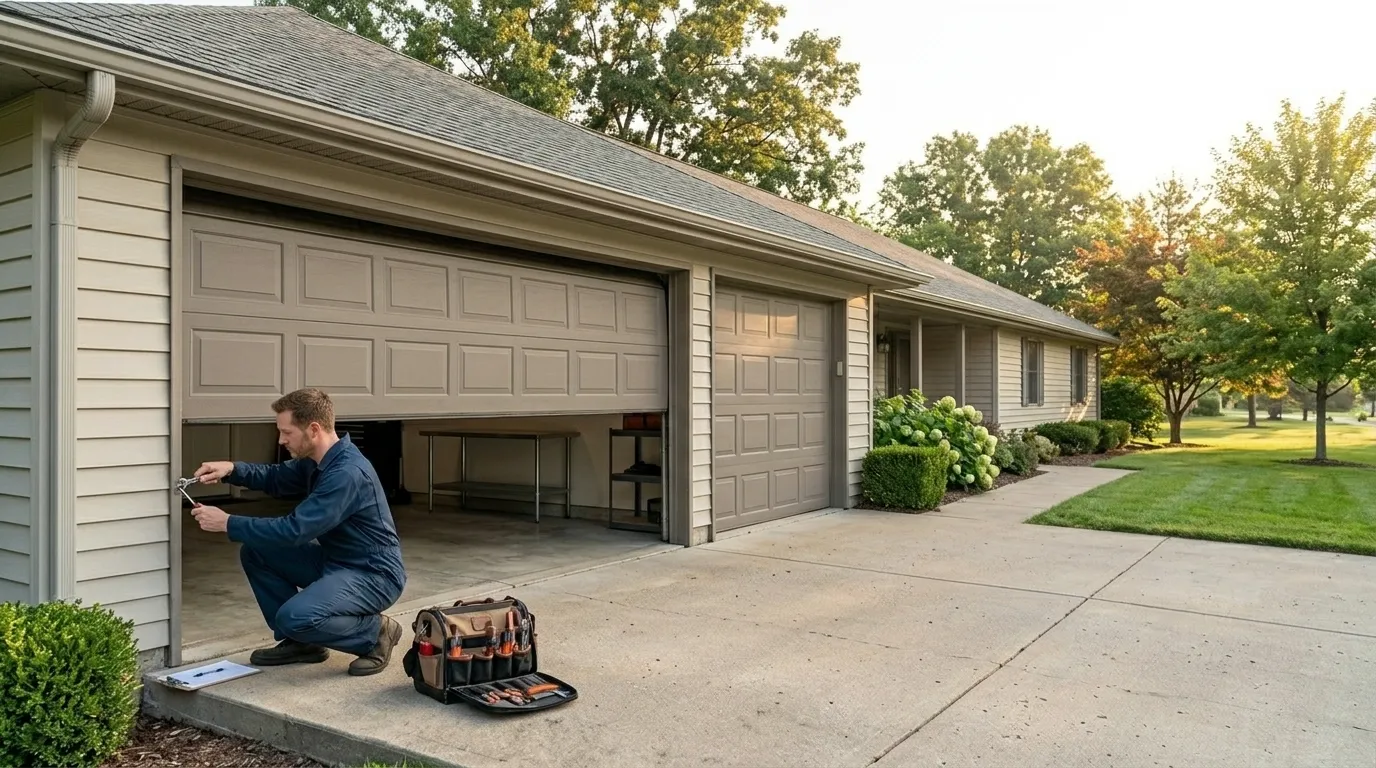
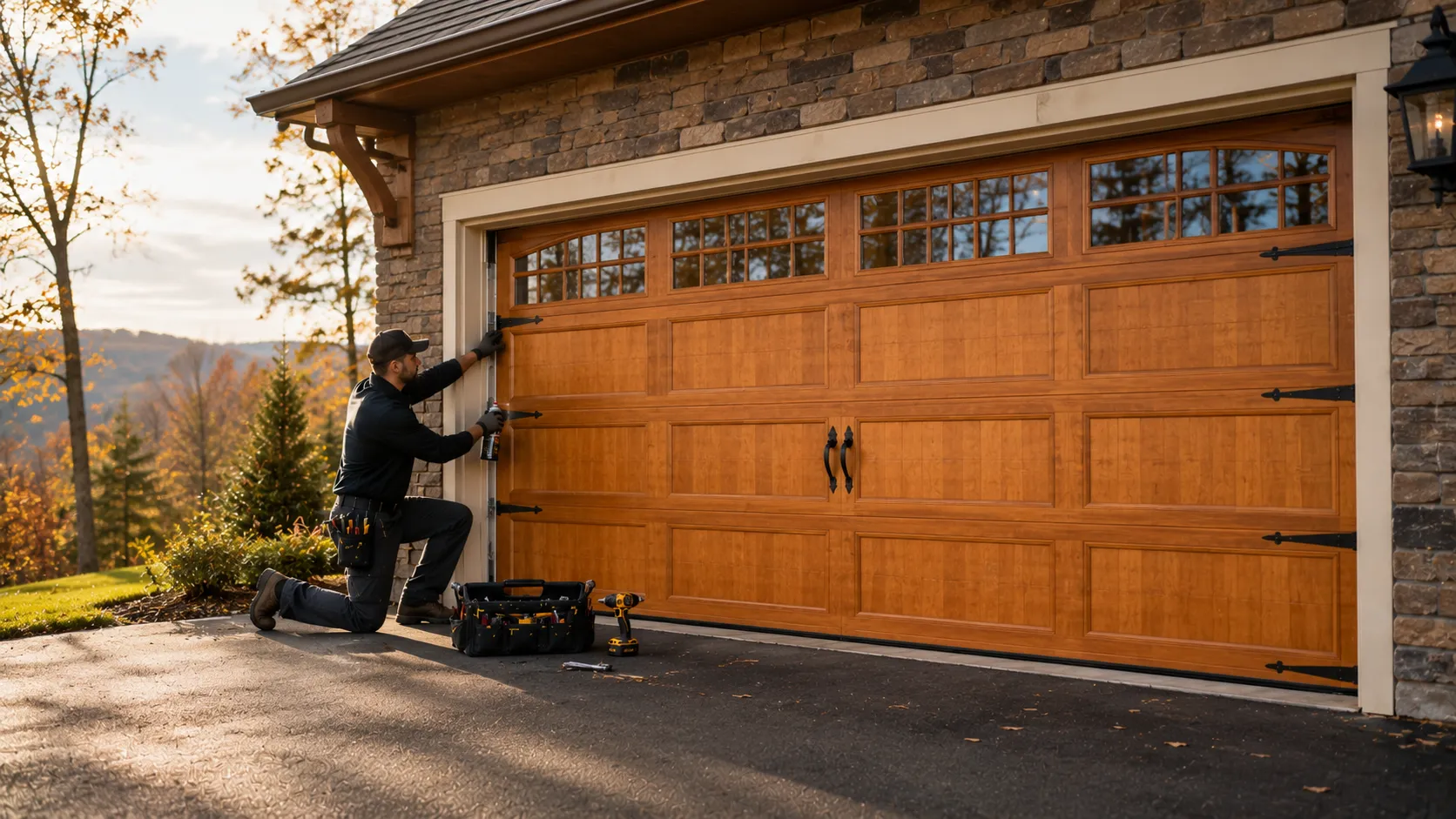
A door installed around 1955 wasn't built to today's spring cycle ratings, and a lot of the springs still in service on these doors are well past any reasonable lifespan even if they haven't broken yet. Side-mounted torsion setups and older extension spring rigs both show up more here than the center-mounted torsion bars you'd find on a garage built in the 1980s or 90s. That matters for repair because replacement parts for the original hardware are frequently not something a supply house stocks off the shelf anymore - we sometimes have to adapt a modern spring or cable to fit an old drum or bracket rather than find an exact match. The cold winters this area sits in add their own wear: steel contracts, lubricant thickens, and a spring already near the end of its cycle count is more likely to let go on a January morning than a July afternoon. If a door's track, hardware, and panel are all original from a 1955 build, there's a point where patching one more part isn't the better move over swapping the whole unit - we'll tell you when we think you've hit that point instead of just billing for another repair.
What People Here Ring About
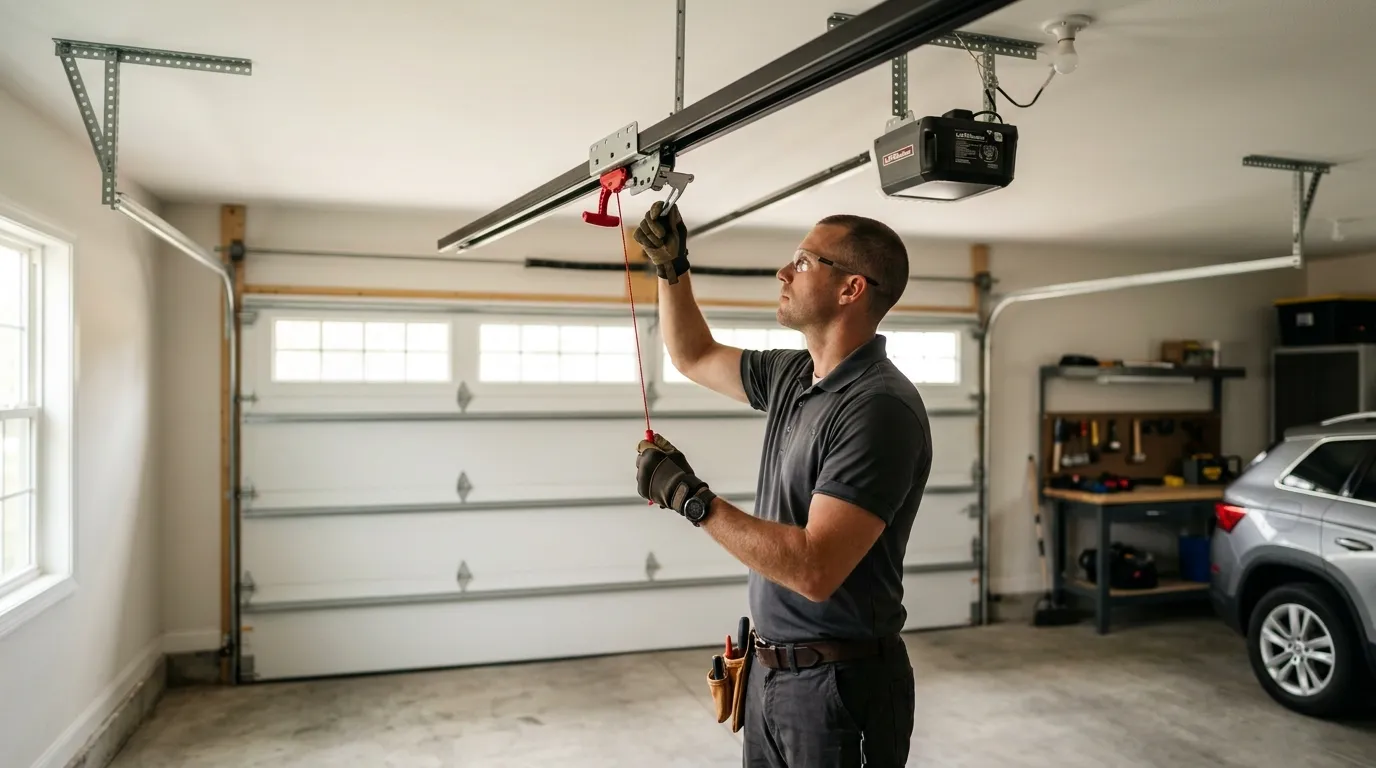
Broken torsion springs on original side-mount hardware make up a good share of the calls from this area, along with cables that have frayed on drums that don't quite match anything a supplier carries new. Openers are a mixed bag - some homes have already swapped in a newer unit, others are still running whatever was bolted to the ceiling decades ago and just needs a new sensor or gear kit rather than a full replacement. Panel damage from a car backing out too fast is common everywhere, but on a door this old the fix sometimes means sourcing a compatible panel rather than an exact one, since the original run of that door style isn't in production. We'll always say up front if we think a repair is a stopgap rather than a real fix.