24/7 Emergency Service Open 7 days · 7am–8pm Serving Chicago, IL & nearby
(708) 630-7529
Chicago, IL

Garage Door Service for Homewood's 1960s Housing Stock

Chicago Garage Door Co travels to Homewood, IL to fix the torsion springs, tracks, and openers common in this area's 1962-era housing stock.

Garage Door Service for Homewood's 1960s Housing Stock
Chicago, IL
Licensed & insured
Free estimates
Residential & commercial

This Area's Housing

Homewood's houses cluster around a median build year of 1962, which puts most garages here a decade or two ahead of the vinyl-and-steel doors that got popular in the 1980s. That matters because a house built in 1962 usually got a single-layer steel or wood door on a torsion spring sized for a lighter panel than what's often hanging there now after a replacement decades back. With roughly 7,042 households in the area, a lot of these original openings never got resized - they just got a new door bolted onto old track and old brackets. Median household income here runs $96,522, higher than a lot of the region, and we see that show up in how many owners have already put in a nicer insulated door but kept the original 1960s jamb and header behind it. That mismatch between new door and old framing is one of the more common reasons a door binds or won't seal right at the bottom. If your house still has the original one-piece door, parts for it are getting harder to source, and a straight repair sometimes costs more than most people expect once you add up obsolete hardware.

Getting Here

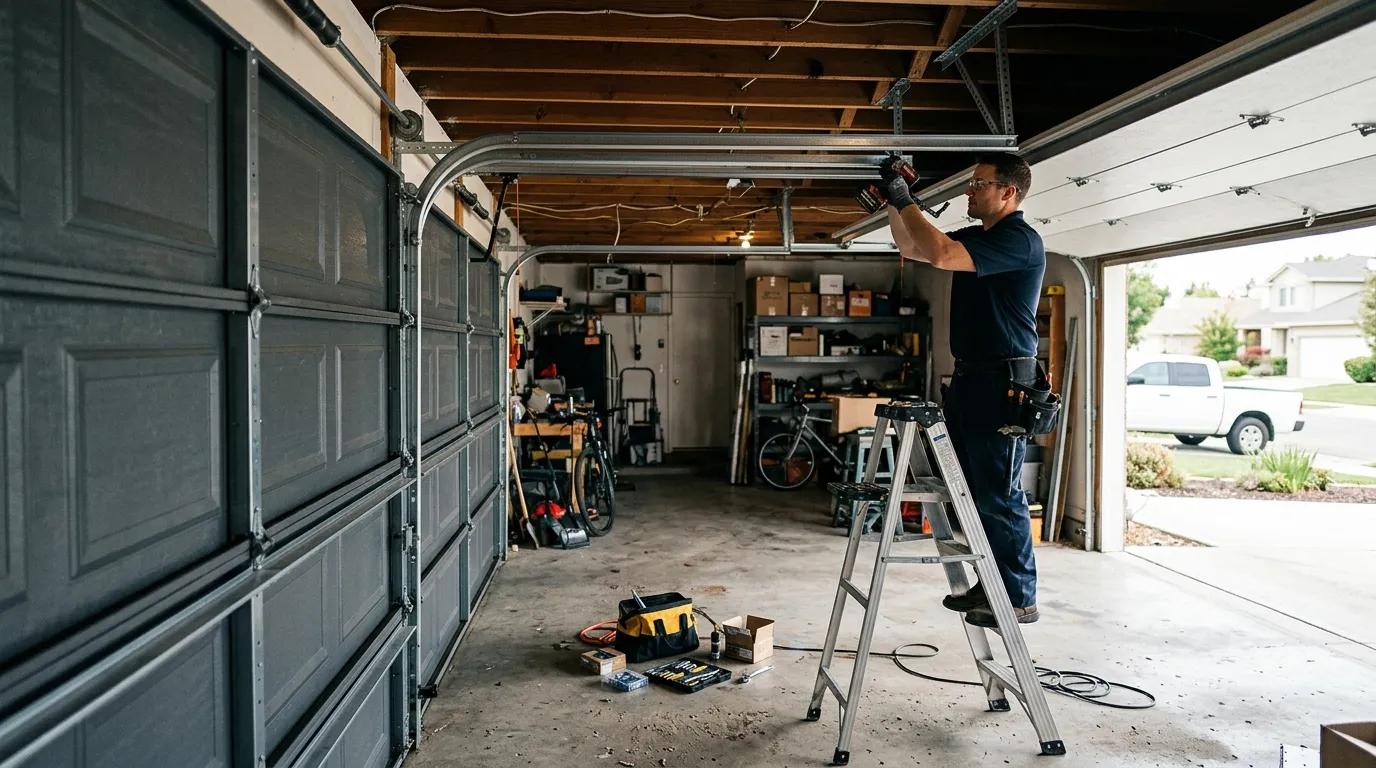
Homewood sits about 19 miles from Chicago, which is a real drive, not a quick hop across town. We don't run a depot out there, so when a job comes in from this area it means a truck loaded up and routed out from the city rather than a crew already parked nearby. That's worth knowing upfront: we're not going to pretend there's a same-hour guarantee we can't back up over that distance. What we can do is schedule the trip so the truck is stocked for what a 1962-era door in this area typically needs - standard torsion springs, common roller sizes, and openers that fit older track widths - so the visit isn't wasted on a return trip for a part. If your job turns out to need something unusual, we'll say so before we start, not after.

What That Means for Doors

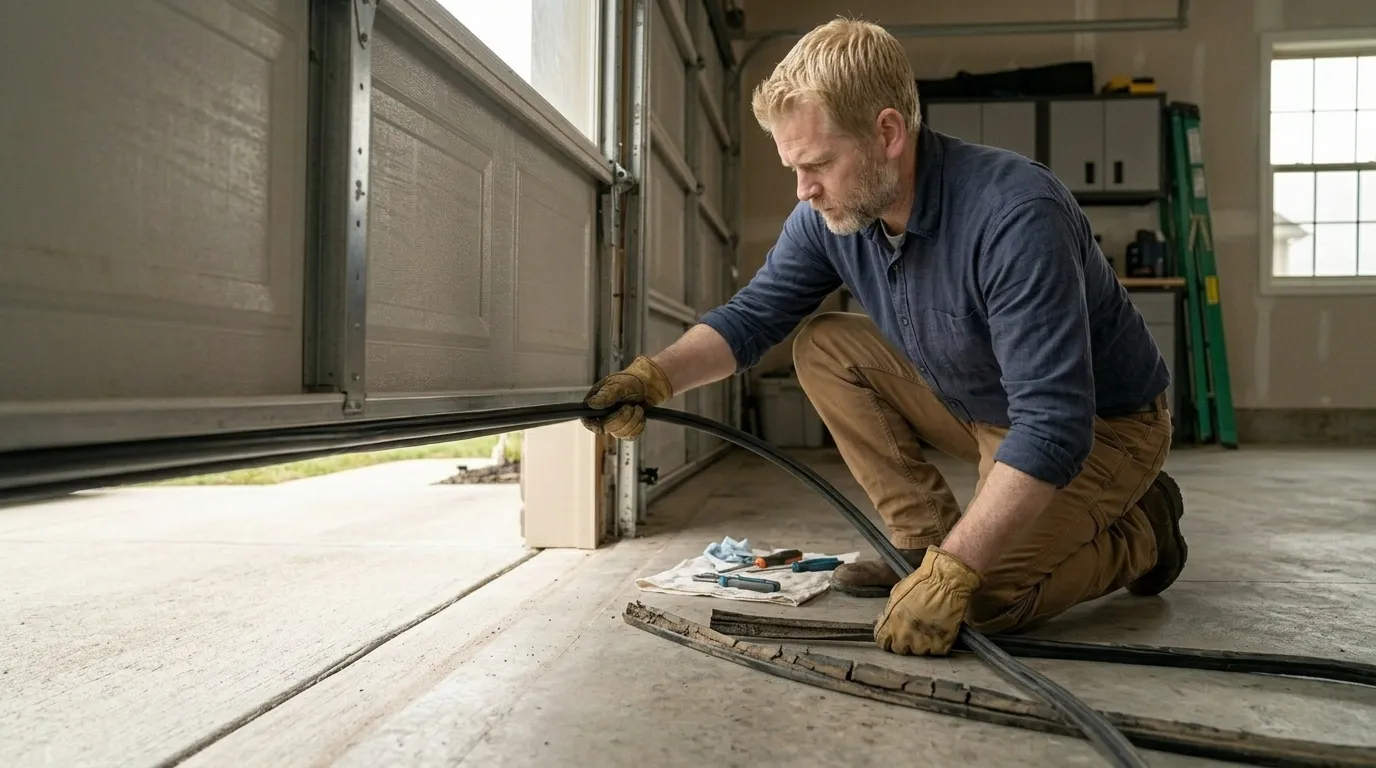
This area sits in a cold, moderate climate band, and on a house built around 1962 that combines badly with an uninsulated or thinly insulated panel - the kind that was standard when these garages were built. Cold makes steel contract and springs stiffen, so a torsion spring that was already marginal for the door's weight tends to fail in the coldest stretch of the year, not the mildest. On original 1960s hardware, we also see galvanized cable that's never been replaced and rollers that were steel, not nylon, wearing grooves into track that's technically still functional but noisy and rough. None of that is dramatic, but it's the pattern: older frame, later door, cold-weather spring stress. It's a different failure profile than you'd get on a house built in the 1990s with a factory-insulated door and modern extension springs. We work on both, but we bring different stock depending on which one we're driving out for.

What People Here Ring About

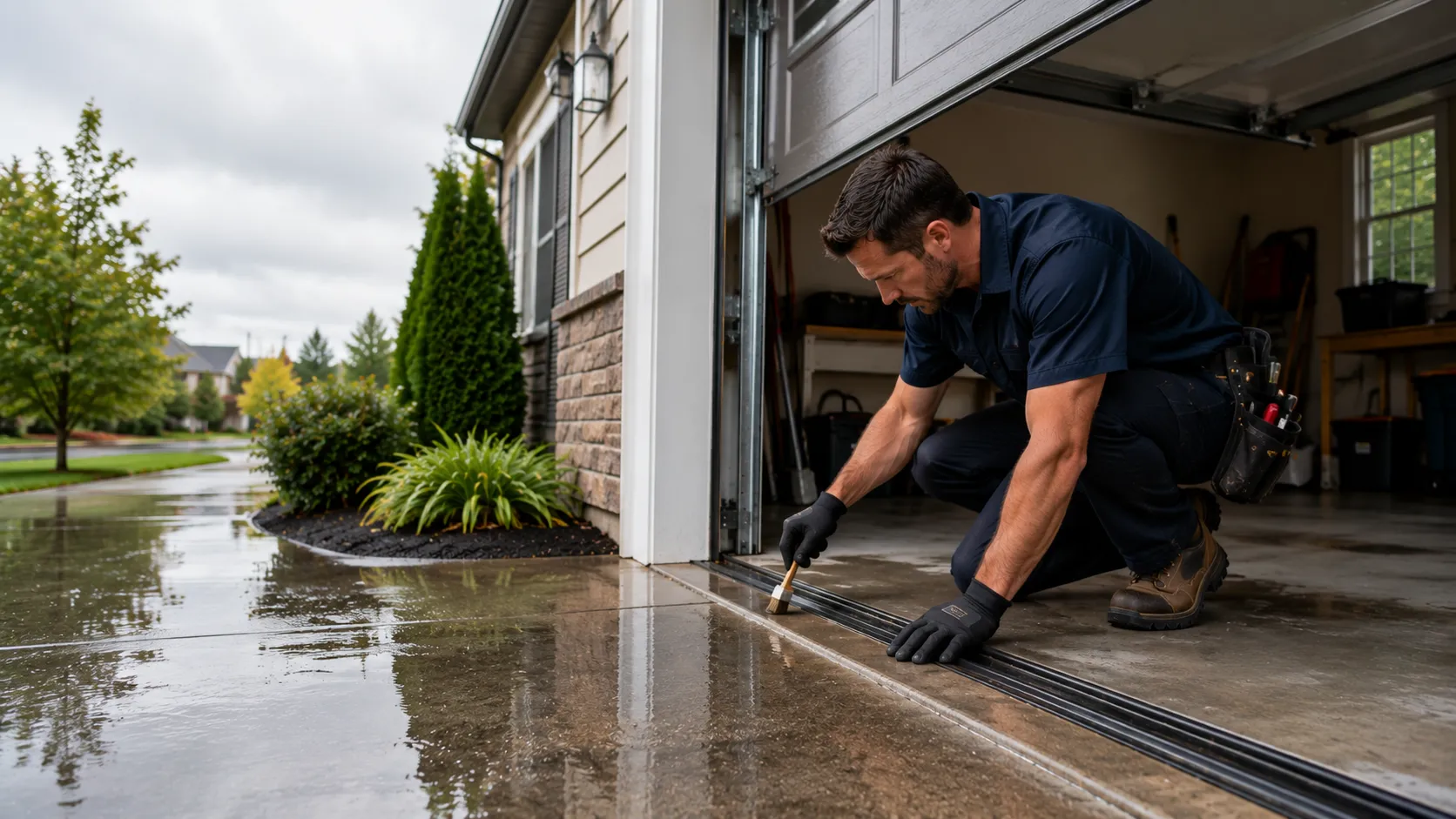
The calls we get from this area split a few ways. A good number are broken torsion springs, usually in cold weather, on doors that turn out to be original steel from the 1960s build era - once we're out there, replacing the spring with correctly sized hardware is usually the whole job. Others are openers that have started grinding or stopped responding, often because the door itself has gotten heavier from added insulation over the years and the motor is working harder than it was built for. We also get calls about doors that won't seal at the bottom, which on this housing stock is as often about a settled, decades-old frame as it is about the door itself. One thing we're upfront about: if your door and opener are both original to a 1962 build, sometimes the honest answer is replacement rather than another repair, since sourcing matching parts for that generation of hardware isn't always practical.
How it works

From “it’s stuck” to “it’s fixed”

1
Tell us what’s wrong - Chicago garage door service

Tell us what’s wrong

Describe the symptom - won’t open, loud bang, opener runs but the door won’t move.

2
On-site diagnosis - Chicago garage door service

On-site diagnosis

A technician tests the door under power and by hand and finds what actually failed.

3
Clear, up-front plan - Chicago garage door service

Clear, up-front plan

You get the fix that’s needed and what drives the cost - before any work starts.

4
Repaired & tested - Chicago garage door service

Repaired & tested

The repair is done, the door is set true and tested, and the work area left clean.

Serving Chicago, IL - tell us what your door’s doing and we’ll take it from there.

How we work

What to expect

Diagnosis firstEvery visit starts by finding what actually failed - not a pre-written parts list.
The right part for the doorSprings and openers matched to the door’s weight and age, so the fix holds up.
Straight answersWhen a repair makes more sense than a replacement - or the reverse - you hear it plainly.
Clean, careful workTension released safely, hardware set true, the door tested under power before we leave.
2,664,452Residents in Chicago
4Garage door services
110Neighborhoods & suburbs
ILServing Chicago, IL
Who we help

Residential & commercial

Residential garage doors

Homes in Chicago

  • Single- and double-car garages
  • Spring, cable & opener repair
  • New door installation
See services
Commercial garage doors

Businesses & property

  • Rolling steel & sectional doors
  • Loading-dock doors
  • Built for higher cycle counts
See services
Questions

Frequently asked

Straight answers about garage door repair in Chicago. Still unsure? Ask us directly.

Do you have a crew based in Homewood?

No. We're a Chicago company and Homewood is about 19 miles out, so every job here means a truck routed from the city. We stock it for what this area's older housing typically needs before we head out, but we're not pretending there's a local depot.

Why did my spring break in winter and not summer?

Cold steel gets stiffer and more brittle, and on a torsion spring that's already sized close to its limit - common on original 1960s-era doors here - winter is when the extra stress usually finds the weak point. It's a pattern we see often on this area's housing stock.

My house is original from the early 1960s - can you still fix the door?

Often yes, but sourcing exact hardware for that era gets harder every year. If the frame and track are original steel, we'll tell you honestly whether a repair makes sense or whether replacement is the better use of your money.

Is a same-day repair guaranteed?

We don't promise a response time for this area. We travel from Chicago, roughly 19 miles, and we'll give you a real window when you call rather than a guess we can't stand behind.

Ready to get your garage door sorted?

Tell us what it’s doing and where you are in Chicago - we’ll take it from there.

Request a QuoteCall