This Area's Housing
The typical house in Midlothian went up in 1964, which lines up with the median build year across the whole service area we cover from Chicago - a stretch that runs from 1938 to 1994. That's not a coincidence so much as a reflection of how this pocket grew: postwar, in a hurry, with a lot of single-family homes going up on the same kind of lot in the same handful of years. Compared to the 461,017 households spread across the 86 named areas we cover, Midlothian's roughly 5,834 households make it one of the smaller pockets on the list, but the housing story is the same one you'd find in most of them. Doors from that era were built for garages that are, by today's standards, narrow and short-headroom. A lot of that original hardware is still hanging on tracks that were never meant to run an opener, because openers weren't standard equipment when these houses were framed. If your door still has the low-headroom torsion setup or a one-piece slab door, you're looking at original 1960s equipment, not something installed in the last twenty years.
What That Means for Doors
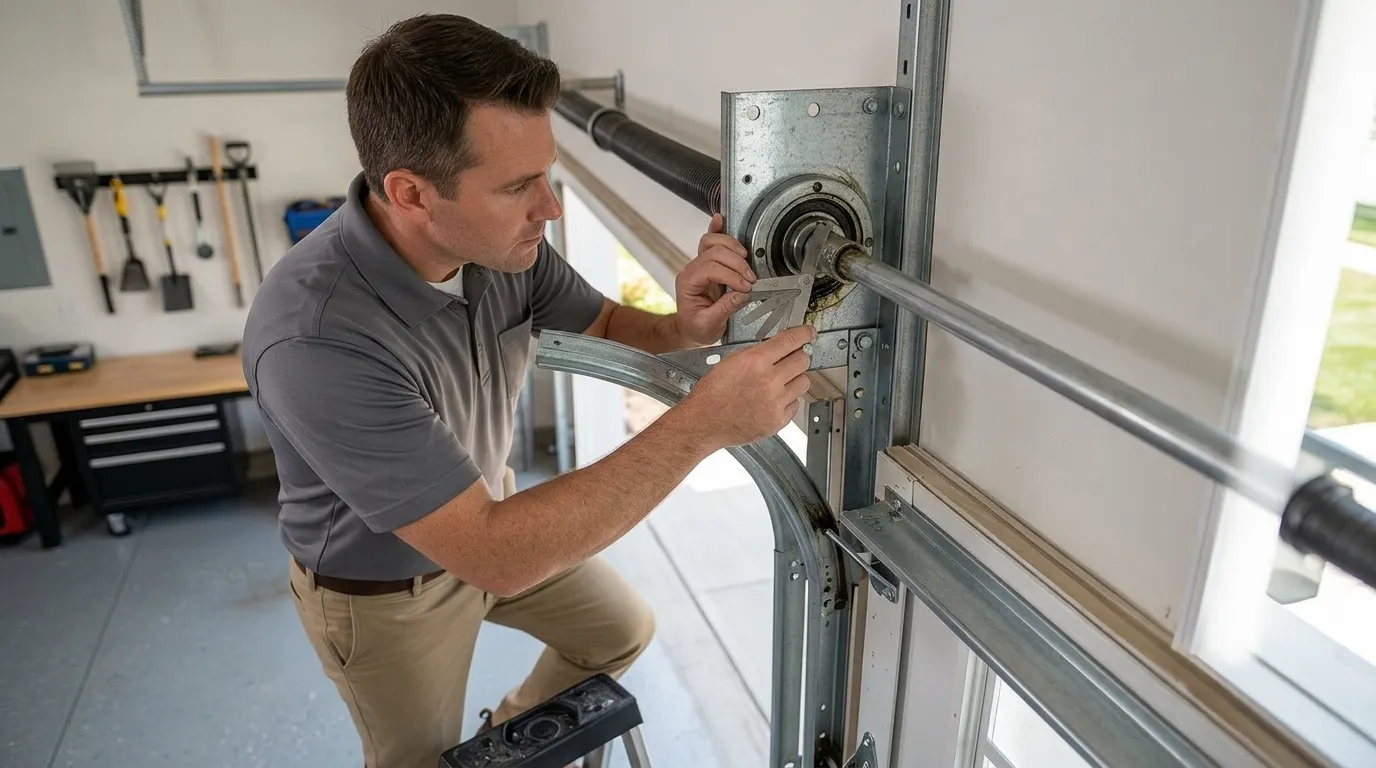
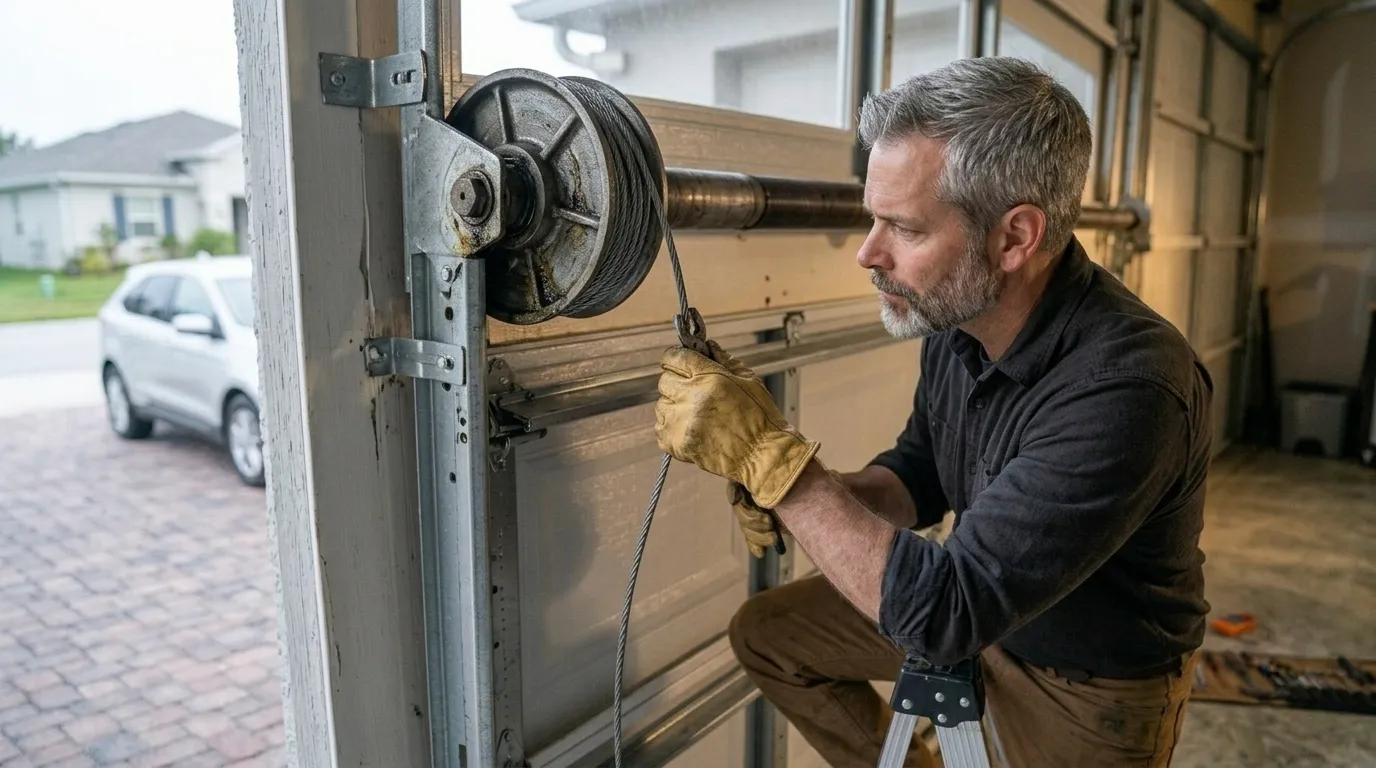
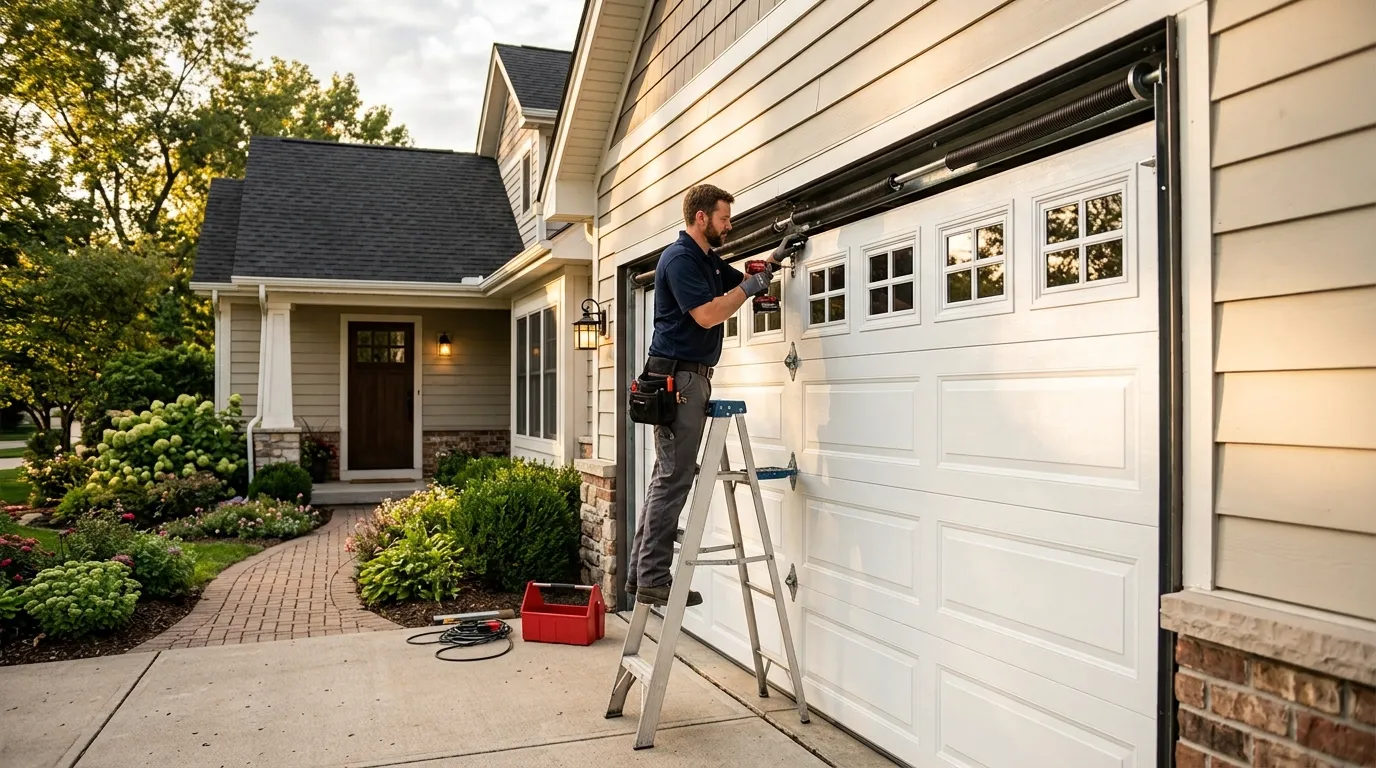
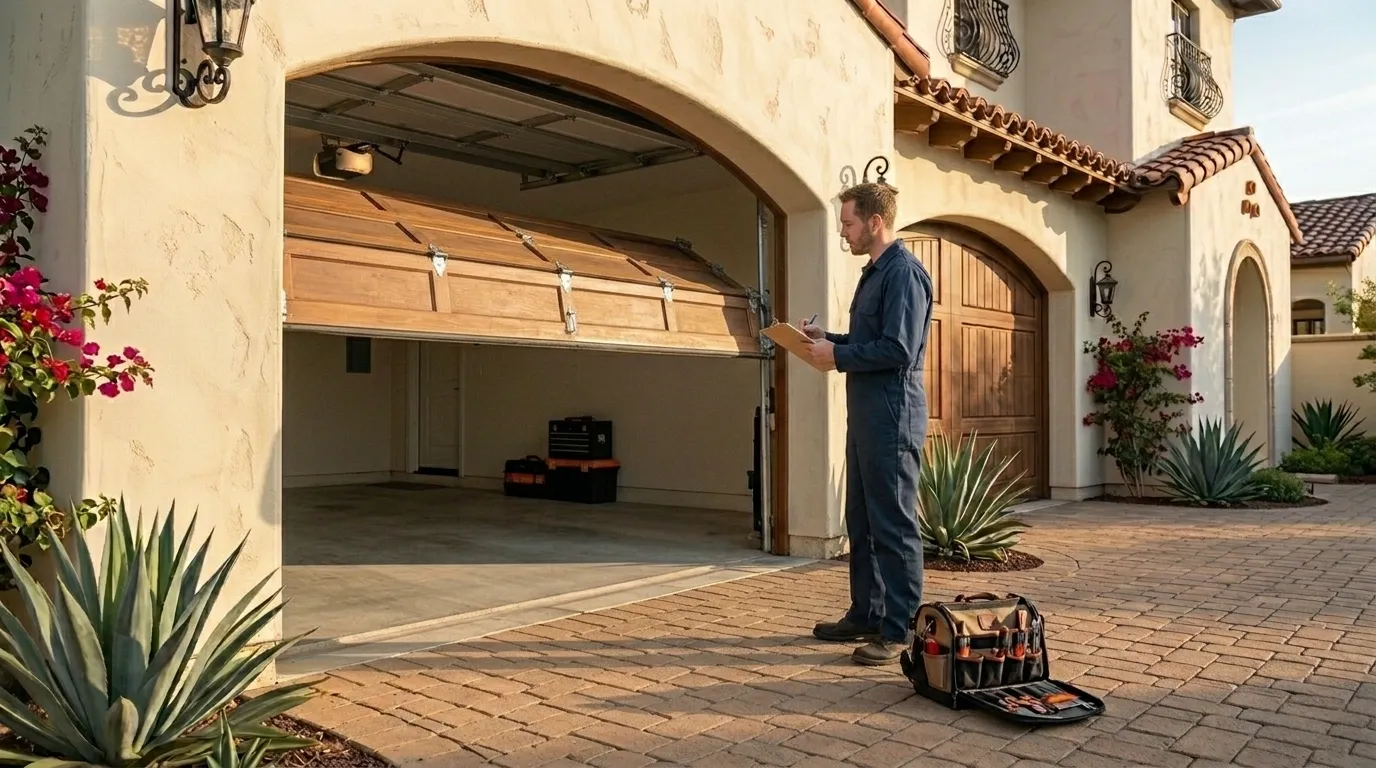
Cold weather does real damage to old steel and old lubrication, and this area sits in a moderate cold climate band, so winter is the season that usually finds the weak point first. A torsion spring that's been cycling since the 1960s or 70s doesn't care that it's original equipment - metal fatigues the same way whether it's forty years old or four. On the houses in this pocket, that usually shows up as a spring that lets go on a cold morning, or an opener that's been straining against a spring that's already lost tension without anyone noticing. Original one-piece doors on side-mounted torsion hardware are common enough here that we don't treat them as unusual, but they are a different repair than a modern sectional door with extension springs - the parts and the leverage math aren't interchangeable. Sometimes the honest answer on a door that old is that a new spring buys you a few more years and sometimes the track and hinges are worn enough that replacement makes more financial sense than patching one more part on a fifty-year-old door. We'll tell you which one it is rather than default to the bigger job.
What People Here Ring About
Median household income in this pocket runs $67,872, noticeably below the $80,202 median across the wider service area, and that shows up in the kind of calls we get - people wanting the actual failed part fixed, not a wholesale door replacement, unless the door genuinely isn't worth saving. The most common call is a broken torsion spring, usually on a door that's been getting harder to lift for weeks before it finally lets go. Second most common is an opener that's stopped responding, often because the drive gear or capacitor has worn out on a unit installed decades after the door itself. We also hear from people whose rollers are grinding in the track, which on a house from this era usually means steel rollers that were never upgraded to nylon. One thing we're upfront about: if the door's original hardware and it's been failing part by part, we'll tell you when it's cheaper over time to replace the whole unit instead of feeding it one repair at a time.