This Area's Housing
Most of the housing stock here dates to around 1977, which puts it noticeably younger than a lot of the rest of the territory we cover. Across the wider service area the median build year sits closer to 1964, with most stock going up in the 1960s and 70s across the 86 named areas we work in - but this particular stretch skews to the later end of that window, closer to a mid-70s build-out than a postwar one.
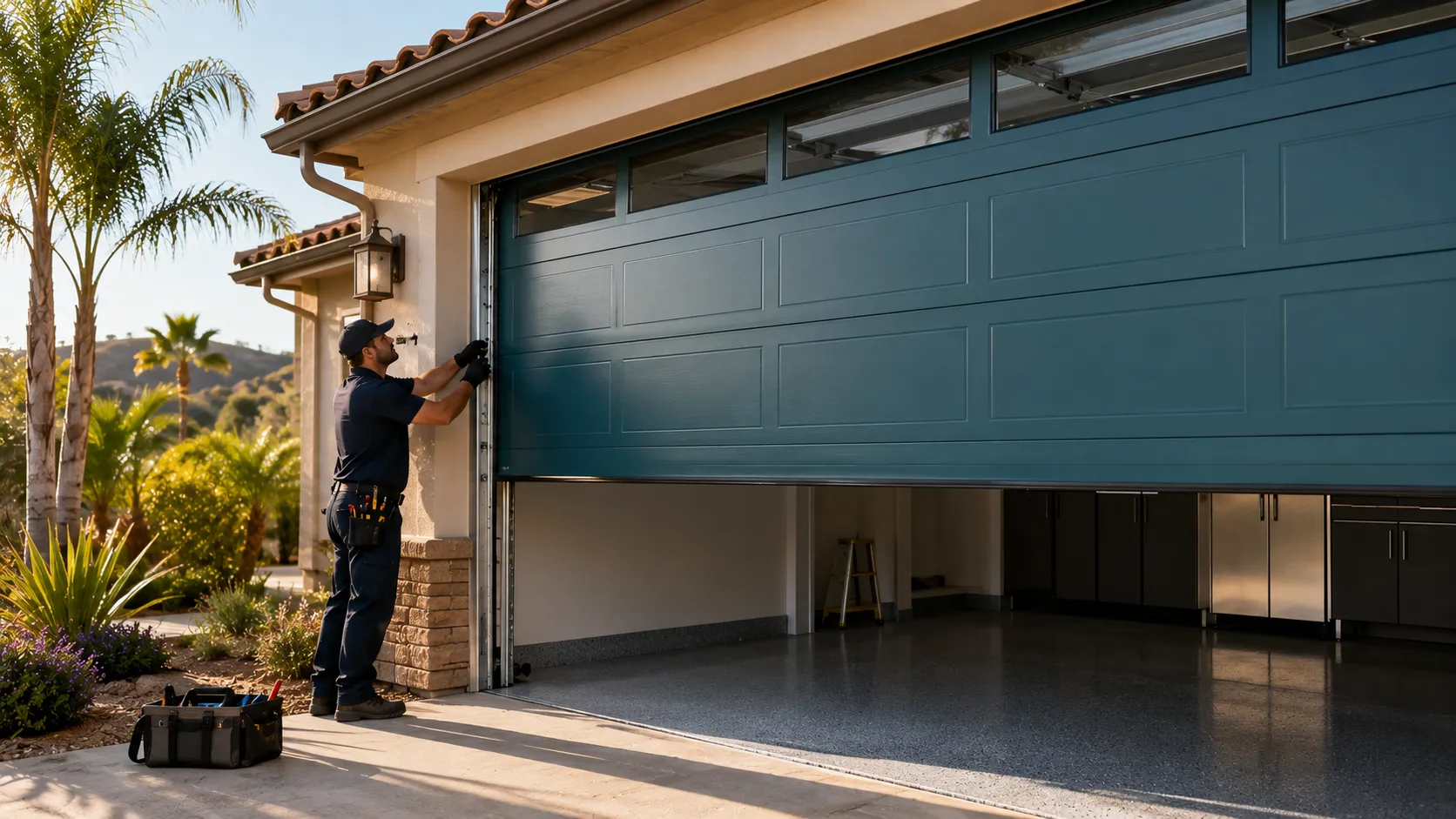
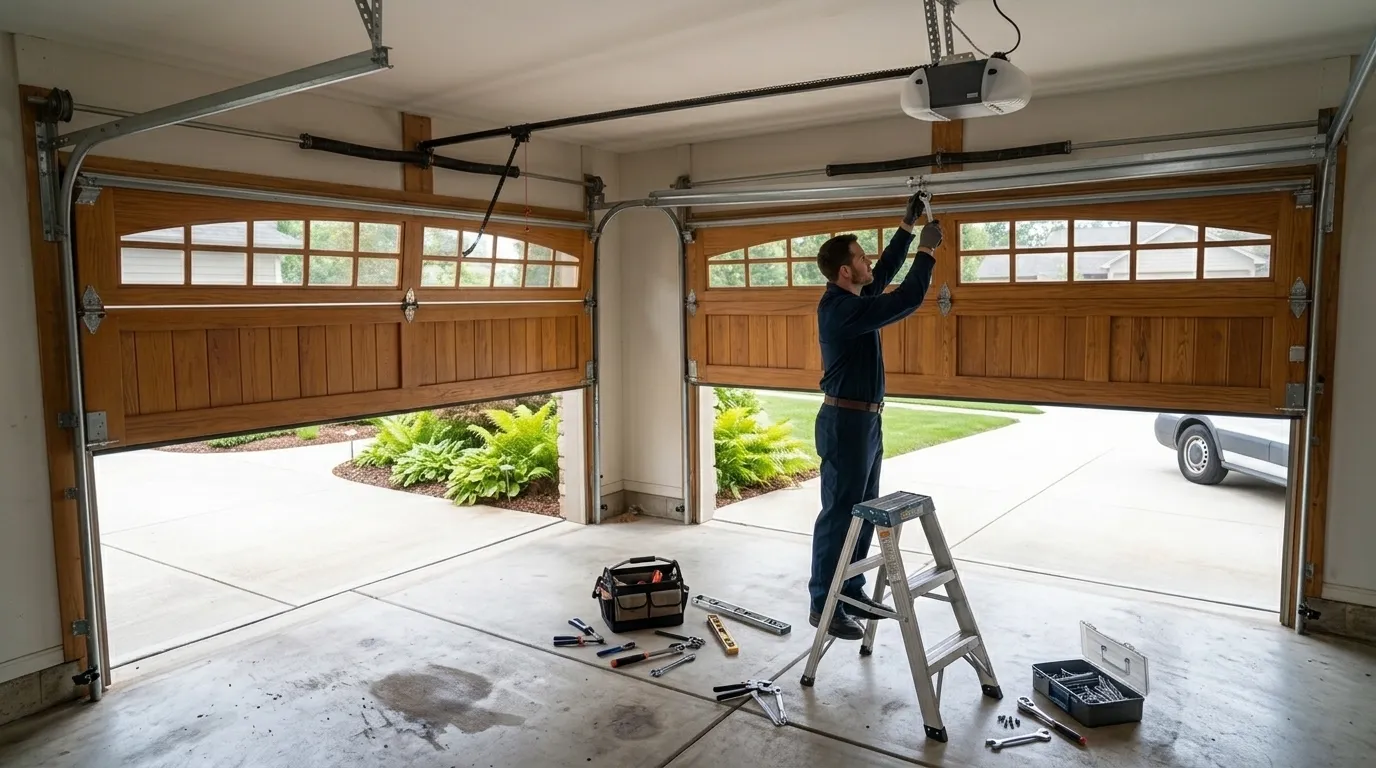
That matters more than it sounds like it should. A house framed in 1977 was built after torsion-spring setups had become the standard on new residential doors, rather than the older extension-spring rigs still common on homes from the 1950s. It also means original garage doors here, if they're still in place, are steel or aluminum sectional units on hardware that's now pushing fifty years old - old enough to be tired, but a different generation of tired than what you'd find on a 1948 build.
With about 1,320 households in this pocket, it's a small slice of the roughly 461,017 households across the full coverage area, and one of the more compact markets we serve. Median household income here runs $70,586, a bit under the area-wide figure of $80,202, which tends to track with more owners holding onto original hardware longer before replacing it outright.
What That Means for Doors
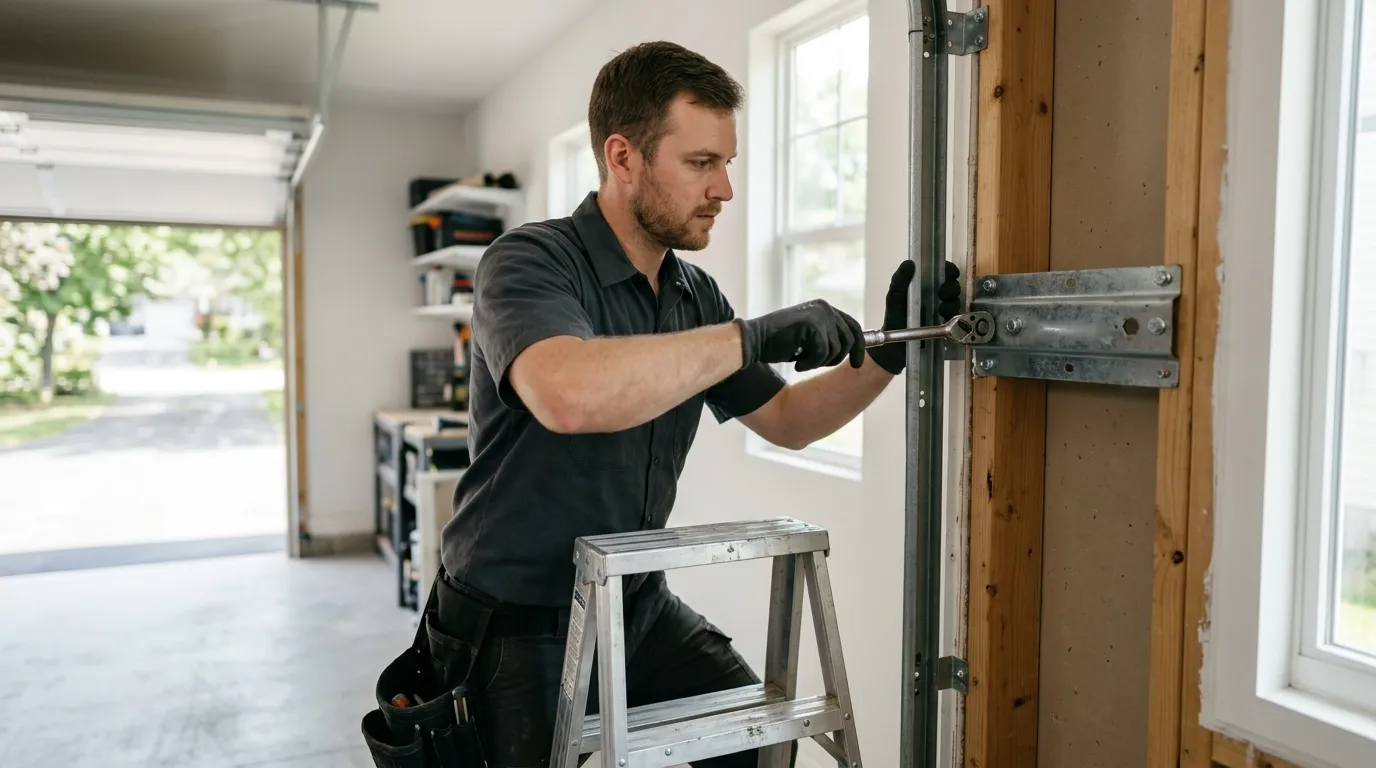
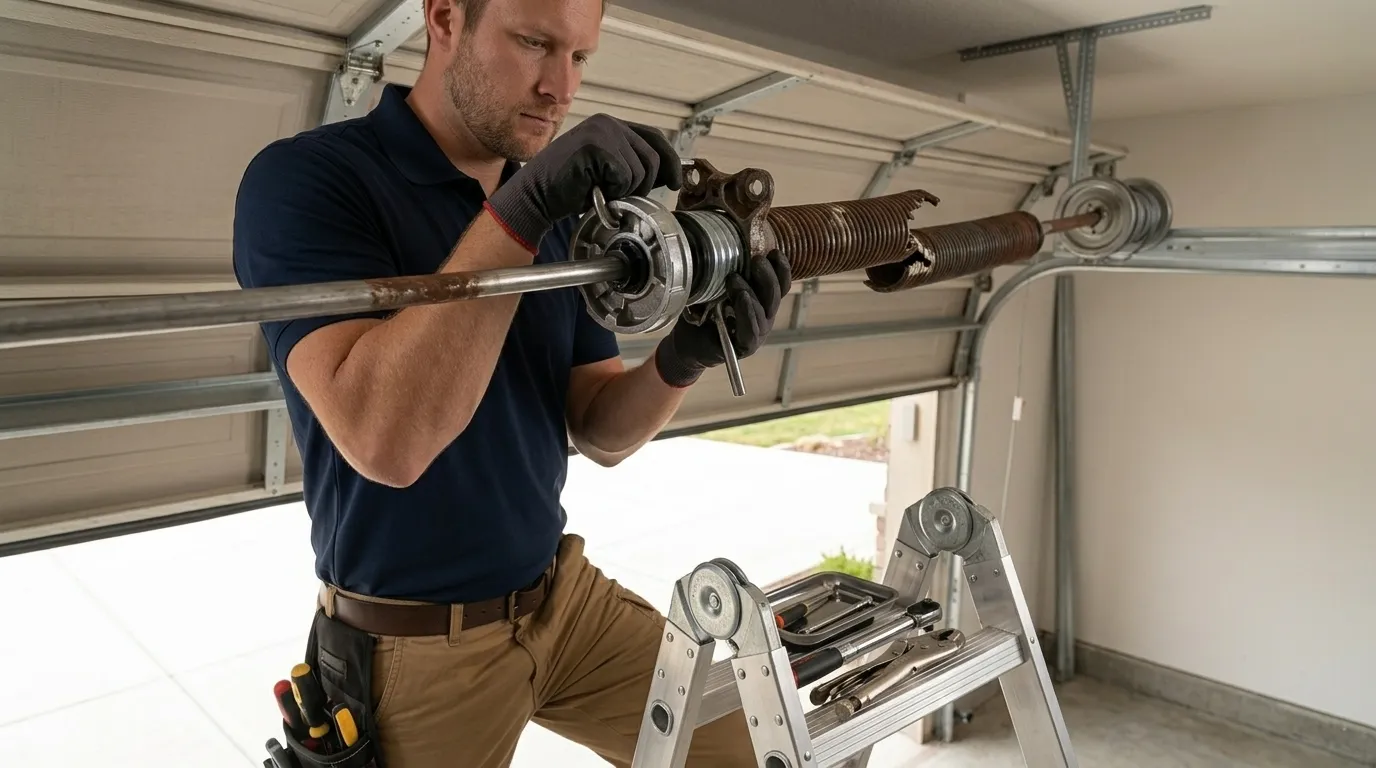
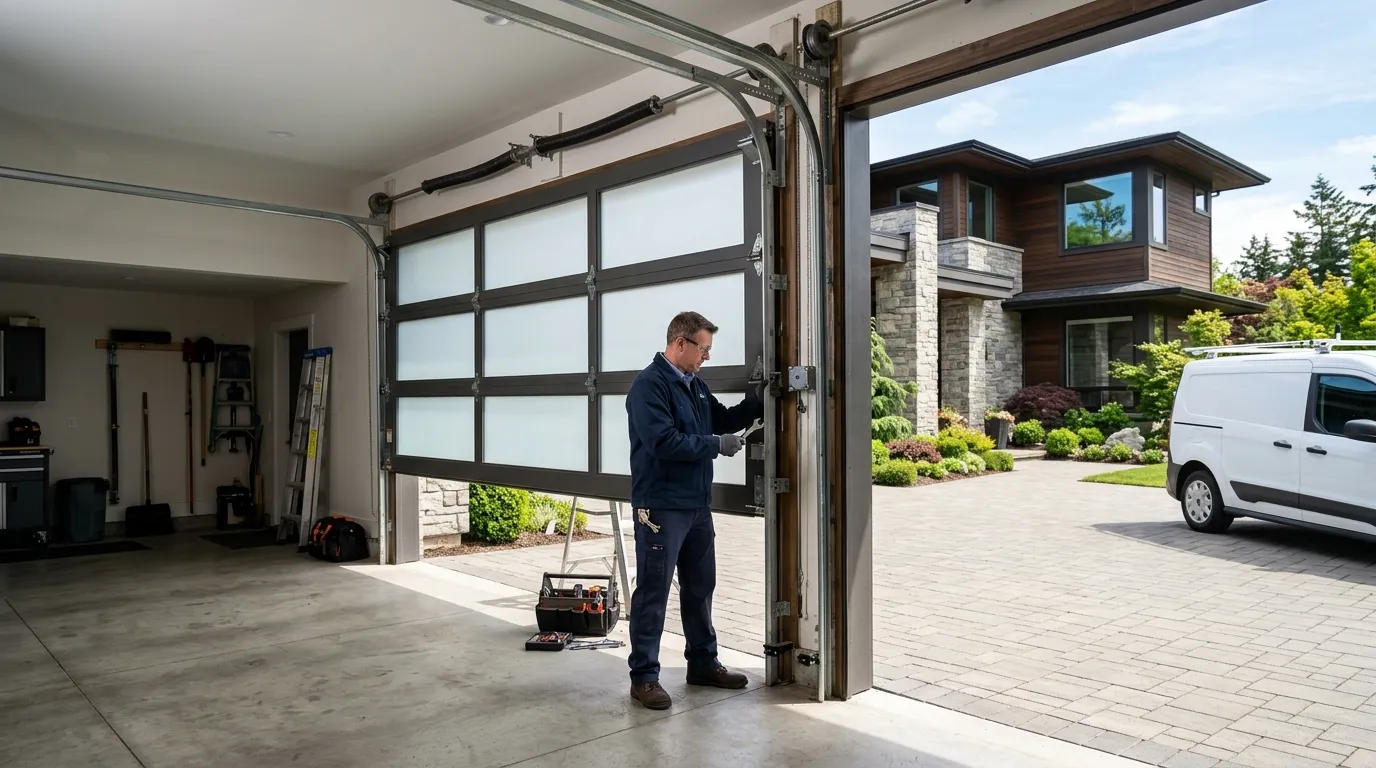
A door installed around 1977 was almost certainly built with torsion spring hardware mounted over the header, not the older extension springs stretched along the horizontal track that you still find on older homes elsewhere in the territory. That's good news in one sense - torsion systems are more predictable to service - but the springs themselves are now decades past their rated cycle count on most of these doors, and steel components from that era don't always match what's stocked on trucks today.
Openers from houses built in the mid-to-late 70s were retrofitted in later decades in most cases, since chain and belt drive openers weren't standard equipment on new construction that far back. So the door hardware and the opener hardware on a lot of these houses are actually from two different eras entirely, which is worth knowing before you assume a single fix covers both.
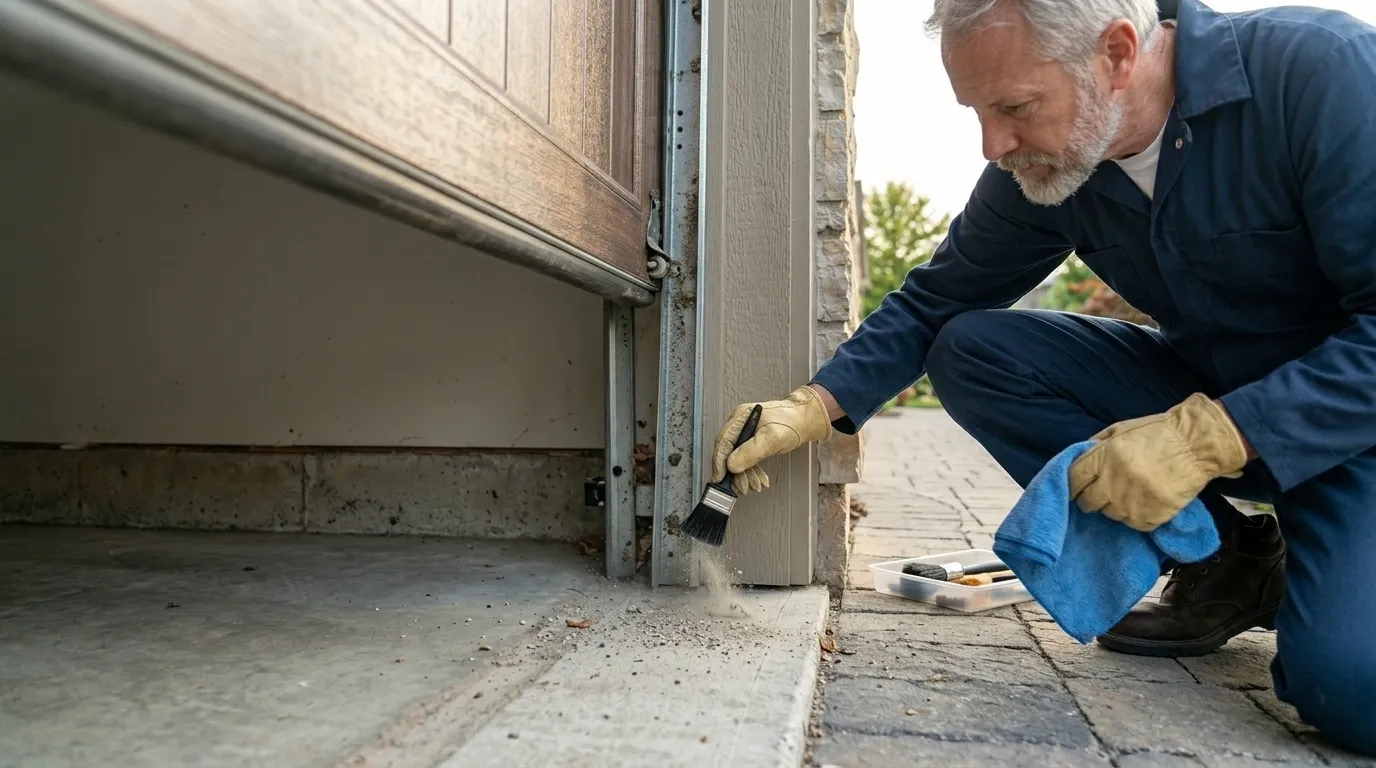
Winters here fall in the cold-moderate band for the region, and cold makes old lubricant on original rollers and hinges seize up fast, which is often what turns a slow door into a stuck one overnight.
What People Here Ring About
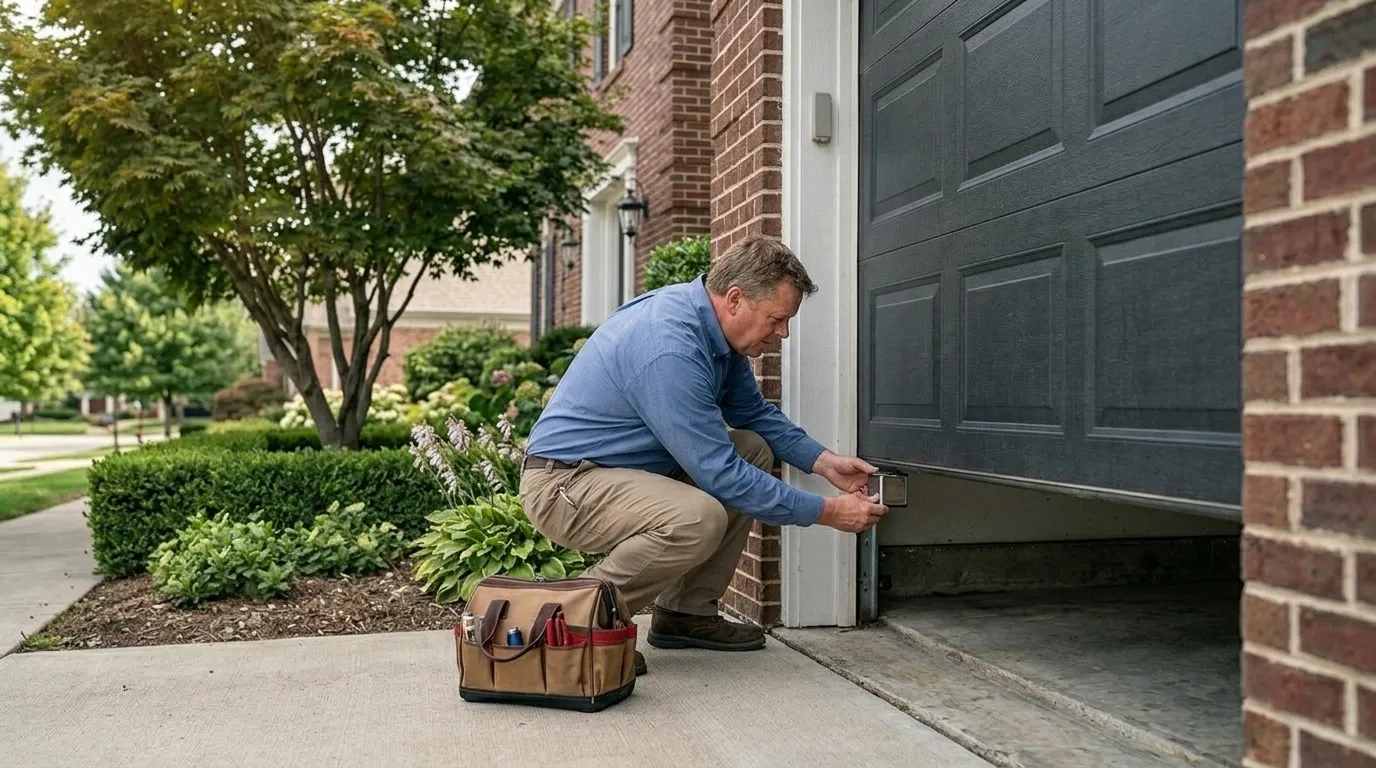
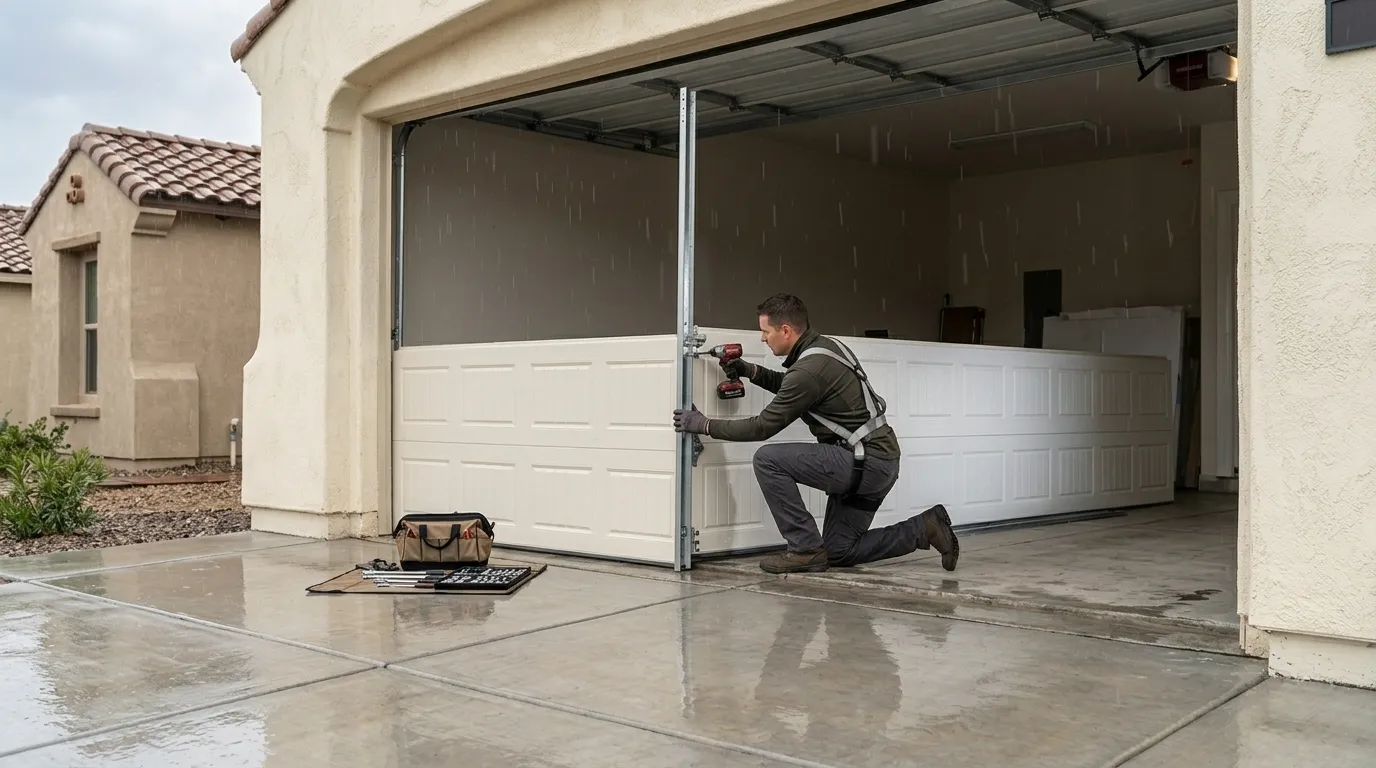
Given the age of the hardware, the calls we get from this stretch lean toward torsion springs finally giving out after decades of cycles, openers from a later retrofit that have simply worn through their gears, and rollers that have gone dry and noisy on original tracks. Panel damage from a car bump or a stuck opener forcing a bent door shows up too, same as anywhere.
One honest limitation: parts for some of the original steel sectional doors from this era aren't something we keep on the truck as standard stock, since the panel profiles from the mid-70s aren't universal across manufacturers. If a full panel needs replacing rather than just hardware, we'll tell you upfront if that means a special order and a longer wait, rather than promise a same-day fix we can't back.