This Area's Housing
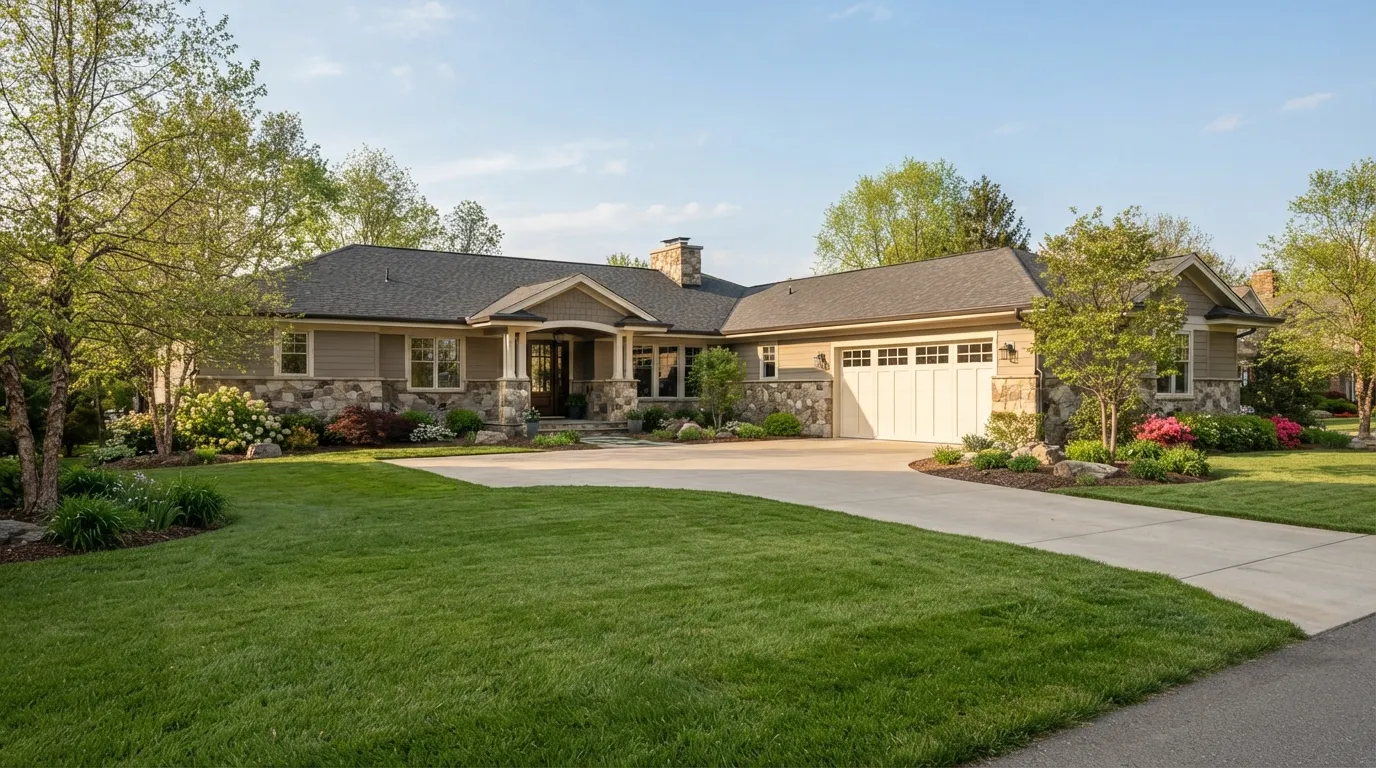
Palos Park's housing stock centers on a median build year of 1974, which puts it a decade newer than the wider service area's median of 1964 (houses here mostly went up 1938-1994). That gap matters more than it sounds. A home built in 1974 came with a different garage door standard than one built in the 1950s - wider single-car openings gave way to double-wide two-car garages, and torsion spring systems started replacing the older extension-spring setups builders used through the 1960s. With 2,052 households in Palos Park and a median income of $126,263, well above the service area's $80,202 median, we also see more owners investing in insulated steel doors and upgraded openers rather than patching what's there. That combination - newer original hardware, higher rate of upgrades - means the calls we get here skew toward opener electronics and worn rollers on doors that are otherwise structurally sound, not full door replacements on doors past their working life.
What That Means for Doors
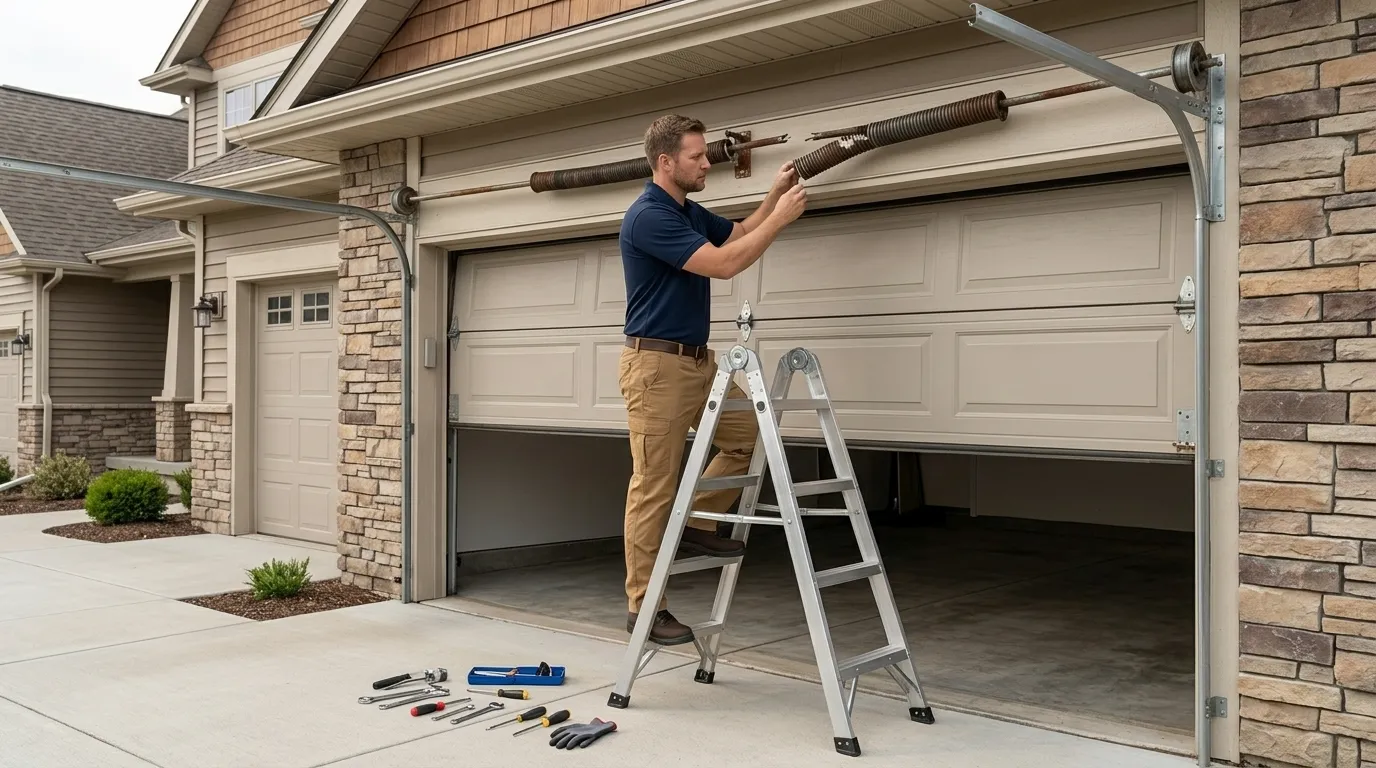
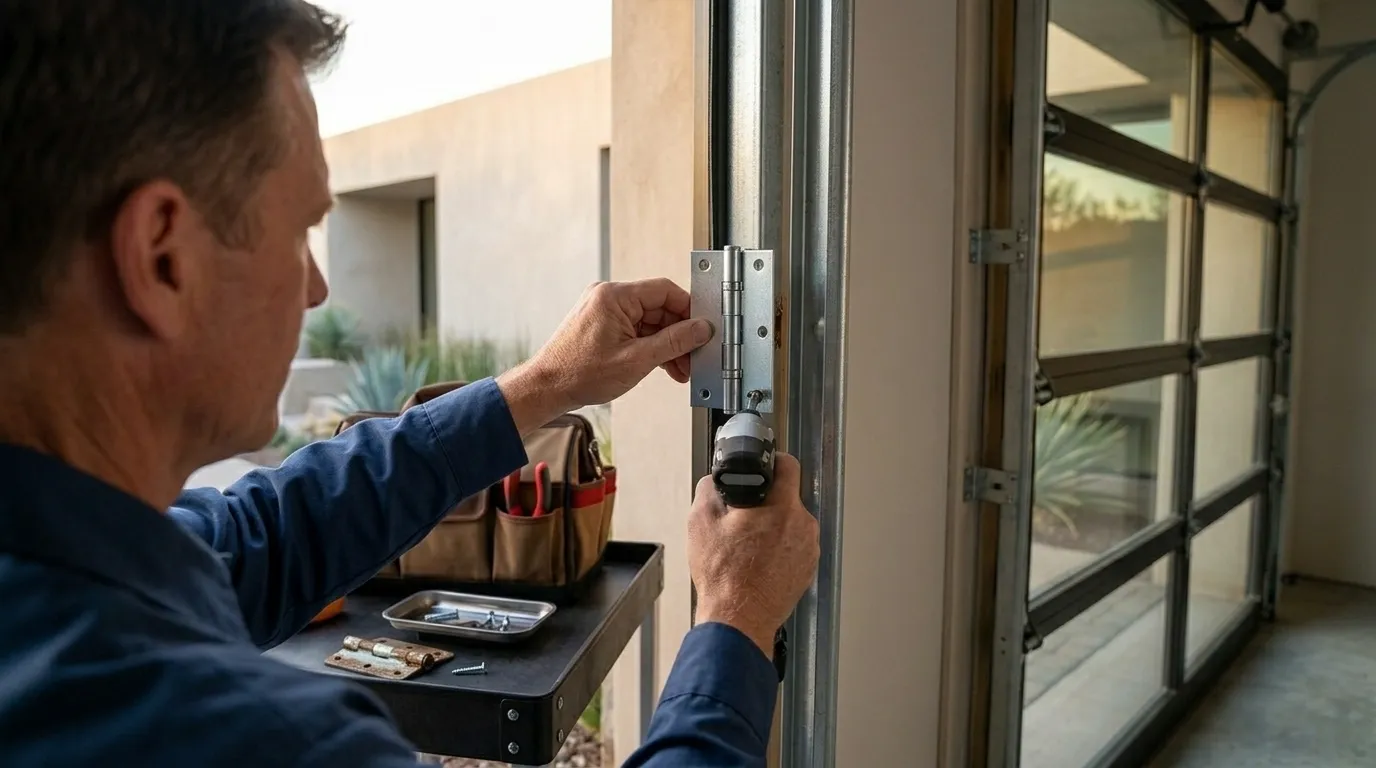
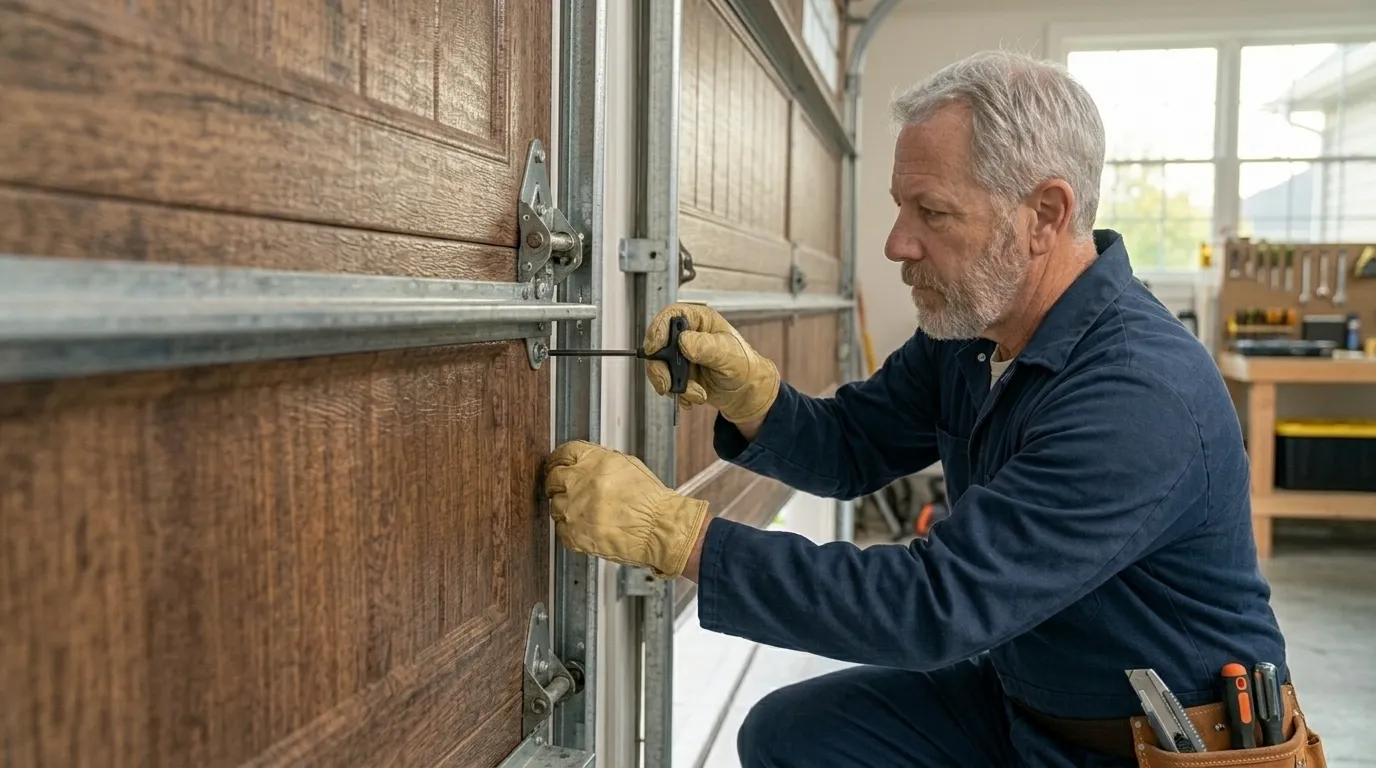
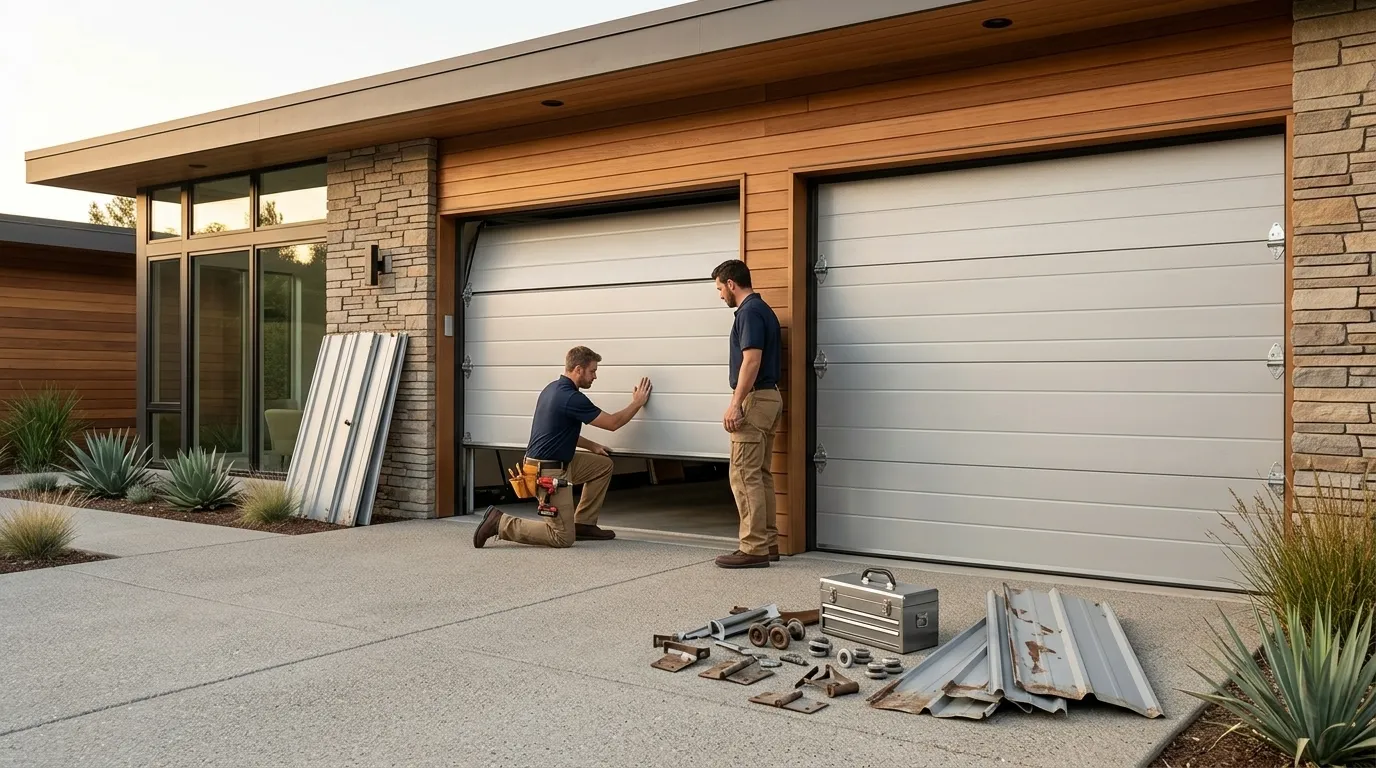
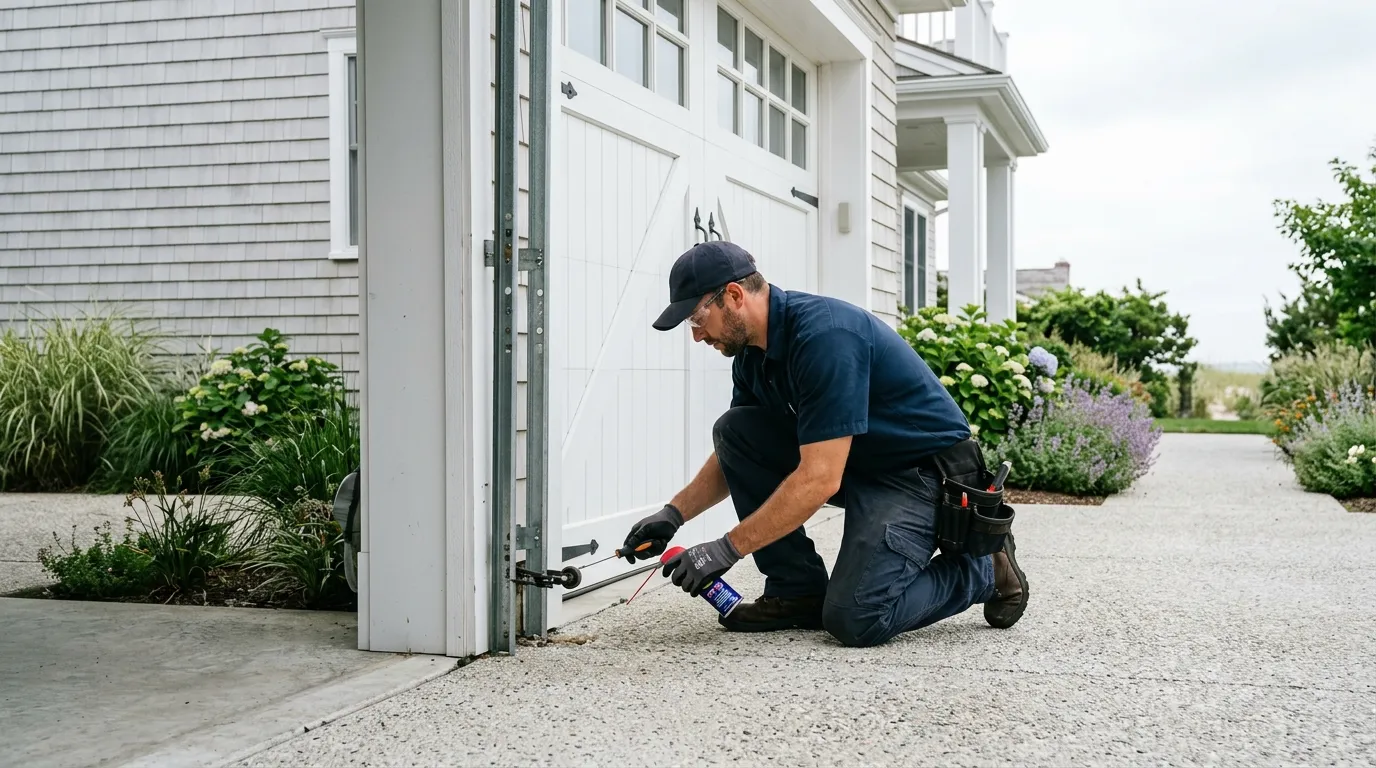
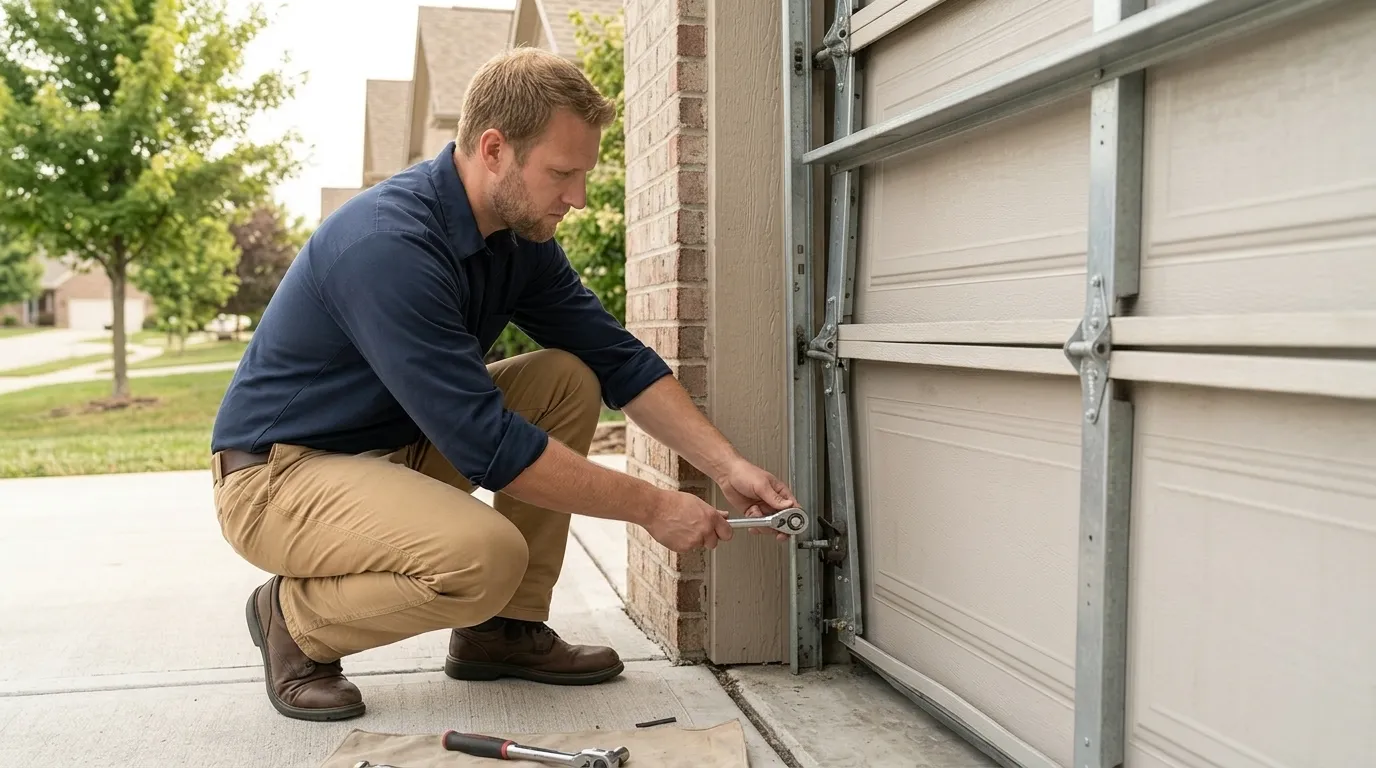
Because most Palos Park garages date to the early-to-mid 1970s, the hardware pattern is fairly consistent: torsion springs mounted on a single shaft above the door, steel roller tracks, and either the original chain-drive opener or a replacement installed sometime in the last two decades. Under the service area's cold moderate climate, that mid-70s steel is often original and starting to show it - rust at the bottom bracket, hardened lubricant on rollers, springs that have cycled past their rated life. The upside of a 1974-median build is that panel sizes and track widths are standard enough that parts aren't a scavenger hunt the way they can be on pre-1950 doors. The downside: original torsion springs from that era were sized for lighter, uninsulated panels, so a homeowner who's since upgraded to a heavier insulated door may be running springs that are undersized for the new weight - a mismatch that shows up as an opener straining or a door that won't stay open on its own.
What People Here Ring About
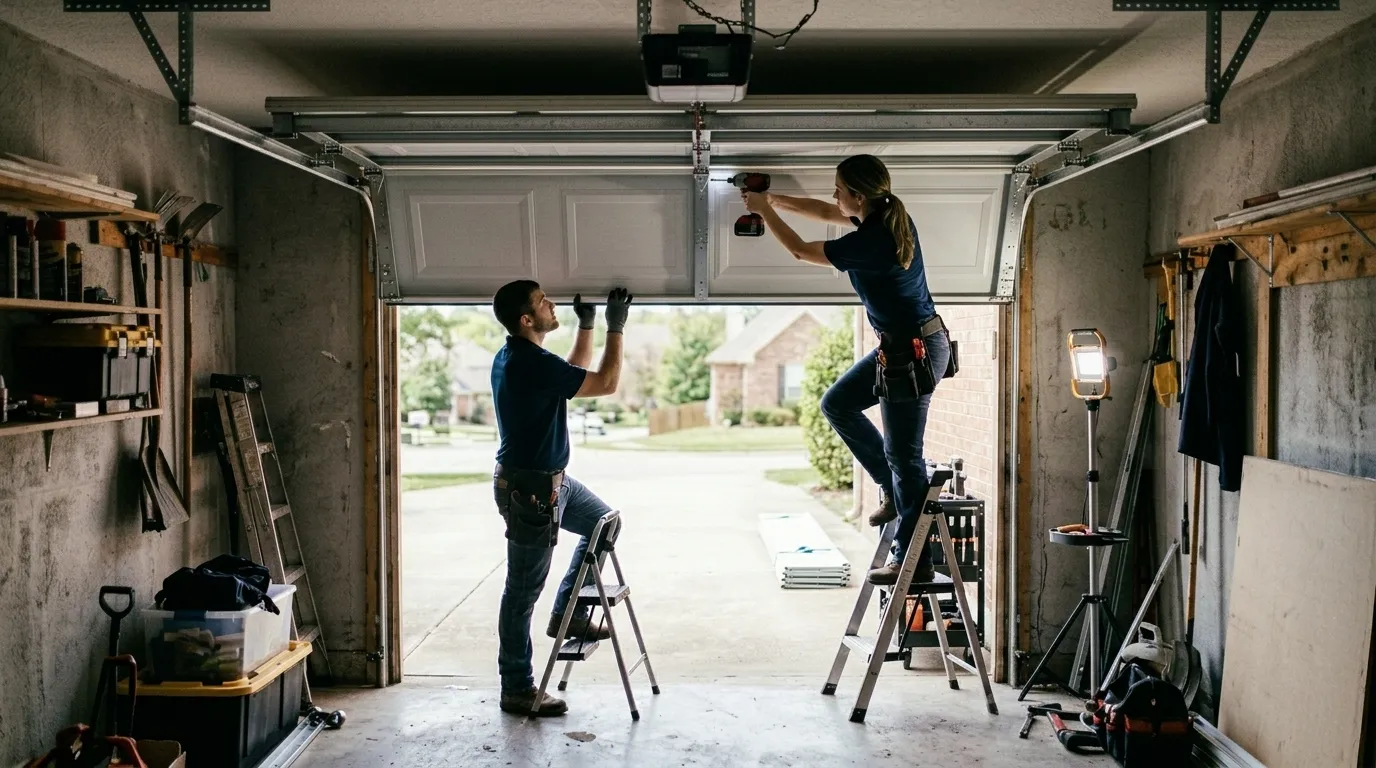
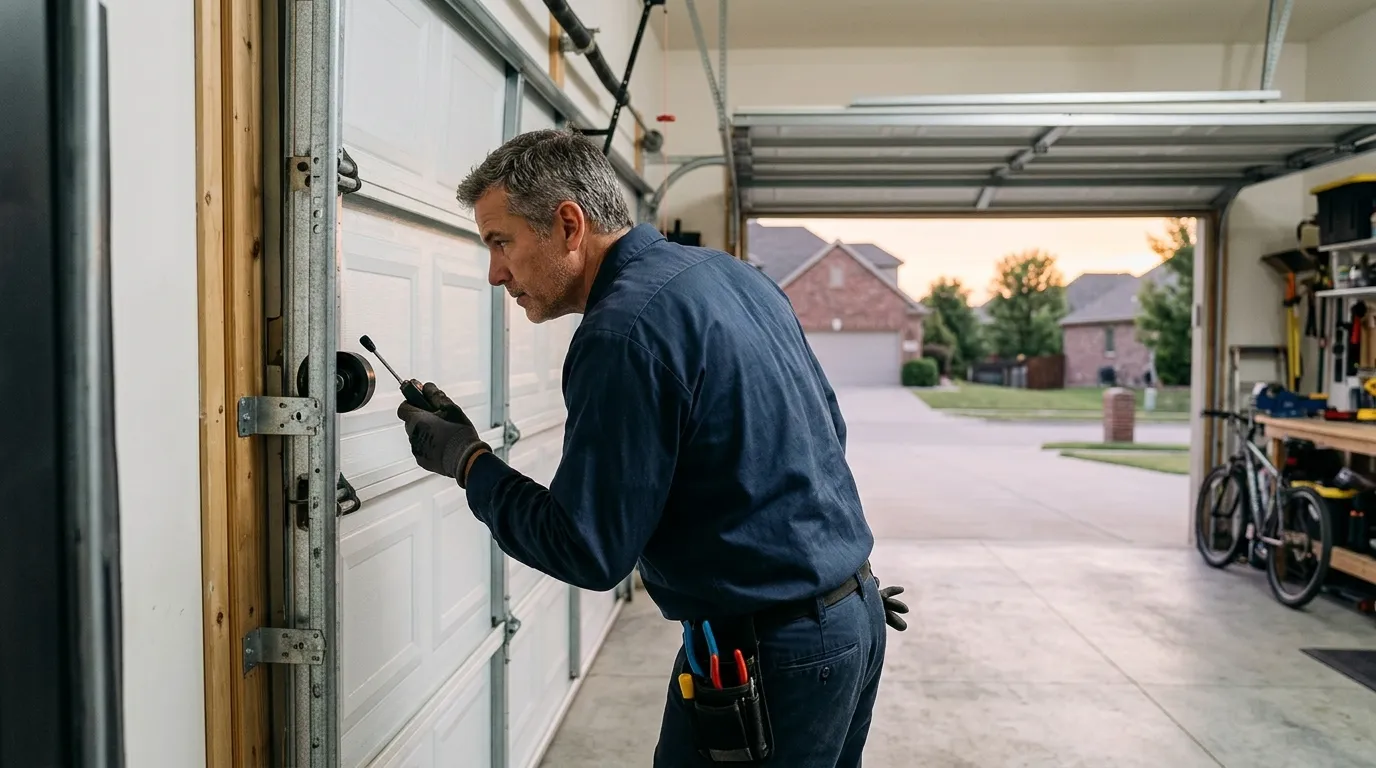
Given the age and income profile here, the calls fall into a few buckets. A fair number are opener replacements - homeowners moving from an old chain-drive unit to something quieter, sometimes paired with battery backup, which tracks with the higher rate of home investment income like $126,263 tends to support. Others are spring swaps on doors where the original torsion spring finally gives out after decades of cycles. We also get calls about doors that bind or drag in the track, usually from a bent roller bracket rather than anything structural. One thing we're upfront about: if a door's cable has snapped or a spring has broken, we won't try to force the door open by hand for a quick fix - that's how people lose fingers. We tell owners to leave it shut and call, even if it's inconvenient for a day.