This Area's Housing
Schiller Park's houses cluster tight around 1963, which puts this area right at the middle of the wider service region's 1938-1994 build window. That single number tells you more than a decade range would. A house built in 1963 got a garage door and opener setup designed for a different era of hardware: often a single steel panel door, torsion springs mounted on a stationary center bracket, and openers that have been swapped once or twice since but bolted onto framing that hasn't moved. With 4,240 households in the area, that's a lot of garages holding onto the same basic bones even after decades of updates elsewhere in the house. We see fewer of the multi-panel insulated doors that show up in newer subdivisions, and more of the older single-layer steel that dents easy and rusts at the bottom panel first. Median household income here runs about $67,473, noticeably under the wider area's $80,202, which shapes the calls we get - more patch-and-repair requests, fewer full teardown replacements. None of that is a knock on the neighborhood. It just means the fixes that make sense here aren't always the fixes that make sense three towns over.
What That Means for Doors
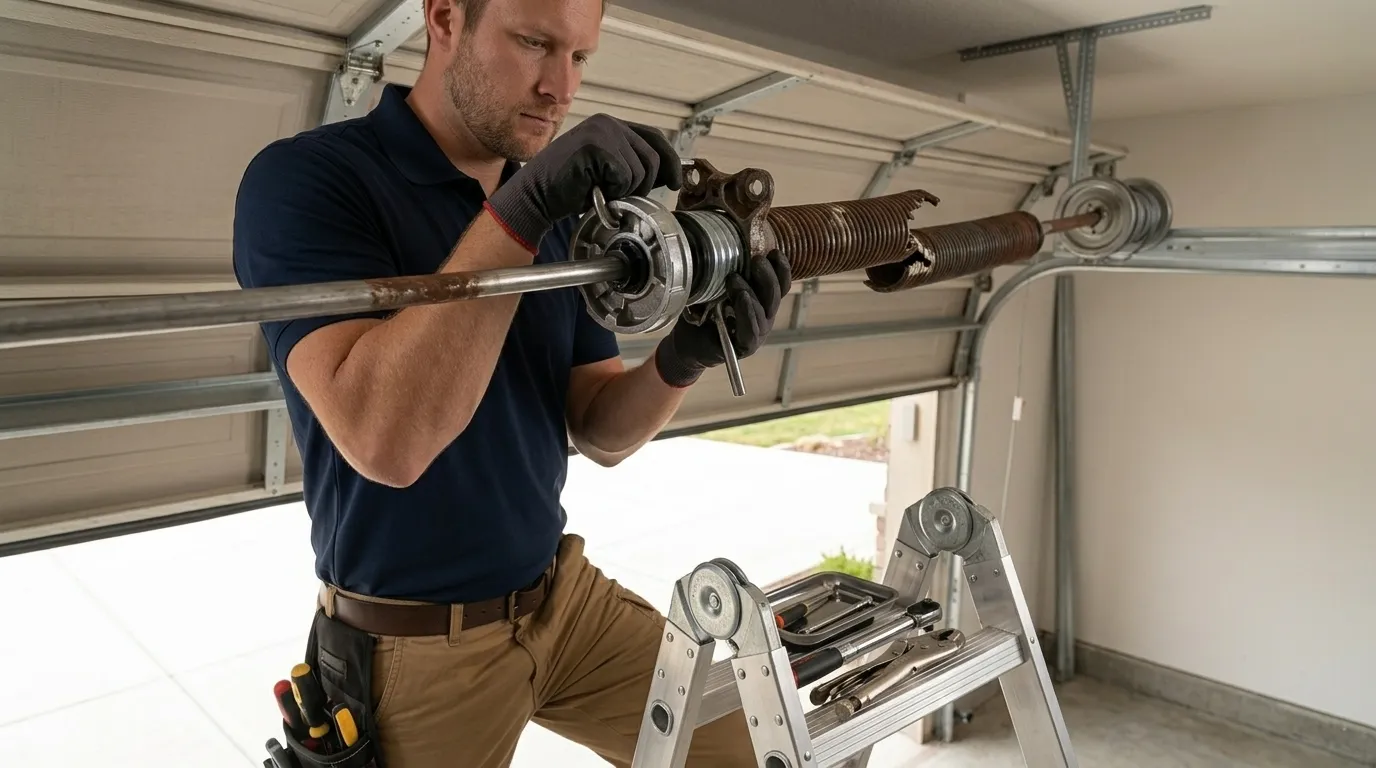
A door installed around 1963 wasn't built to the same spec as anything going into new construction now. Torsion springs from that period were often undersized by today's cycle-life standards, so they fail sooner and with less warning - a loud bang rather than a slow sag. Steel doors from the era also tend to run one thickness, with no foam core, so panels dent from a stray bumper tap in a way insulated doors resist. In this area's climate - cold winters with real freeze-thaw swings - original steel without insulation flexes more at the seams over the years, which loosens hinges and stresses rollers faster than it would in a milder climate band. That's not a defect specific to any one house; it's what forty-plus winters do to steel and hardware built for a different set of expectations. When we're out on a call here, we're usually not diagnosing a mystery - we're confirming that a 60-year-old spring finally gave out, or that the roller track has worked loose from repeated seasonal contraction.
What People Here Ring About
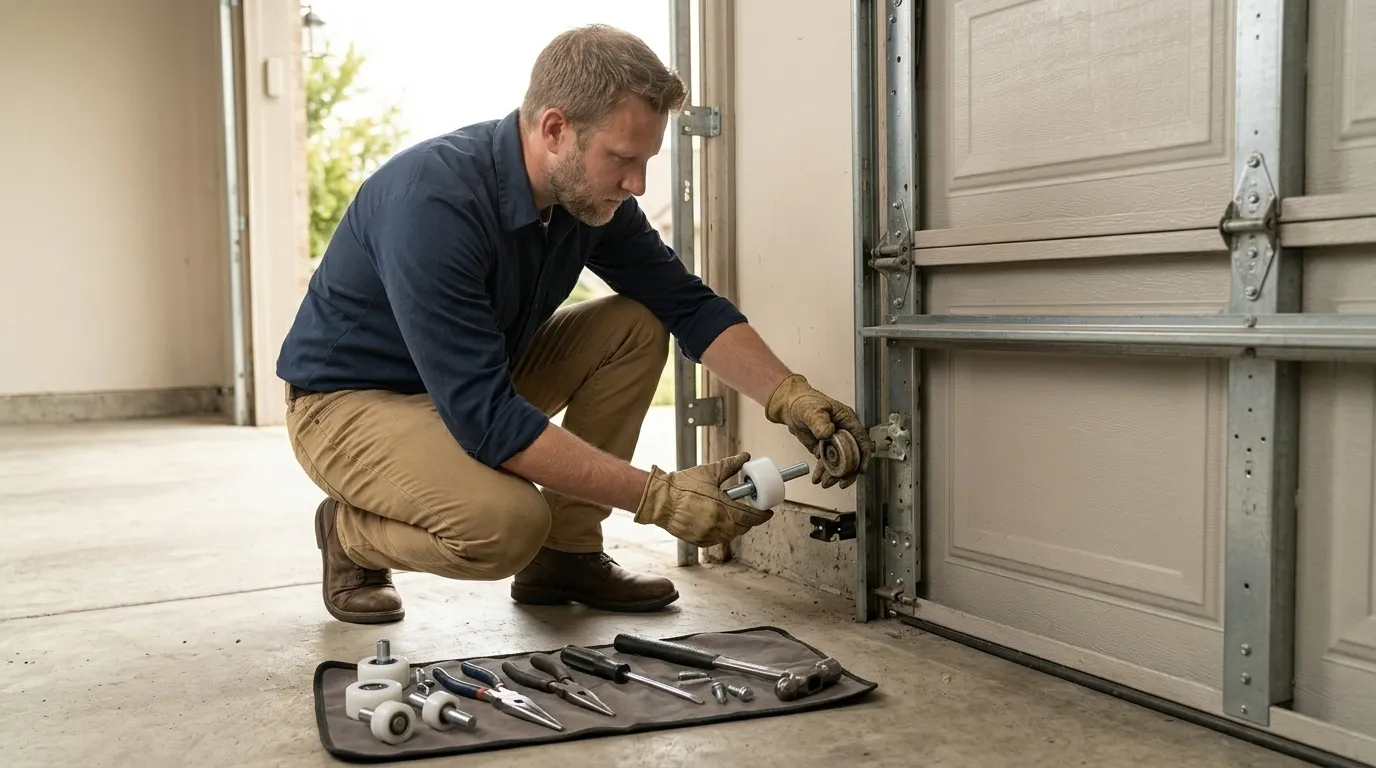
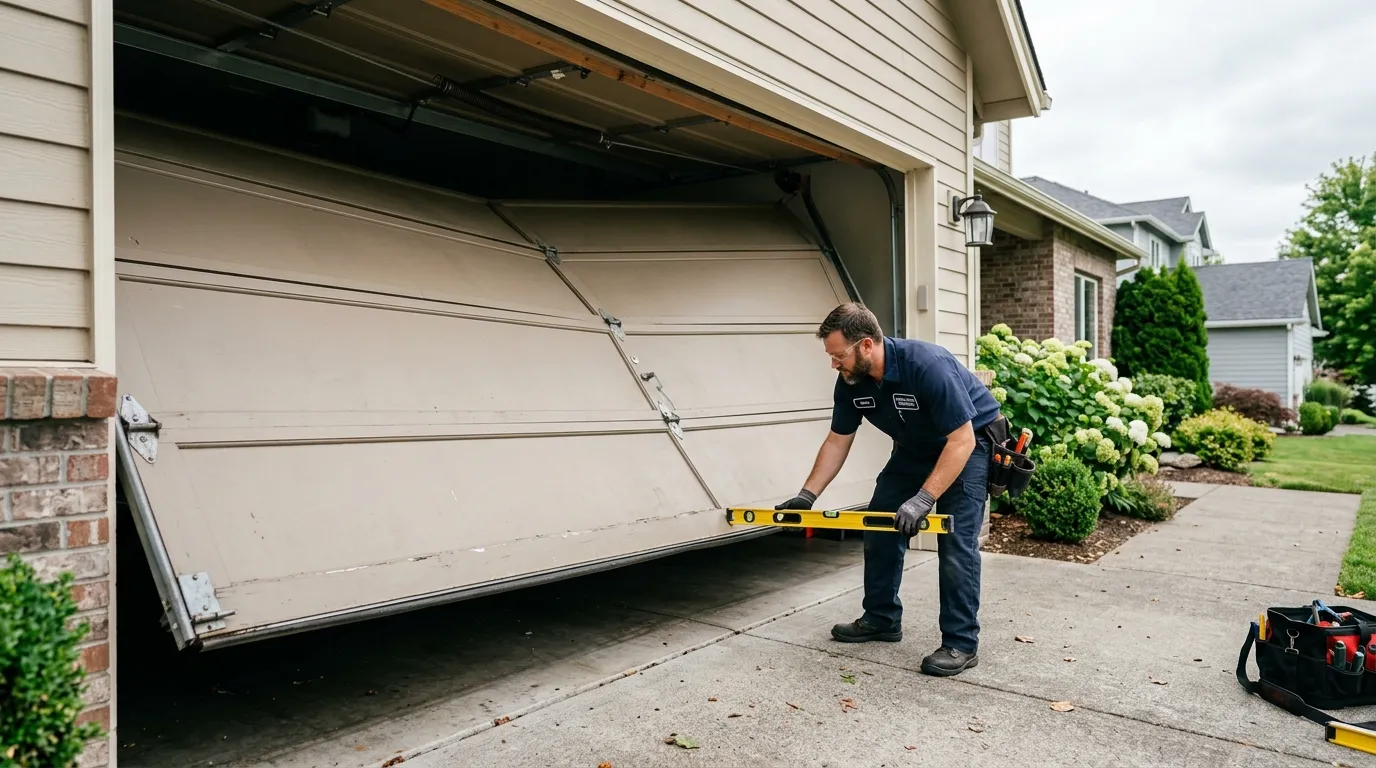
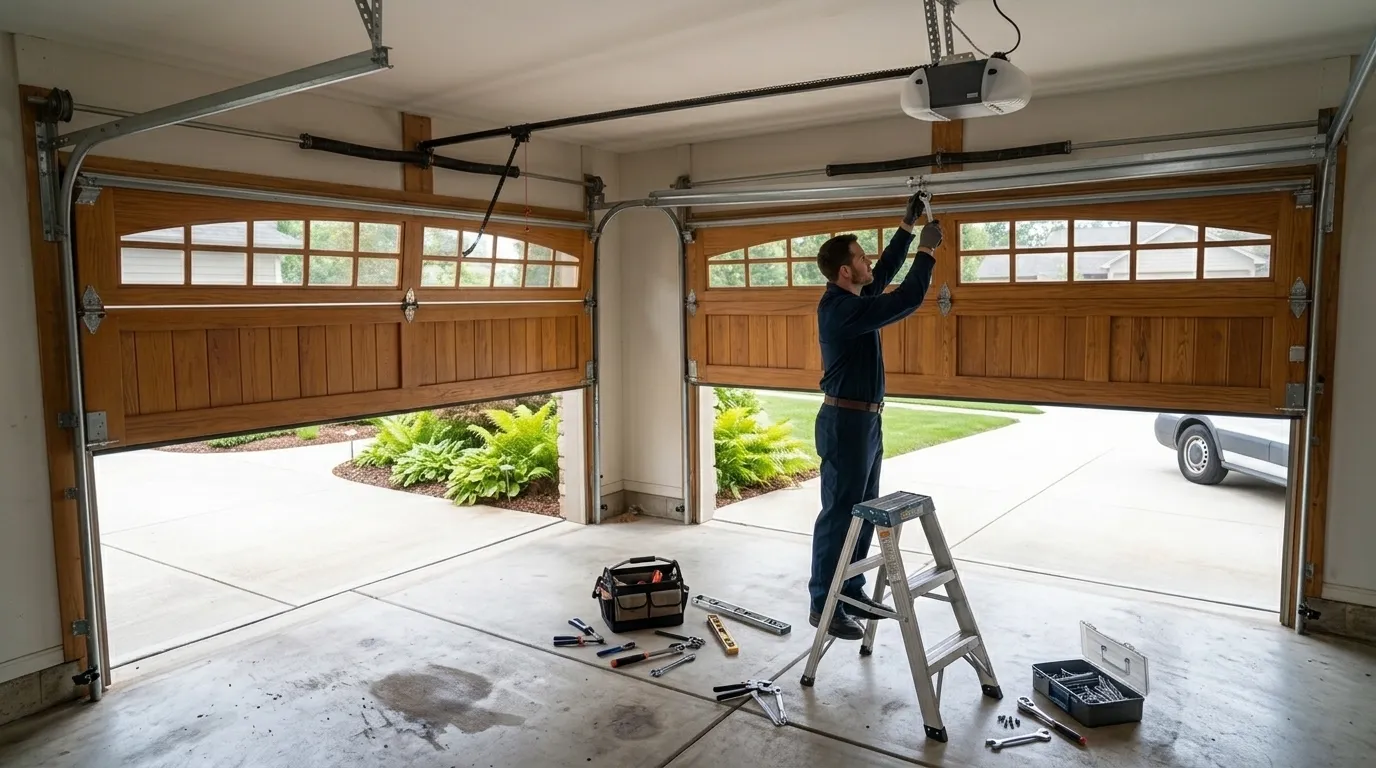
Most calls we get from Schiller Park fall into a short list: a torsion spring that let go without warning, a door that won't stay in track because the roller channel has bowed slightly over the decades, or an opener that's stopped responding because the logic board is original to a unit installed long before smart-home add-ons existed. We also get calls about doors that reverse for no visible reason - often a safety sensor knocked out of alignment by age and vibration rather than anything the homeowner did. Given the age of the housing stock here, we don't push replacement as a first answer. A well-maintained door from 1963 can often be repaired rather than torn out, and given the area's median income sits below the wider region's, that repair-first approach tends to be the right call for most households here, not just the cheaper one.