
This Area's Housing
South Holland's housing stock centers on 1967, which puts it later than a lot of what we see closer to Chicago proper, where homes commonly date back to the late 1930s through the 1990s with a median around 1964. That eight-year gap matters more than it sounds like on paper. A house built in 1967 usually came with a garage built to hold a lighter door on a torsion or extension spring setup that was standard for that era, not the older heavier one-piece slab doors you find in prewar construction. With 7,498 households in the area, you get a fairly uniform run of garages from the same building cycle, which means a fairly uniform set of failure points too - the springs, rollers, and openers installed or replaced over the last few decades are wearing out at close to the same pace across whole blocks. Median household income here runs $87,378, higher than the broader service area's $80,202, and we see that reflected in the number of owners who replace an aging door outright with an insulated steel model rather than patch an old one repeatedly. It's a newer-stock area by local standards, but newer doesn't mean maintenance-free - it means a different set of parts wearing out on a different schedule.
What That Means for Doors
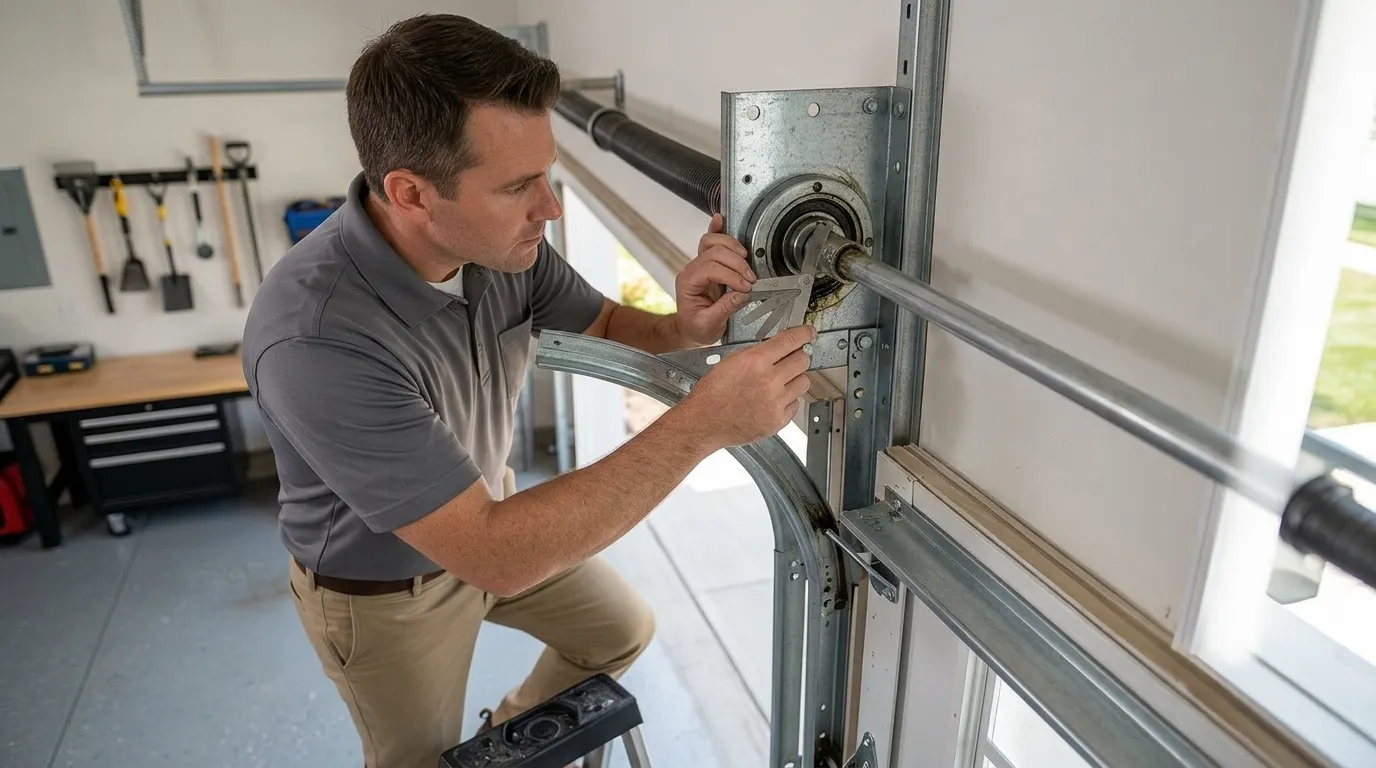
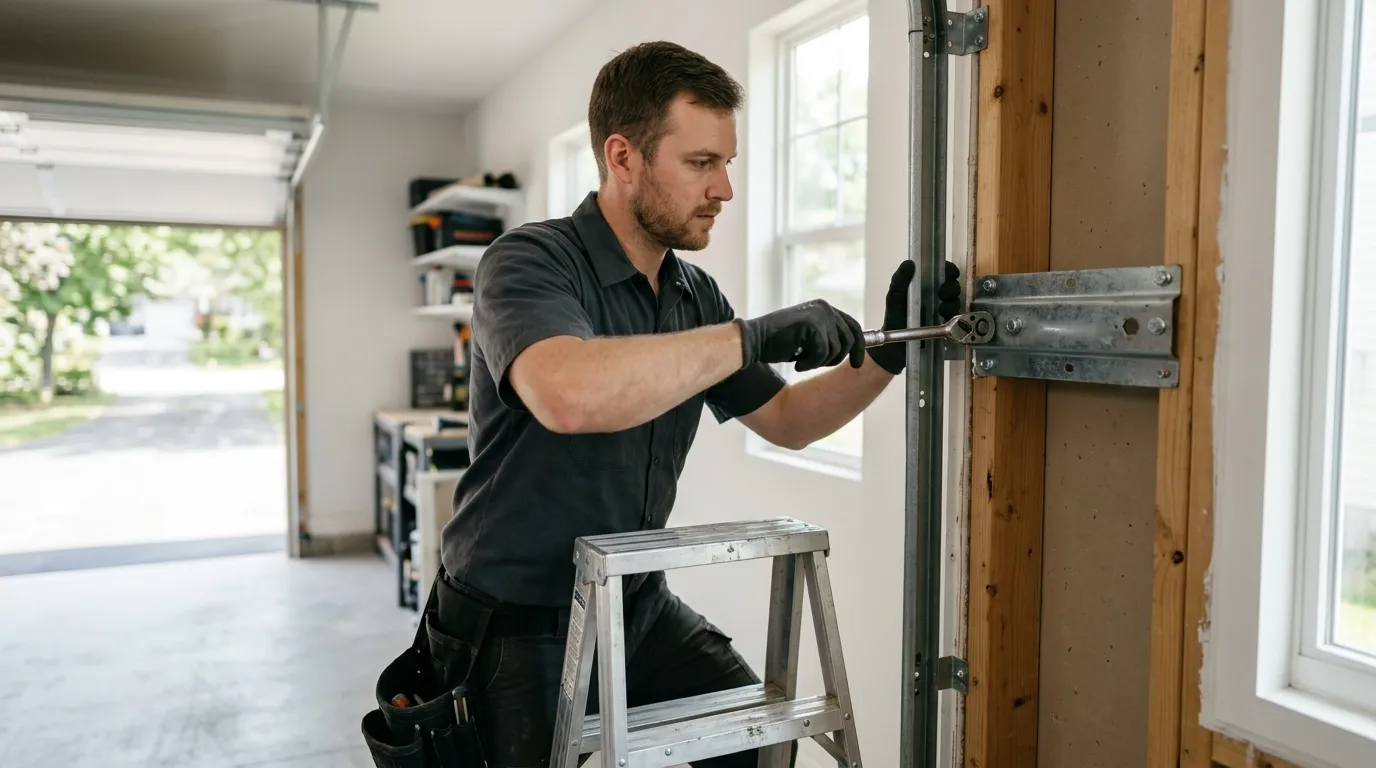
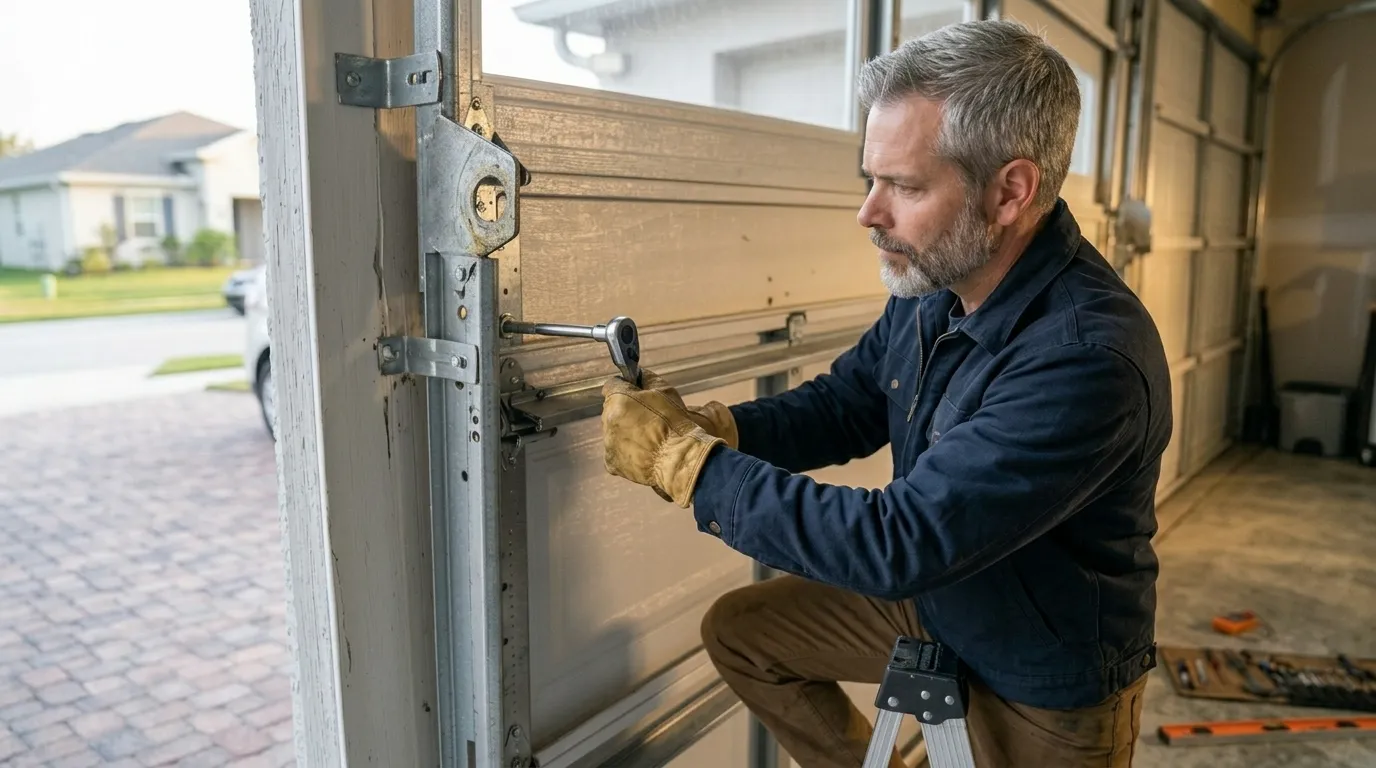
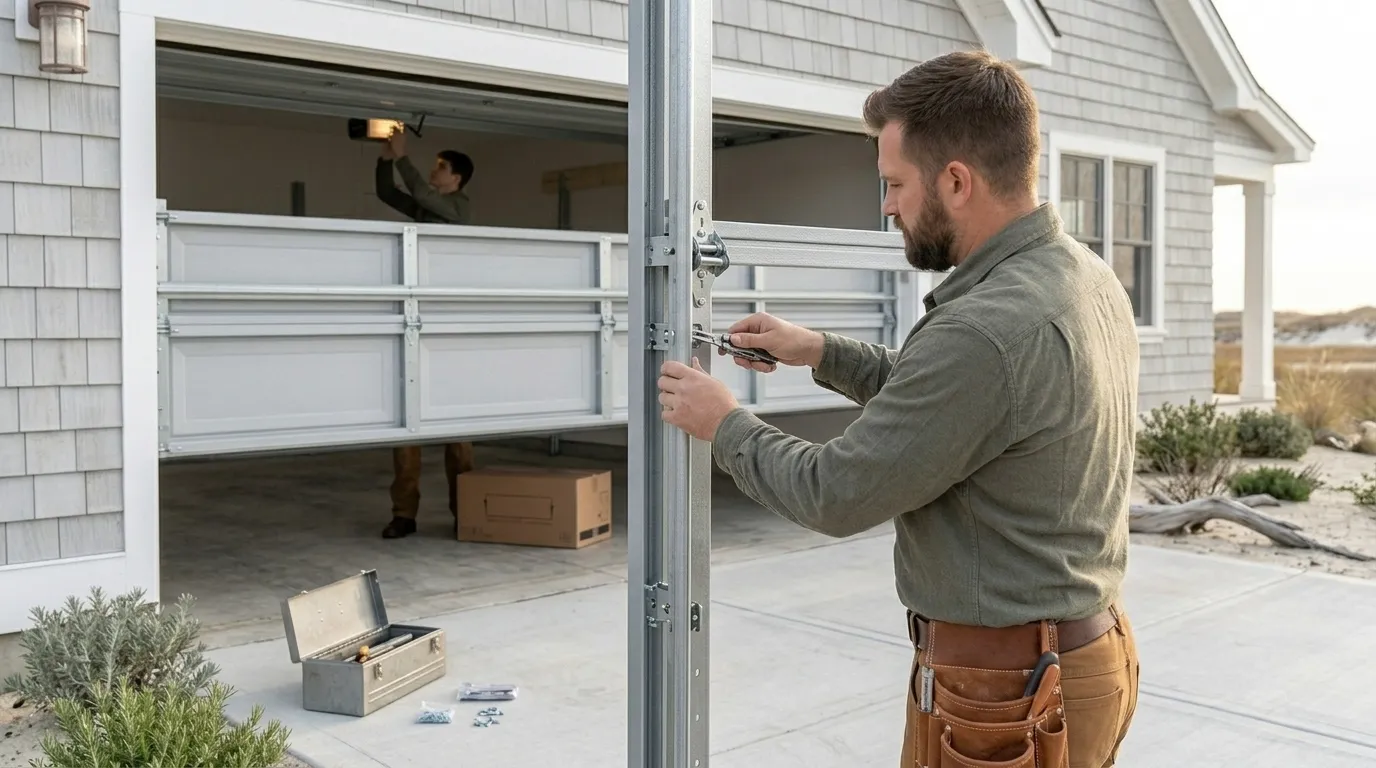
Because most garages here trace back to construction around 1967, the openers we replace tend to be second- or third-generation units - chain drives from the 80s and 90s giving way to belt drives, not the ancient screw-drive originals you'd find on 1940s garages. Torsion springs on these doors are usually sized for a standard steel or aluminum panel door of that period, which is more predictable to match than the oddball hardware on much older stock. The area sits in a cold climate band, which is the bigger factor day to day: steel doors contract in winter, weatherstripping hardens and cracks, and nylon rollers get brittle and start binding on the track in the cold months. On a 1967-era garage, the wood jambs the track is lag-bolted into have usually seen fifty-some winters of freeze and thaw, so track separation from a loosened jamb is a more common call here than a snapped cable.
What People Here Ring About
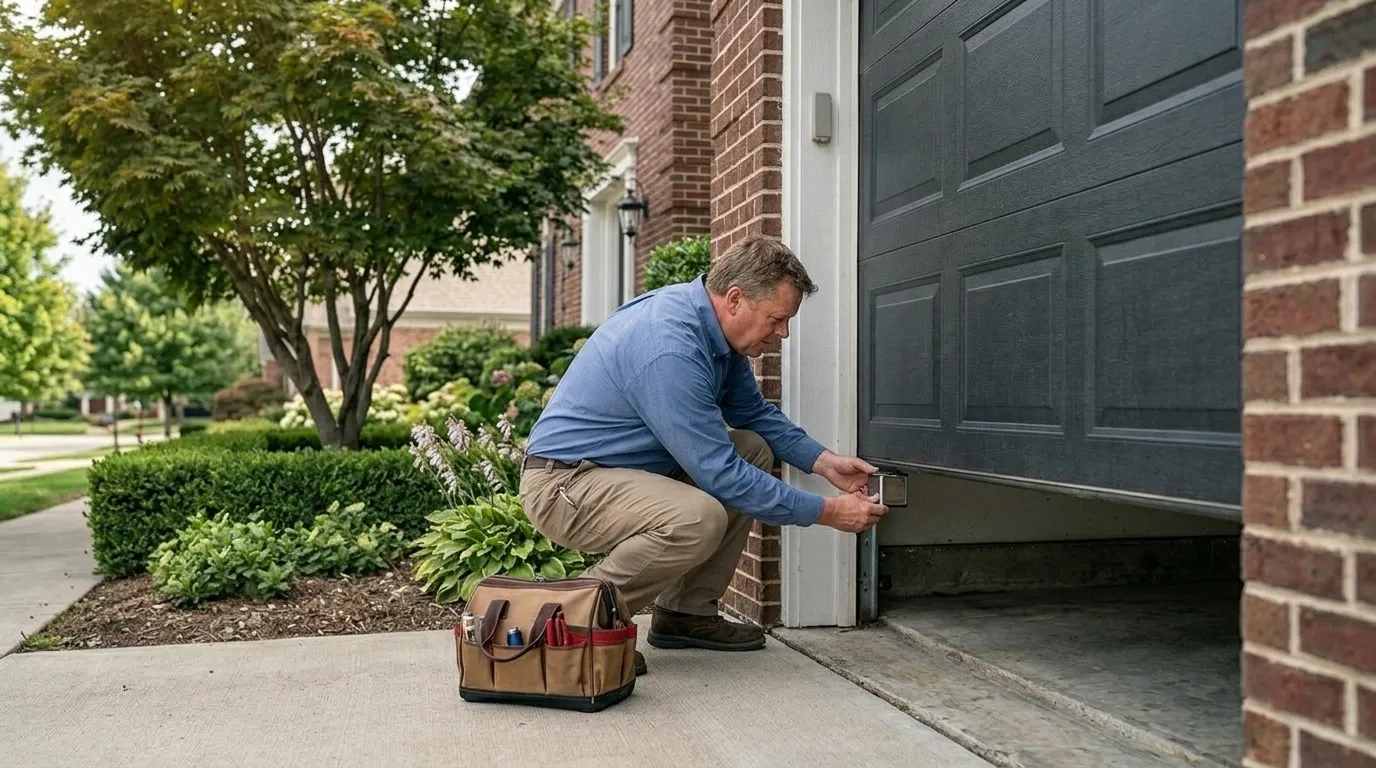
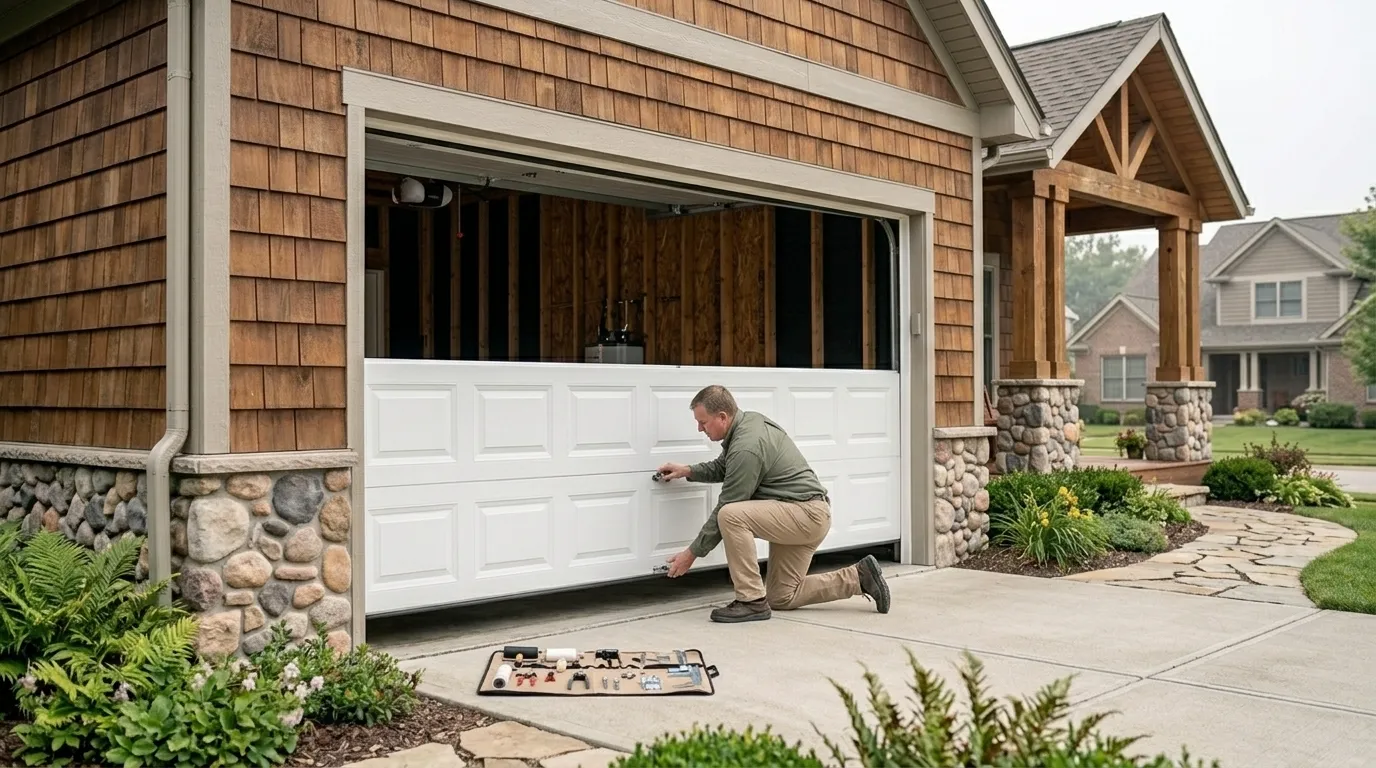
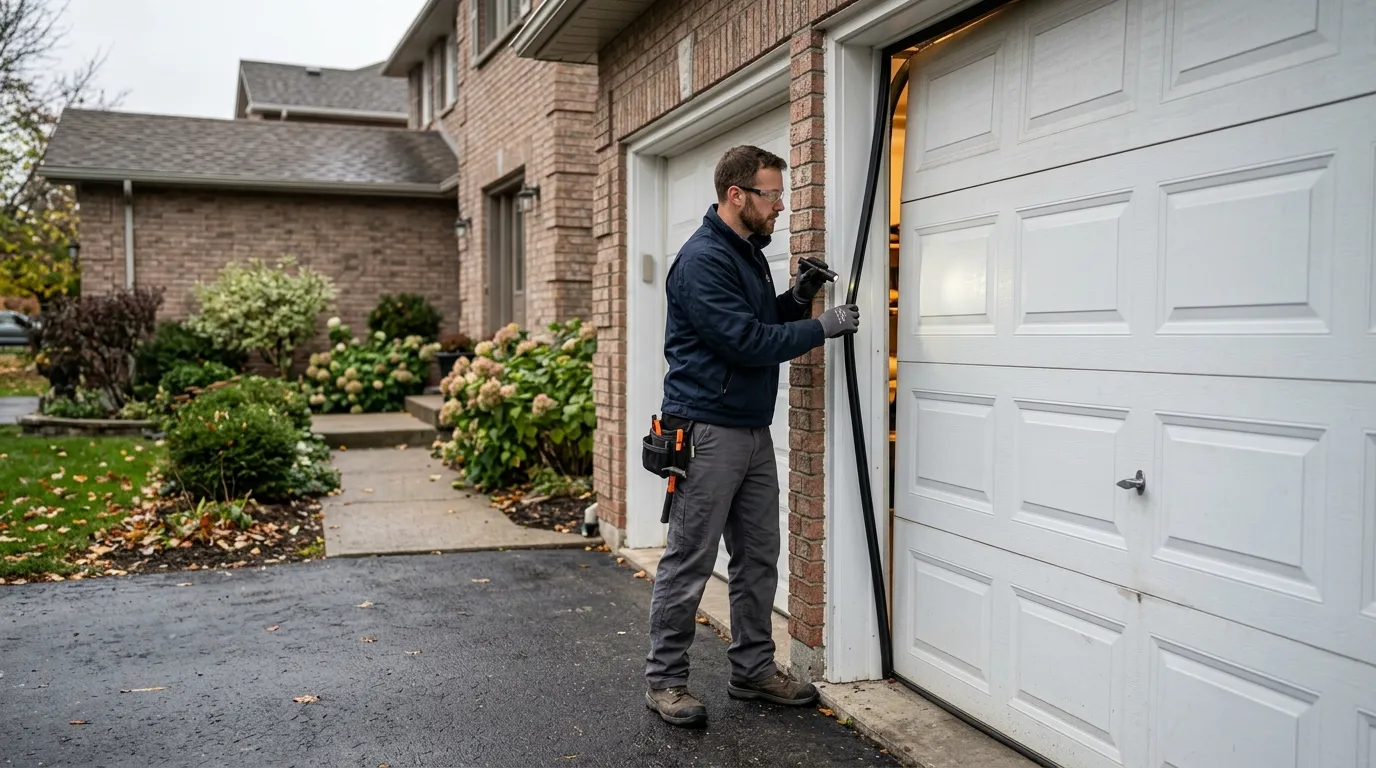
The calls we get from this area cluster around a handful of things: a torsion spring that's gone on a door installed decades ago and never touched since, an opener that's started grinding or stopped responding to the remote, and rollers that have seized up enough to make the door judder on its way down. We also get calls about doors that won't seal at the bottom - given the cold band this area sits in, that's usually worn weatherstripping rather than anything wrong with the door itself, and it's a cheaper fix than people expect. One honest limitation: if a door is original to a 1960s build and the track or hardware is bent or rusted beyond adjustment, we'll tell you replacement is the better use of your money rather than keep patching a system that's fighting you every step. We'd rather say that upfront than run the bill up on repairs that won't hold.