24/7 Emergency Service Open 7 days · 7am–8pm Serving Chicago, IL & nearby
(708) 630-7529
Chicago, IL

Garage Door Work in West Town, Chicago

West Town homes date mostly 1938-1994, with plenty of original torsion hardware still on the door. We fix and replace it, working from the housing stock, not a script.

Garage Door Work in West Town, Chicago
Chicago, IL
Licensed & insured
Free estimates
Residential & commercial

What Is on These Garages

West Town's garages match the houses in front of them, and most of those houses went up between 1938 and 1994, with the typical build year landing around 1964. That means a lot of doors here are older sectional steel or even single-panel units mounted on torsion springs sized for a lighter door than what's sold today. Some have been swapped for newer sectional doors at some point, usually when the original spring finally let go, but the tracks and header hardware behind them are often the same age as the house. We see openers from three or four different decades on the same block, because nobody replaces an opener until it quits. If your door still has a chain-drive unit with a pull cord for manual release, that's consistent with the era of housing this neighborhood is built from, not a sign something was done wrong. The honest limit here: on the oldest torsion setups, we sometimes have to wait on a specific spring size, since the industry doesn't stock every wind and length off a shelf the way it does for doors built after 2000.

Houses on These Streets

A house built in the 1960s in West Town is going to have a narrower garage opening than a house built after 2000, and that shapes what door and spring combination works. Across the wider service area, the housing stock runs from 1938 up to 1994, and West Town sits inside that band with a lot of its stock clustered toward the 1960s median. That era of construction generally means single or narrow-double garages, shorter tracks, and less headroom above the door than modern builds allow for. It also means the original torsion hardware, if it's still there, wasn't sized with today's insulated steel doors in mind - a heavier replacement door on old springs will wear the cable and drum faster than the springs were rated for. Across the 223,261 owner-occupied houses in this service area, a house from this build era is far more likely to still be running its first or second garage door than a newer one. That's not a guess about West Town specifically; it's what the age of the housing stock implies, and it's the first thing we check on a call here.

Where You Are

West Town sits about 5 miles north of the service area's center, farther out than West Loop (4 miles) and Near West Side (2 miles), but still well inside the inner ring of named neighborhoods this crew works. Little Italy sits closer to the core as well, at 3 miles northeast. That inner-ring position matters less for how we quote a job and more for how fast a truck gets there - it's a shorter run than the outer suburban stops on our list, like Brookfield or La Grange, ten-plus miles out. We don't cover every neighborhood or town in this region, and we're not going to name streets we haven't confirmed, but West Town falls inside the area we actually service, not on the edge of it.

Typical Work

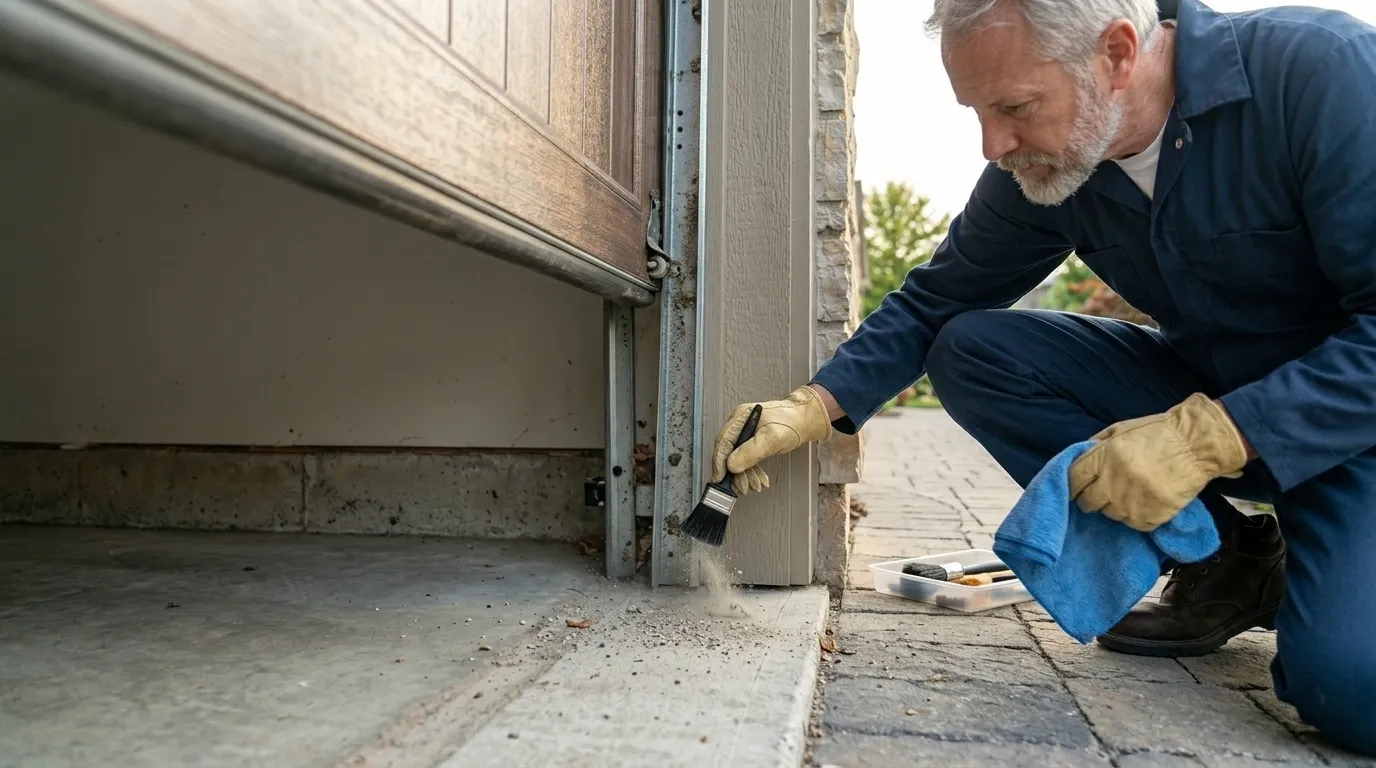
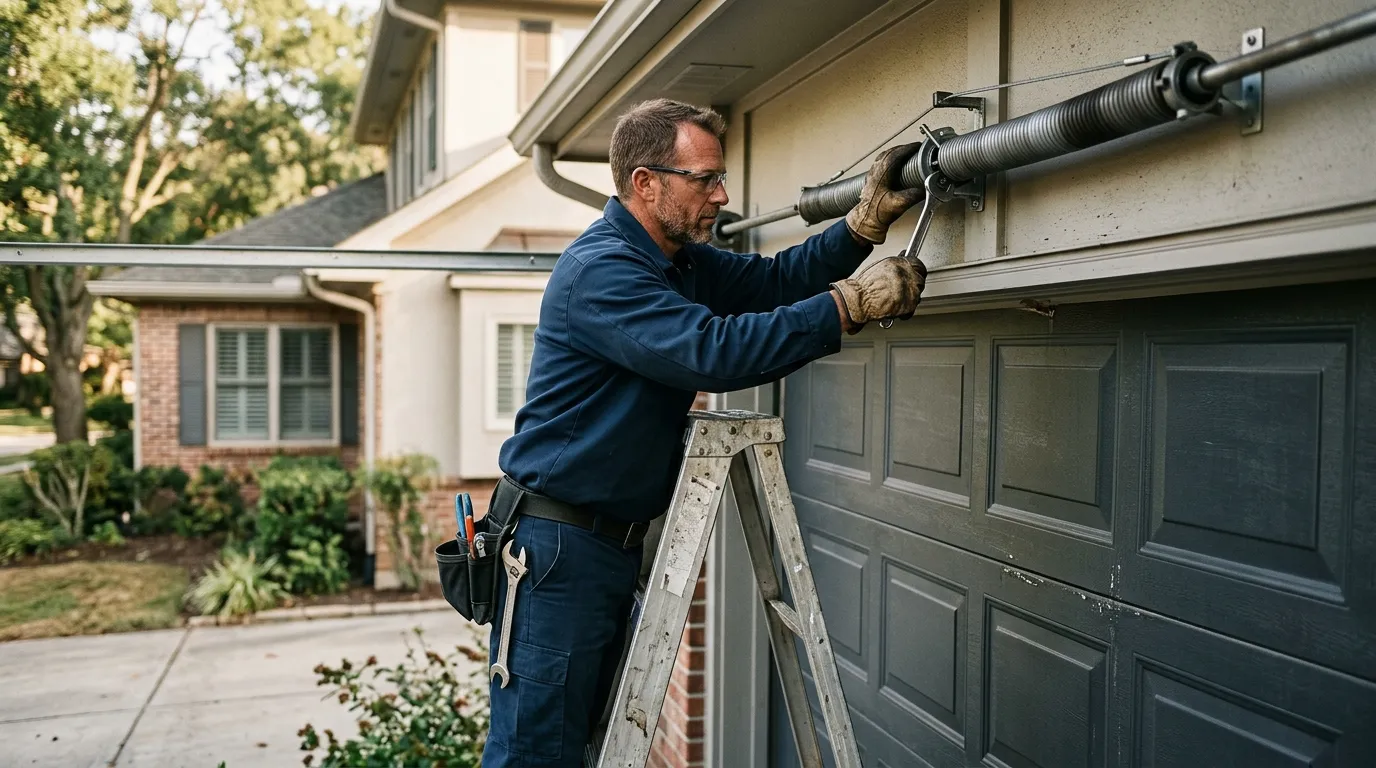
The calls we get from this part of the city follow a pattern set by the age of the houses. Broken torsion springs top the list - not surprising, since spring life is measured in cycles, and older springs on doors that have been swapped once already are usually near the end of that count. Cold weather makes it worse: a garage that isn't insulated in Chicago's climate means metal contracts, tracks tighten slightly, and a spring already near failure goes on a cold morning instead of a mild one. Weatherstripping replacement is common on doors from this era, since the original bottom seal and side seals have usually hardened and cracked. We also get a steady run of opener upgrades - swapping a decades-old chain-drive unit for something quieter, sometimes prompted by a house sale or a new baby's nap schedule. With a median household income of $80,202 across the service area, most owners here weigh a straightforward spring or cable fix against a full opener or door replacement rather than letting a small problem sit. What we don't do is chase every rattle - if the door still runs true and the spring has life left, we'll say so instead of upselling a new one.

How it works

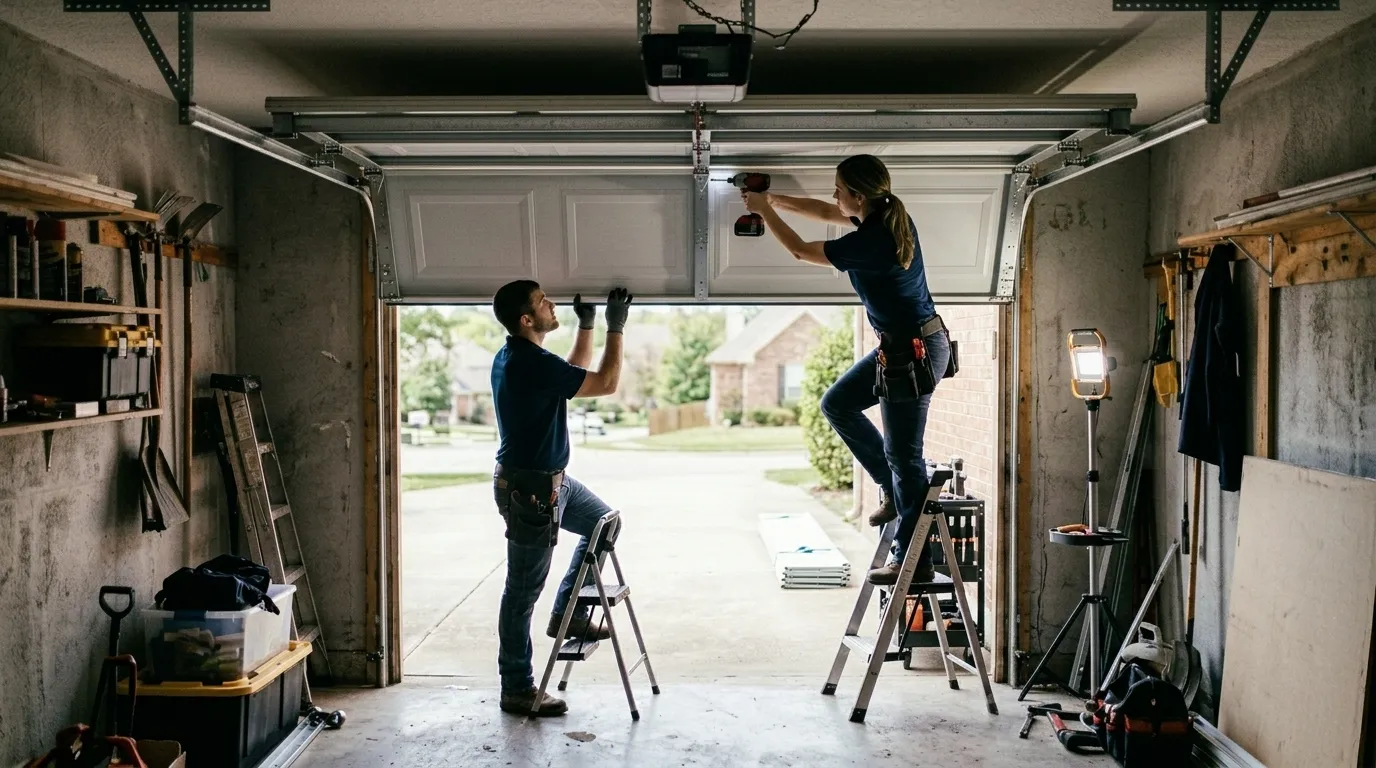
From “it’s stuck” to “it’s fixed”

1
Tell us what’s wrong - Chicago garage door service

Tell us what’s wrong

Describe the symptom - won’t open, loud bang, opener runs but the door won’t move.

2
On-site diagnosis - Chicago garage door service

On-site diagnosis

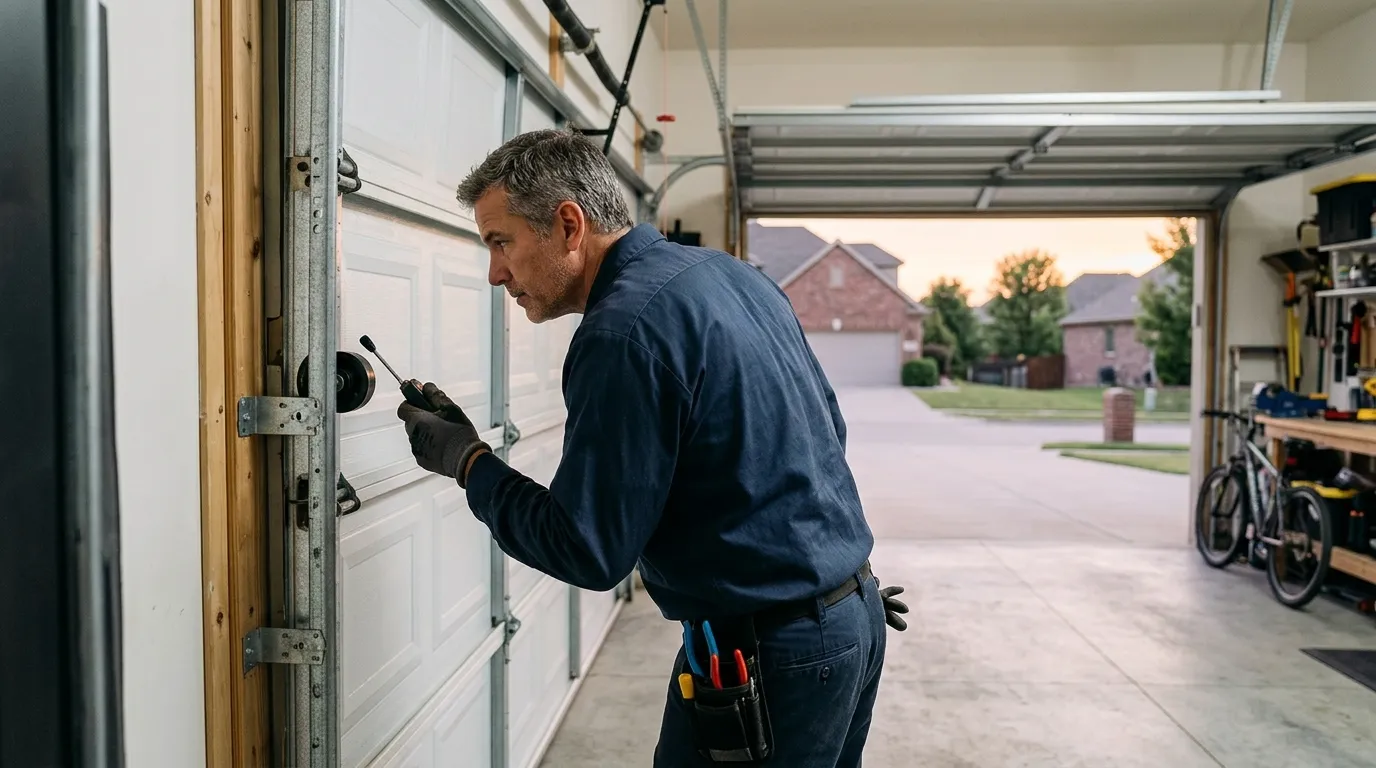
A technician tests the door under power and by hand and finds what actually failed.

3
Clear, up-front plan - Chicago garage door service

Clear, up-front plan

You get the fix that’s needed and what drives the cost - before any work starts.

4
Repaired & tested - Chicago garage door service

Repaired & tested

The repair is done, the door is set true and tested, and the work area left clean.

Serving Chicago, IL - tell us what your door’s doing and we’ll take it from there.

How we work

What to expect

Diagnosis firstEvery visit starts by finding what actually failed - not a pre-written parts list.
The right part for the doorSprings and openers matched to the door’s weight and age, so the fix holds up.
Straight answersWhen a repair makes more sense than a replacement - or the reverse - you hear it plainly.
Clean, careful workTension released safely, hardware set true, the door tested under power before we leave.
2,664,452Residents in Chicago
4Garage door services
110Neighborhoods & suburbs
ILServing Chicago, IL
Who we help

Residential & commercial

Residential garage doors

Homes in Chicago

  • Single- and double-car garages
  • Spring, cable & opener repair
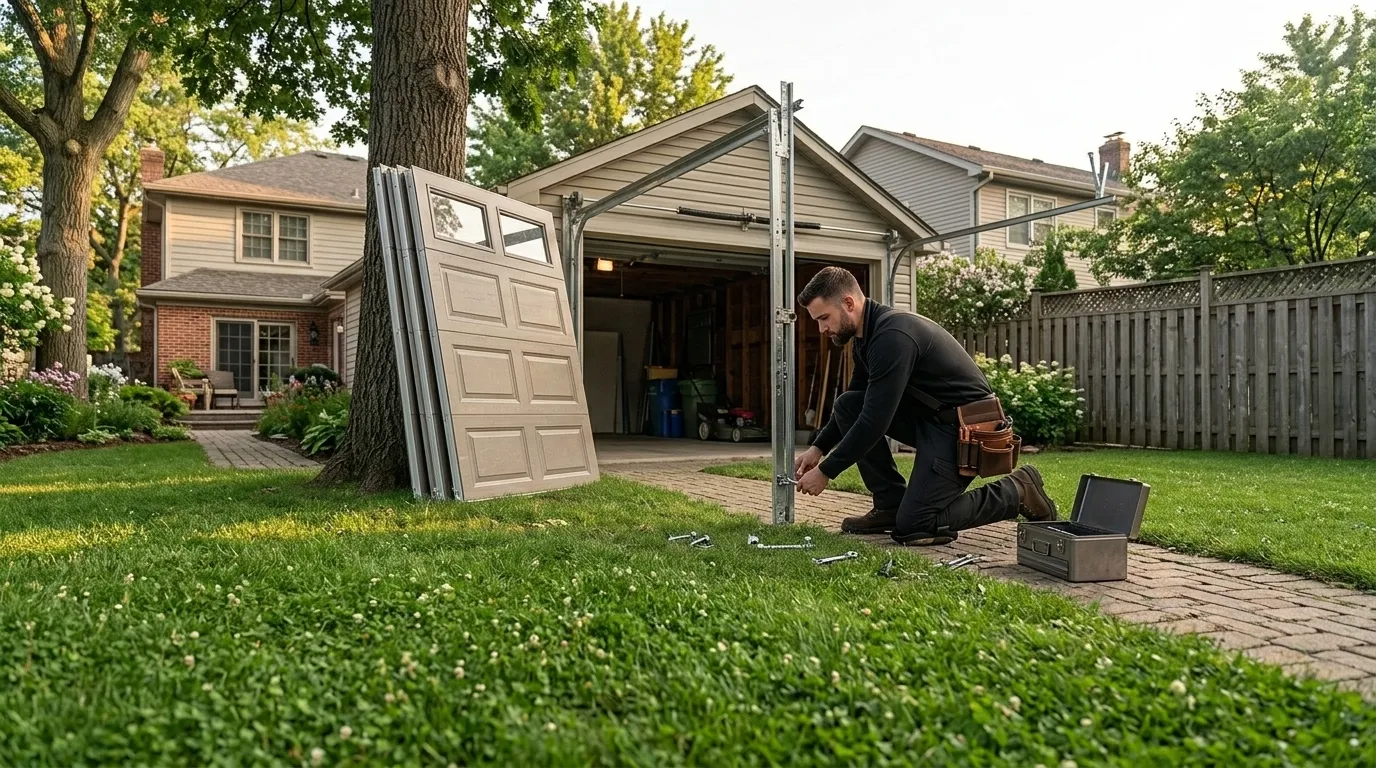
  • New door installation
See services
Commercial garage doors

Businesses & property

  • Rolling steel & sectional doors
  • Loading-dock doors
  • Built for higher cycle counts
See services
Questions

Frequently asked

Straight answers about garage door repair in Chicago. Still unsure? Ask us directly.

Are the garage doors in West Town original to the house?

Often the hardware is, even if the door face has been replaced once. Houses in this part of the service area mostly date from 1938 to 1994, median around 1964, and torsion springs from that era don't always match what's sold for today's heavier steel doors. We check the hardware age separately from the door age on every call.

Why do springs seem to break more in winter here?

Cold makes metal less forgiving, and this service area sits in a moderate-cold climate band. A spring that's near the end of its cycle life is more likely to snap on a cold morning than a mild one, because the metal has less give. It's not that cold causes the wear - it just tends to be when the last cycle happens.

How far out is West Town from your other service areas?

About 5 miles north of the center of the area we cover. That puts it closer in than most of the suburbs on our list, like Brookfield or La Grange at 8 to 10 miles, and a bit farther out than West Loop or Near West Side.

Do you stock parts for older torsion springs?

Not every size. Doors from the 1938-1994 building era sometimes used spring winds and lengths that aren't common stock anymore, so an exact-match replacement can take longer to source than a spring for a newer door. We'll tell you upfront if that's the case rather than guess.

Ready to get your garage door sorted?

Tell us what it’s doing and where you are in Chicago - we’ll take it from there.

Request a QuoteCall